If you have ever started a low carb fat loss phase and experienced that extraordinary first week where the scale drops, your appetite quietens, your cravings disappear, and you suddenly feel like fat loss is actually possible, you are not imagining things. Something real is happening in your body. And understanding exactly what that something is will help you use the low carb bootcamp fat loss approach intelligently rather than falling into the trap of thinking low carb is magic that needs to continue forever.
In my previous article I explained the structure of the low carb kickstart I use with most of my fat loss clients: two to four weeks of reduced carbohydrate intake at approximately 50 to 100 grams per day, with high protein, healthy fats, and non-starchy vegetables forming the foundation. This article goes deeper. It explains the seven specific mechanisms that make the initial low carb phase so effective, why those mechanisms are largely front-loaded (meaning they produce their strongest benefits in the first few weeks), and why the approach eventually needs to evolve for long-term success. Every claim here is backed by peer-reviewed evidence. No hype. No low carb ideology. Just the science of why this works.
Mechanism One: Glycogen Depletion and the Rapid Scale Drop
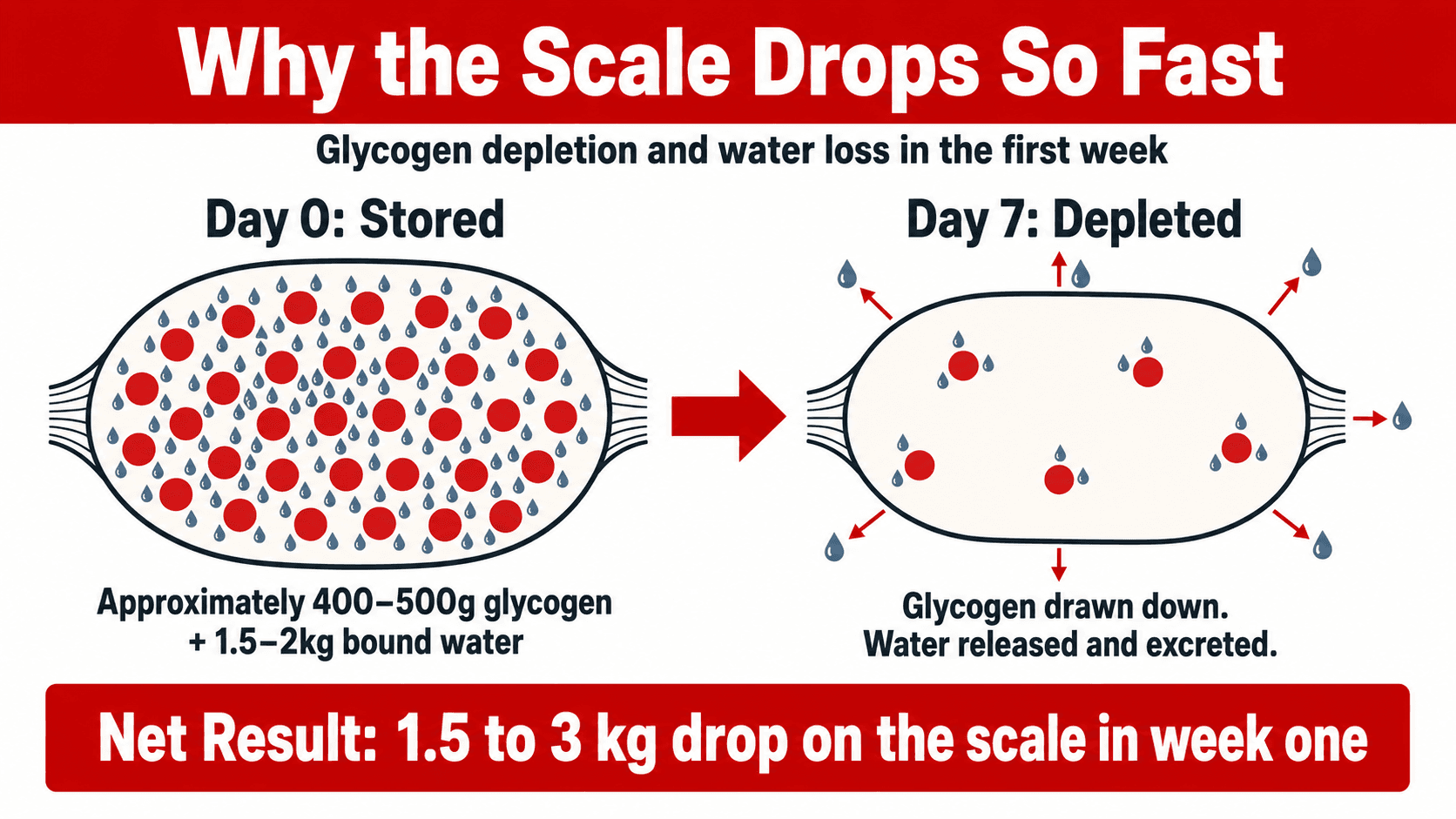
The most visible and immediate effect of carbohydrate restriction is a rapid drop in body weight, typically 1.5 to 3 kilograms in the first week. The majority of this initial loss is not body fat. It is glycogen and the water bound to it. Your body stores approximately 400 to 500 grams of glycogen in the muscles and liver, and each gram of glycogen is stored alongside approximately 3 grams of water (1). When you significantly reduce carbohydrate intake, your body draws down these glycogen stores to maintain blood glucose levels, and the bound water is released and excreted.
From a pure physiology standpoint, this is not fat loss and I am always transparent about that with my clients. But from a behavioural and psychological standpoint, it is one of the most powerful tools in my coaching arsenal. A client who has been stuck at the same weight for months, who has tried and failed multiple times, who has lost confidence in their ability to change, sees the scale drop 2 kilograms in five days and something shifts in their mindset. They believe it is working. They engage more fully. They adhere more tightly. And that adherence is what drives the real fat loss that follows in weeks two, three, four, and beyond. Never underestimate the motivational power of early visible progress.
Mechanism Two: Appetite Suppression Through Hormonal Shifts
One of the most clinically significant effects of carbohydrate restriction is its impact on appetite-regulating hormones. Under normal dieting conditions, when you create a calorie deficit, your body fights back. The hunger hormone ghrelin increases, the satiety hormones leptin and peptide YY decrease, and your subjective drive to eat intensifies. This is the primary reason most diets fail. The biology of hunger eventually overwhelms the psychology of willpower.
Carbohydrate restriction appears to partially circumvent this response. A study published in the European Journal of Clinical Nutrition found that when participants lost weight through a ketogenic very low energy diet and were in a state of ketosis, the expected post-weight-loss increase in ghrelin was suppressed. However, when carbohydrates were reintroduced and ketosis ceased, ghrelin levels increased and hunger returned (2). A systematic review and meta-analysis of ketogenic diets confirmed that these diets suppress appetite and reduce hunger ratings despite the calorie deficit, likely through multiple mechanisms including the effects of circulating ketone bodies, higher protein intake, and the elimination of blood sugar spikes and crashes (3).
In practical terms, this means that the first two to four weeks of a low carb kickstart are often the easiest weeks of the entire fat loss phase from an appetite perspective. My clients report feeling noticeably less hungry, experiencing fewer cravings, and finding it easier to stick to their calorie target. This window of reduced appetite is extremely valuable. It allows the client to build new habits, establish meal preparation routines, and accumulate a meaningful amount of fat loss before the hormonal pressure to eat intensifies.
Mechanism Three: Elimination of Blood Sugar Volatility
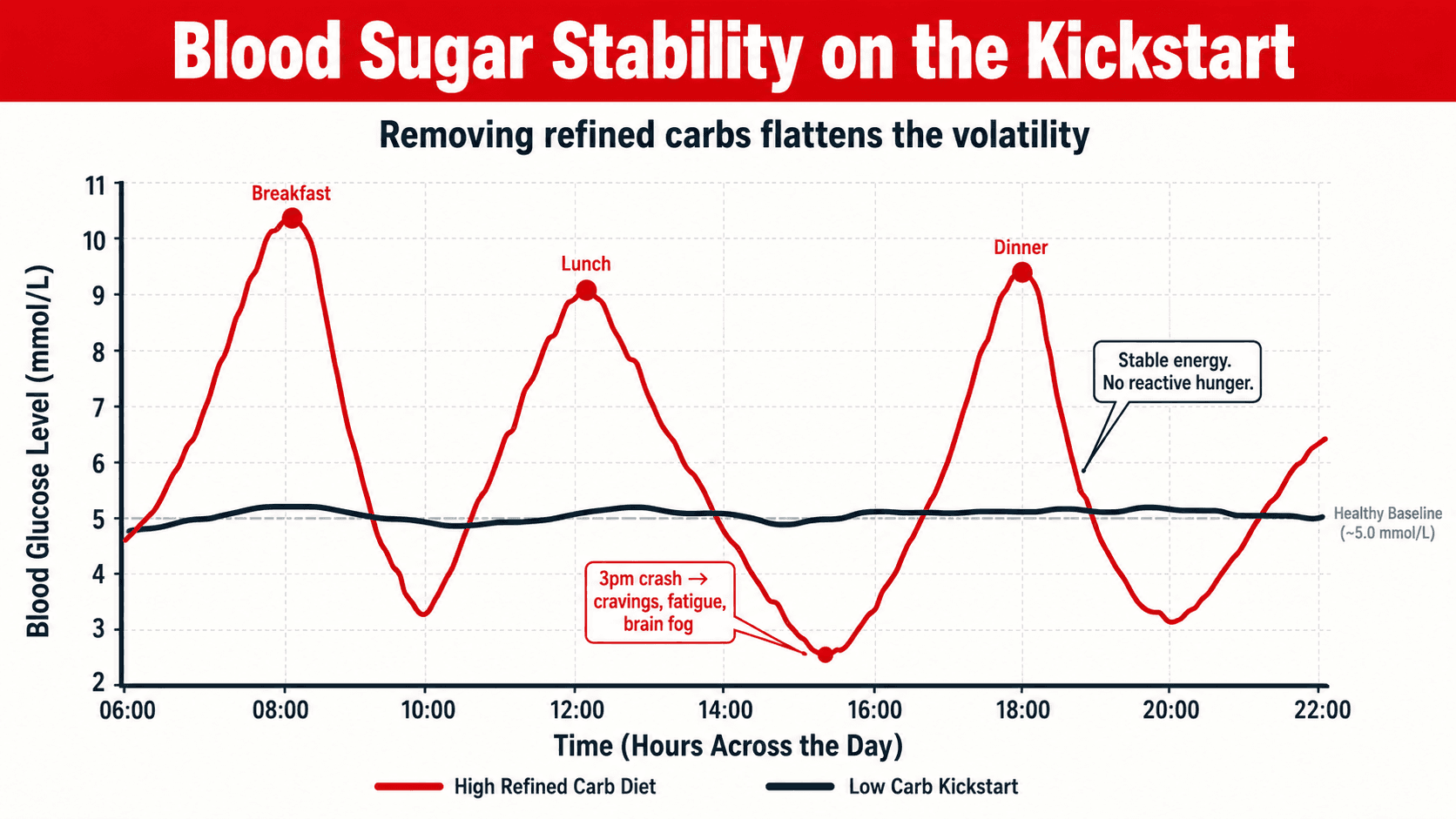
When your diet is built around refined carbohydrates, your blood glucose follows a predictable pattern: spike, crash, crave, eat, spike again. Each time blood glucose rises sharply, insulin surges to clear it. The insulin often overshoots, driving blood glucose below baseline. This reactive hypoglycaemia triggers intense hunger, irritability, fatigue, poor concentration, and a strong drive to consume more fast-acting carbohydrates to restore blood sugar levels. It is a cycle that many people live in without realising it.
When you remove the primary drivers of this cycle, namely refined carbohydrates, sugary snacks, white bread, cereal, and sugar-sweetened beverages, blood glucose flattens out dramatically. The spikes disappear. The crashes disappear. The reactive hunger disappears. Research by Ludwig published in JAMA demonstrated that high glycemic load meals produced greater subsequent hunger and increased activation of brain regions associated with craving and reward compared to low glycemic load meals (4). By the third or fourth day of the low carb kickstart, most of my clients report that the 3pm energy crash they had accepted as normal has simply vanished. Their energy is more stable throughout the day, and the desperate mid-afternoon reach for sugar or biscuits stops happening.
Mechanism Four: Increased Thermic Effect From Higher Protein
When carbohydrates are reduced, the calories need to come from somewhere. In a well-designed low carb kickstart, protein is increased to 1.8 to 2.2 grams per kilogram of bodyweight per day, and fat fills the remaining caloric gap. This macronutrient shift has a direct impact on metabolic rate through the thermic effect of food (TEF).
The thermic effect of protein is approximately 20 to 30 percent, meaning that for every 100 calories of protein you eat, your body expends 20 to 30 calories simply digesting and metabolising it. For carbohydrates, the thermic effect is 5 to 10 percent, and for fat it is 0 to 3 percent (5). By shifting a significant portion of daily calories from carbohydrates to protein, you increase the total energy your body expends on digestion and metabolism without changing your total calorie intake. A meta-analysis published in the American Journal of Clinical Nutrition confirmed that higher protein intakes are associated with greater energy expenditure, improved satiety, and better preservation of lean body mass during calorie restriction (6). The kickstart leverages this advantage from day one.
Mechanism Five: Simplified Food Choices and Reduced Decision Fatigue
This mechanism is not biochemical but it is just as powerful as any hormonal shift. The beginning of a fat loss phase is when decision fatigue is at its highest. You are changing your eating patterns, navigating social situations, resisting habitual foods, and making dozens of food choices every day that you did not have to make when you were eating without a plan. Every one of those decisions costs cognitive energy, and when that energy runs out, the default is to reach for whatever is easiest, which is usually the food you are trying to avoid.
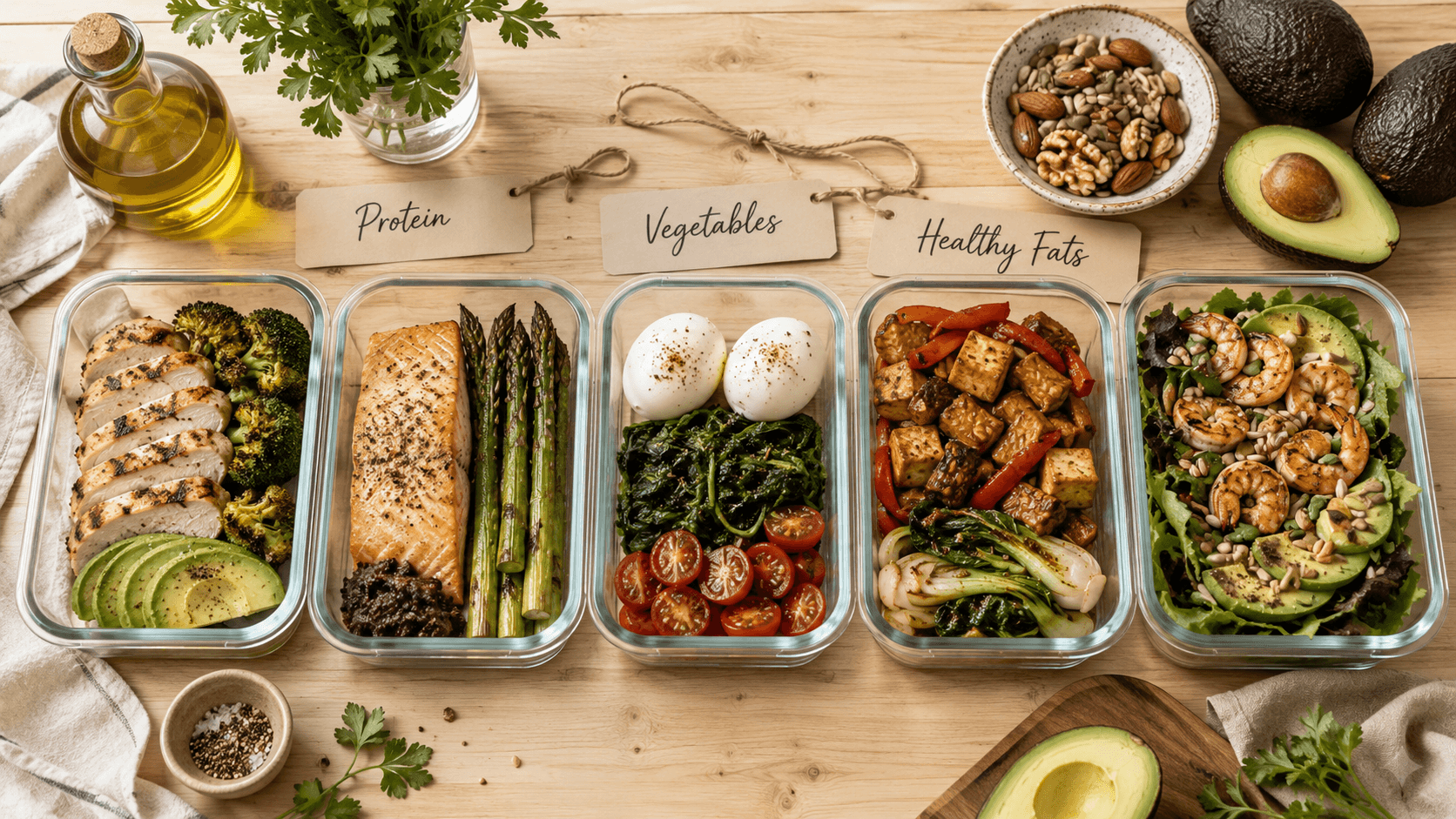
The low carb kickstart dramatically reduces the number of decisions. The formula is simple: protein, vegetables, healthy fats. Every meal follows the same template. Breakfast is eggs and vegetables, or a protein shake with nuts. Lunch is a large salad with tofu, chicken, or tinned fish, avocado, and olive oil. Dinner is a protein source with roasted vegetables and a drizzle of good fat. For vegetarian clients: Greek yoghurt with berries and seeds, paneer with vegetables, tempeh stir-fry. For vegan clients: scrambled tofu with spinach, a large lentil and vegetable bowl (keeping carbs within the allocated range), or a seitan and vegetable plate with tahini dressing. There is no weighing pasta portions, no debating whether rice fits the plan, no agonising over bread. The simplicity is the strategy.
Mechanism Six: Removal of Ultra-Processed Trigger Foods
The foods that are removed during the low carb kickstart happen to be the same foods that are most strongly associated with overconsumption. Research by Kevin Hall at the National Institutes of Health demonstrated that when people were given unlimited access to ultra-processed food, they spontaneously consumed approximately 500 more calories per day compared to when given whole, minimally processed food, despite both diets being matched for available macronutrients (7). Bread, cereal, biscuits, pasta, crisps, sugary drinks, pastries, and confectionery are all high carbohydrate and all highly processed. They are engineered to be hyper-palatable, easy to overeat, and difficult to stop eating once you start.
By removing these foods during the kickstart, you eliminate the primary caloric offenders from the diet. The foods that replace them, eggs, vegetables, lean protein, tofu, nuts, seeds, avocado, olive oil, are satiating, nutrient dense, and extremely difficult to overeat. Nobody binges on grilled chicken and broccoli. Nobody sits down and accidentally eats 1,000 calories of scrambled tofu and spinach. The low carb framework removes the environmental triggers that drive overconsumption and replaces them with foods that naturally regulate intake. The calorie deficit practically creates itself.
Mechanism Seven: Rapid Improvement in Insulin Sensitivity
For clients with any degree of insulin resistance, which includes a substantial proportion of overweight and obese individuals, the low carb kickstart produces measurable improvements in insulin sensitivity within days to weeks. Reducing carbohydrate intake lowers the insulin demand on the pancreas, allowing fasting insulin levels to decline and cells to become more responsive to the insulin that remains. A meta-analysis of randomised controlled trials found that low carbohydrate diets produced significant reductions in fasting insulin and improvements in insulin sensitivity at 3 to 6 months (8).
The practical significance of this cannot be overstated. When your cells are more insulin sensitive, glucose is cleared from the bloodstream more efficiently, less insulin is required to do the job, and the metabolic environment shifts away from fat storage and towards fat oxidation. For my clients with type 2 diabetes, PCOS, or metabolic syndrome, the improvements in blood glucose, HbA1c, and fasting insulin that occur during the kickstart phase are often dramatic. Some clients see their fasting glucose normalise within two weeks. This gives them tangible, measurable evidence that their body is responding to the intervention, which reinforces adherence and motivation.
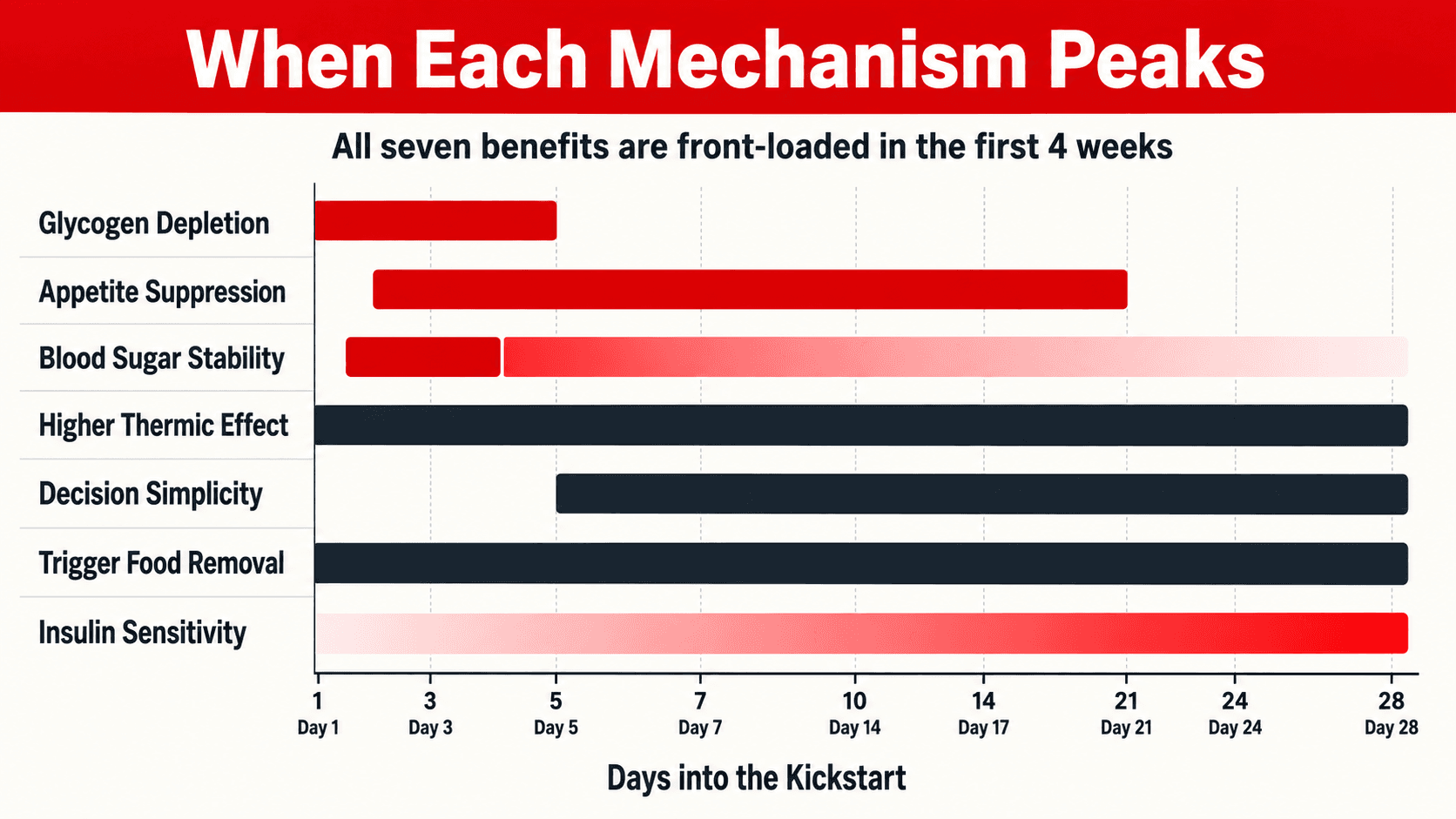
The Seven Mechanisms at a Glance
| Mechanism | What Happens | When It Peaks | Why It Matters |
|---|---|---|---|
| 1. Glycogen Depletion | Glycogen and bound water released producing rapid scale drop of 1.5 to 3 kg | Days 1 to 7 | Builds confidence and momentum |
| 2. Appetite Suppression | Ghrelin increase blunted by ketosis. Hunger and cravings reduce significantly | Days 3 to 21 | Easiest adherence window of the entire diet |
| 3. Blood Sugar Stability | Removal of refined carbs eliminates glucose spikes and crashes | Days 2 to 5 | Stable energy, no afternoon crashes, fewer cravings |
| 4. Higher Thermic Effect | More protein means more calories burned through digestion and metabolism | Immediate and ongoing | Slight metabolic advantage without extra effort |
| 5. Decision Simplicity | Fewer food categories means fewer daily decisions and less cognitive load | Week 1 onwards | Reduces willpower depletion early in the programme |
| 6. Trigger Food Removal | Ultra-processed, hyper-palatable foods eliminated. Replaced with satiating whole foods | Immediate | Removes primary drivers of overconsumption |
| 7. Insulin Sensitivity | Lower carb demand reduces fasting insulin. Cells become more responsive | Weeks 1 to 4 | Improved fat oxidation and metabolic health markers |
Why These Benefits Are Front-Loaded and What That Means for You
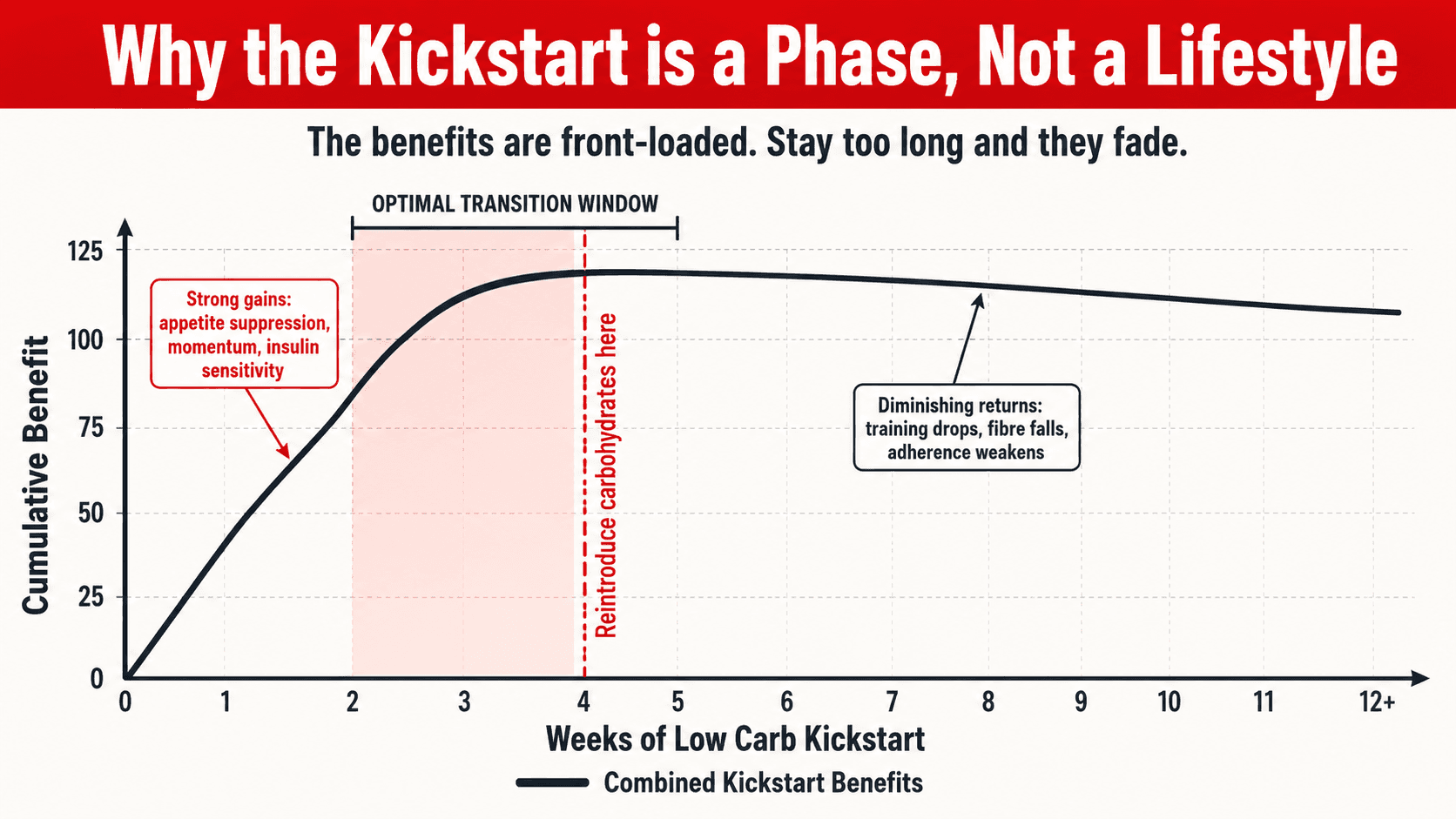
Here is the critical insight that separates intelligent coaching from dietary ideology: all seven of these mechanisms produce their strongest effects in the first two to four weeks of carbohydrate restriction. After that, the benefits begin to plateau or diminish.
The glycogen and water loss happens once. Once your stores are depleted, that particular scale advantage is done. The appetite suppression linked to ketone body production is most pronounced in the early weeks and tends to fade as the body adapts. The blood sugar stabilisation occurs quickly but is then maintained regardless of whether carbohydrates are kept low or reintroduced at moderate levels from whole food sources. The decision simplicity is valuable while new habits are being formed but becomes restrictive once habits are established. And the improvements in insulin sensitivity, while real and important, continue to improve with sustained weight loss regardless of macronutrient composition.
This is precisely why I use the kickstart as a phase, not a permanent prescription. You harvest the strongest benefits during the first few weeks, build momentum, establish habits, and accumulate meaningful fat loss. Then you transition to a more balanced, sustainable macronutrient split that supports your training performance, dietary variety, fibre intake, and long-term adherence. Staying low carb indefinitely means diminishing returns from the mechanisms described above while accumulating increasing costs in terms of training performance, dietary enjoyment, and adherence. The smart play is to use the tool when it is most effective and put it away when it stops being the right tool for the job.
Top Tips: Maximising the Low Carb Kickstart
Set clear expectations with yourself before you start. Understand that the first 1.5 to 3 kilograms of loss is primarily water and glycogen, not fat. This is not a bad thing. It is a predictable, normal, and motivationally useful part of the process. Real fat loss begins accumulating from week one and continues as long as you are in a calorie deficit.
Front-load your protein from day one. Protein is the most important macronutrient during the kickstart. It preserves muscle mass, suppresses appetite, and has the highest thermic effect. 1.8 to 2.2 grams per kilogram of bodyweight per day, split across three to four meals. Every meal starts with a protein source.
Expect the first three to five days to be the hardest. As your body transitions from relying on glycogen to increasing fat oxidation, you may experience mild fatigue, headaches, or irritability. Stay well hydrated, ensure adequate sodium and electrolyte intake, and reduce training intensity slightly if needed. By day five to seven, most people feel significantly better.
Use the appetite suppression window to build habits, not just lose weight. The reduced hunger of the first few weeks is a gift. Use it to establish meal preparation routines, practise portion awareness, build your vegetable intake, and develop the consistency that will carry you through the harder phases later. The habits you build now are what keep the weight off permanently.
Plan your exit from the kickstart before you start it. Know in advance that this phase lasts two to four weeks and that carbohydrates are coming back. Having a reintroduction plan prevents the all-or-nothing mentality where people stay low carb until they crack and then binge on everything they have been avoiding.
Track more than just scale weight. Measure your waist circumference, take progress photos, note your energy levels, track your training performance, and monitor your sleep quality. The scale will move dramatically in week one (water), slow in weeks two to four (actual fat loss), and may even stall briefly as water redistributes. The full picture is always more informative than a single number.
Do not be afraid to bring carbs back. When the kickstart ends and you reintroduce oats, rice, sweet potato, and legumes, the scale will tick up slightly. That is glycogen and water returning to your muscles. It is not fat regain. It is a normal physiological response and it means your muscles are refuelled and ready to train hard again.
The Bottom Line
The low carb kickstart works so well at the start of a fat loss phase because of seven converging mechanisms: glycogen depletion for rapid visible progress, hormonal appetite suppression, blood sugar stabilisation, higher thermic effect from increased protein, simplified food choices, removal of ultra-processed trigger foods, and rapid improvements in insulin sensitivity. These mechanisms are real, they are supported by evidence, and they produce genuine benefits. But they are also front-loaded, meaning their impact is strongest in the first few weeks and diminishes over time. That is why the kickstart is a phase, not a lifestyle. Use it to build momentum. Use it to reset your appetite. Use it to establish habits. And then transition to a balanced, sustainable approach that supports your training, your health, and your long-term results.
If you want a fat loss programme that uses evidence-based tools at the right time, tailored to your body, your goals, your dietary preferences, and your medical history, get in touch through trperformancecoaching.com. I work one-to-one with clients online globally. Whether you eat meat, are vegetarian, vegan, or anywhere in between, whether you are managing diabetes, PCOS, insulin resistance, or simply want to get leaner, I will build a plan that works. Not because it is trendy. Because it is right for you.
Work with Me
Get a personalised coaching plan built around your goals, your schedule, and your life.
Enquire NowReferences
- Olsson KE, Saltin B. Variation in total body water with muscle glycogen changes in man. Acta Physiologica Scandinavica. 1970; 80(1): 11-18.
- Sumithran P, Prendergast LA, Delbridge E, et al. Ketosis and appetite-mediating nutrients and hormones after weight loss. European Journal of Clinical Nutrition. 2013; 67(7): 759-764.
- Gibson AA, Seimon RV, Lee CM, et al. Do ketogenic diets really suppress appetite? A systematic review and meta-analysis. Obesity Reviews. 2015; 16(1): 64-76.
- Ludwig DS. The glycemic index: physiological mechanisms relating to obesity, diabetes, and cardiovascular disease. JAMA. 2002; 287(18): 2414-2423.
- Westerterp KR. Diet induced thermogenesis. Nutrition and Metabolism. 2004; 1(1): 5.
- Leidy HJ, Clifton PM, Astrup A, et al. The role of protein in weight loss and maintenance. American Journal of Clinical Nutrition. 2015; 101(6): 1320S-1329S.
- Hall KD, Ayuketah A, Brychta R, et al. Ultra-processed diets cause excess calorie intake and weight gain: an inpatient randomized controlled trial of ad libitum food intake. Cell Metabolism. 2019; 30(1): 67-77.
- Apekey TA, Maynard MJ, Apaydim R, et al. Comparison of the effectiveness of low carbohydrate versus low fat diets in type 2 diabetes: systematic review and meta-analysis of randomized controlled trials. Nutrients. 2022; 14(20): 4391.