
Testosterone is probably the most talked about, most misunderstood, and most exploited topic in men's health right now. Open your phone and within five minutes you will see an advert for a testosterone booster, a clinic offering TRT, or a social media post claiming that some obscure supplement will ‘naturally double your T levels’. Most of it is nonsense. Some of it is dangerous.
They feel tired, they have gained weight, they have lost motivation, they cannot build muscle, and they have jumped to the conclusion that they need a pill, a patch, or an injection. In most cases, what they actually need is to fix their sleep, clean up their nutrition, start lifting weights, and reduce their body fat. But that does not sell supplements.
This article is going to cut through the noise. I am going to explain what testosterone actually does in your body, what happens to it as you age, what genuinely affects your levels, what does not, and when you should actually be concerned. No hype. No sales pitch. Just evidence.
What Does Testosterone Actually Do?
Before we talk about what goes wrong with testosterone, let me explain what it does when it is working properly. Most men think testosterone is only about muscle and sex drive. It does far more than that.
| Function | Why It Matters For You |
|---|---|
| Muscle mass | Testosterone stimulates muscle protein synthesis. It helps your body build and maintain muscle tissue. Less testosterone makes it harder to build muscle and easier to lose it. |
| Fat distribution | Testosterone influences where and how your body stores fat. Lower levels are associated with increased visceral fat (the dangerous fat around your organs). |
| Bone density | Testosterone helps maintain strong bones. Low levels over time increase the risk of osteoporosis and fractures, especially as you age. |
| Mood and energy | Testosterone affects your mood, motivation, and overall energy levels. Men with low testosterone often report fatigue, irritability, and low mood. |
| Libido and sexual function | Testosterone is a key driver of sex drive. It also plays a role in erectile function. Low levels can reduce both desire and performance. |
| Red blood cell production | Testosterone stimulates the production of red blood cells which carry oxygen around your body. This affects endurance, recovery, and overall vitality. |
| Cognitive function | There is growing evidence that testosterone plays a role in memory, concentration, and mental clarity. Lower levels are associated with brain fog and reduced cognitive sharpness. |
| Cardiovascular health | Testosterone helps maintain healthy blood vessel function. Both very low and very high levels of testosterone are associated with cardiovascular risk. |
As you can see, testosterone is not just about muscles and sex. It is involved in virtually every system in the male body. When it is in a healthy range, everything functions better. When it drops, the effects are widespread and cumulative.

What Happens to Testosterone as You Age
Here is where the conversation gets important, because there is a lot of misinformation about age-related testosterone decline.
The Baltimore Longitudinal Study of Aging, one of the most comprehensive long-term studies of male hormonal health, found that total testosterone declines at an average rate of approximately 1 to 2 percent per year after the age of 30, with bioavailable testosterone (the portion your body can actually use) declining even faster because of rising levels of a binding protein called SHBG (1). The Massachusetts Male Aging Study found similar longitudinal declines, with total testosterone declining at roughly 1.6 percent per year and bioavailable testosterone at 2 to 3 percent per year (2).
However, and this is crucial, a major analysis from the Baltimore Longitudinal Study of Aging found that when comorbidities like obesity, diabetes, heart failure, and other chronic conditions were accounted for, age itself was not a significant predictor of testosterone decline (3). In other words, much of what we think of as ‘age-related’ testosterone decline may actually be driven by the health conditions that accumulate with age: weight gain, poor metabolic health, sedentary behaviour, and chronic disease. This is profoundly important because it means that a significant portion of testosterone decline is preventable and even reversible through lifestyle intervention.
Top Tip
If you are feeling the symptoms of low testosterone, do not assume it is just your age. Get a blood test. But also look honestly at your body composition, your training habits, your sleep, your stress, and your diet. These factors have a far bigger impact on your testosterone than most men realise.
The Testosterone and Body Fat Cycle: The Trap Most Men Do Not See
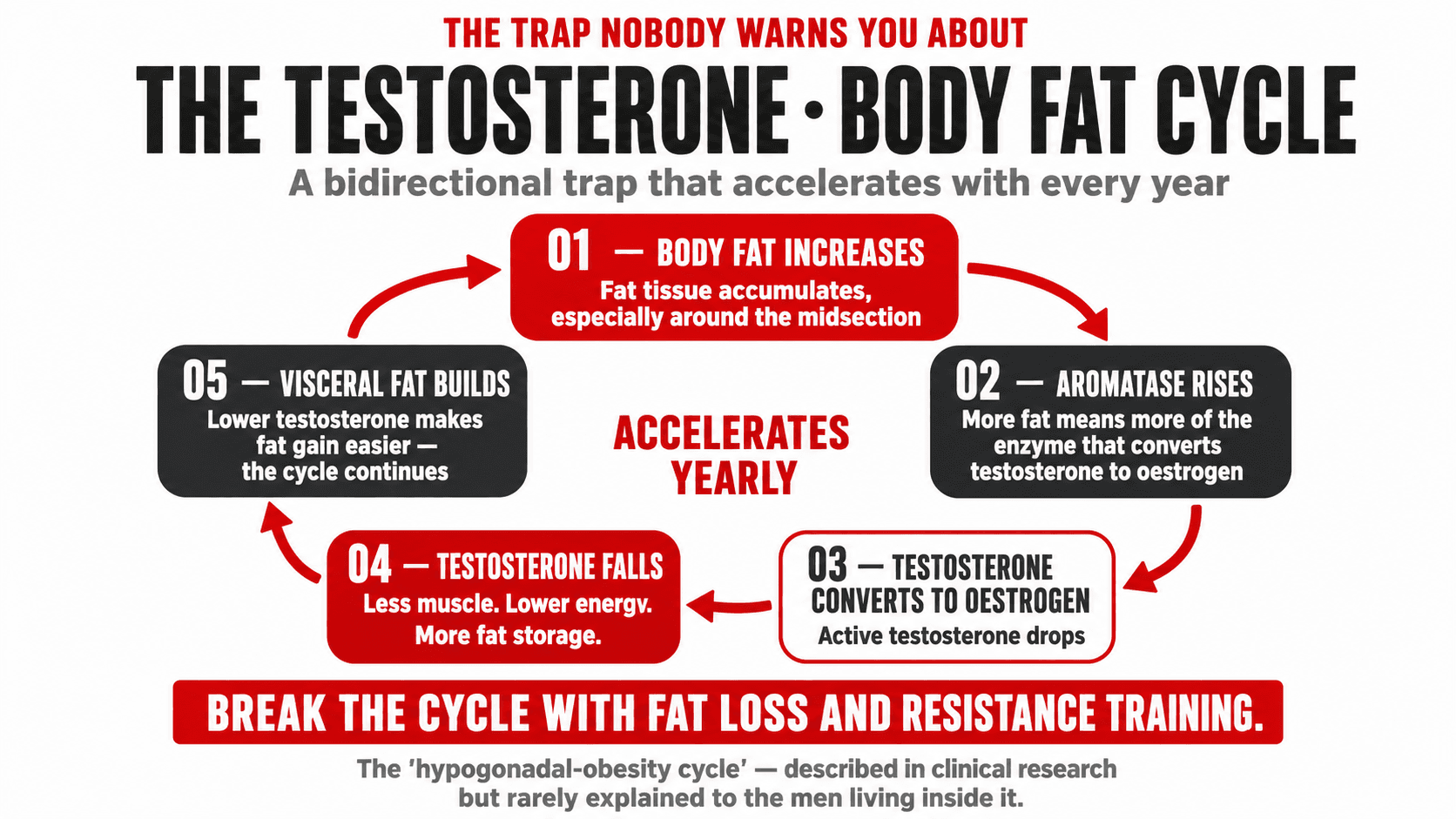
This is one of the most important concepts in men's health, and almost nobody talks about it properly. Your body fat and your testosterone exist in a bidirectional relationship. Each one affects the other. And when this relationship goes wrong, it creates a self-reinforcing cycle that pulls your health downward.
Here is how it works. Your fat tissue contains an enzyme called aromatase. Aromatase converts testosterone into oestradiol, a form of oestrogen. The more body fat you carry, the more aromatase you have, and the more of your testosterone gets converted into oestrogen (4). This means that as you gain body fat, your effective testosterone drops. At the same time, lower testosterone makes it easier to accumulate more body fat, particularly visceral fat around your organs (5). More fat means more aromatase, which means even lower testosterone, which means even more fat. The cycle accelerates.
Research has described this as the hypogonadal-obesity cycle, where increasing adiposity and declining testosterone feed into each other progressively (5). This is why I see so many men in their 40s and 50s who feel terrible but do not understand why. They have been gradually gaining body fat for years, their testosterone has been quietly dropping, their energy has been declining, their mood has been worsening, and they have been told it is just what happens when you get older. In many cases, it is not ageing. It is this cycle.
Top Tip
If you have been told your testosterone is low and you are also carrying excess body fat, reducing your body fat is the single most impactful thing you can do. In many cases, losing 10 to 15 percent of body weight through resistance training and nutrition can meaningfully improve testosterone levels without any medical intervention.
What Actually Influences Your Testosterone
This is where I want to separate what genuinely matters from what the supplement industry wants you to believe matters. Based on the evidence, here are the factors that have the biggest impact on your testosterone levels.
| Factor | How It Affects Testosterone | Evidence Strength | What To Do |
|---|---|---|---|
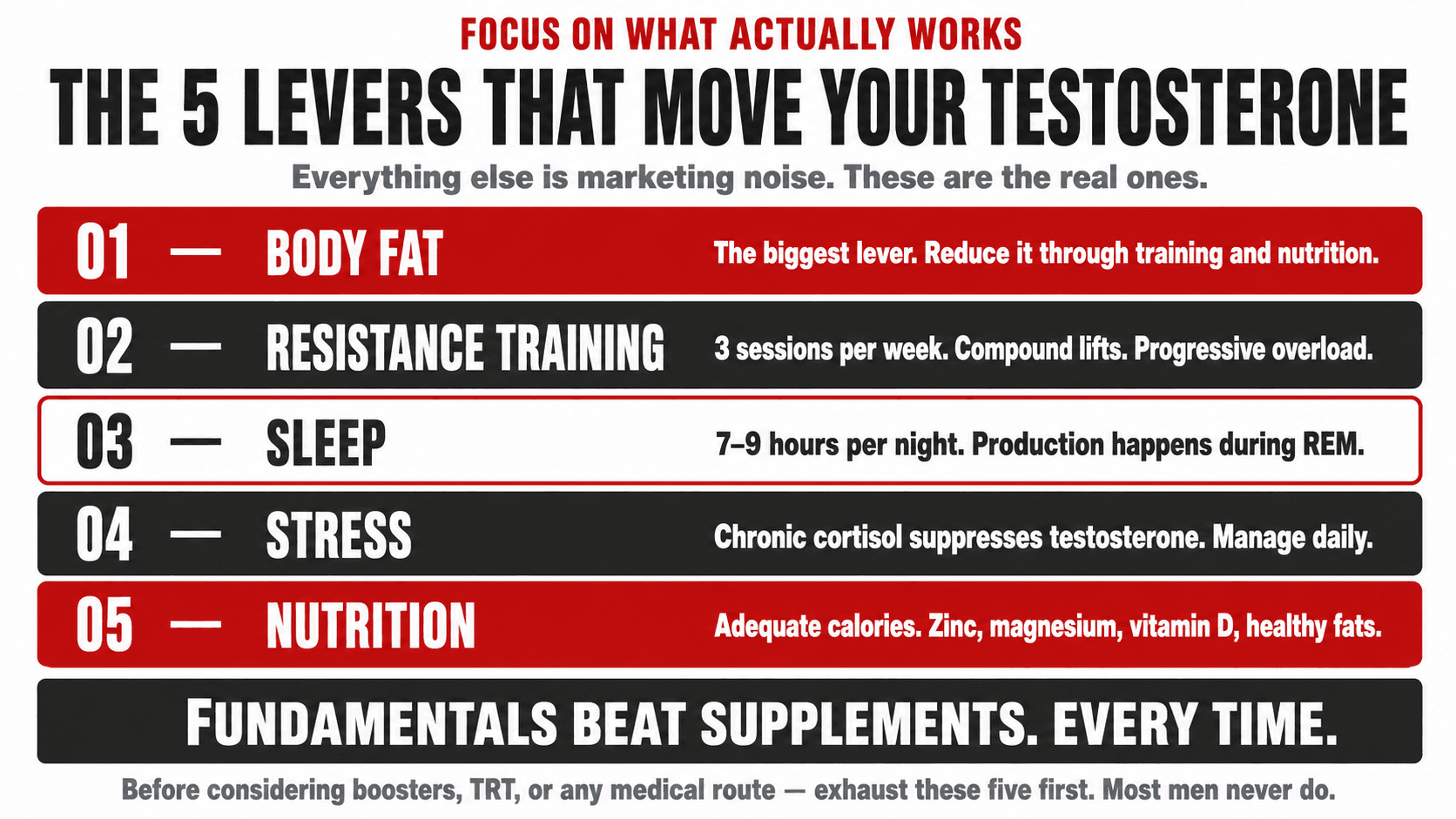
| Body Fat | More body fat = more aromatase = more testosterone converted to oestrogen. This is the single biggest modifiable factor (4)(5). | Very strong | Reduce body fat through resistance training and improved nutrition. |
| Resistance Training | Acutely raises testosterone after each session. More importantly, it builds muscle and reduces body fat, which supports healthier testosterone levels long-term (6)(7). | Strong | Train with weights 3x per week. Focus on compound movements. Progressive overload. |
| Sleep | One week of sleeping only 5 hours per night reduced testosterone by 10 to 15 percent in healthy young men (8). Testosterone production is closely tied to REM sleep. | Very strong | 7 to 9 hours every night. Consistent schedule. Cool, dark room. No caffeine after 2pm. |
| Stress / Cortisol | Chronic elevated cortisol suppresses the hypothalamic-pituitary-gonadal axis, reducing testosterone production (9). Testosterone and cortisol have an inverse relationship. | Strong | Manage workload. Walk daily. Prioritise recovery. Set boundaries. |
| Nutrition | Severe caloric restriction reduces testosterone. Zinc deficiency impairs testosterone synthesis. Vitamin D deficiency is associated with lower levels (10). Adequate fat intake is needed for hormone production. | Moderate to Strong | Eat enough calories. Do not crash diet. Get zinc, vitamin D, and magnesium from food or supplements. |
| Alcohol | Alcohol acutely suppresses testosterone production, increases cortisol, and with chronic use increases aromatase activity. Even moderate regular drinking has a cumulative effect (11). | Strong | Reduce or eliminate alcohol. Be honest about your intake. |
Body Fat: The Biggest Lever
I have already explained the testosterone-body fat cycle above, but I want to emphasise this point because it is the most important one in this entire article. Your body fat percentage has a bigger influence on your testosterone than any supplement, any superfood, or any ‘testosterone hack’ you will ever read about online. If your body fat is above 25 percent and your testosterone is low, reducing your body fat is the first intervention. Not TRT. Not a booster. Fat loss through resistance training and nutrition.
Resistance Training: The Signal Your Body Needs
Resistance training causes an acute spike in testosterone immediately after a session, particularly when you use large compound movements like squats, deadlifts, rows, and presses that recruit large amounts of muscle mass (6). This acute spike returns to baseline within about 30 minutes, but the downstream effects on muscle growth and body composition last much longer. A meta-analysis examining the effects of exercise on resting testosterone found that while short-term training does not always significantly raise basal testosterone levels on its own, the body composition improvements that result from consistent training (less fat, more muscle) create the conditions for healthier testosterone over time (7). In other words, resistance training may not directly ‘boost’ your resting testosterone in the way supplement adverts suggest, but it addresses the root causes of low testosterone more effectively than anything else.

Sleep: The Hormone Factory
Your body produces the majority of its daily testosterone during sleep, particularly during REM sleep cycles. A landmark study published in JAMA found that just one week of restricted sleep (five hours per night) reduced daytime testosterone levels by 10 to 15 percent in healthy young men (8). That is an enormous decline from just seven days. Most men I work with who are sleeping poorly have been doing so for months or years, not days. The cumulative hormonal impact is significant.
Stress and Cortisol: The Inverse Relationship
Cortisol and testosterone have a well-documented inverse relationship. When cortisol is chronically elevated through ongoing work stress, poor sleep, overtraining, or general life pressure, your body suppresses the hormonal axis that produces testosterone (9). Your body prioritises survival over reproduction. Chronic stress literally tells your endocrine system to stop investing in testosterone production. This is why I always address stress management with my clients. You cannot optimise testosterone while your cortisol is through the roof.
Nutrition: What Actually Matters
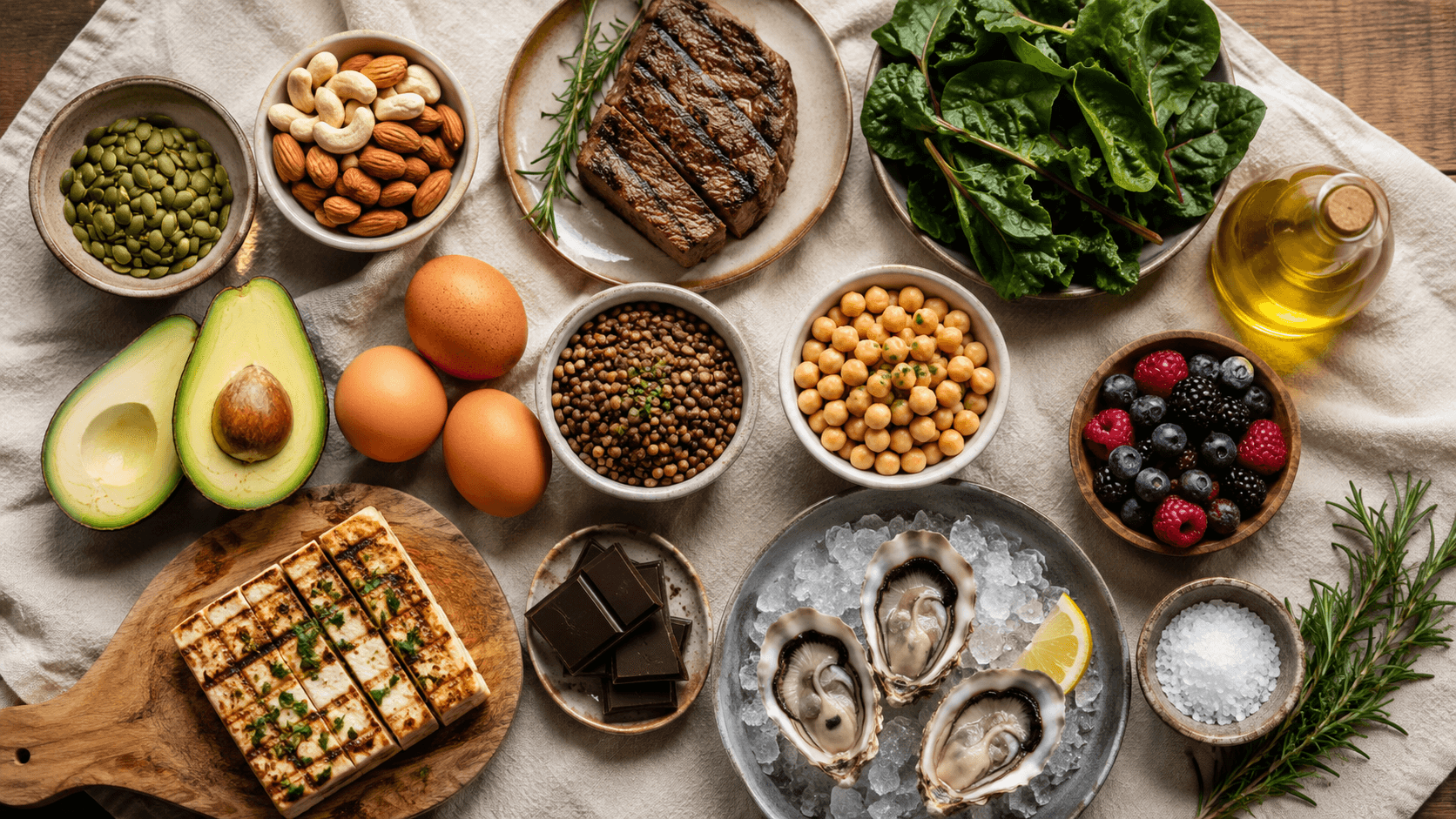
The supplement industry would love you to believe that there is a magic nutrient that will fix your testosterone. The reality is far more boring and far more effective. What matters is: eating enough calories (crash dieting suppresses testosterone), getting adequate zinc (found in red meat, shellfish, pumpkin seeds, lentils, chickpeas, and cashews), maintaining healthy vitamin D levels (supplementation is sensible for most men in the UK given limited sun exposure), and consuming enough dietary fat (your body needs fat to produce steroid hormones including testosterone). A balanced, whole-food diet with adequate protein provides all of this. You do not need a special testosterone food plan (10).
For vegetarian and vegan men, all of these nutrients are achievable through food. Zinc is found in pumpkin seeds, lentils, chickpeas, cashews, and fortified cereals. Magnesium is abundant in dark leafy greens, nuts, seeds, and whole grains. Vitamin D supplementation is recommended for everyone in the UK during autumn and winter regardless of diet. Healthy fats from avocados, nuts, olive oil, and seeds support hormone production.
Top Tip
There are only three micronutrients with meaningful evidence for testosterone support: zinc, vitamin D, and magnesium. If you eat a varied, whole-food diet, you are probably getting enough zinc and magnesium already. Vitamin D supplementation (1,000 to 2,000 IU per day) is worth taking during UK winters. Everything else marketed as a ‘testosterone booster’ has either weak or no evidence behind it.
What About Testosterone Boosters?
I am going to be direct about this because I think men deserve honesty rather than marketing. The vast majority of over-the-counter ‘testosterone booster’ supplements have either no evidence or extremely weak evidence supporting their claims. Products containing tribulus terrestris, fenugreek, D-aspartic acid, ashwagandha, and other ingredients are marketed aggressively to men who feel tired, unmotivated, or weak. The clinical evidence for meaningful, sustained increases in testosterone from any of these compounds is at best modest and at worst non-existent (12).
Some of these ingredients may have small effects on stress, sleep quality, or general wellbeing, which could indirectly influence how you feel. But none of them come close to the impact of reducing body fat, lifting weights, sleeping properly, managing stress, and eating well. If you have been spending money on testosterone boosters while still carrying excess body fat, sleeping poorly, and not training with resistance, you are trying to bail out a sinking boat with a teaspoon while ignoring the hole in the hull.
When to See Your GP: The Numbers You Need to Know
If you have addressed the lifestyle factors above and you are still experiencing symptoms of low testosterone, it is time to see your GP. I want to be clear: I am not a doctor, and I am not qualified to diagnose or treat hormonal conditions. What I can do is help you understand what to ask for and what the numbers mean so that you can have an informed conversation with your GP or an endocrinologist.
Normal total testosterone in men is generally considered to be between 8.6 and 29 nmol/L, though the exact reference ranges vary between laboratories. However, a man at 9 nmol/L will feel very different from a man at 25 nmol/L, even though both are technically ‘in range’. Context matters. Your symptoms, your age, your body composition, and your free testosterone (not just total) all need to be considered. If your GP dismisses your concerns because your total testosterone is ‘technically normal’, ask for a referral to an endocrinologist for a more thorough assessment.
Top Tip
Always get your testosterone tested in the morning before 10am. Testosterone levels peak in the early morning and decline throughout the day. An afternoon test can give a misleadingly low reading. Fast overnight and avoid heavy exercise the day before the test for the most accurate result.
A Brief Note on TRT (Testosterone Replacement Therapy)
I am not going to go into detail on TRT because I am not a doctor and it is not within my scope of practice to prescribe or recommend it. What I will say is this: TRT is a legitimate medical treatment for men who have genuinely low testosterone that has been confirmed by repeated blood tests and thorough clinical assessment by an endocrinologist. It is not a lifestyle choice. It is not a shortcut. And it is not something that should be initiated by an online clinic after a single blood test and a questionnaire.
If you have genuinely low testosterone after addressing all of the lifestyle factors I have discussed in this article, and your GP or endocrinologist recommends TRT, then it may be the right course of action. But TRT comes with ongoing monitoring requirements, potential side effects (including fertility implications), and a commitment to long-term treatment. It should always be a last resort after lifestyle factors have been optimised, not a first step.
How I Can Help
The reason I wrote this article is that I see too many men either ignoring their hormonal health entirely or being exploited by companies selling them products that do not work. The truth is in the middle. Testosterone matters. It genuinely affects how you feel, look, and perform. But the most powerful interventions are not in a bottle. They are in the gym, in the kitchen, in your bedroom at night, and in how you manage the demands of your life.
I help men optimise the factors that are within their control: body composition, resistance training, nutrition, sleep, and stress management. These are the biggest levers for healthy testosterone, and they are exactly what I focus on in every coaching programme I build. I work one-to-one online globally, with men of all dietary backgrounds. As a lifelong vegetarian, I understand how to get the full spectrum of testosterone-supporting nutrients from every type of diet.
If this article has resonated with you, or if you are concerned about your testosterone and want to take a structured, evidence-based approach to improving it, get in touch through trperformancecoaching.com. Stop guessing. Start with the things that actually work.
Work with Me
Get a personalised coaching plan built around your goals, your schedule, and your life.
Enquire NowReferences
- (1) Harman SM, et al. Longitudinal effects of aging on serum total and free testosterone levels in healthy men. Baltimore Longitudinal Study of Aging. Journal of Clinical Endocrinology and Metabolism. 2001;86(2):724-731.
- (2) Feldman HA, et al. Age trends in the level of serum testosterone and other hormones in middle-aged men: longitudinal results from the Massachusetts Male Aging Study. Journal of Clinical Endocrinology and Metabolism. 2002;87(2):589-598.
- (3) Bajaj SS, et al. Association between comorbidities and longitudinal changes in total testosterone among men from the Baltimore Longitudinal Study of Aging. Journal of Urology. 2023;210(1):152-160.
- (4) Cohen PG. Aromatase, adiposity, aging and disease. The hypogonadal-metabolic-atherogenic-disease and aging connection. Medical Hypotheses. 2001;56(6):702-708.
- (5) Cohen PG. The hypogonadal-obesity cycle: role of aromatase in modulating the testosterone-estradiol shunt. Medical Hypotheses. 1999;52(1):49-51.
- (6) Mangine GT, et al. Exercise-induced hormone elevations are related to muscle growth. Journal of Strength and Conditioning Research. 2017;31(1):45-53.
- (7) Riachy R, et al. Various factors may modulate the effect of exercise on testosterone levels in men. Journal of Functional Morphology and Kinesiology. 2020;5(4):81.
- (8) Leproult R, Van Cauter E. Effect of 1 week of sleep restriction on testosterone levels in young healthy men. JAMA. 2011;305(21):2173-2174.
- (9) Cumming DC, et al. Acute suppression of circulating testosterone levels by cortisol in men. Journal of Clinical Endocrinology and Metabolism. 1983;57(3):671-673.
- (10) Pilz S, et al. Effect of vitamin D supplementation on testosterone levels in men. Hormone and Metabolic Research. 2011;43(3):223-225.
- (11) Emanuele MA, Emanuele NV. Alcohol's effects on male reproduction. Alcohol Health and Research World. 1998;22(3):195-201.
- (12) Clemesha CG, et al. 'Testosterone boosting' supplements composition and claims are not supported by the academic literature. World Journal of Men's Health. 2020;38(1):115-122.