If I asked you what the most important factors for fat loss are, you would probably say diet and exercise. You would be right, but you would be incomplete. There is a third variable that influences every single aspect of your fat loss effort, from the hormones that regulate your hunger to the decisions you make about food, from how efficiently your body burns fat to how much muscle you preserve during a calorie deficit. That variable is sleep. And almost nobody is paying enough attention to it.
Sleep and fat loss are connected in ways that go far deeper than simply feeling tired. The research on this topic is not ambiguous. It is not emerging. It is established, replicated, and emphatic. Poor sleep does not just slow your fat loss down. It actively works against you by changing your hormones, your brain chemistry, your metabolism, your food choices, and your body composition. If you are doing everything right with your nutrition and training but sleeping five or six hours a night, you are undermining your own results in ways you probably do not even realise.
I see this constantly in my coaching practice. Clients come to me frustrated because they are eating in a deficit, training hard, hitting their protein targets, walking 10,000 steps a day, and yet progress has stalled or body composition is not changing the way it should. One of the very first questions I ask is about sleep. And more often than not, that is where the problem lives. Not in their macros. Not in their training programme. In the six hours of broken sleep they are getting because they are scrolling their phone until midnight and waking up to an alarm at 5:30am. This article is going to walk you through exactly what the science says about sleep and fat loss, why it matters so much, and what you can do about it starting tonight.

Poor Sleep Changes What Your Body Does With a Calorie Deficit
The single most important study on sleep and fat loss was published in the Annals of Internal Medicine in 2010 by Nedeltcheva and colleagues. It was a randomised crossover trial in which overweight adults followed the same calorie-restricted diet under two conditions: one with 8.5 hours of sleep opportunity per night and one with only 5.5 hours. The results were striking. Both groups lost roughly the same amount of total weight. But the composition of that weight loss was dramatically different. When sleeping 8.5 hours, participants lost predominantly fat. When sleeping only 5.5 hours, the proportion of weight lost as fat dropped by 55 percent and the loss of lean body mass increased by 60 percent (1). Same diet. Same calories. Completely different outcomes, determined entirely by how much they slept.
Think about what that means in practical terms. You could follow the perfect nutrition plan, hit your calories and protein exactly right, train with intelligence and consistency, and still lose mostly muscle instead of fat if your sleep is inadequate. You would step on the scale and see the number go down and think it was working. But under the surface, your body would be cannibalising its own muscle tissue while holding on to fat. That is the worst possible outcome for anyone trying to improve their body composition, and it is driven entirely by insufficient sleep.
How Sleep Duration Changes What You Lose During a Calorie Deficit
Adapted from Nedeltcheva et al., Annals of Internal Medicine, 2010 (1). Same calorie deficit in both conditions.
| 8.5 Hours Sleep | 5.5 Hours Sleep | |
|---|---|---|
| Fat Lost | 1.4 kg | 0.6 kg |
| Lean Mass Lost | 1.5 kg | 2.4 kg |
| Fat as % of Weight Lost | ~50% | ~20% |
| Hunger Levels | Manageable | Significantly Elevated |
| Metabolic Rate | Preserved | Reduced |
Sleep Deprivation Rewires Your Hunger Hormones
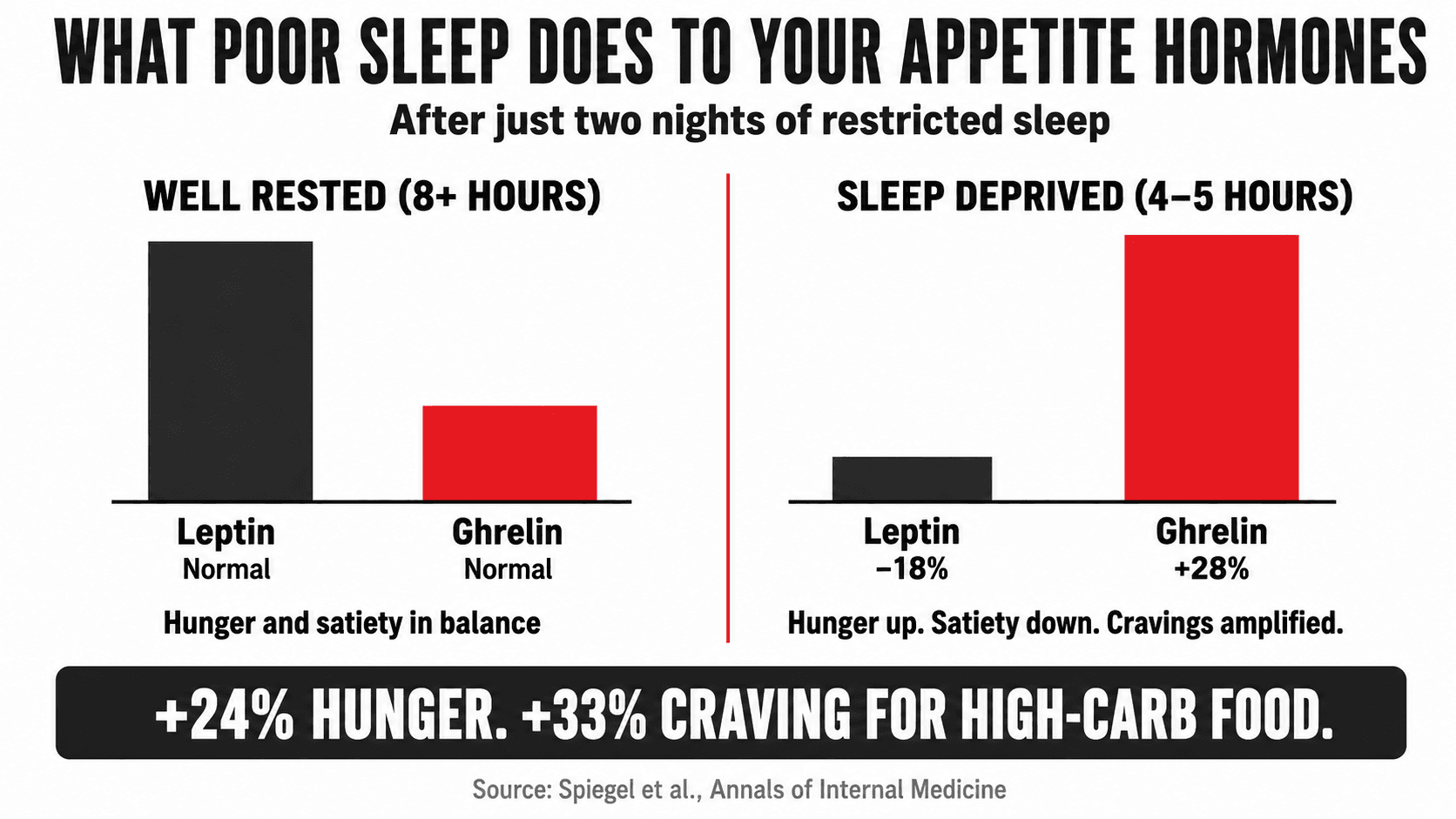
Your appetite is not purely a matter of willpower. It is regulated by a complex interplay of hormones, the two most important of which are leptin and ghrelin. Leptin is produced by your fat cells and signals satiety to your brain. When leptin is functioning properly, it tells you that you have had enough to eat. Ghrelin is produced in your stomach and does the opposite. It signals hunger. In a well-rested state, these two hormones work in balance. When you are sleep deprived, that balance is thrown off dramatically.
A landmark study by Spiegel and colleagues published in the Annals of Internal Medicine measured leptin and ghrelin levels in healthy young men after two nights of four hours sleep versus two nights of ten hours sleep, with calorie intake and physical activity controlled. After just two nights of short sleep, leptin levels dropped by 18 percent and ghrelin levels rose by 28 percent. Hunger ratings increased by 24 percent and appetite for calorie-dense, carbohydrate-heavy foods increased by 33 percent (2). A larger population study by Taheri and colleagues in the Wisconsin Sleep Cohort, involving over 1,000 participants, confirmed these findings, showing that habitually sleeping less than eight hours was associated with lower leptin, higher ghrelin, and higher BMI in a dose-dependent relationship (3).
This is not a minor inconvenience. This is your body actively fighting against your fat loss goals at a hormonal level. When leptin drops and ghrelin rises, you do not just feel a bit hungry. You feel ravenous. Your cravings intensify. Your ability to feel satisfied after a meal diminishes. And all of this is happening before you have made a single food choice. The deck is already stacked against you.
Your Brain Makes Worse Food Choices on Poor Sleep
Even if you could override the hormonal hunger signals through sheer discipline, sleep deprivation sabotages you at another level: your brain. A fascinating neuroimaging study published in Nature Communications by Greer, Goldstein, and Walker used functional MRI to scan the brains of healthy adults after a normal night of sleep and after a night of total sleep deprivation. Participants were shown images of various foods and asked to rate their desire for each one. The results were remarkable. After sleep deprivation, activity in the frontal cortex, the part of the brain responsible for complex decision making, impulse control, and evaluating consequences, was significantly reduced. At the same time, activity in the amygdala, a more primitive brain region associated with desire and reward, was amplified. The net effect was a marked increase in desire for high-calorie, weight-gain-promoting foods (4).
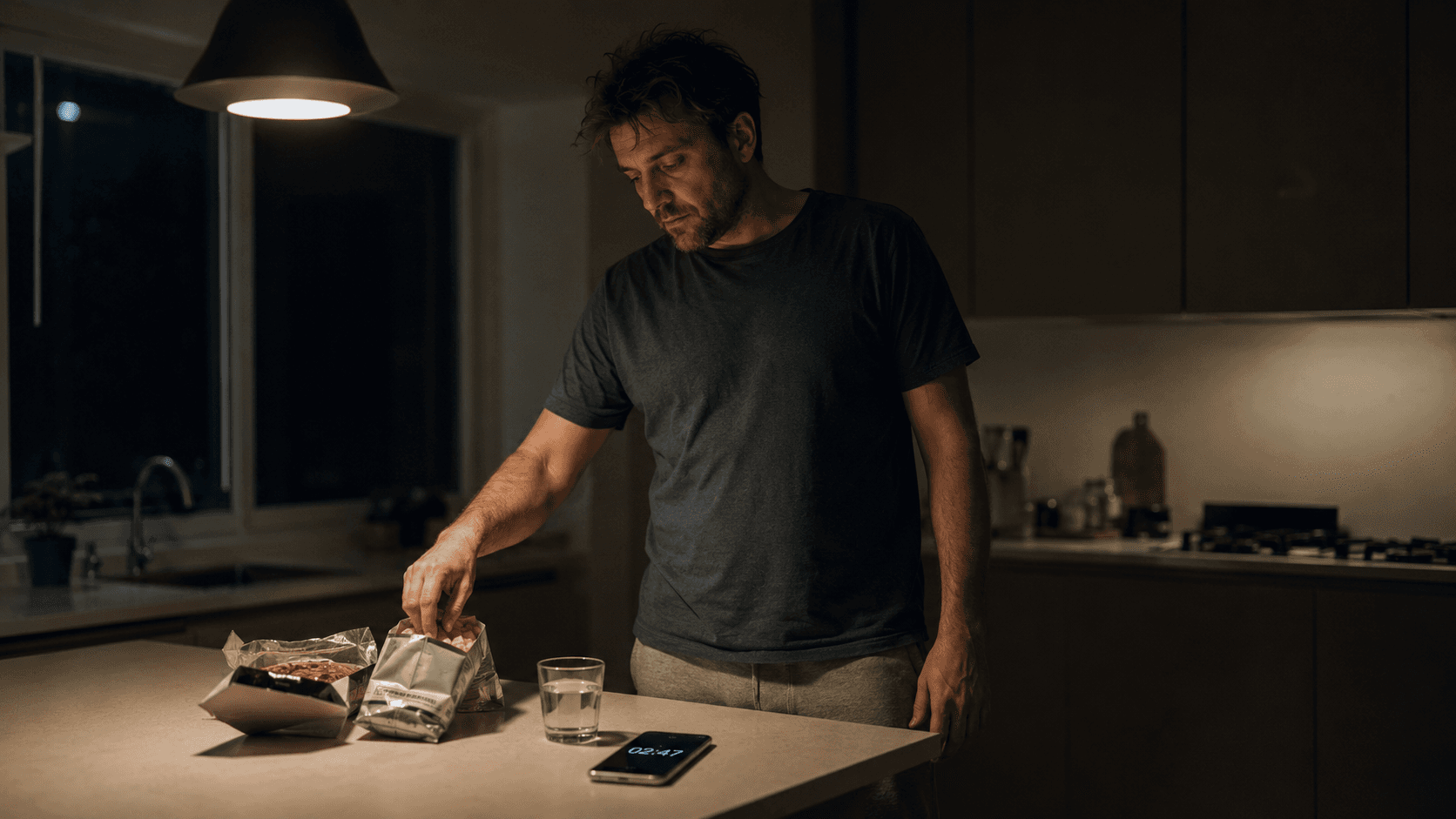
This is why sleep-deprived people reach for biscuits, crisps, chocolate, and takeaways instead of the balanced meals they had planned. It is not a character flaw. It is a neurological response. The rational, planning part of your brain is suppressed, and the impulsive, reward-seeking part takes over. If you have ever had a terrible night of sleep and then found yourself standing in the kitchen at 10pm eating things you would never normally eat, now you know why. Your prefrontal cortex was not functioning properly, and your amygdala was running the show.
What Happens in Your Body When You Sleep Less Than Six Hours
Summary of key research findings on sleep restriction and fat loss outcomes.
| System Affected | What Changes | Impact on Fat Loss |
|---|---|---|
| Hunger Hormones | Leptin drops 18%, ghrelin rises 28% (2) | Increased hunger, stronger cravings, harder to feel full |
| Brain Function | Frontal cortex suppressed, amygdala amplified (4) | Worse food decisions, preference for high-calorie foods |
| Insulin Sensitivity | Reduced by 20% after one week (5) | Poorer glucose handling, increased fat storage tendency |
| Cortisol | Evening cortisol rises ~50% (5) | Promotes visceral fat storage, increases muscle breakdown |
| Body Composition | 55% less fat lost, 60% more muscle lost (1) | Lose muscle instead of fat during a deficit |
| Daily Activity | NEAT and spontaneous movement decline (7) | Lower total energy expenditure, smaller calorie deficit |
Sleep and Insulin Sensitivity: A Direct Path to Fat Storage
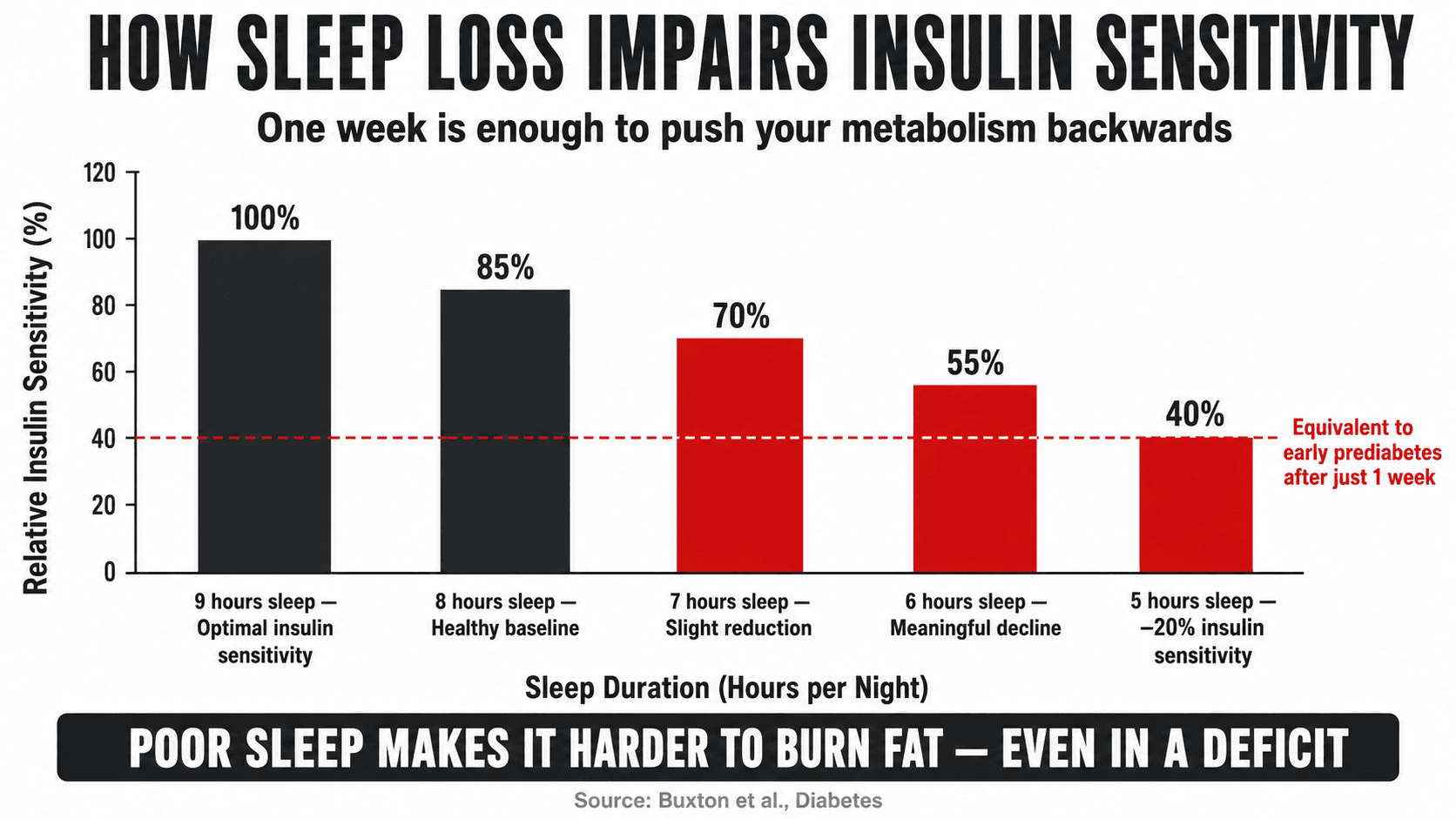
The metabolic consequences of poor sleep extend beyond appetite regulation. Insulin sensitivity, the ability of your cells to respond appropriately to insulin and clear glucose from your bloodstream, is profoundly affected by sleep duration. Buxton and colleagues published a controlled trial in the journal Diabetes in which healthy men had their sleep restricted to five hours per night for just one week. The result was a 20 percent reduction in insulin sensitivity as measured by intravenous glucose tolerance testing, accompanied by impaired glucose tolerance and a 51 percent increase in evening cortisol levels (5).
For anyone trying to lose fat, insulin sensitivity matters enormously. When your cells become less responsive to insulin, your body has to produce more of it to manage the same amount of glucose. Elevated insulin levels promote fat storage and inhibit fat oxidation. They make it harder for your body to access stored body fat for fuel, even when you are in a calorie deficit. For individuals who already have some degree of insulin resistance, which includes a large proportion of the overweight population, the metabolic impairment caused by chronic sleep restriction can be the difference between steady fat loss and a frustrating plateau. This is particularly relevant for my clients with Type 2 diabetes, PCOS, or significant visceral fat, where insulin sensitivity is already compromised.
Poor Sleep Reduces Your Daily Energy Expenditure
Sleep deprivation does not only increase the number of calories you consume. It also decreases the number of calories you burn. Research published in the American Journal of Clinical Nutrition by Schmid and colleagues found that short-term sleep loss significantly decreased physical activity under free-living conditions (6). When you are tired, you move less. You take fewer steps. You fidget less. You choose the lift instead of the stairs. You sit down instead of standing. All of these small reductions in non-exercise activity thermogenesis, what we call NEAT, add up to a significant decrease in your total daily energy expenditure.
I have seen this play out repeatedly with clients who wear activity trackers. When their sleep drops below six hours, their step count reliably falls by 2,000 to 4,000 steps per day, even without any conscious change in their behaviour. That reduction in NEAT can easily represent 150 to 300 fewer calories burned per day. Over a week, that is the equivalent of wiping out an entire day of your calorie deficit. Combined with the increased calorie intake driven by hormonal changes and impaired food choices, poor sleep creates a double hit: you eat more and you burn less. The calorie deficit you thought you had can disappear entirely.
The Calorie Surplus You Did Not Know You Were Eating
One of the most insidious effects of sleep deprivation on fat loss is the increase in total calorie intake, particularly from snacking. Nedeltcheva and colleagues published a separate study in the American Journal of Clinical Nutrition showing that sleep-restricted individuals consumed an average of 559 additional calories per day compared to when they were well-rested, with the majority of those extra calories coming from snacks consumed after 7pm (7). That is not a subtle change. That is enough to completely eliminate a moderate calorie deficit and even push you into a surplus.
The extra calories tend to come from the worst possible sources: highly palatable, calorie-dense, carbohydrate-and-fat combinations like crisps, biscuits, chocolate, ice cream, and convenience foods. The hormonal and neurological changes I described earlier create a perfect storm for overconsumption. Your hunger signals are elevated. Your satiety signals are suppressed. Your brain is wired to seek out rewarding, energy-dense foods. And you have extra waking hours in which to eat them. This is why I tell every client that improving their sleep is not just a recovery strategy. It is a nutrition strategy.
The Population Evidence: Short Sleep Duration and Obesity Risk
The laboratory findings are consistent with what we see at a population level. A comprehensive meta-analysis by Cappuccio and colleagues, published in the journal Sleep, pooled data from 45 studies involving over 634,000 participants worldwide. The analysis found that short sleep duration was associated with a 55 percent increased risk of obesity in adults and an 89 percent increased risk in children (8). For every hour reduction in sleep below eight hours, BMI increased by approximately 0.35 units. This was consistent across age groups, genders, and geographic regions.
These are not small effect sizes. An 89 percent increased risk of obesity in children who sleep less is an enormous public health finding. And while epidemiological data cannot prove causation on its own, when combined with the controlled laboratory studies showing direct mechanistic pathways through hormones, brain activity, insulin sensitivity, energy expenditure, and food intake, the causal picture becomes very clear. Chronic short sleep is not just associated with obesity. It actively promotes it through multiple converging biological pathways.
How Much Sleep Do You Actually Need for Optimal Fat Loss?
Based on the totality of the evidence, I recommend a minimum of seven hours and ideally seven to nine hours of actual sleep per night for anyone pursuing a fat loss goal. Note that sleep opportunity and actual sleep are different things. If you get into bed at 11pm and set your alarm for 6am, that is seven hours of opportunity. But by the time you account for the time it takes to fall asleep and any nighttime waking, you are probably getting six to six and a half hours of actual sleep. For most people, that means you need to be in bed with the lights off for at least eight hours to reliably get seven hours of sleep.
I know this is not what many people want to hear, especially busy professionals and parents who feel like they simply do not have the time. But the reality is that cutting your sleep to fit in early morning training sessions, late-night work, or extra screen time is actively working against the very goals you are sacrificing sleep to pursue. An hour of sleep is worth more to your fat loss results than an extra hour on the treadmill or an extra hour of meal prep. This is not an opinion. It is what the evidence consistently shows.

Practical Sleep Strategies That Support Fat Loss
Knowing that sleep matters is one thing. Actually improving it is another. Here are the evidence-based strategies I implement with my clients to optimise their sleep quality and duration as a direct fat loss intervention.
Consistency is the foundation. Your circadian rhythm, the internal clock that regulates your sleep-wake cycle, thrives on regularity. Going to bed and waking up at roughly the same time every day, including weekends, is the single most impactful change most people can make. A study published in the journal Sleep found that irregular sleep patterns were independently associated with higher body fat and metabolic dysfunction, even when total sleep duration was adequate (9). Your body needs rhythm. Give it one.
Light exposure management is critical. Bright light, particularly blue light from screens, suppresses melatonin production and delays sleep onset. I advise clients to dim the lights in their home two hours before bed, avoid screens for at least 60 minutes before sleep, and if screen use is unavoidable, use blue-light-blocking settings or glasses. Conversely, getting bright natural light exposure in the morning, ideally within the first hour of waking, helps anchor your circadian rhythm and improves both sleep onset and sleep quality.
Nutrition timing plays a role. Going to bed either very hungry or after a very large meal can impair sleep quality. For clients who train in the evening, I typically schedule their dinner to finish at least two hours before bed, with a moderate carbohydrate content. Carbohydrates can actually support sleep quality by increasing tryptophan availability, which is a precursor to serotonin and melatonin. A small evening snack containing complex carbohydrates and some protein, such as oats with plant-based milk, Greek yoghurt with berries, or a small portion of rice with tofu or tempeh, can support both sleep and recovery without compromising the calorie deficit.
Caffeine management is non-negotiable. Caffeine has a half-life of approximately five to six hours, meaning that a coffee at 3pm still has half its caffeine circulating in your system at 9pm. For anyone with sleep difficulties, I recommend no caffeine after midday, and for those who are particularly sensitive, no caffeine after 10am. This includes pre-workout supplements, many of which contain 200 to 400 milligrams of caffeine.
The bedroom environment matters more than most people think. A dark, cool room between 16 and 19 degrees Celsius is optimal for sleep. Blackout curtains or an eye mask, minimal noise or a consistent white noise source, and a comfortable mattress and pillow all contribute to sleep quality. These are not luxuries. They are basic requirements for the physiological conditions that support deep, restorative sleep.
Top Tips to Optimise Sleep for Fat Loss
Aim for Seven to Nine Hours of Actual Sleep Every Night. Not seven hours in bed. Seven hours of actual sleep. For most people that means eight or more hours of sleep opportunity. Track your sleep for a week to find out what you are actually getting. Use a basic tracker or simply note when you fall asleep and when you wake up. You cannot improve what you do not measure.
Fix Your Sleep Schedule Before You Fix Your Training Schedule. If you are sleeping less than seven hours to fit in a 5am gym session, you are likely doing yourself more harm than good. Train at a time that does not require you to sacrifice sleep. A well-rested training session at 7am or 6pm will always produce better results than a sleep-deprived session at 5am.
Cut Caffeine After Midday. This is one of the simplest and most effective changes you can make. If your afternoon coffee or pre-workout is affecting your ability to fall asleep, it is directly interfering with your fat loss. Switch to decaffeinated options after lunch.
Create a Wind-Down Routine of at Least 60 Minutes Before Bed. Put your phone in another room. Dim the lights. Read, stretch, or do something calming. The transition from a stimulated, screen-lit state to sleep should be gradual, not instant. Your brain needs time to shift from wakefulness to sleep readiness.
Keep Your Bedroom Cool, Dark, and Quiet. Invest in blackout curtains. Set your thermostat between 16 and 19 degrees. Remove electronics from the bedroom. These environmental changes are free or low-cost and they make a meaningful difference to sleep quality.
Do Not Use Alcohol as a Sleep Aid. Alcohol may help you fall asleep faster, but it fragments your sleep architecture, reduces REM sleep, and impairs overnight recovery. If fat loss is your goal, alcohol before bed is working against you on multiple fronts.
Use Morning Light to Set Your Circadian Rhythm. Get outside within the first hour of waking, even for just 10 to 15 minutes. Bright natural light in the morning anchors your body clock and makes it significantly easier to fall asleep at the right time that evening.
If You Are a Shift Worker, Prioritise Sleep Hygiene Even More Aggressively. Shift work presents unique challenges for sleep and body composition. Blackout curtains become essential, not optional. Meal timing should be structured around your actual wake and sleep times, not conventional mealtimes. A personalised coaching approach can help you navigate these complexities.
The Bottom Line
Sleep is not a luxury. It is not something you earn after everything else is done. It is a fundamental pillar of fat loss that is at least as important as your nutrition and your training. The evidence is unambiguous: poor sleep increases hunger, impairs food choices, reduces insulin sensitivity, elevates cortisol, decreases daily energy expenditure, promotes muscle loss, and shifts body composition away from fat loss and towards lean mass loss. No supplement, no workout programme, and no diet strategy can overcome the damage caused by chronic sleep deprivation.
I have worked with clients who had been stuck at a plateau for months, doing everything right with their food and training, and the breakthrough came not from changing their macros or adding more cardio, but from getting an extra 90 minutes of sleep per night. It sounds too simple to be true. But the physiology does not care whether it sounds simple. It cares whether you are giving your body the conditions it needs to lose fat efficiently and preserve muscle. And one of the most important of those conditions is adequate, consistent, high-quality sleep.
If you are serious about transforming your body composition, whether that means losing fat, building muscle, improving metabolic health, or managing a condition like Type 2 diabetes, PCOS, or hypertension, sleep has to be part of your strategy. It is not optional. It is foundational.
If you want a coaching approach that addresses every variable that affects your results, not just diet and training but sleep, stress, lifestyle, and long-term sustainability, get in touch through trperformancecoaching.com. I work one-to-one with clients online globally, across all dietary backgrounds including vegetarian, vegan, and plant-based. No quick fixes. No gimmicks. Just evidence, accountability, and results.
Work with Me
Get a personalised coaching plan built around your goals, your schedule, and your life.
Enquire NowReferences
- Nedeltcheva AV, Kilkus JM, Imperial J, Schoeller DA, Penev PD. Insufficient sleep undermines dietary efforts to reduce adiposity. Annals of Internal Medicine. 2010; 153(7): 435-441.
- Spiegel K, Tasali E, Penev P, Van Cauter E. Brief communication: sleep curtailment in healthy young men is associated with decreased leptin levels, elevated ghrelin levels, and increased hunger and appetite. Annals of Internal Medicine. 2004; 141(11): 846-850.
- Taheri S, Lin L, Austin D, Young T, Mignot E. Short sleep duration is associated with reduced leptin, elevated ghrelin, and increased body mass index. PLoS Medicine. 2004; 1(3): e62.
- Greer SM, Goldstein AN, Walker MP. The impact of sleep deprivation on food desire in the human brain. Nature Communications. 2013; 4: 2259.
- Buxton OM, Pavlova M, Reid EW, Wang W, Simonson DC, Adler GK. Sleep restriction for 1 week reduces insulin sensitivity in healthy men. Diabetes. 2010; 59(9): 2126-2133.
- Schmid SM, Hallschmid M, Jauch-Chara K, Wilms B, Benedict C, Lehnert H, et al. Short-term sleep loss decreases physical activity under free-living conditions but does not increase food intake under time-deprived laboratory conditions in healthy men. American Journal of Clinical Nutrition. 2009; 90(6): 1476-1482.
- Nedeltcheva AV, Kilkus JM, Imperial J, Kasza K, Schoeller DA, Penev PD. Sleep curtailment is accompanied by increased intake of calories from snacks. American Journal of Clinical Nutrition. 2009; 89(1): 126-133.
- Cappuccio FP, Taggart FM, Kandala NB, Currie A, Peile E, Stranges S, Miller MA. Meta-analysis of short sleep duration and obesity in children and adults. Sleep. 2008; 31(5): 619-626.
- Huang T, Redline S. Cross-sectional and prospective associations of actigraphy-assessed sleep regularity with metabolic abnormalities: the Multi-Ethnic Study of Atherosclerosis. Diabetes Care. 2019; 42(8): 1422-1429.