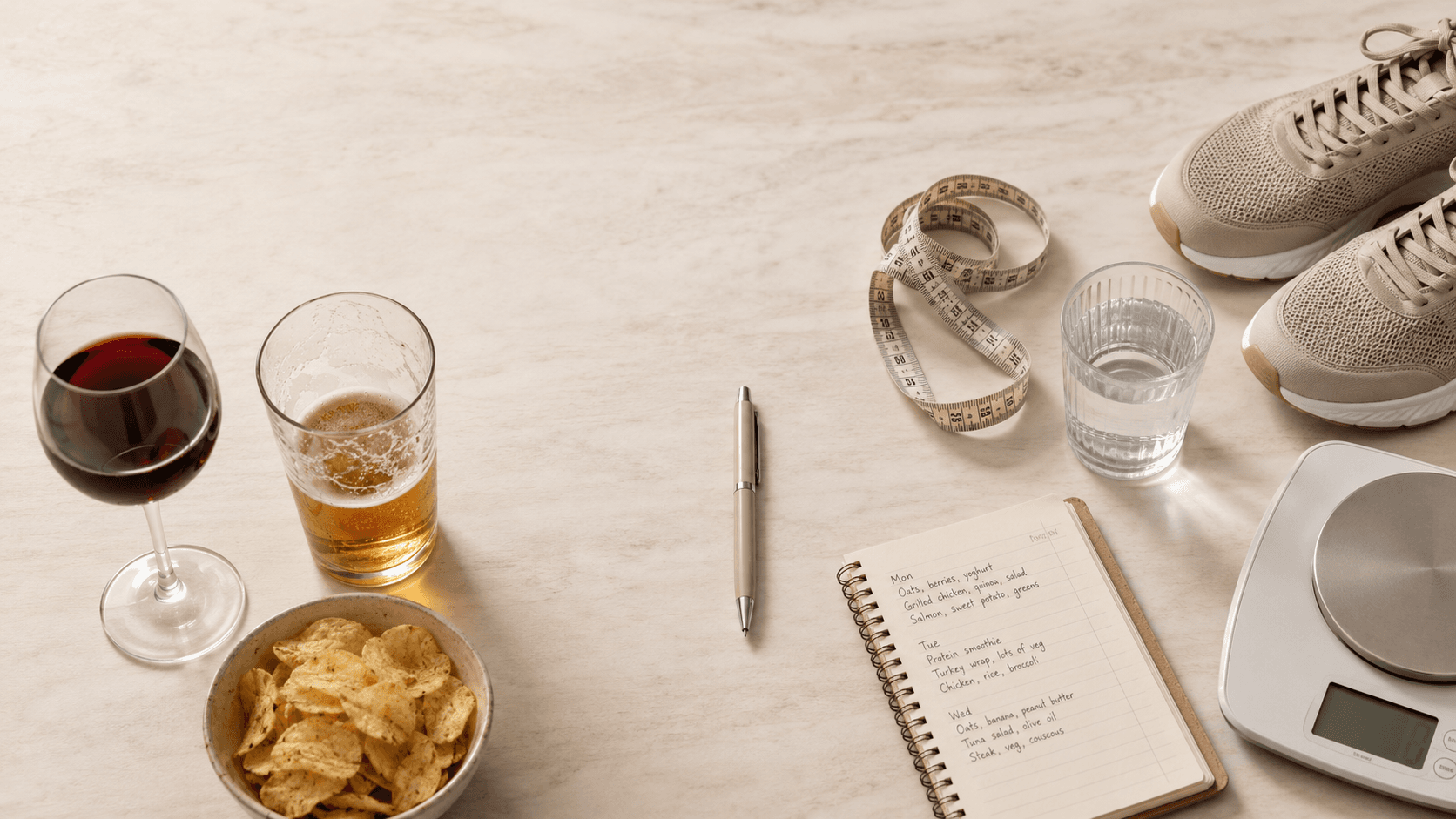
Alcohol and fat loss is a conversation that nobody seems to want to have honestly. On one side you have the fitness industry telling you that a single drink will destroy your gains and ruin your metabolism. On the other side you have the wellness crowd reassuring you that red wine is practically a health food and that moderate drinking is part of a balanced lifestyle. Neither position is accurate, and both leave people confused about what alcohol actually does to their body composition and whether they can still drink while making progress.
I am not anti-alcohol. I am not here to lecture anyone about their lifestyle choices. What I am here to do is give you the full, evidence-based picture of what happens in your body when you drink, why it matters so much for fat loss specifically, and how to make informed decisions that allow you to have a social life without completely undermining your results. Because the reality is that alcohol affects fat loss through at least five distinct biological mechanisms, most of which have nothing to do with the calorie content of the drink itself. Understanding those mechanisms is the difference between someone who can navigate alcohol intelligently during a fat loss phase and someone who unknowingly sabotages weeks of hard work every Friday and Saturday night.
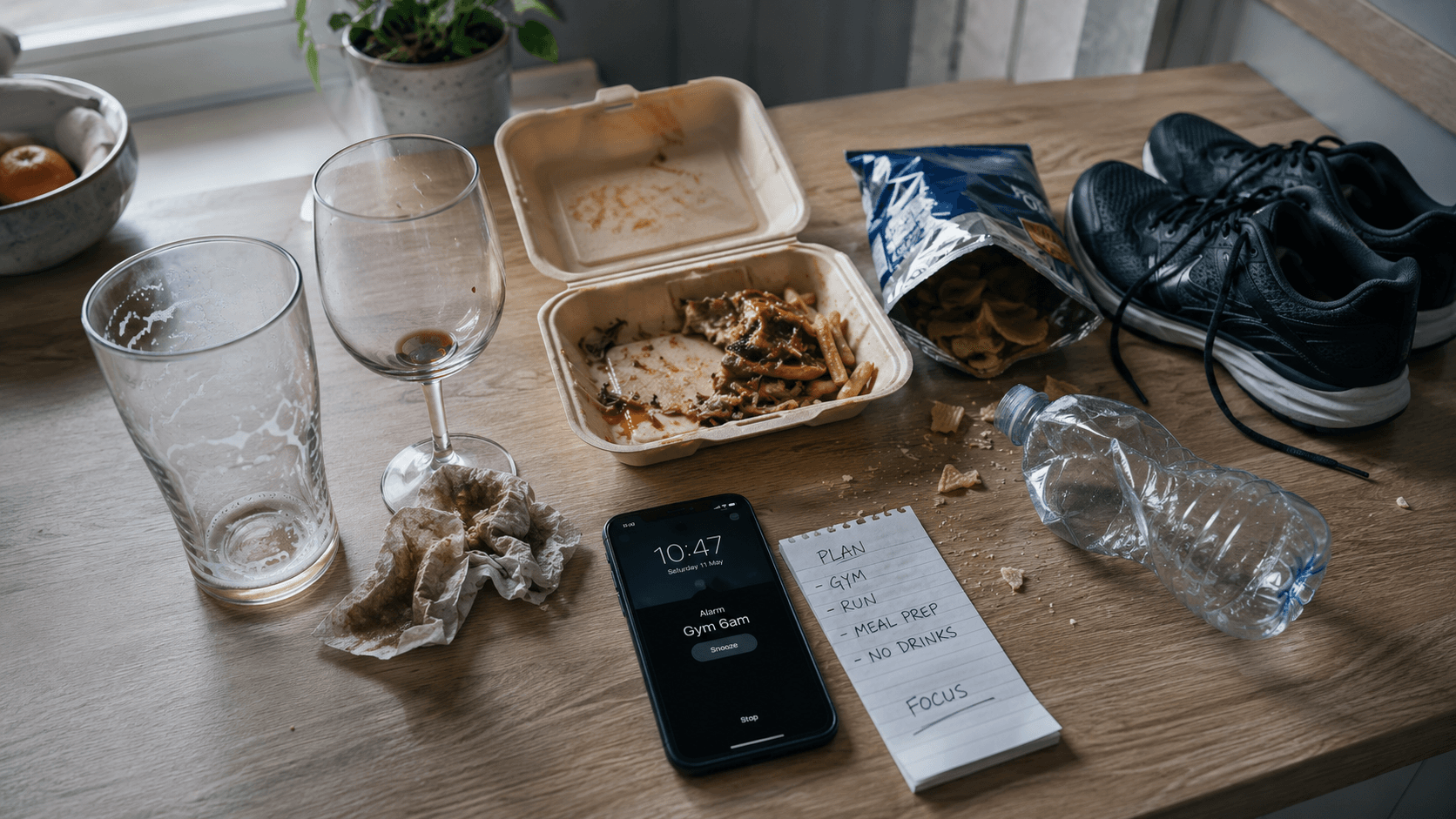
I see this play out constantly in my coaching practice. A client will be absolutely dialled in Monday through Thursday. Nutrition on point. Training consistent. Steps hit. Sleep solid. Then Friday arrives and two or three drinks turn into five or six, a takeaway gets ordered, Saturday morning training gets skipped, and Sunday becomes a write-off of poor food choices driven by a hangover. By Monday they are right back where they started. Two steps forward, two steps back, week after week. And many of them genuinely do not understand why their results have plateaued, because they are only counting the calories in the drinks themselves. The real damage goes far deeper than that.
Alcohol Is Not a Normal Calorie Source
The first thing to understand about alcohol and fat loss is that ethanol is metabolically unique. It does not behave like carbohydrate, fat, or protein. It provides 7.1 calories per gram, placing it between carbohydrate at 4 calories per gram and fat at 9 calories per gram. But unlike those macronutrients, alcohol has no nutritional value whatsoever. There is no biological requirement for it. Your body cannot store it. And because ethanol is essentially a toxin, your liver treats its metabolism as an urgent priority, pushing everything else to the back of the queue.
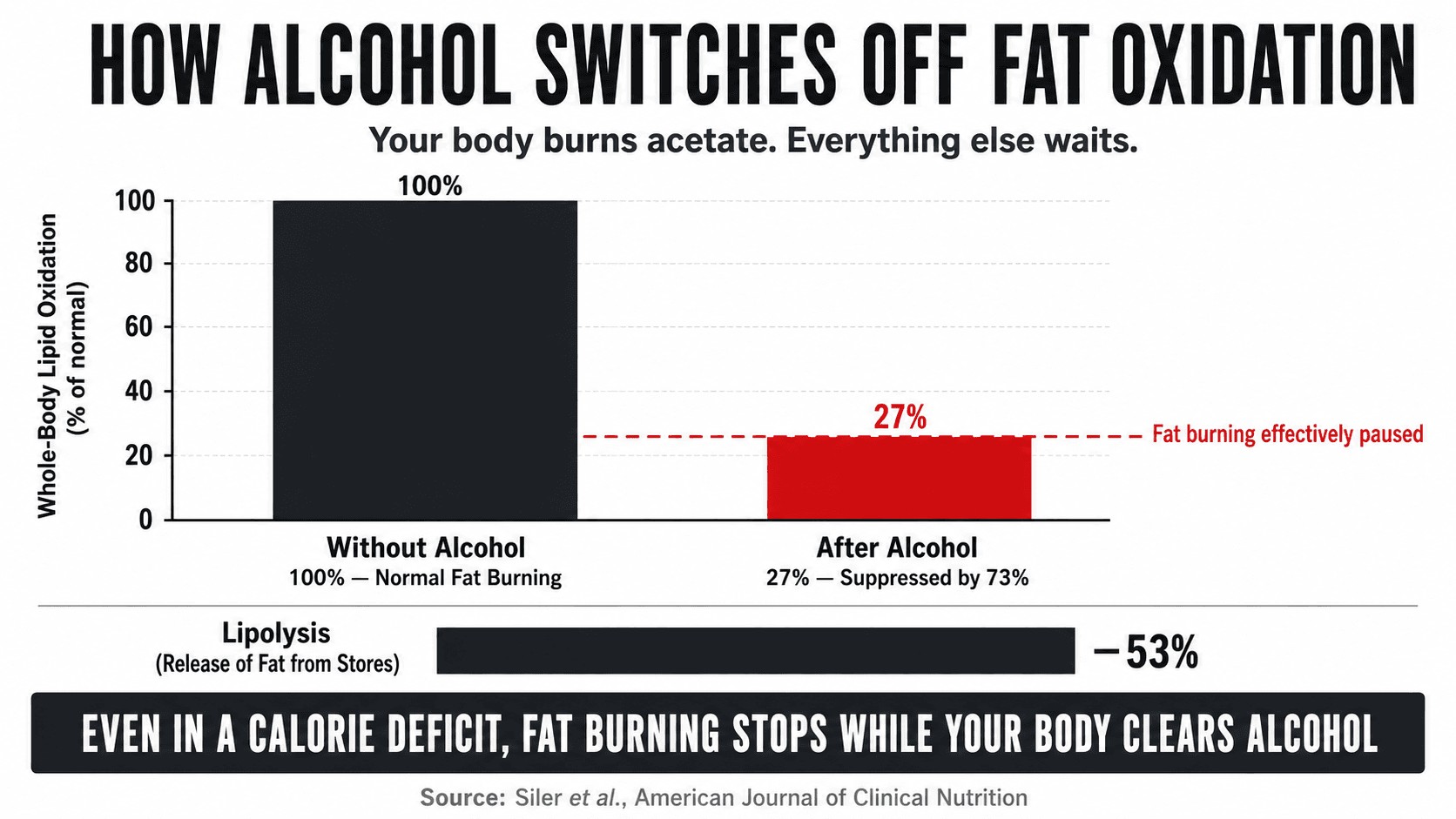
When you consume alcohol, your liver converts it first to acetaldehyde and then to acetate through the alcohol dehydrogenase pathway. This acetate floods your bloodstream and becomes the preferred fuel source for your entire body. As long as acetate is available, your body has no reason to burn anything else. A study published in the American Journal of Clinical Nutrition by Siler and colleagues used advanced isotope labelling techniques to quantify exactly what happens after alcohol consumption and found that whole-body lipid oxidation, the process of burning fat for fuel, was suppressed by 73 percent. Lipolysis, the release of fatty acids from your fat stores, was simultaneously suppressed by 53 percent (1). That means your body effectively stops burning fat for hours after you drink, regardless of whether you are in a calorie deficit.
What Happens When You Drink: The Metabolic Queue
| Priority | What Your Body Does | What This Means for Fat Loss |
|---|---|---|
| 1st | Metabolises alcohol to acetaldehyde, then acetate. This is treated as an emergency. | All other fuel burning is paused until alcohol is cleared. |
| 2nd | Burns acetate as the primary fuel across all tissues. | Fat oxidation drops by up to 73%. Your body stops accessing stored fat (1). |
| 3rd | Protein and carbohydrate metabolism continue but are deprioritised. | Muscle recovery slows. Glycogen replenishment is impaired. |
| Last | Fat metabolism resumes only after all alcohol-derived acetate is cleared. | Any dietary fat consumed alongside alcohol is far more likely to be stored. |
Based on Siler et al., American Journal of Clinical Nutrition, 1999 (1) and Suter et al., New England Journal of Medicine, 1992 (2).
Alcohol Promotes Fat Storage Even in a Calorie Deficit
The suppression of fat oxidation is only part of the story. A landmark study published in the New England Journal of Medicine by Suter and colleagues examined what happens when alcohol is added to the daily diet of healthy men. They found that both the addition of alcohol on top of normal food intake and the isocaloric substitution of alcohol for other macronutrients resulted in significantly reduced fat oxidation over 24 hours. When alcohol was added, fat oxidation dropped by 36 percent. When it replaced other calories, fat oxidation still dropped by 31 percent (2). The researchers concluded that ethanol consumption in excess of normal energy needs favours fat storage.
This is the finding that most people miss. Even if you account for the calories in your drinks by eating less food, the metabolic shift caused by alcohol still suppresses fat burning. You are not just adding empty calories. You are fundamentally changing the metabolic environment in a way that favours fat storage and opposes fat loss. The food you eat alongside alcohol, particularly the high-fat foods that people tend to gravitate towards when drinking, is far more likely to end up in your fat cells because your body is too busy processing acetate to deal with dietary fat in the normal way.
The Calorie Problem Is Bigger Than You Think
Beyond the metabolic effects, there is the straightforward calorie issue. Alcohol is calorically dense, and most people dramatically underestimate how much they are consuming. A standard glass of wine (175ml) contains approximately 130 calories. A pint of lager contains around 180 to 230 calories depending on the brand. A double gin and tonic sits at about 150 calories. A cocktail like a margarita or pina colada can easily contain 300 to 500 calories per serving. Three or four drinks on a Friday night can represent 600 to 1,000 additional calories, which is enough to wipe out an entire week of carefully maintained calorie deficit.
Calorie Content of Common Alcoholic Drinks
| Drink | Typical Serving | Approximate Calories |
|---|---|---|
| Pint of Lager (4-5%) | 568ml | 180 to 230 kcal |
| Glass of Red Wine | 175ml | 130 kcal |
| Glass of White Wine | 175ml | 125 kcal |
| Double Gin and Tonic | 50ml gin + tonic | 150 kcal |
| Vodka Soda | 50ml vodka + soda | 100 kcal |
| Margarita / Cocktail | Standard serve | 300 to 500 kcal |
| Pint of IPA / Craft Beer | 568ml | 250 to 350 kcal |
| Typical Night Out (4 to 5 drinks) | Mixed | 600 to 1,500+ kcal |
These figures do not include the food consumed alongside drinking, which typically adds 500 to 1,000+ additional calories.
But the calorie issue extends beyond the drinks themselves. A study published in the American Journal of Clinical Nutrition by Nedeltcheva and colleagues found that when participants had their sleep restricted, they consumed an average of 559 additional calories per day, predominantly from late-night snacking (3). Alcohol produces a remarkably similar behavioural pattern. When people drink, their inhibitions drop, their appetite increases, and their food choices deteriorate. The kebab on the way home, the late-night pizza order, the Sunday morning fry-up to cure the hangover. These secondary calories often dwarf the calories in the drinks themselves. In my experience coaching clients, the real calorie damage from a night of drinking is typically two to three times the calorie content of the alcohol alone.
Alcohol Disrupts Hormones That Drive Fat Loss and Muscle Retention
The hormonal impact of alcohol consumption is significant and directly relevant to body composition. A review published in Nutrition and Metabolism by Steiner and Lang examined the evidence on alcohol and hormonal alterations related to muscle hypertrophy. The review found that moderate to high doses of alcohol, typically above 0.8 grams per kilogram of body weight, consistently reduced testosterone levels in men. For context, that is roughly equivalent to four to five standard drinks for a 75 kilogram male. The mechanism involves direct suppression of testicular testosterone production through interference with Leydig cell function, combined with increased conversion of androgens to oestrogens (4).
Testosterone matters for fat loss because it plays a critical role in maintaining lean muscle mass during a calorie deficit. The more muscle you preserve, the higher your resting metabolic rate stays, and the greater the proportion of weight you lose that comes from fat rather than muscle. Anything that chronically suppresses testosterone, whether it is insufficient sleep, excessive stress, or regular heavy drinking, tilts the balance towards muscle loss and fat retention. This is particularly relevant for men over 35, where testosterone levels are already in natural decline, and for women with PCOS or hormonal imbalances where androgen metabolism is already compromised.
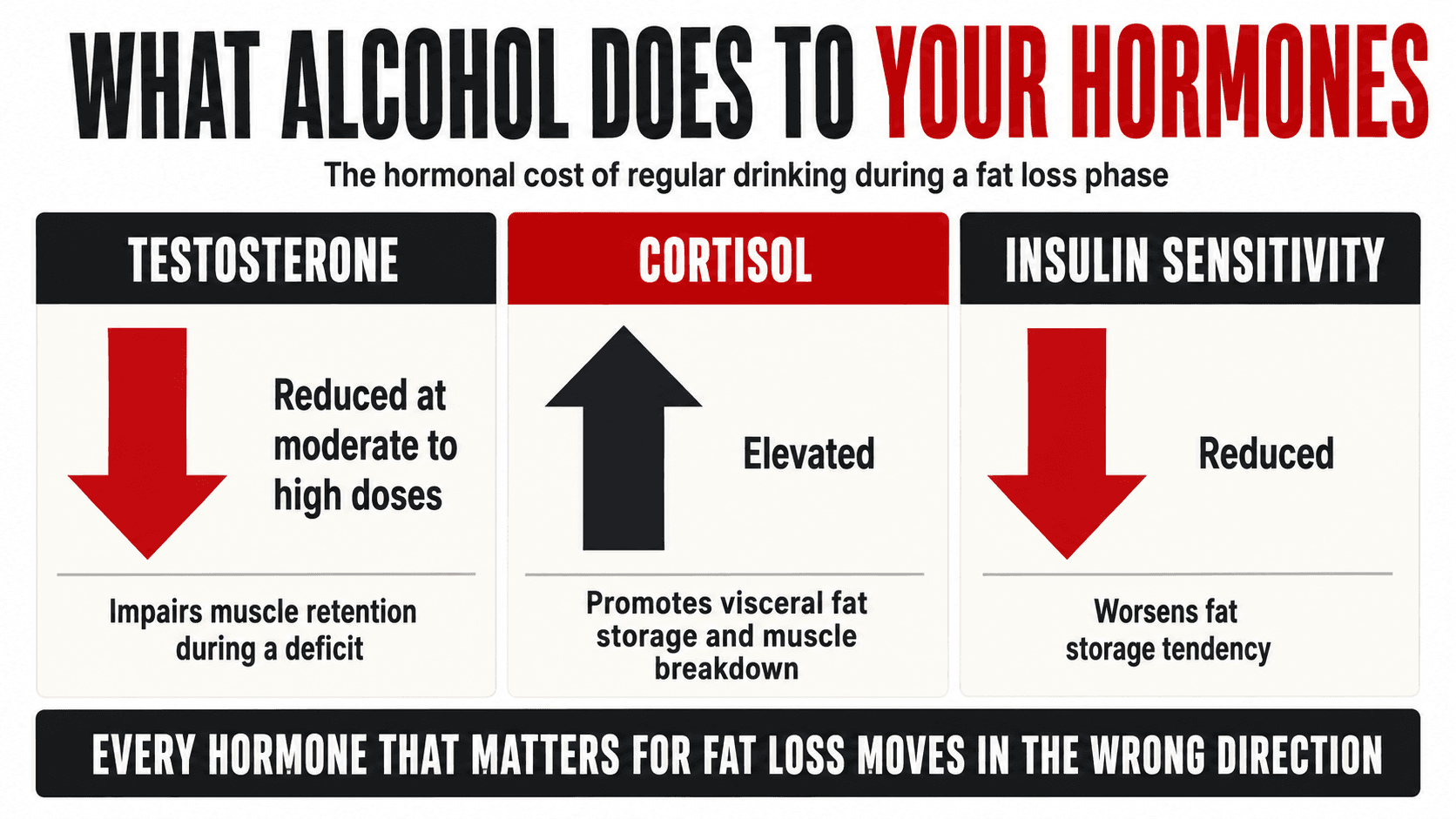
Cortisol is also elevated by alcohol consumption. Heikkonen and colleagues published a study in Alcoholism: Clinical and Experimental Research showing that the combination of alcohol and physical exercise produced significant elevations in serum cortisol in healthy men (5). Chronically elevated cortisol promotes visceral fat storage, increases protein breakdown, impairs recovery from training, and contributes to insulin resistance. All of these outcomes are the opposite of what you want when pursuing fat loss.
Alcohol Destroys Sleep Quality
Many people use alcohol as a relaxation tool in the evening, believing it helps them sleep. And while alcohol can reduce the time it takes to fall asleep, it profoundly disrupts sleep architecture in ways that are devastating for fat loss and recovery. Research published in Alcoholism: Clinical and Experimental Research by Ebrahim and colleagues conducted a systematic review of the evidence and found that while alcohol increases slow-wave sleep in the first half of the night, it significantly disrupts sleep in the second half, reduces REM sleep in a dose-dependent manner, and increases sleep fragmentation (6).
As I covered extensively in my article on sleep and fat loss, poor sleep increases hunger hormones, impairs insulin sensitivity, reduces daily activity, promotes muscle loss, and shifts body composition away from fat loss. Alcohol-induced sleep disruption compounds all of these effects. You are not just consuming extra calories when you drink. You are also degrading the quality of the sleep that follows, which produces its own cascade of negative metabolic consequences that persist into the next day. This is why clients who drink on Friday night often find that their appetite, food choices, and energy levels are impaired not just on Saturday, but well into Sunday and sometimes Monday.
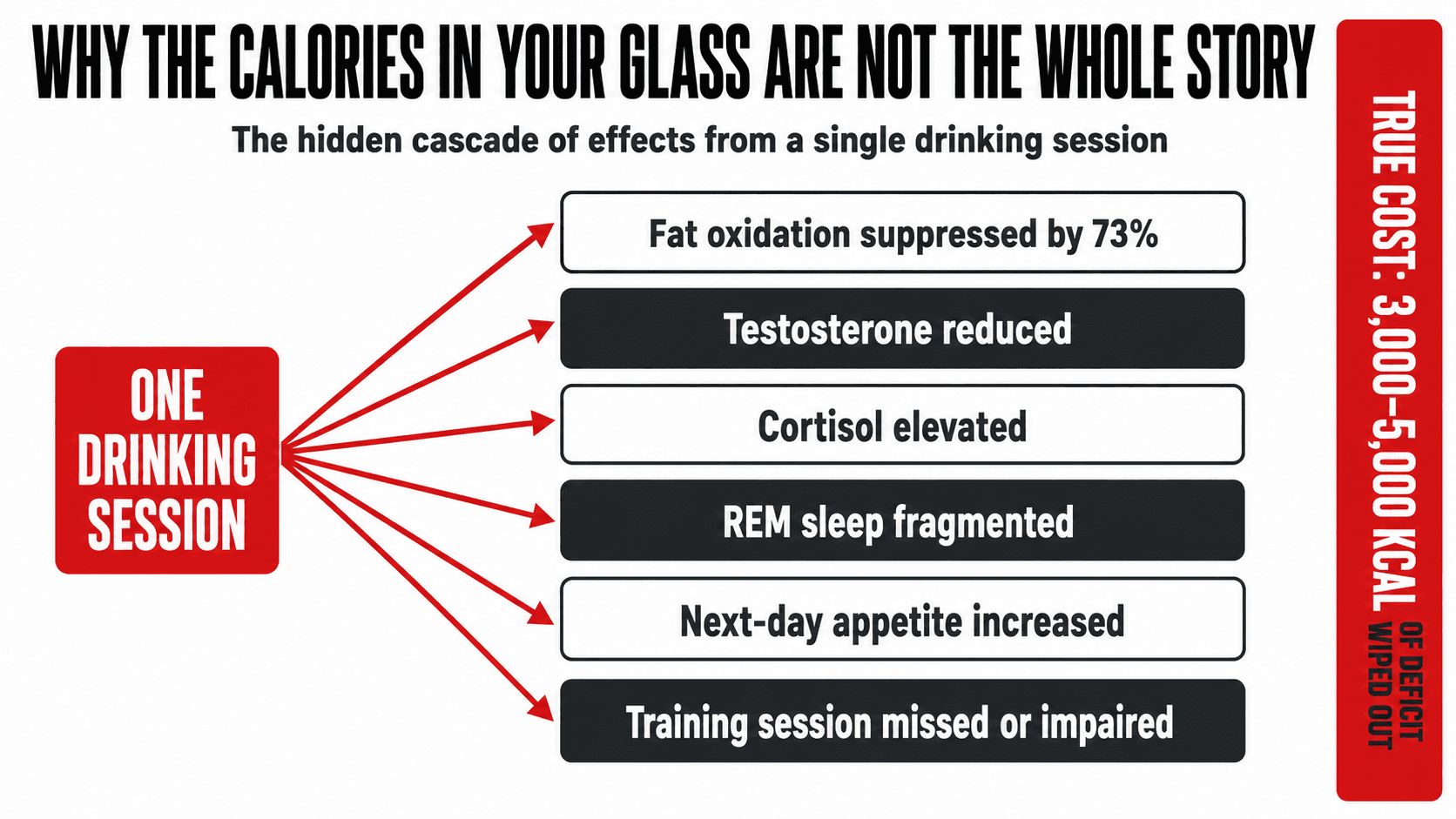
The Full Impact of a Night of Drinking on Your Fat Loss
This is the cumulative picture. It is not just the calories in the drinks. It is every downstream effect combined.
| Effect | What Happens |
|---|---|
| Fat Burning | Suppressed by up to 73% for hours while your body clears acetate (1) |
| Calorie Surplus | 600 to 1,500+ calories from drinks alone, plus 500 to 1,000+ from food consumed alongside |
| Testosterone | Suppressed at moderate to high intake, impairing muscle retention during a deficit (4) |
| Cortisol | Elevated, promoting visceral fat storage and muscle breakdown (5) |
| Sleep | REM sleep reduced, second-half sleep fragmented, recovery impaired (6) |
| Next-Day Appetite | Hunger elevated, cravings intensified, food choices deteriorated for 24 to 48 hours |
| Training Quality | Reduced performance, impaired recovery, missed sessions |
| Weekly Deficit | Can be partially or completely eliminated by one heavy session |
Can You Drink at All During a Fat Loss Phase?
Yes. The dose makes the poison, and context matters enormously. The evidence consistently shows that the problems described above are dose-dependent. Small amounts of alcohol produce small metabolic effects. Large amounts produce large effects. The question is not whether you can drink, but how much, how often, and whether you are willing to accept the trade-offs.
A study published in the Archives of Internal Medicine by Wannamethee and Shaper followed over 7,600 men for five years and found that light to moderate drinking, defined as one to two drinks per day, was not associated with significant weight gain compared to non-drinkers. However, heavy drinking and binge drinking patterns were associated with significantly increased waist circumference and overall body fat (7). The pattern matters as much as the total volume. Two glasses of wine spread across a week is a very different metabolic event to seven glasses consumed on a Saturday night, even though the weekly total is similar.
For my clients in an active fat loss phase, I typically recommend one of two approaches. The first is complete abstinence for the duration of the focused fat loss period. This is the approach that produces the fastest and most consistent results, and it is what I recommend for anyone with a specific deadline or an aggressive body composition goal. The second is a controlled low-dose approach for clients who feel strongly about maintaining some alcohol in their social life. This means a maximum of two to three standard drinks per week, ideally consumed on one occasion, with full accounting in their calorie and macro plan.
Practical Strategies for Managing Alcohol During Fat Loss
If you are going to drink during a fat loss phase, the following strategies will help you minimise the damage.
First, plan your drinking into your daily calorie budget. This means reducing calories from other sources, primarily fats, on the day you plan to drink. Alcohol and dietary fat are a particularly problematic combination because the fat cannot be oxidised while your body is processing the alcohol, making it far more likely to be stored. Keeping fat intake low on drinking days and prioritising lean protein and vegetables as your food sources can mitigate some of the metabolic impact.
Second, choose your drinks wisely. Spirits with zero-calorie mixers like vodka and soda water or gin and slimline tonic are the lowest calorie options per unit of alcohol. Wine is moderate. Beer, cocktails, and anything with sugary mixers are the highest calorie options and should be avoided during a fat loss phase. The sugar in mixers and cocktails not only adds calories but also compounds the insulin response.
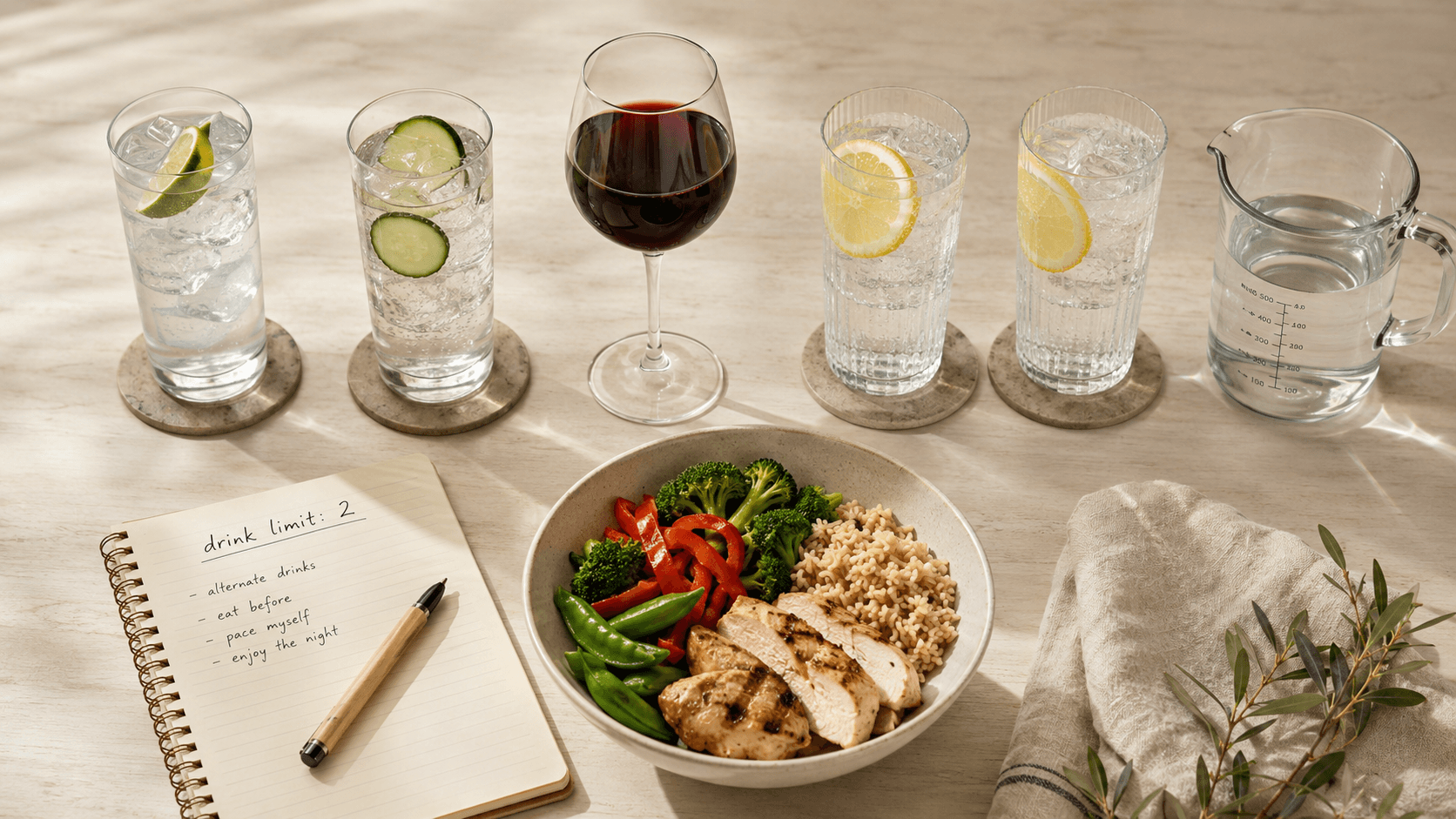
Third, eat before you drink, not during or after. Having a balanced meal containing protein, fibre, and some complex carbohydrates before your first drink slows alcohol absorption, reduces the appetite-stimulating effects, and provides a structural anchor that makes it easier to avoid the late-night takeaway. Good options include a meal built around grilled tofu, tempeh, chicken, or fish with vegetables and a moderate portion of rice or sweet potato. The meal should be planned, tracked, and part of your daily calorie budget.
Fourth, set a drink limit before you go out and stick to it. This is where most fat loss efforts around alcohol fail. People tell themselves they will have two drinks and end up having six because their inhibitions dropped after the second one. Having a hard limit, communicating it to whoever you are with, and alternating each alcoholic drink with a glass of water are simple strategies that make a meaningful difference.
Top Tips for Managing Alcohol and Fat Loss
If You Are in an Aggressive Fat Loss Phase, the Best Strategy Is Zero Alcohol. This is not a moral judgement. It is a practical one. For a focused period of 8 to 16 weeks, removing alcohol entirely gives your body the best possible metabolic environment for fat loss. You can reintroduce it once you are maintaining.
Never Drink Without Accounting for It in Your Daily Calories. Alcohol calories count just like every other calorie. If you are going to have three drinks totalling 400 calories, those need to come from somewhere. Reduce fat intake on that day by an equivalent amount. Never add alcohol on top of your normal food intake.
Choose Spirits with Zero-Calorie Mixers Over Beer and Cocktails. A vodka and soda water is roughly 100 calories. A pint of IPA can be 300+. A mojito can be 250+. If you are going to drink, make every unit of alcohol as calorie-efficient as possible.
Eat a Proper Meal Before You Drink, Not After. The late-night food decisions made under the influence of alcohol are responsible for more diet damage than the drinks themselves. Eat a structured, high-protein meal beforehand and commit to not eating again after your last drink.
Set a Hard Limit and Alternate Every Drink with Water. Decide how many drinks you will have before you start. Two is a sensible maximum during a fat loss phase. Alternate each alcoholic drink with a full glass of water. This slows consumption, reduces total intake, and supports hydration.
Do Not Skip Training the Next Day. One of the biggest secondary costs of drinking is the missed gym session the following morning. Even if you do not feel 100 percent, getting to the gym and doing something maintains the habit, supports your deficit, and prevents the two-day spiral of poor choices.
Track the Full Cost, Not Just the Drink Calories. When you review a drinking occasion, add up the drinks, the food consumed alongside them, the next-day snacking, the missed training session, and the reduced step count. That is the true cost. For most people, a single heavy drinking session costs 3,000 to 5,000 calories when you factor in everything, which is enough to eliminate an entire week of deficit.
Be Honest About Whether Alcohol Is Holding You Back. If your fat loss has stalled and you are drinking two or more times per week, the answer to why you are not making progress might be sitting right in front of you. Be willing to have that honest conversation with yourself.
The Bottom Line
Alcohol is not forbidden during a fat loss phase, but it is also not harmless. It suppresses fat oxidation for hours after consumption. It provides substantial calories with zero nutritional value. It promotes fat storage even when you are technically in a deficit. It impairs testosterone, elevates cortisol, disrupts sleep quality, increases next-day appetite, degrades food choices, and reduces training performance and daily activity. Every one of those effects individually slows fat loss. Combined, they can bring it to a complete halt.
I have worked with clients who made zero changes to their training or nutrition but lost significant body fat simply by reducing their alcohol intake from three or four sessions per week to zero or one. That single change was enough to restore the calorie deficit that had been wiped out by the drinking and its downstream effects. It is one of the highest-impact changes most people can make, and it costs nothing.
The evidence is not anti-alcohol. It is pro-information. Know what alcohol does to your body. Know what it costs you. Make your choices accordingly. If you choose to drink, do it intelligently, within your plan, and with full awareness of the trade-offs. If you choose to abstain during a fat loss phase, you are giving yourself every possible metabolic advantage.
If you want a coaching approach that accounts for the reality of your life, including social events, drinking culture, dietary preferences, and work demands, while still delivering measurable results, get in touch through trperformancecoaching.com. I work one-to-one with clients online globally, across all dietary backgrounds including vegetarian, vegan, and plant-based. Real strategies for real life. No judgement, just evidence and accountability.
Work with Me
Get a personalised coaching plan built around your goals, your schedule, and your life.
Enquire NowReferences
- Siler SQ, Neese RA, Hellerstein MK. De novo lipogenesis, lipid kinetics, and whole-body lipid balances in humans after acute alcohol consumption. American Journal of Clinical Nutrition. 1999; 70(5): 928-936.
- Suter PM, Schutz Y, Jequier E. The effect of ethanol on fat storage in healthy subjects. New England Journal of Medicine. 1992; 326(15): 983-987.
- Nedeltcheva AV, Kilkus JM, Imperial J, Kasza K, Schoeller DA, Penev PD. Sleep curtailment is accompanied by increased intake of calories from snacks. American Journal of Clinical Nutrition. 2009; 89(1): 126-133.
- Steiner JL, Lang CH. Alcohol consumption and hormonal alterations related to muscle hypertrophy: a review. Nutrition and Metabolism. 2014; 11: 26.
- Heikkonen E, Ylikahri R, Roine R, Valimaki M, Harkonen M, Salaspuro M. The combined effect of alcohol and physical exercise on serum testosterone, luteinizing hormone, and cortisol in males. Alcoholism: Clinical and Experimental Research. 1996; 20(4): 711-716.
- Ebrahim IO, Shapiro CM, Williams AJ, Fenwick PB. Alcohol and sleep I: effects on normal sleep. Alcoholism: Clinical and Experimental Research. 2013; 37(4): 539-549.
- Wannamethee SG, Shaper AG. Alcohol, body weight, and weight gain in middle-aged men. American Journal of Clinical Nutrition. 2003; 77(5): 1312-1317.