
If you are a man who looks relatively normal in the mirror, fits into medium or large clothes, has a BMI in the ‘healthy’ range, and assumes that means you are in good shape, this article might be the most important thing you read this year. Because there is a very real chance that underneath what looks perfectly fine on the outside, something dangerous is happening inside your body that nobody has told you about.
In my 15 years of coaching, some of the most at-risk clients I have worked with were not the men who came to me obviously overweight. They were the ones who thought they were fine. They looked normal. Their GP had never flagged anything. Their BMI said ‘healthy’. But when we looked deeper, at their body composition, their blood markers, and their lifestyle habits, the picture was completely different. High body fat. Very little muscle. Visceral fat building around their organs. Blood sugar creeping up. Blood pressure rising. Cholesterol out of balance. All hidden behind a body that looked perfectly acceptable in a shirt.
This is what the fitness industry calls ‘skinny fat’. The medical world has a more precise term for it: normal weight obesity. And if you are a skinny fat man, you are carrying the same metabolic risks as someone who is clinically obese, but nobody, including you, knows it.
What Does Skinny Fat Actually Mean?
Let me explain this in the clearest possible terms, because most people get it wrong. Being skinny fat does not mean you are slightly overweight and a bit soft. It means you have a normal body weight (your BMI says you are fine) but underneath, your body composition is a mess. You have too little muscle and too much fat, especially the dangerous kind of fat that wraps around your internal organs.
The clinical name for this is normal weight obesity. A landmark study published in the European Heart Journal analysed over 6,000 people with normal BMI and found that those with high body fat, even though their weight was ‘healthy’, had a four-fold higher prevalence of metabolic syndrome compared to those with lower body fat (1). Let me put that into perspective. These were not overweight people. Their BMI was between 18.5 and 24.9. They would pass any standard GP health check based on weight alone. But their risk of metabolic disease was dramatically elevated.
Further research published in Cell Metabolism estimated that around 20 percent of the normal weight adult population is metabolically unhealthy (2). One in five people who look perfectly fine by every standard measure are carrying a significantly elevated risk of heart disease, Type 2 diabetes, and early death. These individuals had a greater than three-fold higher risk of all-cause mortality and cardiovascular events compared to metabolically healthy normal weight people.
Same Weight, Same BMI, Completely Different Health
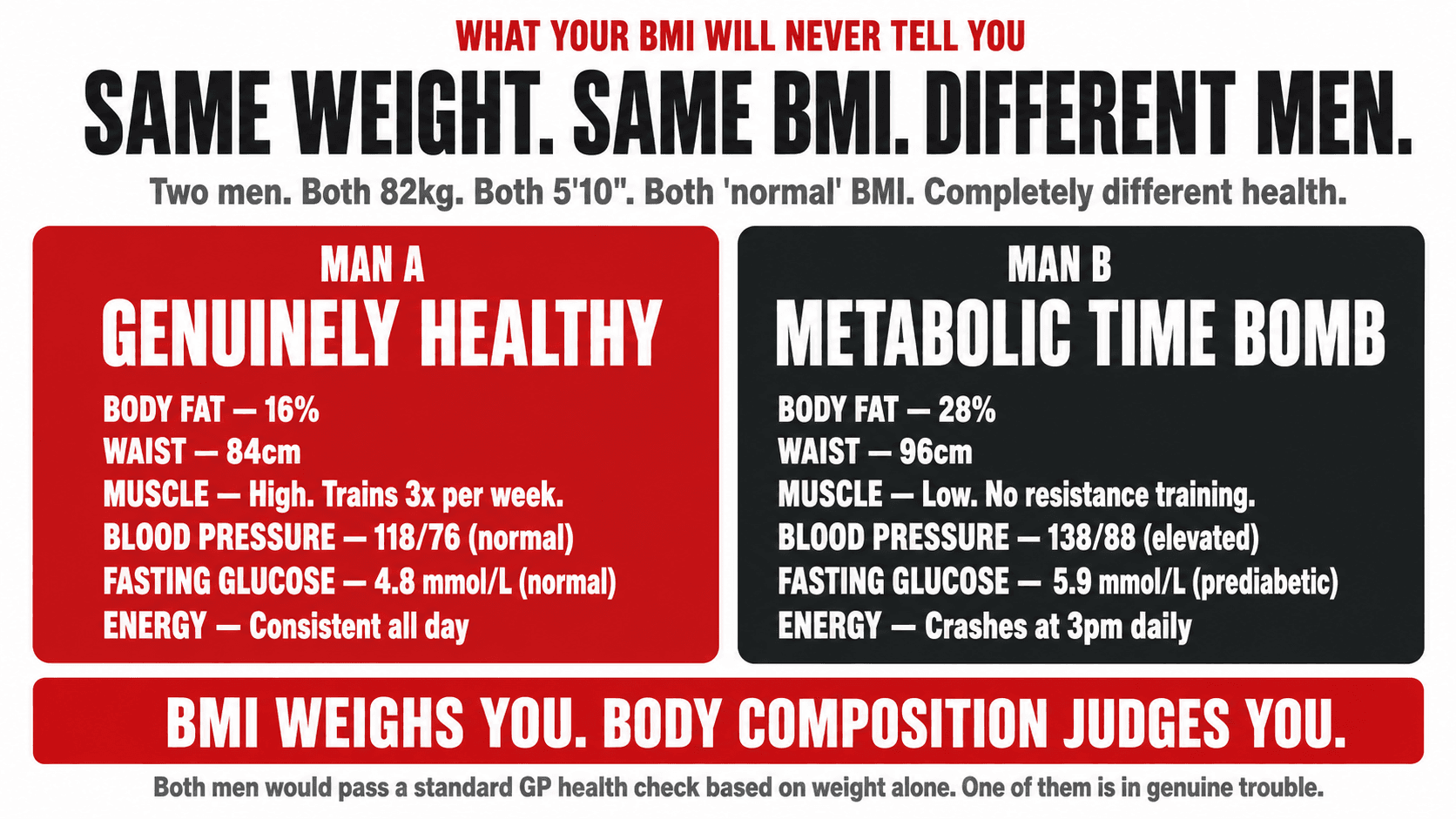
This is a scenario I encounter regularly. Two men walk into my studio. Both weigh 82kg. Both are 5 foot 10. Both have a BMI of around 24, which their GP would call ‘normal’. But when I assess their body composition, the difference is staggering.
What Your GP Is Missing: BMI vs Body Composition
| Marker | Man A (Healthy) | Man B (Skinny Fat) |
|---|---|---|
| Weight | 82kg | 82kg |
| BMI | 24.2 ('Normal') | 24.2 ('Normal') |
| Body Fat % | 16% | 28% |
| Muscle Mass | High. Trains 3x per week. | Low. No resistance training. |
| Waist Circumference | 84cm (33in) - Healthy | 96cm (38in) - At Risk |
| Visceral Fat | Low | Elevated |
| Fasting Blood Sugar | 4.8 mmol/L (normal) | 5.9 mmol/L (prediabetic) |
| Blood Pressure | 118/76 (normal) | 138/88 (high) |
| Triglycerides | 1.1 mmol/L (healthy) | 2.3 mmol/L (elevated) |
| Energy Levels | Consistently high | Crashes at 3pm daily |
| GP Assessment | 'Everything looks fine' | 'Everything looks fine' |
| Reality | Genuinely healthy | Metabolic time bomb |
This is the problem with BMI. It was designed as a population-level screening tool. It was never intended to assess individual health. It cannot distinguish between muscle and fat. It cannot tell you where your fat is stored. It cannot detect visceral fat, insulin resistance, or any of the metabolic markers that actually determine your risk of disease (3). If your GP has only ever checked your weight and your BMI and told you that you are fine, you have not been properly assessed.
Top Tip
BMI tells your GP how heavy you are. It tells them absolutely nothing about how healthy you are. If you have never had your body fat percentage measured or your waist circumference checked, you do not have the full picture. Ask your GP for a full metabolic panel including fasting glucose, HbA1c, a lipid profile, and blood pressure. These tests are quick and usually free on the NHS.
How Men Become Skinny Fat
Skinny fat does not happen overnight. It develops gradually over years, usually driven by a combination of lifestyle factors that most men do not think twice about. Let me walk you through the most common causes I see.
The Cardio Trap
One of the most common patterns I see in skinny fat men is the ‘cardio only’ approach to exercise. They go running three or four times a week, maybe cycle at the weekends, do a few park runs. They feel like they are being active, and they are. But here is what cardio alone does not do: it does not build muscle. It does not reverse the age-related muscle loss that starts in your 30s. It does not strengthen your bones. It does not meaningfully improve your insulin sensitivity in the way resistance training does (4). So these men are burning calories and keeping their weight stable, but their body composition is quietly getting worse every year. Less muscle, more fat, lower metabolic rate, higher risk.
The Diet Trap
The other pattern is chronic dieting without resistance training. Men who repeatedly cut calories to lose weight, often following restrictive diets or meal replacement plans. The problem is that when you drastically cut calories without lifting weights and without eating enough protein, your body does not just burn fat. It burns muscle too. Research shows that on average, 24 percent of weight lost through dietary restriction alone comes from lean tissue, not fat (5). So these men lose weight on the scales, their BMI drops, everyone tells them they look great, but they have actually made their body composition worse. They have lost the very tissue, muscle, that drives their metabolism and protects their health.
Top Tip
If your only form of exercise is running, cycling, or swimming, you are leaving the most powerful health tool on the table. Cardio is good for your heart and lungs, but it does not build muscle, and muscle is what protects you from the metabolic consequences of ageing. You need resistance training.

What Skinny Fat Is Doing to Your Body Right Now
If you are skinny fat and you do not know it, here is what is likely happening inside your body. None of these things cause obvious symptoms in the early stages. That is what makes this so dangerous.
| What Is Happening | What This Means | Why You Do Not Notice |
|---|---|---|
| Visceral fat building around organs | Fat wrapping around your liver, kidneys, and intestines drives inflammation and disrupts how your body processes sugar and fat (6). | You cannot see or feel visceral fat. Your stomach might look relatively flat. Only a body composition scan or waist measurement reveals it. |
| Insulin resistance developing | Your cells are becoming less responsive to insulin, so your body has to produce more to control blood sugar. This is the first step toward Type 2 diabetes (7). | No symptoms in the early stages. Fasting blood sugar may be creeping up but still in the 'normal' range on standard tests. |
| Blood pressure rising | Visceral fat produces inflammatory chemicals that stiffen your blood vessels and raise blood pressure. | High blood pressure has no symptoms. It is called 'the silent killer' for good reason. Most men have no idea theirs is elevated. |
| Cholesterol profile worsening | Triglycerides rising, HDL (good cholesterol) falling. This combination dramatically increases cardiovascular risk. | You feel completely normal. The only way to know is a blood test. |
| Chronic low-grade inflammation | Visceral fat actively produces inflammatory molecules that damage blood vessels and organs over time. | Inflammation at this level does not cause pain or swelling. It works silently over years and decades. |
| Testosterone declining faster | Excess body fat increases an enzyme called aromatase which converts testosterone to oestrogen. More fat means less testosterone and more oestrogen (8). | Symptoms are gradual: slightly less energy, slightly lower mood, slightly reduced libido. Easy to blame on 'getting older'. |
The San Antonio Heart Study, a major population-based study, found that metabolically unhealthy normal weight individuals had the same cardiovascular disease risk as people who were metabolically unhealthy and obese (9). Read that again. The same risk. Being a normal weight did not protect them at all, because it was their body composition, not their weight, that determined their health.
Top Tip
If you recognise yourself in any of this, do not panic. But do take it seriously. The first step is getting proper data. Measure your waist at belly button level. If it is above 94cm (37 inches) you are in the at-risk zone. Book a blood test with your GP and ask for fasting glucose, HbA1c, a full lipid profile, and blood pressure. Knowledge is your starting point.

How to Fix Skinny Fat: The Body Recomposition Approach
Here is the good news. Skinny fat is one of the most fixable problems I work with. It does not require extreme measures. It does not require a crash diet. In fact, a crash diet would make it worse. What it requires is a specific combination of resistance training and nutrition designed to do two things at once: build muscle and reduce body fat. This process is called body recomposition.
Step 1: Start Resistance Training (This Is Not Optional)
If you only take one thing from this article, let it be this: start lifting weights. For a skinny fat man, resistance training is the single most important change you can make. It is the trigger that tells your body to start building muscle. Without it, nothing else works. You can eat all the protein in the world, but without a training stimulus, your body has no reason to use it for muscle growth.
The 2025 ICFSR global consensus, a major review involving researchers from around the world, identified resistance training as essential for maintaining muscle mass, metabolic health, and functional capacity across the lifespan (4). This is not opinion. It is scientific consensus.
If you have never lifted weights before, start simple. Three sessions per week, full body, focusing on the four fundamental movement patterns: a squat (works your legs and core), a push (works your chest, shoulders, triceps), a pull (works your back and biceps), and a hinge (works your hamstrings, glutes, and lower back). These four movements cover your entire body. Start with weights you can manage with good form and gradually progress from there.
Top Tip
Three sessions per week of full body resistance training is enough to start reversing skinny fat. You do not need to live in the gym. Consistency over intensity is the rule. Show up three times a week, lift progressively, and stay patient. The changes will come.
Step 2: Fix Your Protein (You Are Almost Certainly Not Eating Enough)
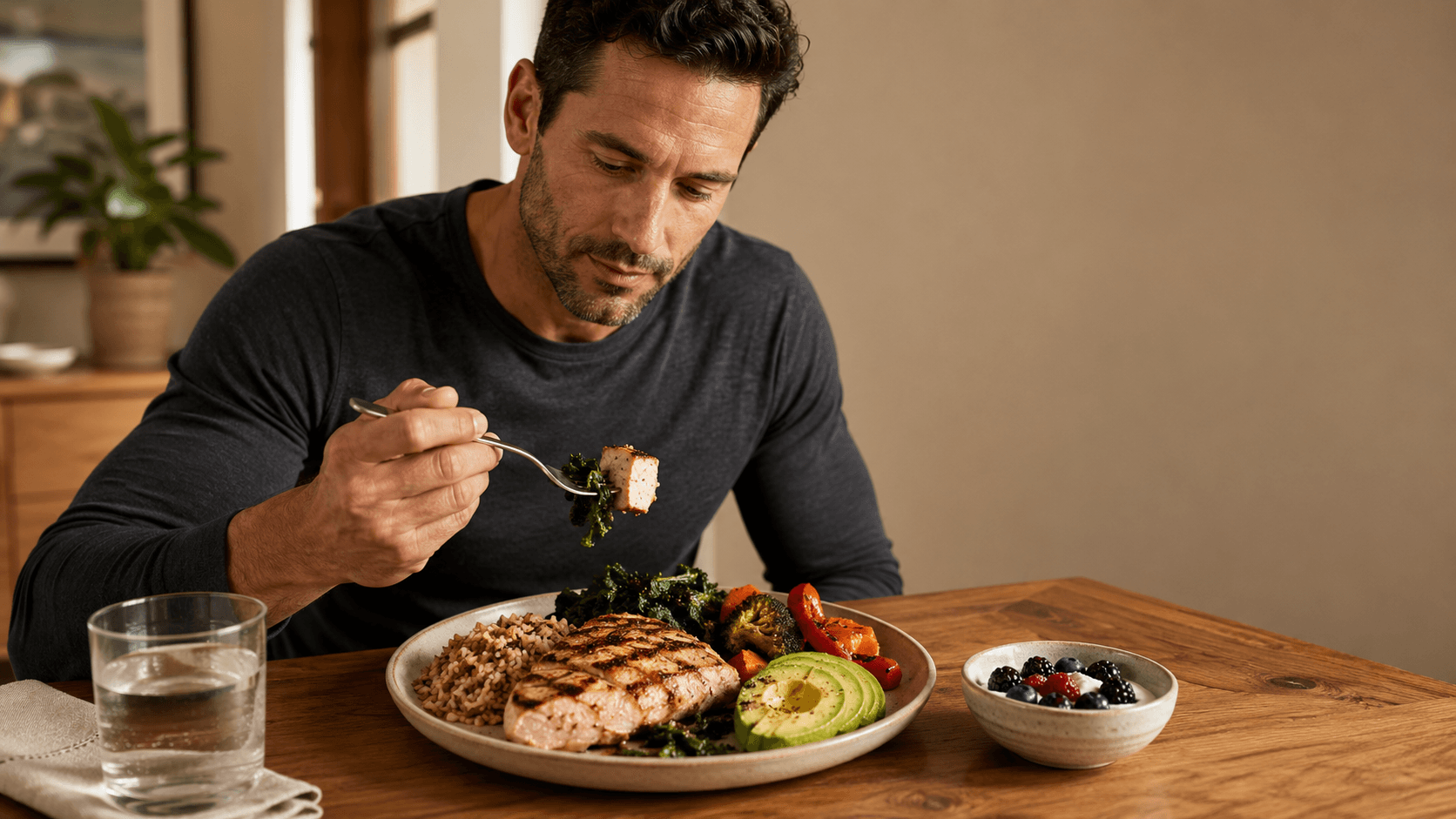
Protein is the raw material your body uses to build and repair muscle. Without enough protein, your body simply cannot grow new muscle tissue regardless of how hard you train. A comprehensive meta-analysis published in the British Journal of Sports Medicine found that protein supplementation alongside resistance training significantly enhanced gains in muscle mass and strength, and that the optimal intake for this purpose is around 1.6 grams per kilogram of body weight per day (10).
For an 80kg man, that is 128 grams of protein per day, spread across three to four meals. Most skinny fat men I start working with are eating between 50 and 70 grams per day. They are not even close.
| For Meat Eaters | For Vegetarians | For Vegans |
|---|---|---|
| 1 medium chicken breast (150g) | 200g paneer + 100g lentils | 250g firm tofu + 50g edamame |
| 150g tinned tuna | 3 large eggs + 200g Greek yoghurt | 1 scoop pea protein + 150g tempeh |
| 150g lean beef mince | 1 scoop whey protein + 2 eggs | 200g seitan |
| 150g salmon fillet | 200g cottage cheese + 30g nuts | 200g cooked lentils + 100g soy mince |
| 1 scoop whey + 150g chicken | 200g tofu + 1 scoop whey protein | 1 scoop soy protein + 200g chickpeas |
I am a lifelong vegetarian, so I know from personal experience that you do not need meat to get enough protein. The key for vegetarian and vegan men is variety. Combine different plant protein sources across the day to cover all your essential amino acids. Research has shown that plant-based protein blends containing adequate leucine, the amino acid most responsible for triggering muscle growth, can stimulate muscle protein synthesis to a similar extent as whey protein (11). Soy protein, pea protein, and combinations of legumes with grains are all excellent options.
Top Tip
Track your protein intake for just one week using a free app like MyFitnessPal. Most men are shocked at how little they are eating. Aim for around 30 to 40 grams of protein at each meal, spread across three to four meals. This single change makes an enormous difference.
Step 3: Do Not Crash Diet (Eat for Recomposition)
This is where most skinny fat men go wrong. They see the word ‘fat’ in their body composition results and immediately think they need to eat less. They slash their calories, skip meals, cut out food groups, and start some restrictive plan they found online. This is the worst thing you can do.
When you dramatically cut calories without sufficient protein and resistance training, your body cannibalises its own muscle for energy (5). You lose weight on the scales, but a significant proportion of that weight is muscle, not fat. Your metabolism slows down further. Your body composition gets worse, not better. And when you inevitably start eating normally again, the weight comes back, mostly as fat, because you now have less muscle to burn it off. This is the classic yo-yo dieting cycle and it is one of the main reasons men become skinny fat in the first place.
What Happens When You Reverse Skinny Fat
When a skinny fat man starts resistance training, fixes his protein, and stops crash dieting, the changes that happen are remarkable. They do not happen overnight. But within 12 to 16 weeks of consistent effort, this is what I typically see in the men I coach.
| Marker | Before (Skinny Fat) | After 12 to 16 Weeks |
|---|---|---|
| Body Weight | May stay similar or drop slightly | May stay similar or increase slightly (muscle weighs more than fat) |
| Body Fat % | 25 to 30% | 18 to 22% (and still improving) |
| Waist Circumference | Above 94cm | Dropping toward or below 90cm |
| Muscle Mass | Low | Visibly and measurably increased |
| Energy Levels | Crashes in the afternoon | Consistent energy throughout the day |
| Fasting Blood Sugar | Creeping toward prediabetic range | Back in healthy range |
| Blood Pressure | Elevated | Improved, often back to normal |
| Strength | Weak, struggling with basic movements | Dramatically stronger |
| How Clothes Fit | Soft, shapeless | Shirts fit better, shoulders broader, waist smaller |
| Confidence | Low, avoiding mirrors | Noticeably higher |
The most important thing to understand is that the scales might not change much. This confuses a lot of men. They expect to see the number drop. But if you are losing fat and gaining muscle simultaneously, your weight can stay roughly the same while your body transforms completely. This is why I never use the scales as a primary measure of progress. Waist circumference, body fat percentage, photos, how your clothes fit, your strength in the gym, and your blood markers are far more meaningful.
Top Tip
Do not judge your progress by the scales alone. Take a waist measurement, a photo in the same lighting and position every two weeks, and track your lifts in the gym. If your waist is shrinking, your lifts are going up, and you are looking and feeling better, the programme is working. The scales will catch up eventually.
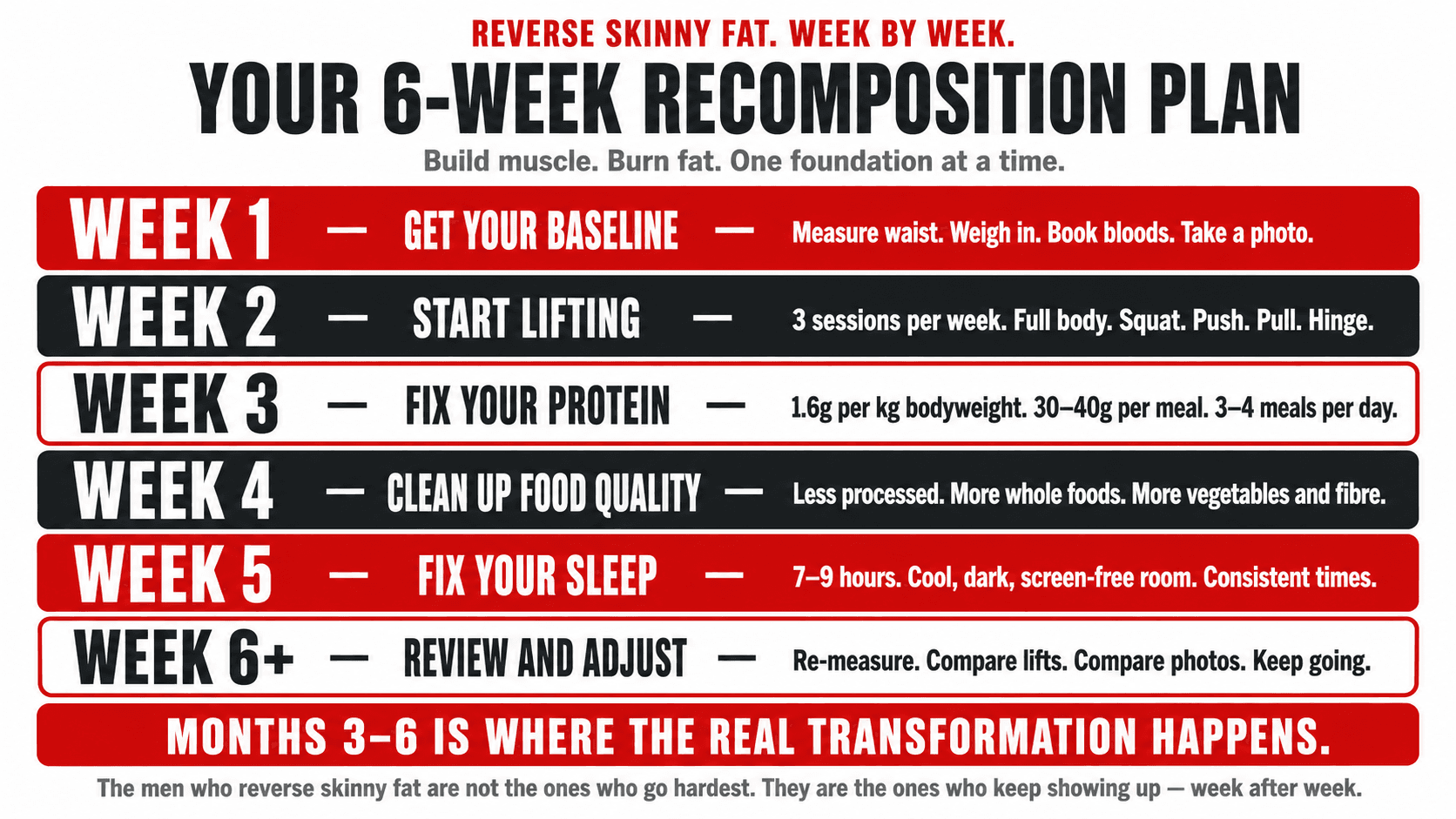
Your First Six Weeks: A Simple Starting Plan
| Week | What to Do |
|---|---|
| Week 1 | Get your baseline. Measure your waist. Weigh yourself. If possible, get a body composition scan (many gyms offer these). Book a blood test with your GP: fasting glucose, HbA1c, lipid profile, blood pressure. Take a photo. Write everything down. |
| Week 2 | Start resistance training. Three full body sessions per week. Focus on the four key movements: squat, push, pull, hinge. Use weights you can manage with good form. If you are unsure, book a few sessions with a qualified coach to learn the basics. |
| Week 3 | Fix your protein. Track your intake for one week. Adjust your meals until you are hitting 1.6g per kg body weight per day, spread across 3 to 4 meals. Add a protein source to every meal: chicken, fish, eggs, tofu, tempeh, lentils, Greek yoghurt, cottage cheese, or a protein shake. |
| Week 4 | Clean up your food quality. Reduce processed food, takeaways, and sugary drinks. Start cooking more meals at home. Add more vegetables and fibre-rich foods. You do not need to be perfect. Just consistently better than before. |
| Week 5 | Focus on sleep. Set a consistent bedtime and wake time. Aim for 7 to 9 hours. Your bedroom should be cool, dark, and screen-free. Sleep is when your body builds muscle and regulates hormones. Without it, your training results will stall. |
| Week 6+ | Review your progress. Retake your waist measurement. Compare photos. Check your gym lifts (they should be going up). If you have had blood work done, compare the numbers. Adjust your training and nutrition as needed. Keep going. The first 6 weeks build the foundation. Months 3 to 6 are where the real transformation happens. |
Top Tip
Consistency is everything. The men who reverse skinny fat are not the ones who train the hardest for two weeks and then disappear. They are the ones who train three times a week, hit their protein, sleep well, and keep showing up. Week after week. Month after month. Small improvements compound into a completely different body and a completely different level of health.
How I Can Help
Skinny fat is one of the most common presentations I see in male clients, and honestly, one of the most rewarding to work with. Because the men who come to me with this problem have often been let down by their GP's reliance on BMI, by the fitness industry's obsession with cardio and calorie cutting, and by a complete lack of understanding about body composition. They had no idea what was happening inside their bodies until we looked properly.
I work one-to-one with men online globally. I build every programme around your starting point, your goals, your lifestyle, and your dietary background. I am a lifelong vegetarian myself and I coach men who eat meat, men who are vegetarian, men who are vegan, and everything in between. The principles of reversing skinny fat are the same regardless of diet. The application is tailored to you.
If this article has described you, or if you are not sure whether it has and you want to find out, get in touch through trperformancecoaching.com. Let us look at the full picture, not just your weight, and build a plan that actually works.
Work with Me
Get a personalised coaching plan built around your goals, your schedule, and your life.
Enquire NowReferences
- (1) Romero-Corral A, et al. Normal weight obesity: a risk factor for cardiometabolic dysregulation and cardiovascular mortality. European Heart Journal. 2010;31(6):737-746.
- (2) Stefan N, et al. Causes, Characteristics, and Consequences of Metabolically Unhealthy Normal Weight in Humans. Cell Metabolism. 2017;26(2):292-300.
- (3) Rothman KJ. BMI-related errors in the measurement of obesity. International Journal of Obesity. 2008;32(S3):S56-S59.
- (4) Izquierdo M, et al. Global consensus on optimal exercise recommendations for enhancing healthy longevity in older adults (ICFSR). Journal of Nutrition, Health and Aging. 2025;29(1):100401.
- (5) Weinheimer EM, et al. A systematic review of the separate and combined effects of energy restriction and exercise on fat-free mass in middle-aged and older adults. Nutrition Reviews. 2010;68(7):375-388.
- (6) Despres JP. Cardiovascular disease under the influence of excess visceral fat. Critical Pathways in Cardiology. 2007;6(2):51-59.
- (7) Meigs JB, et al. Body mass index, metabolic syndrome, and risk of type 2 diabetes or cardiovascular disease. Journal of Clinical Endocrinology and Metabolism. 2006;91(8):2906-2912.
- (8) Cohen PG. Aromatase, adiposity, aging and disease. Medical Hypotheses. 2001;56(6):702-708.
- (9) Aung K, et al. Risk of developing diabetes and cardiovascular disease in metabolically unhealthy normal-weight and metabolically healthy obese individuals. Journal of Clinical Endocrinology and Metabolism. 2014;99(2):462-468.
- (10) Morton RW, et al. A systematic review, meta-analysis and meta-regression of the effect of protein supplementation on resistance training-induced gains in muscle mass and strength. British Journal of Sports Medicine. 2018;52(6):376-384.
- (11) Pinckaers PJM, et al. No differences in muscle protein synthesis rates following ingestion of wheat protein, milk protein, and their protein blend in healthy, young males. British Journal of Nutrition. 2021;126(12):1832-1842.