
You already know the answer to your fat loss nutrition problem. You know it because you have heard it a hundred times. You have read it in articles, seen it in videos, and probably had a friend or a trainer tell you directly. But you do not want it to be the answer because it is not exciting, it is not novel, and it does not give you permission to blame something outside of your control. The answer to the fat loss nutrition question that everyone asks and nobody wants to hear is this: the best diet for fat loss is the one you can actually follow, consistently, for long enough to get results.
That answer is unsatisfying. I know it is. It does not sell books, it does not generate clicks, and it does not give you a shiny new protocol to follow for four weeks before abandoning it for the next one. But the research is unequivocal. A 2020 BMJ network meta-analysis comparing 14 popular named diets including Atkins, DASH, Mediterranean, Zone, Ornish, paleo, and others found that at the 12-month mark there was no clinically meaningful difference in weight loss between any of them (1). Every single diet produced roughly the same results over time. The variable that determined success was not which diet people followed. It was whether they kept following it.
And here is where the real problem lies. They mostly did not keep following it. Self-reported complete adherence to dietary interventions drops from approximately 81 percent at month one to 57 percent by month 24 (2). The typical weight loss plateau that people experience at around the six-month mark is not primarily caused by metabolic adaptation, though that contributes. Mathematical modelling has shown that fluctuating energy intake, which is the scientific term for people gradually eating more than they are supposed to, is the primary driver of the plateau (3). The diet did not stop working. The person stopped doing the diet.
The Uncomfortable Truth About Fat Loss Nutrition
I have worked with meat eaters, vegetarians, vegans, executives, parents, athletes, and people managing chronic conditions including type 2 diabetes, type 1 diabetes, PCOS, and hypertension. The single biggest predictor of who gets results and who does not is not their genetics, their metabolism, their hormones, or which specific dietary approach they follow. It is their consistency of adherence over time.
The clients I have coached to the most dramatic results, including 24 kilograms lost by a client with type 1 diabetes, 33 kilograms lost by a vegetarian client, and multiple clients going from XXL to Medium, did not follow the most extreme or complicated diets. They followed moderate, evidence-based nutrition plans that they could sustain week after week, month after month, adjusting when life demanded it but never abandoning the fundamentals.

Meanwhile, the clients who have struggled the most over the years have almost always shared the same pattern. They wanted the perfect diet. They wanted the optimal macronutrient ratio. They wanted to know whether they should eat at 6am or noon, whether rice was better than potatoes, whether they should be keto or Mediterranean or carnivore. They spent more time researching the ideal approach than they spent executing any approach. And when the approach they chose inevitably became difficult at week three or four, they concluded it was the wrong diet rather than accepting that all diets become difficult at week three or four.
Why People Keep Searching for the Perfect Diet
The diet industry is built on the premise that fat loss failure is a knowledge problem. You did not lose weight because you did not know the right information. Buy this book, follow this protocol, eliminate this food group, and you will finally have the missing piece. But it is not a knowledge problem. Most people who are trying to lose fat can describe a reasonable fat loss diet with reasonable accuracy. They know they need a calorie deficit. They know protein matters. They know they should eat more vegetables and less processed food. The information is not missing. The execution is.
Research on dietary adherence paints a stark picture. A study using doubly labelled water, the gold standard for measuring actual energy intake, found that high adherers to a calorie-restricted diet lost weight at twice the rate of low adherers (4). Furthermore, adherence during the weight loss phase predicted weight maintenance at two years. High adherers regained only 50 percent of the weight they lost. Low adherers regained 99 percent (5). The difference between long-term success and complete failure was not the diet. It was the consistency with which people followed it.

The reason people keep searching for a new diet is because searching feels like progress. It feels productive. It feels like you are doing something about the problem. But switching from one diet to another every few weeks is the nutritional equivalent of driving in circles. You are putting in effort and burning fuel, but you are not getting anywhere. What you need is not a better map. You need to pick a direction and keep driving.
What Actually Determines Whether You Stick to a Diet
If adherence is the primary determinant of fat loss success, then the question becomes: what determines adherence? The research identifies several consistent factors, and understanding them is far more valuable than memorising the macronutrient profile of yet another named diet.
The first factor is the size of the calorie deficit. Larger deficits produce faster initial results but they also produce more hunger, more fatigue, worse training performance, greater muscle loss, and dramatically lower adherence over time (6). A moderate deficit of 400 to 600 calories below maintenance is sustainable for most people over weeks and months. A 1,000-calorie deficit feels heroic for five days and then falls apart. I start every client at a moderate deficit because I am playing a long game, not a short one.
The second factor is whether the diet aligns with your actual life. If you hate cooking, a diet that requires elaborate meal preparation will fail. If you eat out three times a week for work, a diet that prohibits restaurant food will fail. If you are vegan, a diet built around chicken and fish is obviously useless. If you love carbohydrates, a ketogenic diet might produce results for four weeks before your adherence collapses. The best fat loss nutrition plan is one that works within the reality of your life, not one that requires you to build an entirely new life around it.

The third factor is the degree of restriction. Research consistently shows that rigid dietary approaches, those that categorise foods as strictly good or bad and demand perfect compliance, produce worse long-term outcomes than flexible approaches that allow controlled inclusion of all foods (7). Rigid dieters are more likely to experience binge eating, more likely to abandon their diet entirely after a perceived failure, and more likely to regain weight. Flexible dieters maintain their results because a single meal that deviates from the plan does not feel like a catastrophic failure that warrants giving up.
The fourth factor, and one that is chronically undervalued, is external accountability. Supervised weight loss interventions produce significantly higher adherence rates than self-monitored programmes. A meta-analysis found that supervised interventions achieved an adherence rate of 68.6 percent compared to 41.5 percent for self-monitoring alone (8). Having someone who checks your food diary, reviews your weight trends, adjusts your plan, and holds you to account is not a luxury. For most people, it is the difference between finishing the programme and abandoning it.
The Role of Protein in Making Any Diet Work
While the specific macronutrient ratio matters less than most people think, protein deserves special attention because it directly affects two of the most important determinants of adherence: hunger and muscle preservation. A diet with inadequate protein will leave you hungrier, less satisfied, more prone to cravings, and more likely to lose muscle mass alongside fat. A diet with adequate protein will blunt your hunger, preserve your lean tissue, maintain your metabolic rate, and make the entire process significantly more tolerable (9).
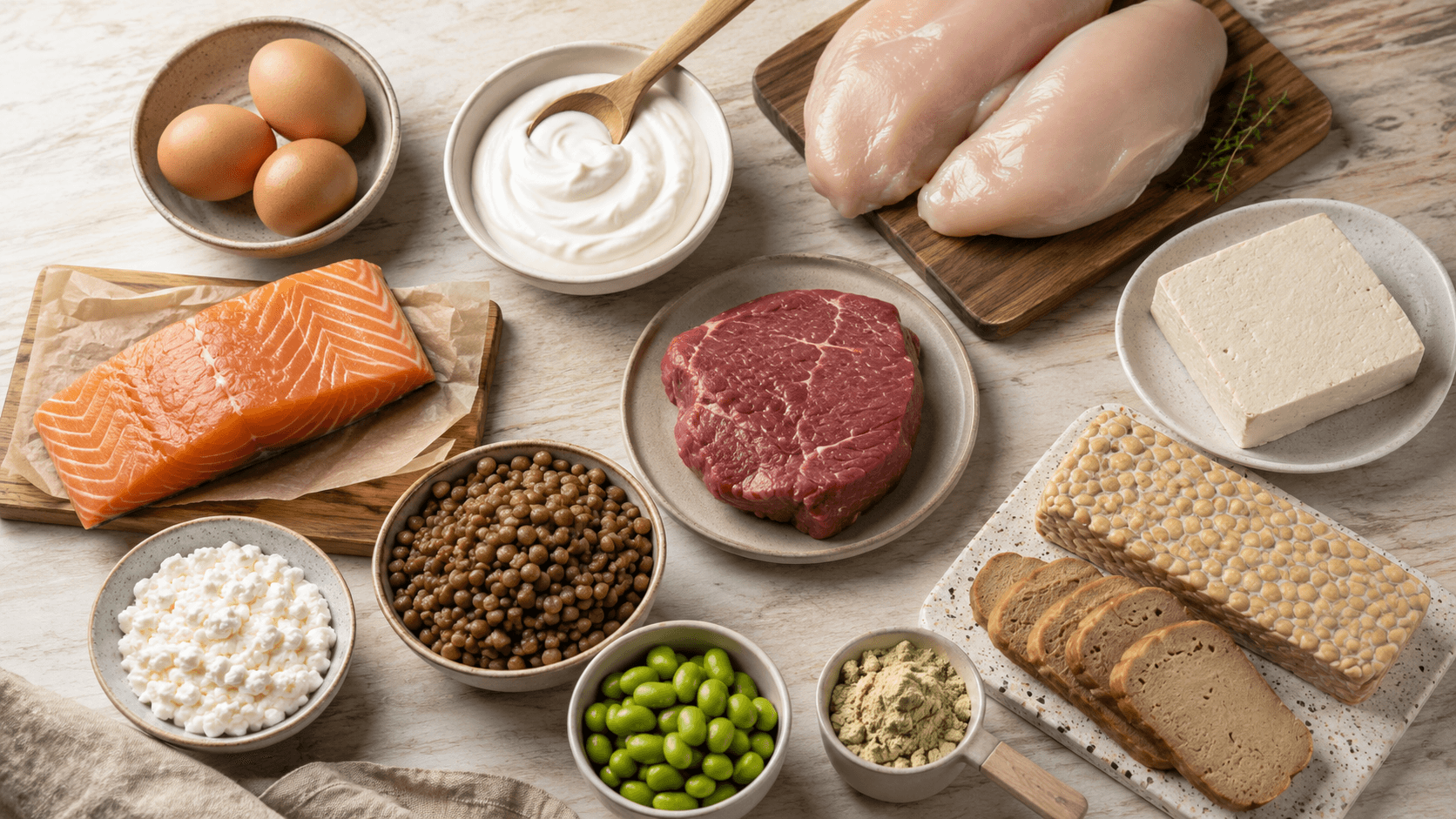
I set protein at 1.8 to 2.2 grams per kilogram of bodyweight for every client regardless of their dietary preference. For omnivores, this comes from chicken, fish, eggs, dairy, and lean meats. For vegetarians, from eggs, dairy, tofu, tempeh, seitan, and supplemental whey or casein. For vegans, from tofu, tempeh, seitan, lentils, chickpeas, edamame, soy protein, and pea protein. The target does not change. The food sources do. This is the one non-negotiable macronutrient target in every plan I write.
Why the Answer You Do Not Want to Hear Is Actually Good News
I understand why this message is frustrating. Telling someone that the answer to their fat loss nutrition problem is consistency rather than a specific diet feels like telling someone who wants directions that the answer is to just keep walking. But here is why it is actually the best possible news.
It means you have not been failing because you are broken. You have been failing because you were sold a lie: that there exists some perfect combination of foods and macros and timing that will make fat loss effortless if only you could find it. That perfect combination does not exist. Fat loss requires a sustained energy deficit and that requires discipline, planning, and patience regardless of whether the deficit comes from low-carb, low-fat, Mediterranean, vegan, or any other dietary framework.
It means you have permission to eat in a way you actually enjoy. You do not need to eliminate carbohydrates if you love carbohydrates. You do not need to force yourself to eat meat if you are vegetarian. You do not need to fast until noon if you wake up hungry. You need a calorie deficit, adequate protein, predominantly whole foods, and a structure that fits your life. Everything else is personal preference, and personal preference is one of the strongest predictors of long-term adherence (2).
And it means that the path forward is simpler than you thought. Not easier. Simpler. You do not need to learn a complicated new system. You need to commit to the fundamentals and keep showing up when it gets hard, which it will, because it always does.
What I Actually Do With Clients Who Come to Me Confused
When a new client comes to me having tried multiple diets without lasting success, the first thing I do is stop them from thinking about diets entirely. I do not ask what they want to eat. I ask what they are currently eating. I have them track their normal intake for seven to fourteen days without changing anything. This gives me their real maintenance calories, their actual protein intake (which is almost always too low), and a clear picture of their eating patterns, habits, and lifestyle.
From that baseline, I make the minimum number of changes required to create a moderate calorie deficit and hit their protein target. I do not overhaul their entire diet on day one. I adjust it. If they eat rice, they keep eating rice. If they are vegan, they stay vegan. If they skip breakfast, they keep skipping breakfast. I work within their existing patterns because those patterns are what they will naturally revert to under stress, and the closer their fat loss diet resembles their normal diet, the more sustainable it will be.

Over time, I progressively improve food quality, increase vegetable intake, refine meal timing around training, and optimise the details. But none of that happens until the foundation is solid. The foundation is always the same: a consistent deficit, sufficient protein, and a structure the client can maintain.
Top Tips: Making Fat Loss Nutrition Actually Work
- Stop searching for the perfect diet and commit to the fundamentals for a minimum of 12 weeks. A calorie deficit, protein at 1.8 to 2.2 grams per kilogram, predominantly whole foods, and a structure that fits your life. Twelve weeks of consistent execution with a moderate plan will always outperform twelve weeks of bouncing between aggressive ones.
- Track your food for at least the first four to six weeks. You cannot manage what you do not measure. Most people underestimate their calorie intake by 30 to 50 percent. Tracking eliminates the guesswork and reveals the hidden calories that are erasing your deficit.
- Choose a dietary framework that aligns with your preferences and your life. If you love carbohydrates, do not go keto. If you are vegetarian, do not force yourself into a meat-heavy plan. If you hate meal prep, find a simpler approach. The diet you enjoy following is the diet you will follow long enough to see results.
- Plan for imperfect days rather than pretending they will not happen. You will eat out. You will have social occasions. You will have days where you exceed your target. A flexible approach that accounts for these realities produces better long-term outcomes than a rigid plan that shatters at the first deviation.
- Get external accountability. Whether it is a coach, a training partner, or even a committed friend, having someone who reviews your progress and holds you to your plan dramatically increases your chances of success. Research shows supervised programmes achieve adherence rates 65 percent higher than self-monitored ones.
- Measure success over months, not days. Your weight will fluctuate daily. Your adherence will fluctuate weekly. None of that matters in isolation. What matters is whether, over rolling four-week periods, your trend is moving in the right direction. Zoom out. The trajectory matters more than any individual data point.
- Accept that fat loss is uncomfortable, and no diet eliminates that discomfort. Hunger during a deficit is normal. Cravings are normal. Wanting to eat more is normal. These are not signs that your diet is wrong. They are signs that your body is in a calorie deficit, which is exactly where it needs to be to lose fat. The discomfort is the process working.
The Bottom Line
The fat loss nutrition problem nobody wants to hear the answer to is that the answer is not a diet. It is discipline applied to any reasonable diet, consistently, over time. The research shows no meaningful difference between popular dietary approaches at 12 months. The research shows that adherence predicts outcomes more reliably than any macronutrient ratio, meal timing strategy, or food elimination protocol. The research shows that flexible, moderate, individually tailored approaches produce better long-term results than rigid, extreme, one-size-fits-all ones.
You do not need a new diet. You need a sustainable plan, the discipline to follow it, and ideally, someone in your corner who will hold you accountable when it gets hard.
If you are ready to stop cycling between diets and start building a nutrition approach that actually lasts, get in touch through trperformancecoaching.com. I work one-to-one with clients online globally. Whether you eat meat, are vegetarian, vegan, or anything in between, whether you are managing diabetes, PCOS, hypertension, or simply want to transform your body, I will build a plan around your life, your preferences, and your reality. No fads. No gimmicks. Just the fundamentals, applied consistently, with expert accountability. That is the answer nobody wants to hear. And it is the one that actually works.
Work with Me
Get a personalised coaching plan built around your goals, your schedule, and your life.
Enquire NowReferences
- Ge L, Sadeghirad B, Ball GDC, et al. Comparison of dietary macronutrient patterns of 14 popular named dietary programmes for weight and cardiovascular risk factor reduction in adults: systematic review and network meta-analysis of randomised trials. BMJ. 2020; 369: m696.
- Greenberg I, Stampfer MJ, Li KN, et al. Adherence and success in long-term weight loss diets: the dietary intervention randomized controlled trial (DIRECT). Journal of the American College of Nutrition. 2009; 28(2): 159-168.
- Thomas DM, Martin CK, Lettieri S, et al. Effect of dietary adherence on the body weight plateau: a mathematical model incorporating intermittent compliance with energy intake prescription. American Journal of Clinical Nutrition. 2014; 100(3): 787-795.
- Alhassan S, Kim S, Bersamin A, King AC, Gardner CD. Dietary adherence and weight loss success among overweight women: results from the A TO Z weight loss study. International Journal of Obesity. 2008; 32(6): 985-991.
- Del Corral P, Bryan DR, Garvey WT, Gower BA, Hunter GR. Dietary adherence during weight loss predicts weight regain. Obesity. 2011; 19(6): 1177-1181.
- Garthe I, Raastad T, Refsnes PE, Koivisto A, Sundgot-Borgen J. Effect of two different weight-loss rates on body composition and strength and power-related performance in elite athletes. International Journal of Sport Nutrition and Exercise Metabolism. 2011; 21(2): 97-104.
- Stewart TM, Williamson DA, White MA. Rigid vs flexible dieting: association with eating disorder symptoms in nonobese women. Appetite. 2002; 38(1): 39-44.
- Lemstra M, Bird Y, Nwankwo C, Rogers M, Moraros J. Weight loss intervention adherence and factors promoting adherence: a meta-analysis. Patient Preference and Adherence. 2016; 10: 1547-1559.
- Paddon-Jones D, Westman E, Mattes RD, Wolfe RR, Astrup A, Westerterp-Plantenga M. Protein, weight management, and satiety. American Journal of Clinical Nutrition. 2008; 87(5): 1558S-1561S.