
If you have ever started a fat loss phase and wondered whether you should be eating fewer carbohydrates, you are asking a question I hear almost every day. The low carb fat loss approach is one of the most debated topics in nutrition, and for good reason. There is genuine evidence supporting its use in the right context, at the right time, for the right person. There is also a tremendous amount of dogma, misinformation, and unnecessary extremism surrounding it. The truth, as always, sits in the middle.
I have settled on an approach that I use with the majority of my fat loss clients. It is not permanent low carb. It is not zero carb. It is not keto. It is a structured, time-limited lower carbohydrate kickstart phase that lasts two to four weeks, followed by a deliberate, progressive reintroduction of carbohydrates based on the individual's response, training demands, and metabolic health. This article explains exactly why I use this approach, what it looks like in practice, and when and how I bring carbohydrates back.
Why Most People Start a Fat Loss Phase Eating Too Many Carbohydrates
Before I explain the kickstart phase, you need to understand the problem it solves. The typical Western diet provides somewhere between 45 and 65 percent of total calories from carbohydrates, with a significant proportion coming from refined, processed sources like white bread, pasta, cereals, biscuits, sugary drinks, and snack foods (1). For someone eating 2,500 calories a day, that could mean 280 to 400 grams of carbohydrates, much of it rapidly digested, producing large blood sugar fluctuations and correspondingly large insulin responses throughout the day.
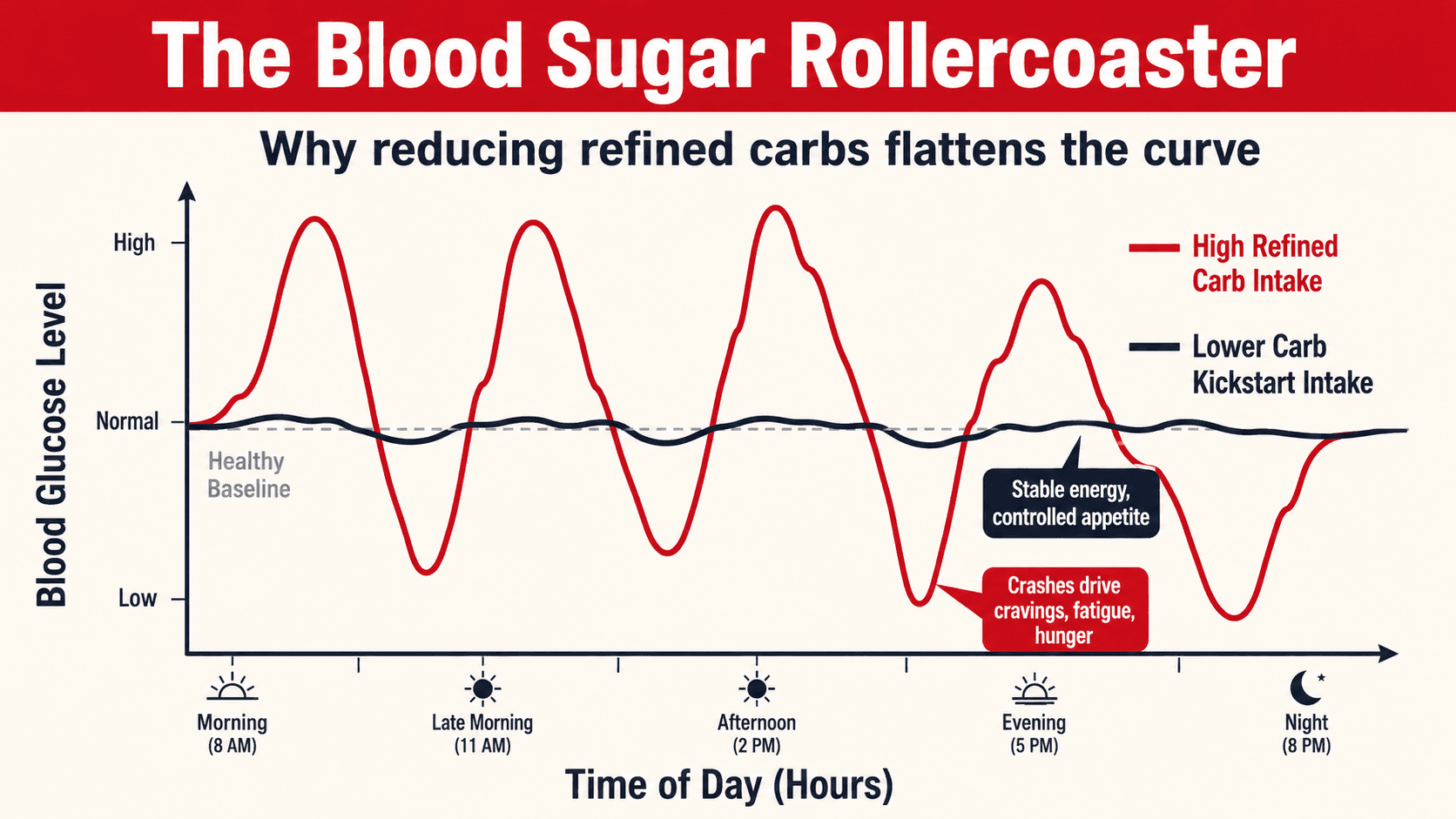
For someone who is sedentary, overweight, and already showing signs of insulin resistance, which is a substantial proportion of the clients who come to me wanting to lose fat, this habitual carbohydrate intake is far more than their body can handle efficiently. Their muscles are insulin resistant, meaning glucose is not being taken up and stored as glycogen effectively. Their liver is dealing with excess glucose by converting it to fat. Their pancreas is producing elevated levels of insulin to compensate. And their blood sugar is on a rollercoaster of spikes and crashes that drives hunger, cravings, fatigue, and a hormonal environment that makes fat loss harder than it needs to be.
Simply putting this person into a calorie deficit without addressing their carbohydrate intake can work, but it is often a harder road than it needs to be. They will be hungrier, more fatigued, more prone to cravings, and less likely to adhere. The kickstart phase solves this by resetting the metabolic environment before the grind of sustained dieting begins.
What the Low Carb Kickstart Phase Looks Like
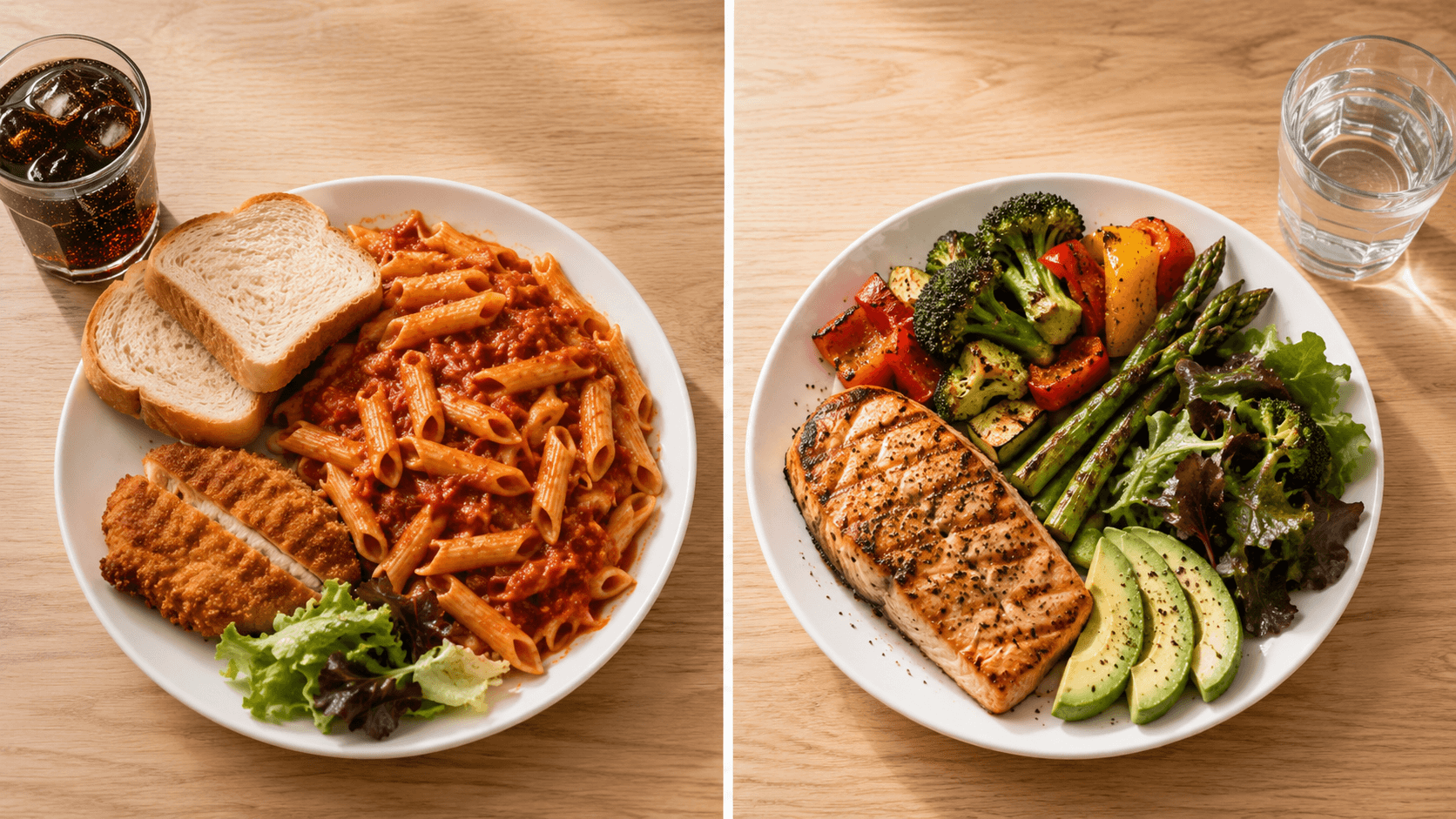
The kickstart phase is not a ketogenic diet. I am not restricting carbohydrates to 20 or 30 grams per day. I am not asking clients to count net carbs or test their ketone levels. I am reducing carbohydrate intake to approximately 50 to 100 grams per day for a period of two to four weeks while keeping protein high (1.8 to 2.2 grams per kilogram of bodyweight) and filling the remaining calories primarily with healthy fats and fibrous vegetables.
In practical terms, this means removing or significantly reducing the obvious high-carbohydrate foods: bread, pasta, rice, potatoes, cereals, fruit juice, and sugary snacks. It means building every meal around a protein source, adding generous amounts of non-starchy vegetables, including healthy fats from sources like olive oil, avocado, nuts, seeds, and for those who eat them, oily fish and eggs. Carbohydrates come from vegetables, small portions of berries, and incidental carbs in foods like nuts and dairy or dairy alternatives.
For my vegetarian clients, the kickstart centres around eggs, Greek yoghurt, cottage cheese, tofu, tempeh, paneer, protein powder (whey or plant based), and plenty of vegetables with nuts, seeds, and olive oil for fats. For vegan clients, the emphasis shifts to tofu, tempeh, seitan, edamame, small amounts of lentils and chickpeas (which contain carbohydrates but are prioritised for their protein content), pea or soy protein shakes, nuts, seeds, avocado, and non-starchy vegetables. Vegan clients typically sit at the higher end of the carbohydrate range during the kickstart (closer to 80 to 100 grams) because complete carbohydrate elimination is neither practical nor necessary on a plant-based diet.
Six Reasons the Kickstart Works So Well
Rapid early results build momentum and confidence. When you reduce carbohydrate intake significantly, your body depletes its glycogen stores. Glycogen is stored in your muscles and liver alongside water, approximately 3 grams of water per gram of glycogen (2). As glycogen depletes, the associated water is released. This produces a noticeable drop on the scale of 1.5 to 3 kilograms in the first week, sometimes more. Is this fat loss? No. It is primarily water and glycogen. But psychologically, it is enormously powerful. A client who has been stuck at the same weight for months sees the scale drop 2 kilograms in a week and suddenly believes the process is working. That belief drives adherence. That adherence drives real fat loss in the weeks that follow. I am honest with my clients about the water loss component, but I also leverage the psychological momentum it creates.
It resets appetite and reduces cravings. One of the most consistent findings in the research on reduced carbohydrate diets is appetite suppression. A systematic review of randomised controlled trials found that very low carbohydrate diets were associated with reduced hunger and greater satiety compared to higher carbohydrate approaches (3). The mechanism is multifactorial: eliminating refined carbohydrates removes the blood sugar rollercoaster that drives cravings, higher protein and fat intake are more satiating gram for gram, and the shift away from highly palatable processed foods reduces the hedonic drive to overeat. My clients consistently report that after three to five days on the kickstart, their hunger drops noticeably and their cravings for sugar and refined carbohydrates diminish or disappear entirely.
It improves insulin sensitivity rapidly. Reducing carbohydrate intake lowers the insulin demand on the pancreas. Within days, fasting insulin levels begin to fall, and the cells become more responsive to the insulin that is present. A study published in Diabetes, Obesity and Metabolism found that low carbohydrate diets produced significant reductions in fasting insulin at 3 to 6 months (4). For my insulin-resistant clients, this is one of the primary reasons for the kickstart. By the time I reintroduce carbohydrates, their body is handling them more efficiently. It is like clearing the backlog before allowing new deliveries.
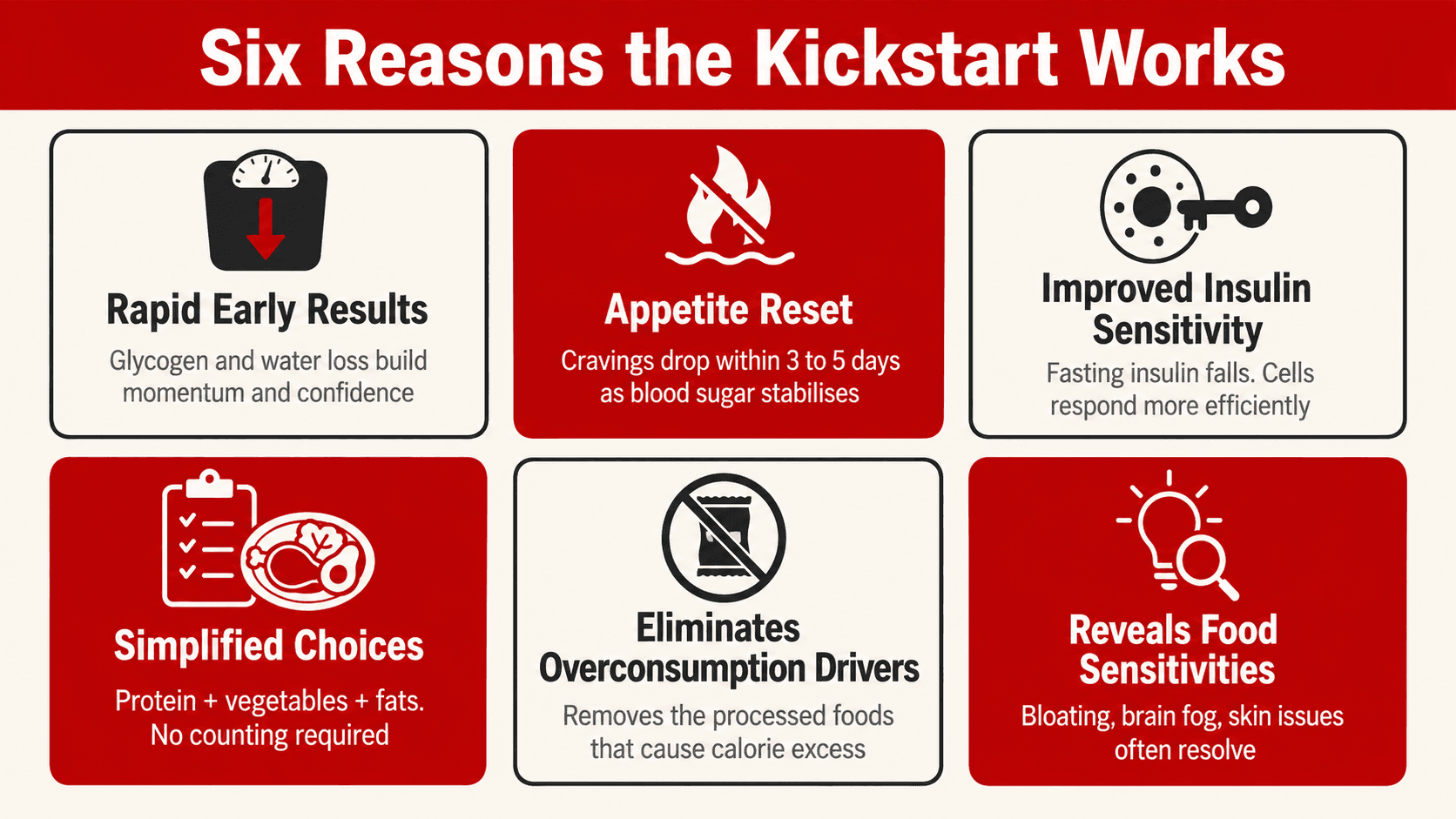
It simplifies decision-making. The beginning of a fat loss phase is when motivation is highest but habits are weakest. The kickstart simplifies food choices dramatically. Protein plus vegetables plus fats. That is the formula. There is no counting macros, no weighing rice portions, no agonising over whether pasta fits the plan. The simplicity reduces decision fatigue and makes adherence in the first few weeks as easy as possible. Once the habits are established and the client has built momentum, I introduce more complexity gradually.
It eliminates the foods most likely to cause overconsumption. The foods removed during the kickstart, bread, pasta, rice, cereals, biscuits, and sugary snacks, are the foods that are most frequently overeaten. Research by Kevin Hall at the National Institutes of Health demonstrated that ultra-processed foods drive overconsumption by approximately 500 calories per day compared to whole, minimally processed alternatives (5). By temporarily removing these foods, you remove the primary drivers of calorie excess. When they come back later, they come back in controlled portions within a structured plan, not as ad libitum dietary staples.
It reveals food sensitivities and intolerances. This is a secondary benefit that surprises many clients. By removing wheat, gluten-containing grains, and dairy (in some cases) during the kickstart, some clients discover that bloating, digestive discomfort, skin issues, or brain fog that they had accepted as normal actually resolve within two weeks. When specific foods are reintroduced, the ones causing issues become immediately obvious. This is not a formal elimination diet, but the kickstart often functions as one, and the information it provides is valuable for long-term dietary planning.
The Three Phases of Carbohydrate Management in a Fat Loss Programme
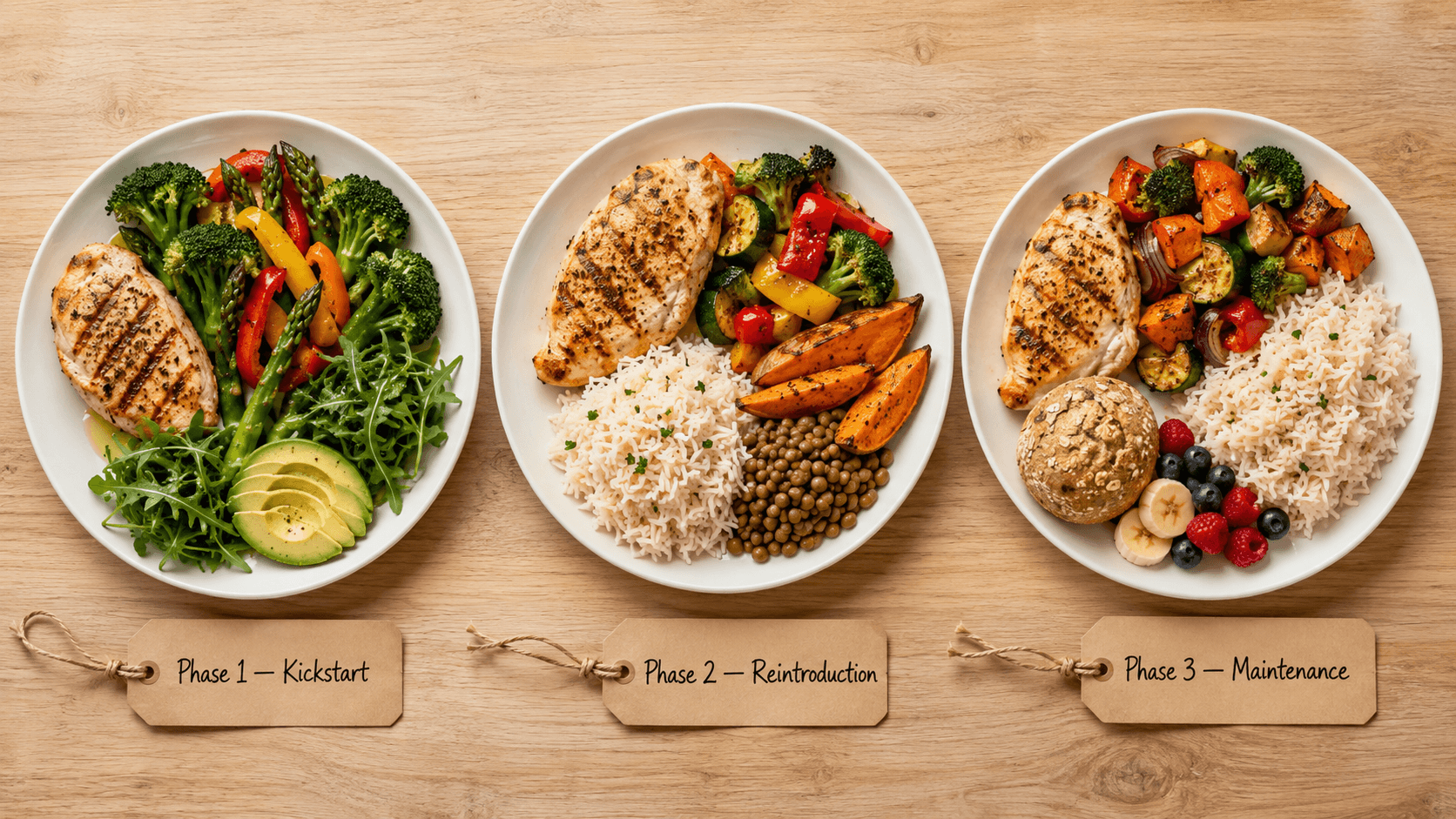
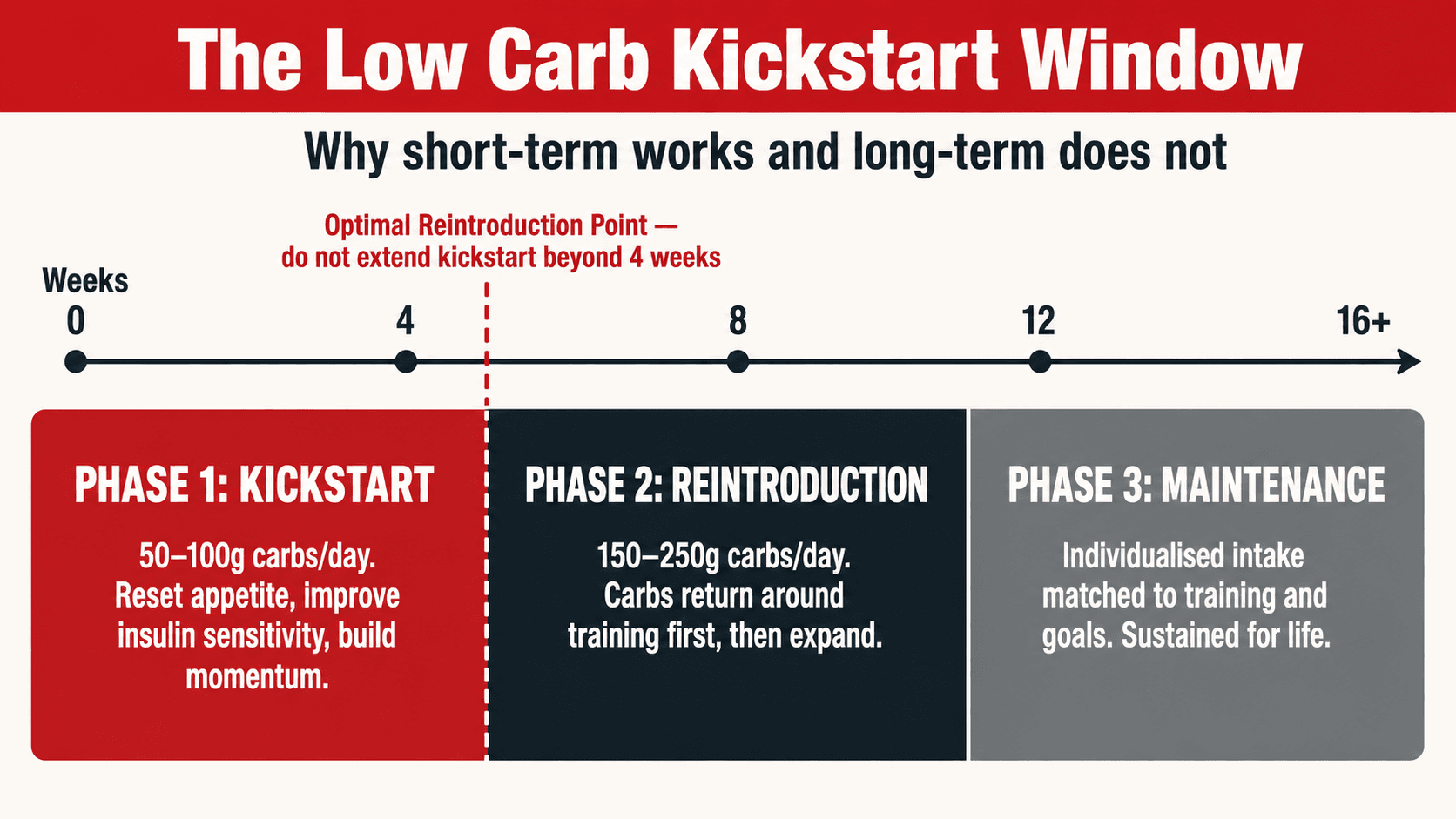
I structure carbohydrate intake across a fat loss programme in three distinct phases. The table below outlines what each phase looks like, how long it lasts, and why it matters.
| Phase 1: Low Carb Kickstart | Phase 2: Carbohydrate Reintroduction | Phase 3: Long-Term Maintenance | |
|---|---|---|---|
| Duration | 2 to 4 weeks | 4 to 8 weeks | Ongoing |
| Carbohydrate Intake | 50 to 100g per day. Primarily from vegetables, berries, and incidental sources. | 150 to 250g per day. Reintroduce oats, rice, sweet potato, legumes, fruit progressively. | Individualised. Typically 2 to 4g per kg bodyweight. Adjusted to training volume and goals. |
| Protein Intake | 1.8 to 2.2g per kg bodyweight. Highest priority at every meal. | 1.8 to 2.2g per kg bodyweight. Maintained throughout. | 1.6 to 2.2g per kg bodyweight. Adjusted based on goal (fat loss vs maintenance). |
| Fat Intake | Higher relative to total calories. Fills the gap left by reduced carbs. Healthy sources prioritised. | Moderate. Decreases as carbohydrate calories increase. Minimum 0.7g per kg maintained. | Moderate. Minimum 0.7 to 1.0g per kg. Balance between carbs and fats based on preference. |
| Primary Carb Sources | Non-starchy vegetables, small amounts of berries, nuts, seeds. | Oats, sweet potato, basmati rice, quinoa, lentils, chickpeas, fruit. | All whole food sources. Refined carbs limited to 20 percent or less of total carb intake. |
| Training Fuelling | Adequate for moderate intensity. May feel slightly flat in the first week. Adjust training intensity if needed. | Carbs strategically placed around training sessions for performance and recovery. | Fully fuelled. Carbs matched to training demands. Higher on training days, lower on rest days if desired. |
| Who Benefits Most | Insulin-resistant individuals. People coming from a high-carb processed diet. Those who struggle with cravings and appetite control. | Everyone. This is where the transition to sustainable long-term habits occurs. | Everyone. This is the dietary pattern you maintain for life with periodic adjustments. |
| Primary Purpose | Reset appetite, improve insulin sensitivity, build momentum, simplify choices, eliminate processed food drivers. | Restore training performance, increase dietary variety, teach portion control with carbs, test individual carb tolerance. | Sustain results long-term. Flexible, enjoyable, performance-supporting nutrition that is not a diet. |
When and How I Bring Carbohydrates Back
The kickstart is always temporary. I never leave clients on a very low carbohydrate intake indefinitely because it is neither necessary nor desirable for long-term health, training performance, or dietary sustainability. The reintroduction starts at the end of the kickstart phase, typically at week 3 or 4, and follows a structured, progressive approach.
I start by adding carbohydrates to the meals directly before and after training sessions. This is where the body handles them most efficiently because exercise increases insulin sensitivity and GLUT4 transporter activity in muscle tissue (6). A portion of oats before training and a portion of rice or sweet potato after training is the first step. This alone might add 60 to 80 grams of carbohydrates back into the daily intake.
Over the following weeks, I add carbohydrates to other meals progressively: breakfast, lunch, and then dinner. Each addition is monitored for its effect on appetite, energy, training performance, body composition, and subjective wellbeing. If a client reports that adding rice at dinner makes them bloated or triggers evening snacking, I adjust. If they report that adding oats at breakfast transforms their morning energy, I keep it. This is not a rigid protocol. It is guided experimentation based on data and feedback.
The final carbohydrate intake settles at whatever level supports the client's training, their calorie target, their satiety, and their enjoyment of food. For most of my fat loss clients, this is between 150 and 250 grams per day by the midpoint of their programme. For very active individuals, it may be higher. For clients with significant insulin resistance, it may sit at the lower end. There is no universal number. There is only the number that works for you.
Why Staying Low Carb Too Long Becomes a Problem
This is the part that the low carb evangelists do not want to talk about. While short-term carbohydrate restriction has clear benefits for appetite, insulin sensitivity, and early momentum, prolonged restriction beyond four to six weeks can create problems that undermine your fat loss and your health.
Training performance declines. Glycogen is the primary fuel for high-intensity exercise, including resistance training. If you are training hard three to four times per week, chronically depleted glycogen stores will reduce your power output, your training volume, and your ability to generate the mechanical tension that stimulates muscle growth and preservation. Over time, this translates to poorer body composition outcomes because you are not training hard enough to maintain or build the muscle that keeps your metabolic rate healthy (7).
Thyroid function can be affected. Prolonged carbohydrate restriction, particularly when combined with a calorie deficit, has been associated with reductions in T3 (the active thyroid hormone), which contributes to lower metabolic rate and adaptive thermogenesis (8). Your body interprets the combination of low calories and low carbohydrates as a signal of energy scarcity and downregulates energy expenditure accordingly. Reintroducing carbohydrates helps mitigate this response.
Adherence deteriorates. The research on this is unambiguous. A meta-analysis of very low carbohydrate ketogenic diets found that adherence was poor across the majority of studies, with only one out of thirteen trials achieving sustained adherence to the prescribed carbohydrate limit (9). In my own practice, I have found that most clients can sustain a very low carbohydrate intake enthusiastically for two to three weeks. By week four, the novelty wears off, social eating becomes difficult, cravings return, and the risk of a binge increases. Reintroducing carbohydrates before this breaking point preserves the gains from the kickstart and prevents the restrict-binge cycle that derails so many fat loss attempts.
Gut health may suffer. Fibre intake often declines on very low carbohydrate diets because many of the best fibre sources, including legumes, whole grains, and starchy vegetables, are restricted. A diverse, fibre-rich diet supports gut microbiome health, which has downstream effects on immune function, inflammation, appetite regulation, and metabolic health (10). Bringing carbohydrates back, particularly from legumes, oats, and whole grains, restores fibre intake and supports long-term gut health.
Top Tips: Getting the Most From a Low Carb Kickstart Phase
Treat the kickstart as a phase, not a lifestyle. Two to four weeks. That is all it needs to be. You are resetting your appetite, improving your insulin sensitivity, and building momentum. You are not adopting a permanent dietary identity. The goal is always to return to a balanced, sustainable intake that includes whole food carbohydrates.
Keep protein high from day one. The kickstart only works if protein is prioritised. 1.8 to 2.2 grams per kilogram of bodyweight per day, split across three to four meals. This protects your muscle mass, maximises satiety, and ensures the weight you lose is fat, not lean tissue. For vegetarians: eggs, Greek yoghurt, cottage cheese, tofu, tempeh, whey or plant protein shakes. For vegans: tofu, tempeh, seitan, edamame, soy or pea protein shakes.
Do not fear dietary fat during the kickstart. When carbohydrates are reduced, fat fills the caloric gap. Avocado, olive oil, nuts, seeds, oily fish, eggs, and cheese or their plant-based equivalents are staples during this phase. Fat does not make you fat. Excess calories make you fat. Fat during the kickstart keeps you satisfied and prevents the miserable, unsustainable feeling of eating nothing but chicken and broccoli.
Eat enough vegetables to fill two thirds of your plate. Broccoli, spinach, courgettes, peppers, cauliflower, asparagus, green beans, mushrooms, tomatoes, leafy greens. These provide fibre, micronutrients, and volume with minimal carbohydrate content. They keep you full, they keep your digestion moving, and they prevent the constipation that some people experience when reducing carbohydrates.
Expect to feel slightly flat in the first three to five days. As your body transitions from relying heavily on glycogen to using more fat for fuel, you may experience mild fatigue, headaches, or irritability. This is normal and temporary. Stay hydrated, ensure adequate sodium intake (adding a pinch of salt to water can help), and reduce training intensity slightly if needed. By the end of the first week, most clients report feeling better than they did before.
Reintroduce carbohydrates around training first. When the kickstart ends, the first carbohydrates to come back should be in the pre-training and post-training meals. This is when your muscles are most receptive and the carbohydrates will be used most productively. Oats before training, rice or sweet potato after training is the simplest starting point.
Monitor how you feel as carbohydrates increase. Pay attention to your energy, your appetite, your sleep, your training performance, and your digestion as carbohydrates come back. Everyone has a different optimal carbohydrate intake. The reintroduction phase is where you discover yours. If energy improves and appetite stays controlled, you are on track. If cravings return sharply or bloating occurs, adjust the type or amount.
The Bottom Line
The low carb kickstart is not a diet. It is a strategic tool within a well-structured fat loss programme. It works because it resets appetite, improves insulin sensitivity, builds psychological momentum, simplifies decision-making, and eliminates the processed food drivers of overconsumption. It does not work as a permanent approach because it limits training performance, dietary variety, fibre intake, and long-term adherence. The magic is not in the restriction. The magic is in knowing when to restrict, how to transition, and when to bring carbohydrates back. That requires nuance, individualisation, and experience.
If you want a fat loss programme that uses the right tools at the right time, that adapts to your body, your metabolism, your medical history, and your dietary preferences, get in touch through trperformancecoaching.com. I work one-to-one with clients online globally. Whether you eat meat, are vegetarian, vegan, or anywhere in between, whether you are managing diabetes, PCOS, or simply want to lose fat and feel your best, I will build a plan that works for your life and gets results. No dogma. No extremes. Just the right approach, at the right time, for you.
Work with Me
Get a personalised coaching plan built around your goals, your schedule, and your life.
Enquire NowReferences
- Public Health England. National Diet and Nutrition Survey: Results from Years 9 to 11 (2016/2017 to 2018/2019). London: PHE; 2020.
- Olsson KE, Saltin B. Variation in total body water with muscle glycogen changes in man. Acta Physiologica Scandinavica. 1970; 80(1): 11-18.
- Gibson AA, Seimon RV, Lee CM, et al. Do ketogenic diets really suppress appetite? A systematic review and meta-analysis. Obesity Reviews. 2015; 16(1): 64-76.
- Apekey TA, Maynard MJ, Apaydim R, Healey A, Kain-Wright K. Comparison of the effectiveness of low carbohydrate versus low fat diets in type 2 diabetes: systematic review and meta-analysis of randomized controlled trials. Nutrients. 2022; 14(20): 4391.
- Hall KD, Ayuketah A, Brychta R, et al. Ultra-processed diets cause excess calorie intake and weight gain: an inpatient randomized controlled trial of ad libitum food intake. Cell Metabolism. 2019; 30(1): 67-77.
- Richter EA, Hargreaves M. Exercise, GLUT4, and skeletal muscle glucose uptake. Physiological Reviews. 2013; 93(3): 993-1017.
- Burke LM, Hawley JA, Wong SH, Jeukendrup AE. Carbohydrates for training and competition. Journal of Sports Sciences. 2011; 29(Suppl 1): S17-S27.
- Danforth E. Diet and thyroid hormone metabolism. In: Bray GA, ed. Obesity: Comparative Methods of Weight Control. John Libbey; 1985: 67-75.
- Bueno NB, de Melo IS, de Oliveira SL, da Rocha Ataide T. Very-low-carbohydrate ketogenic diet v. low-fat diet for long-term weight loss: a meta-analysis of randomised controlled trials. British Journal of Nutrition. 2013; 110(7): 1178-1187.
- Sonnenburg ED, Sonnenburg JL. Starving our microbial self: the deleterious consequences of a diet deficient in microbiota-accessible carbohydrates. Cell Metabolism. 2014; 20(5): 779-786.
- Silverii GA, Botarelli L, Dicembrini I, et al. Effectiveness of low-carbohydrate diets for long-term weight loss in obese individuals: a meta-analysis of randomized controlled trials. Diabetes, Obesity and Metabolism. 2022; 24(8): 1458-1468.