If you have spent any time reading about nutrition, you have almost certainly come across the term glycemic index. It gets thrown around in diet articles, on food packaging, and in conversations about blood sugar and weight loss. But most people have only a vague understanding of what it actually means, and even fewer know how to use it practically. Some dismiss it entirely. Others treat it like gospel and build their entire diet around it. Both approaches miss the point. The glycemic index is a genuinely useful tool when you understand what it measures, what it does not measure, and how to apply it intelligently alongside the other fundamentals of good nutrition.
I use the glycemic index as one of several tools when building nutrition plans for my clients. It is particularly valuable for clients managing type 2 diabetes, PCOS, insulin resistance, or metabolic syndrome, and it has practical applications for anyone pursuing fat loss or improved body composition. But it is not a magic ranking system and it does not override calories or macronutrients.
What Is the Glycemic Index
The glycemic index (GI) is a numerical scale that ranks carbohydrate-containing foods based on how quickly and how much they raise blood glucose levels after consumption. It was developed in 1981 by Dr David Jenkins and colleagues at the University of Toronto and published in the American Journal of Clinical Nutrition.(1) The scale runs from 0 to 100, with pure glucose assigned a reference value of 100. Foods are tested in standardised conditions: a portion providing 50 grams of available carbohydrate is consumed after an overnight fast, and blood glucose is measured at intervals over the following two hours. The resulting blood glucose curve is compared to the curve produced by 50 grams of pure glucose, and the food is given a GI value accordingly.
Foods are broadly categorised into three groups. Low GI foods score 55 or below and produce a slow, gradual rise in blood glucose. Medium GI foods score between 56 and 69 and produce a moderate rise. High GI foods score 70 or above and cause a rapid, sharp spike in blood glucose followed by a correspondingly rapid decline.(2) The practical implication is that low GI foods provide a more sustained release of energy, keep you feeling fuller for longer, and place less demand on your body’s insulin response. High GI foods flood the bloodstream with glucose quickly, trigger a large insulin response, and often leave you feeling hungry again within a short period.
Glycemic Index of Common Foods
The table below lists the glycemic index values of common foods from highest to lowest. These values are based on published data from the International Tables of Glycemic Index and Glycemic Load Values compiled by Atkinson, Foster-Powell, and Brand-Miller.(3) Keep in mind that GI values can vary depending on ripeness, cooking method, processing, and the specific variety of a food. These figures represent tested averages and are a reliable guide for practical use.
| Food | GI Value | Category |
|---|---|---|
| Glucose | 100 | High GI |
| White baguette | 95 | High GI |
| Cornflakes | 93 | High GI |
| Baked potato (Russet) | 91 | High GI |
| White rice (jasmine) | 89 | High GI |
| Rice cakes | 87 | High GI |
| Instant mashed potato | 85 | High GI |
| Pretzels | 83 | High GI |
| Rice Krispies | 82 | High GI |
| Watermelon | 76 | High GI |
| White bread (sliced) | 75 | High GI |
| Wholemeal bread | 74 | High GI |
| Bagel (white) | 72 | High GI |
| Pineapple | 66 | Medium GI |
| Couscous | 65 | Medium GI |
| Sucrose (table sugar) | 65 | Medium GI |
| Raisins | 64 | Medium GI |
| Beetroot | 64 | Medium GI |
| White rice (long grain) | 64 | Medium GI |
| Sweet potato (boiled) | 63 | Medium GI |
| Ice cream (regular) | 62 | Medium GI |
| Muesli (non-toasted) | 60 | Medium GI |
| Honey | 58 | Medium GI |
| Pitta bread (white) | 57 | Medium GI |
| Basmati rice | 57 | Medium GI |
| Mango | 56 | Medium GI |
| Banana (ripe) | 55 | Low GI |
| Oats (rolled, porridge) | 55 | Low GI |
| Sourdough bread | 54 | Low GI |
| Brown rice | 50 | Low GI |
| Pasta (white, al dente) | 49 | Low GI |
| Pasta (wholemeal) | 48 | Low GI |
| Grapes | 46 | Low GI |
| Orange | 45 | Low GI |
| Quinoa | 45 | Low GI |
| Baked beans | 40 | Low GI |
| Apple | 39 | Low GI |
| Pear | 38 | Low GI |
| Chickpeas | 36 | Low GI |
| Butter beans | 36 | Low GI |
| Black beans | 35 | Low GI |
| Skimmed milk | 32 | Low GI |
| Lentils (green/brown) | 30 | Low GI |
| Kidney beans | 29 | Low GI |
| Full fat milk | 27 | Low GI |
| Grapefruit | 25 | Low GI |
| Barley (pearl) | 25 | Low GI |
| Soy milk (unsweetened) | 24 | Low GI |
| Cherries | 22 | Low GI |
| Cashew nuts | 22 | Low GI |
| Fructose | 19 | Low GI |
| Peanuts | 14 | Low GI |
| Hummus | 6 | Low GI |
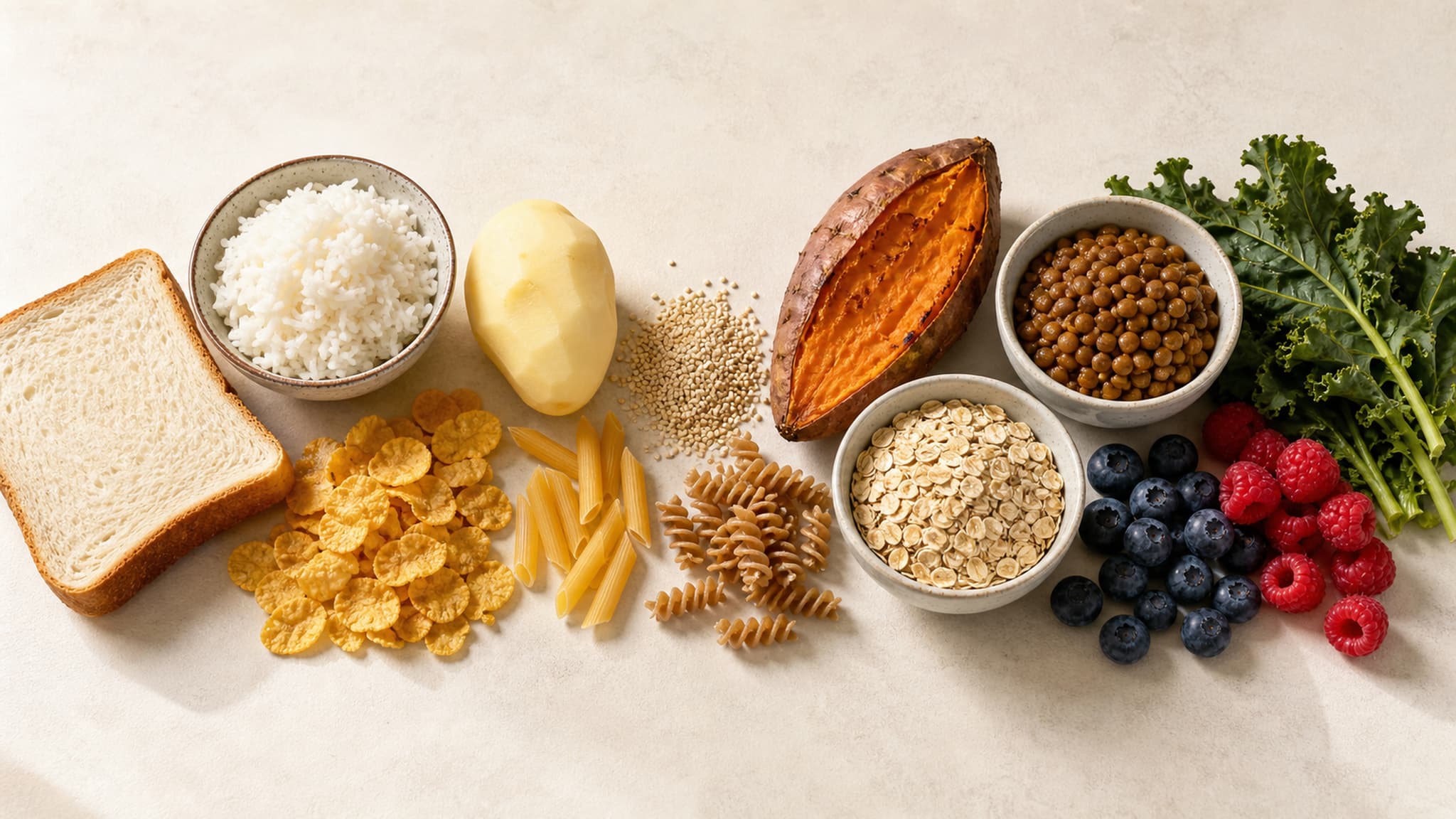
This table is not exhaustive, but it covers the foods that come up most frequently in conversations with my clients. The pattern is clear. Highly processed, refined carbohydrates tend to sit at the top. Whole, minimally processed foods with intact fibre, protein, and fat tend to sit lower. There are some surprises in there, like watermelon scoring high despite being a fruit, and that is where understanding the limitations of the GI becomes important, which I will come to shortly.
Why the Glycemic Index Matters for Fat Loss
Fat loss ultimately comes down to energy balance. You need to consume fewer calories than you expend over a sustained period. The glycemic index does not change that fundamental equation. But what the GI does influence is how easy or difficult it is to maintain that deficit consistently, and how your body handles the food you eat within that deficit. This is where it becomes a genuinely valuable tool rather than just a theoretical concept.
When you eat high GI foods, blood glucose spikes rapidly. Your pancreas responds by releasing a large bolus of insulin to clear the glucose from your bloodstream. This sharp insulin response drives glucose into cells quickly, often overshooting and causing a subsequent drop in blood sugar below baseline. That reactive hypoglycemia triggers hunger, cravings, irritability, fatigue, and a strong drive to eat again, usually reaching for more high GI, quick-energy foods. The result is a cycle of spiking and crashing that makes appetite control significantly harder.(4) When you eat low GI foods, the glucose enters your bloodstream gradually, the insulin response is proportionate and controlled, blood sugar remains stable, and you stay fuller for longer. Adhering to a calorie deficit becomes substantially easier when your blood sugar is not on a rollercoaster.
A meta-analysis published in the American Journal of Clinical Nutrition examined the effect of low GI diets on body weight and found that low GI diets produced greater fat loss and better preservation of lean mass compared to high GI diets, even when total calorie intake was matched.(5) Another study published in The Lancet found that overweight individuals on a low GI diet lost more body fat and maintained lower levels of circulating insulin compared to those on a high GI diet over a 12-week period.(6) The mechanism is not complicated. Stable blood sugar leads to better appetite regulation, fewer cravings, less overeating, and a hormonal environment that favours fat oxidation over fat storage.
The Glycemic Index and Insulin Resistance
For clients managing insulin resistance, type 2 diabetes, PCOS, or metabolic syndrome, the glycemic index becomes even more important. These conditions are characterised by an impaired ability to regulate blood glucose effectively. The pancreas is already working harder than it should to produce insulin, and the cells are responding less efficiently to it. Repeatedly flooding the system with high GI foods accelerates this dysfunction. It is like revving an engine that is already overheating.
Research published in the Journal of the American Medical Association found that low GI diets improved glycemic control and reduced HbA1c (a marker of long-term blood sugar management) in individuals with type 2 diabetes.(7) For clients with PCOS, a condition strongly linked to insulin resistance, a lower GI dietary approach has been shown to improve menstrual regularity, reduce androgen levels, and support weight loss.(8) I use the glycemic index extensively when working with these populations. It is not the only consideration, but it is a critical one. Choosing lower GI carbohydrate sources at every meal is one of the simplest and most impactful changes these clients can make.
The Glycemic Index and Training Performance
The GI is also a useful tool for timing your nutrition around training. Before a training session, you generally want sustained energy without a blood sugar crash mid-workout. Low to moderate GI carbohydrates consumed 2 to 3 hours before training, such as oats, sweet potato, basmati rice, or wholegrain bread, provide a steady stream of glucose that supports performance throughout the session.(9) Immediately after intense resistance training or high-intensity exercise, the situation changes. Post-workout, your muscles are depleted of glycogen and are highly insulin sensitive. This is the one window where higher GI carbohydrates can be strategically useful, as they rapidly replenish glycogen stores and stimulate an insulin response that supports nutrient delivery to recovering muscle tissue. White rice, white potato, rice cakes, or fruit are commonly used here.
For most of my clients who are training for body composition rather than competitive sport, I do not overcomplicate this. I focus on lower GI carbohydrate sources for the majority of their meals and allow flexibility around training windows. The overall quality and quantity of their carbohydrate intake across the day matters far more than obsessing over the GI of every individual food.
The Glycemic Index and Satiety
Satiety, the feeling of fullness and satisfaction after eating, is one of the most important practical factors in any fat loss plan. If you are hungry all the time, you will eventually break. The glycemic index has a direct relationship with satiety. A study published in the European Journal of Clinical Nutrition found that low GI meals produced significantly greater satiety and reduced subsequent food intake compared to high GI meals matched for calories and macronutrients.(10) The slow digestion and gradual glucose release of low GI foods keeps hunger hormones stable and prevents the sharp return of appetite that follows a blood sugar crash.
This is one of the reasons I prioritise foods like oats, lentils, chickpeas, sweet potatoes, and legumes in my clients’ meal plans. They are not just good sources of carbohydrates and fibre. They keep my clients full, satisfied, and in control of their appetite throughout the day. For vegetarian and vegan clients, many of the best low GI carbohydrate sources are already staples of their diets. Lentils, beans, chickpeas, and whole grains are the backbone of plant-based eating and they happen to be some of the most satiating foods available.
The Limitations of the Glycemic Index
The glycemic index is a useful tool but it is not perfect, and understanding its limitations is important for using it properly. The first limitation is that GI is measured in isolation. Foods are tested on their own, consumed after an overnight fast, in a portion providing exactly 50 grams of carbohydrate. That is not how anyone eats in real life. When you eat a mixed meal containing protein, fat, and fibre alongside your carbohydrates, the glycemic response is significantly blunted.(11) A baked potato on its own has a high GI, but a baked potato eaten with chicken, vegetables, and a drizzle of olive oil produces a much flatter blood glucose curve. Context matters enormously.
The second limitation is that GI does not account for portion size. This is where the concept of glycemic load (GL) becomes important. Glycemic load multiplies the GI of a food by the amount of carbohydrate in a typical serving and divides by 100. Watermelon has a GI of around 76, which looks alarming. But a typical serving of watermelon contains only about 6 grams of carbohydrate, giving it a glycemic load of roughly 5, which is very low.(3) The actual impact on your blood sugar from a slice of watermelon is minimal. GI tells you how fast. GL tells you how much. Both matter.
The third limitation is individual variability. People respond differently to the same foods based on their gut microbiome, insulin sensitivity, genetics, activity levels, and metabolic health.(12) A food that spikes one person’s blood sugar significantly may produce a moderate response in another. The GI gives you a useful population-level average, but your individual response may differ. For clients who want precision, continuous glucose monitors provide real-time, personalised data that takes the guesswork out entirely. For everyone else, the GI is a reliable directional guide that works well in practice even if it is not perfect in theory.
Top Tips for Using the Glycemic Index in Your Nutrition
Swap Rather Than Restrict. You do not need to eliminate all high GI foods. You need to make smarter swaps for the majority of your meals. White rice becomes basmati rice. White bread becomes sourdough or wholegrain. Instant oats become rolled or steel-cut oats. White potato becomes sweet potato or new potatoes. These swaps lower the overall glycemic impact of your diet without removing entire food groups or making your meals boring.
Always Eat Carbohydrates With Protein and Fat. Adding protein and fat to a carbohydrate-containing meal slows gastric emptying and glucose absorption, significantly reducing the glycemic response.(11) Never eat refined carbohydrates in isolation. A piece of white toast on its own is high GI. A piece of white toast with eggs, avocado, and smoked salmon is a completely different metabolic event. Build balanced meals and the GI largely takes care of itself.
Prioritise Fibre-Rich Carbohydrate Sources. Fibre slows carbohydrate digestion and glucose absorption. Foods that are naturally high in fibre, such as legumes, vegetables, whole grains, and most fruits, tend to have lower GI values. If you are eating enough fibre (aiming for 30 grams or more per day), you are almost certainly eating a predominantly low GI diet without even trying.
Use Higher GI Foods Strategically Around Training. Post-workout is the one time when a faster glucose response can work in your favour. White rice, rice cakes, white potato, or fruit consumed after intense training helps replenish glycogen stores quickly and supports recovery. Save your higher GI carbohydrates for this window and keep the rest of your meals lower GI.
Think Glycemic Load, Not Just Glycemic Index. Always consider how much carbohydrate you are actually eating, not just the speed at which it is absorbed. A small portion of a high GI food may have less total impact on your blood sugar than a large portion of a moderate GI food. Portion size and total carbohydrate content matter just as much as the GI value.
Do Not Ignore Calories. The glycemic index does not override energy balance. A low GI diet consumed in a caloric surplus will still result in fat gain. The GI is a tool for improving the quality and timing of your carbohydrate intake within a well-structured calorie-controlled plan. It works alongside your deficit, not instead of it.
The Bottom Line
The glycemic index is a practical, evidence-based tool that helps you make better carbohydrate choices for fat loss, blood sugar management, appetite control, training performance, and long-term metabolic health. It is not the only thing that matters and it has genuine limitations, but when used intelligently alongside calorie control, adequate protein intake, and a structured training programme, it makes a meaningful difference to how you feel, how you perform, and how quickly you see results. Choose lower GI carbohydrate sources for the majority of your meals, eat balanced plates with protein, fat, and fibre, and save higher GI options for strategic moments around training. That is all you need to do.
If you want a personalised nutrition plan that accounts for your glycemic health, your training, your body composition goals, and your dietary preferences, get in touch through TR Performance Coaching. I work one-to-one with clients online globally. Whether you eat meat, are vegetarian, vegan, or somewhere in between, and whether you are managing diabetes, PCOS, or simply want to lose fat and feel better, I will build a plan that works for your body and your life.
Work with Me
Get a personalised coaching plan built around your goals, your schedule, and your life.
Enquire NowReferences
- Jenkins DJ, Wolever TM, Taylor RH, et al. Glycemic index of foods: a physiological basis for carbohydrate exchange. American Journal of Clinical Nutrition. 1981; 34(3): 362-366.
- Brand-Miller J, Wolever TM, Foster-Powell K, Colagiuri S. The New Glucose Revolution. 3rd ed. New York: Marlowe and Company; 2007.
- Atkinson FS, Foster-Powell K, Brand-Miller JC. International tables of glycemic index and glycemic load values: 2008. Diabetes Care. 2008; 31(12): 2281-2283.
- Ludwig DS. The glycemic index: physiological mechanisms relating to obesity, diabetes, and cardiovascular disease. JAMA. 2002; 287(18): 2414-2423.
- Thomas DE, Elliott EJ, Baur L. Low glycaemic index or low glycaemic load diets for overweight and obesity. Cochrane Database of Systematic Reviews. 2007; 3: CD005105.
- Ebbeling CB, Leidig MM, Sinclair KB, Hangen JP, Ludwig DS. A reduced-glycemic load diet in the treatment of adolescent obesity. Archives of Pediatrics and Adolescent Medicine. 2003; 57(8): 773-779.
- Jenkins DJ, Kendall CW, McKeown-Eyssen G, et al. Effect of a low-glycemic-index or a high-cereal-fiber diet on type 2 diabetes: a randomized trial. JAMA. 2008; 300(23): 2742-2753.
- Marsh KA, Steinbeck KS, Atkinson FS, Petocz P, Brand-Miller JC. Effect of a low glycemic index compared with a conventional healthy diet on polycystic ovary syndrome. American Journal of Clinical Nutrition. 2010; 92(1): 83-92.
- Burke LM, Collier GR, Hargreaves M. Muscle glycogen storage after prolonged exercise: effect of the glycemic index of carbohydrate feedings. Journal of Applied Physiology. 1993; 75(2): 1019-1023.
- Bornet FR, Jardy-Gennetier AE, Jacquet N, Stowell J. Glycaemic response to foods: impact on satiety and long-term weight regulation. Appetite. 2007; 49(3): 535-553.
- Moghaddam E, Vogt JA, Wolever TM. The effects of fat and protein on glycemic responses in nondiabetic humans vary with waist circumference, fasting plasma insulin, and dietary fiber intake. Journal of Nutrition. 2006; 136(10): 2506-2511.
- Zeevi D, Korem T, Zmora N, et al. Personalized nutrition by prediction of glycemic responses. Cell. 2015; 163(5): 1079-1094.