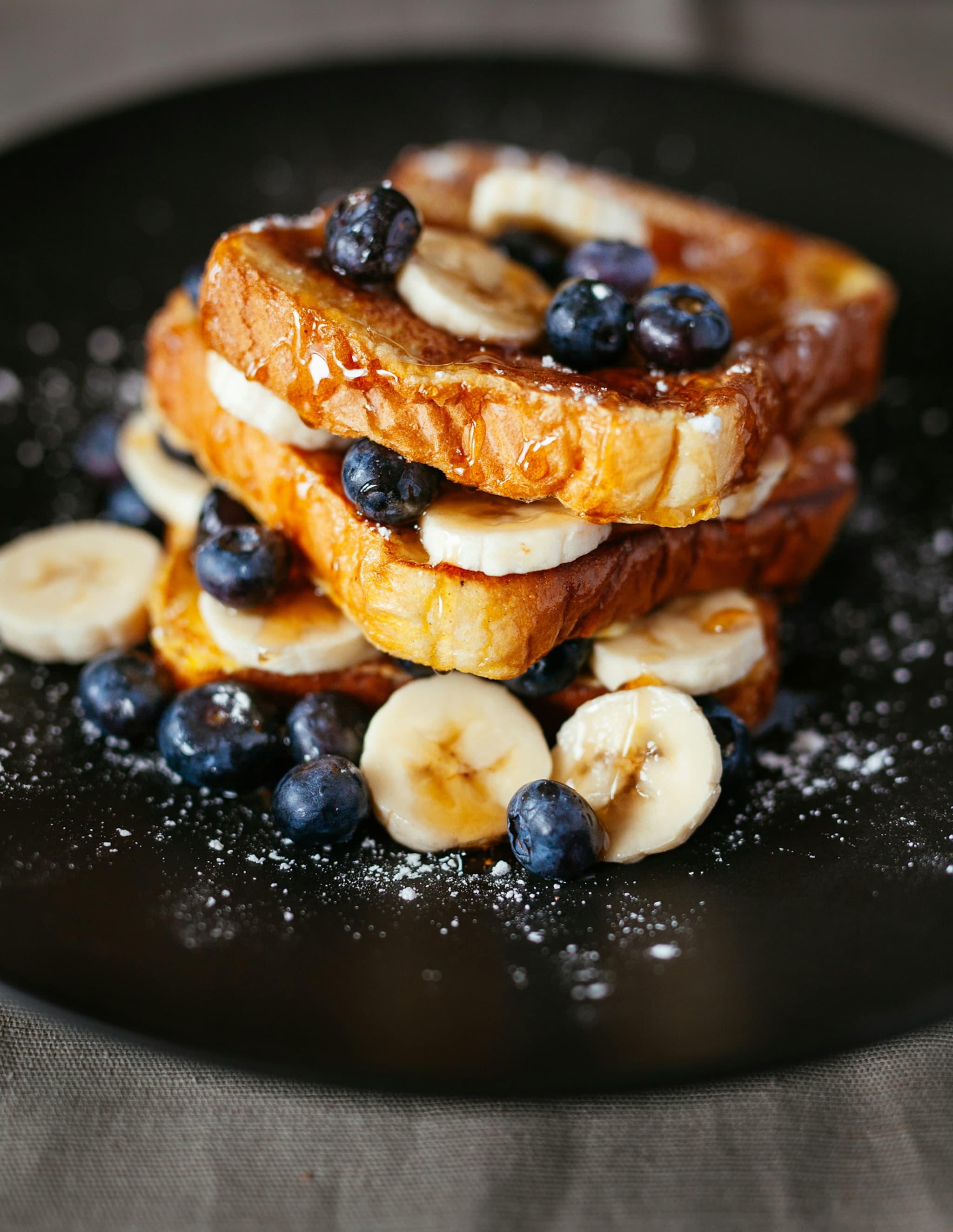
Losing fat and building muscle at the same time is the goal that almost every client brings to me when we first start working together. They want to get leaner, but they also want to look like they actually train. They do not just want to be smaller. They want to be stronger, more defined, and in better shape than they have ever been. And while the training side of that equation gets a lot of attention, it is the nutrition that determines whether you actually get there. Specifically, it is the structure and composition of your meals that turns a decent training programme into visible, lasting results.
Your first meal of the day is where this either starts well or starts badly. I am not saying breakfast is more important than any other meal. Total daily intake matters most. But breakfast is the meal where I see the biggest gap between what people currently eat and what they should be eating to support their goals. Most people’s first meal is either skipped entirely, thrown together with whatever is quick, or built around the wrong macronutrient balance. When I restructure a client’s breakfast to properly support fat loss and muscle building, the impact on their results, their energy, and their day to day relationship with food is immediate and obvious.

Why Most Breakfasts Fail the Fat Loss and Muscle Building Test
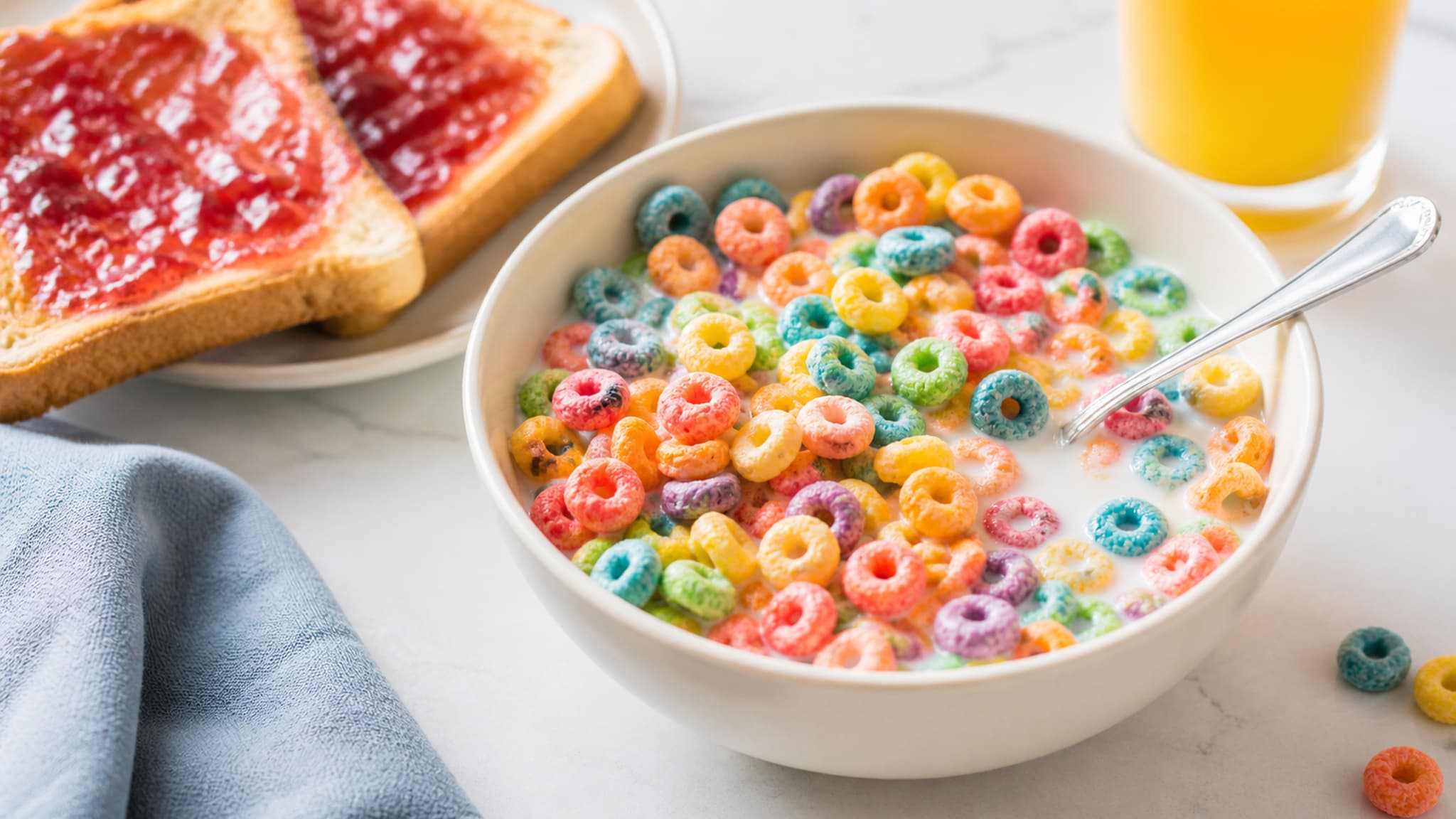
The typical breakfast in the UK is designed around taste, convenience, and habit. It is not designed around body composition. A bowl of cereal with semi skimmed milk provides roughly 300 to 400 calories, most of which come from carbohydrates and sugar, with perhaps 8 to 12 grams of protein. Toast with butter and jam is a similar story. A shop bought croissant or pastry is almost entirely fat and refined carbohydrate with negligible protein. Even options that seem healthier, like a fruit smoothie from a high street chain or a granola bowl, are often loaded with sugar and short on protein.
The problem with these meals is not that they contain carbohydrates or fat. Both macronutrients have a role in a well structured diet. The problem is the ratio. For someone whose goal is to lose fat while building or preserving muscle, the first meal of the day needs to prioritise protein above everything else. Research published in the Journal of Nutrition demonstrated that a breakfast providing at least 30 grams of protein produced significantly greater muscle protein synthesis over 24 hours compared to a breakfast providing only 10 to 15 grams, even when total daily protein intake was matched (1). The body responds to protein on a meal by meal basis, not just a daily total basis. A low protein breakfast is a missed opportunity that cannot be fully compensated for by eating more protein at dinner.
There is also the satiety factor. When your breakfast is predominantly carbohydrate based, you are hungry again within a couple of hours. That leads to snacking, overeating at lunch, and a higher total calorie intake across the day. A study published in the American Journal of Clinical Nutrition found that higher protein breakfasts significantly reduced the appetite stimulating hormone ghrelin and increased peptide YY, a hormone associated with fullness, across the entire morning compared to lower protein alternatives (2). If you are in a calorie deficit trying to lose body fat, starting the day with a meal that leaves you hungry by mid morning is working directly against you.
The Blueprint for a First Meal That Builds Muscle and Burns Fat
After coaching hundreds of clients through body recomposition, I have arrived at a simple framework for the first meal of the day that works regardless of dietary preference, schedule, or cooking ability. Every effective breakfast for fat loss and muscle building follows the same structure. It leads with protein, includes a moderate portion of complex carbohydrates, adds a small amount of healthy fat, and where possible includes some fibre from fruit or vegetables. That is the template. The specific foods you use to fill it depend on what you eat and what you enjoy.
The Protein Foundation: 25 to 40 Grams
Protein is the non negotiable centre of this meal. Every breakfast I build for a client starts here. The target is a minimum of 25 grams and ideally 30 to 40 grams depending on the client’s bodyweight and total daily protein goal. This threshold is supported by research showing that approximately 0.4 grams of protein per kilogram of bodyweight per meal is optimal for stimulating muscle protein synthesis (3). For an 80 kilogram person that is 32 grams. For a 65 kilogram person that is 26 grams. These are the numbers I work to.
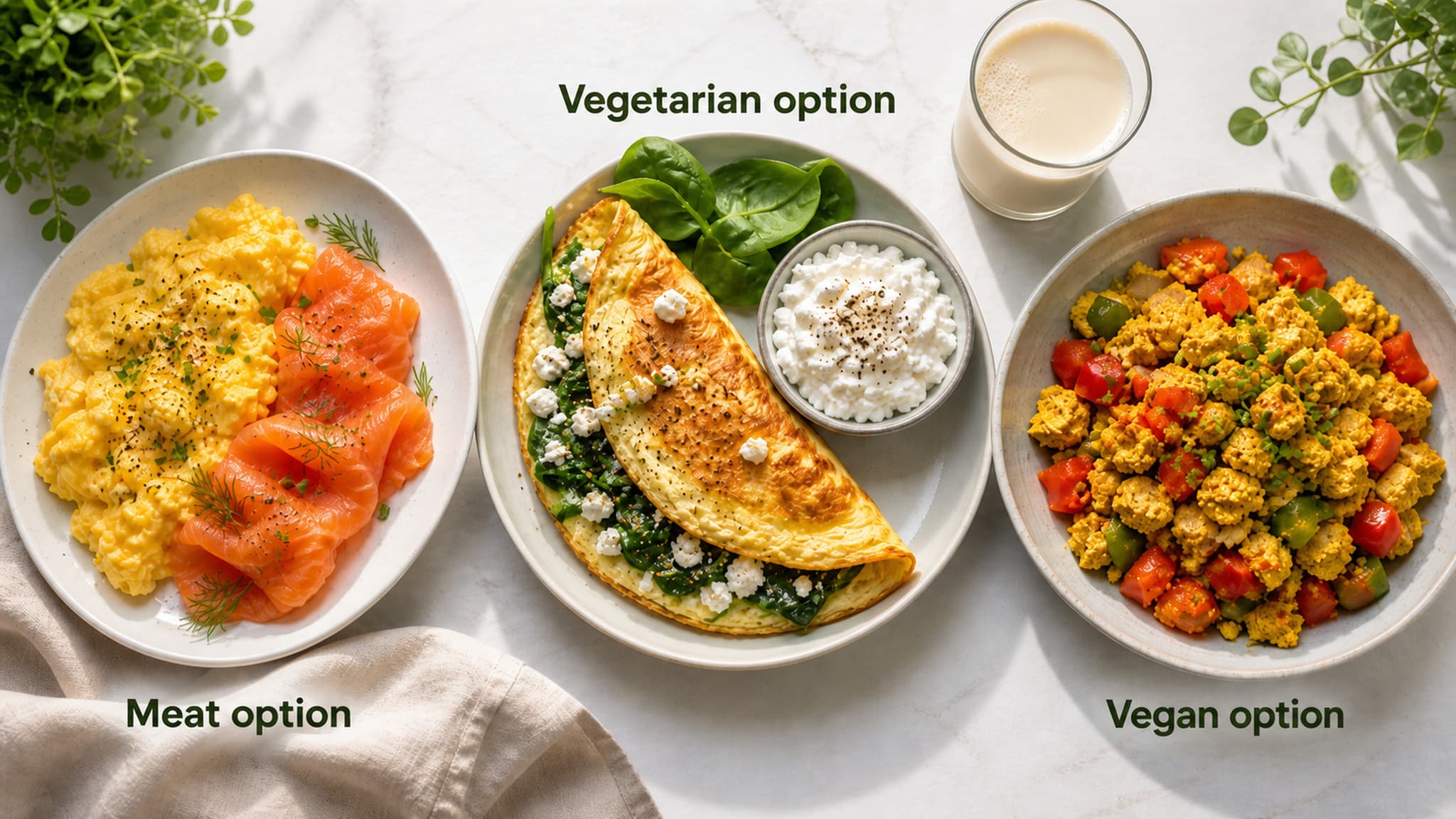
For omnivore clients the simplest way to hit this target is eggs. Three whole eggs provide approximately 21 grams of protein. Add a side of smoked salmon, turkey rashers, or a portion of lean ham and you are comfortably past 30. For vegetarian clients, eggs remain the easiest option, combined with cottage cheese, Greek yoghurt, or paneer. A three egg omelette with 50 grams of feta delivers around 28 grams of protein. For vegan clients, a firm tofu scramble using half a block of tofu provides roughly 20 grams, and adding a glass of soy milk and a tablespoon of hemp seeds takes you past 30. A pea protein or soy protein smoothie is another quick and reliable option that consistently hits the target.
The Carbohydrate Component: Fuel Without Excess
Carbohydrates at breakfast serve a specific purpose. They replenish liver glycogen that has been depleted overnight and they provide energy for the morning ahead. If you train in the morning, a moderate carbohydrate portion at breakfast directly supports your session. If you train later in the day, the carbohydrates at breakfast contribute to your overall daily fuel supply. The goal is to include enough to support energy and performance without adding so many calories that your deficit is compromised.
For most clients in a fat loss phase, I prescribe between 30 and 60 grams of carbohydrates at breakfast, adjusted based on their total daily carbohydrate target and training schedule. Practical options include a slice or two of wholemeal toast, a portion of oats, a small serving of fruit, a wholemeal wrap, or a rice cake. For clients in a muscle building phase with higher calorie targets, the carbohydrate portion can be larger. A full bowl of oats with a banana, or two slices of toast with a side of fruit. The source matters less than the portion. Whole grain and fibre rich options are preferable for sustained energy and satiety, but white bread or white rice at breakfast is not going to derail your results if the total daily picture is in order.
The Fat Component: Enough but Not Too Much
A small amount of fat at breakfast supports hormone function, vitamin absorption, and overall meal satisfaction. But because fat is so calorie dense at 9 calories per gram, it is the macronutrient that most easily pushes a breakfast from well structured to excessive without changing the perceived size of the meal. I keep fat at breakfast moderate for most clients, typically between 10 and 20 grams.
In practical terms, this means cooking your eggs in a measured amount of oil or butter rather than a generous pour, including half an avocado rather than a whole one, using a tablespoon of nut butter rather than a heaped serving, or choosing a small handful of nuts or seeds as a topping rather than a full portion. The fats in eggs, Greek yoghurt, tofu, and other protein sources already contribute meaningfully to this target, so additional fat sources need to be portioned with awareness. This is not about fat phobia. It is about making sure every calorie in the meal is serving a purpose.
Adding Fibre and Micronutrients
The finishing touch on a properly structured breakfast is fibre and micronutrients from fruit or vegetables. This is the component most people leave out entirely, but it makes a meaningful difference to satiety and overall diet quality. A handful of berries on your oats. Some spinach and tomatoes in your omelette or scramble. A sliced banana on your toast. A side of sauteed mushrooms and peppers. These additions are low in calories, high in vitamins and minerals, and they add volume to the meal that helps you feel full.
Research published in Nutrition Reviews confirmed that higher fibre intake at meals was consistently associated with greater satiety and reduced subsequent energy intake (4). Including fibre at breakfast is a small habit with compounding benefits across the day. For clients who are in a deficit and fighting hunger, adding vegetables to a breakfast scramble or topping yoghurt with high fibre fruit like raspberries and blueberries can make the difference between feeling satisfied until lunch and reaching for a snack at 10am.
Putting It All Together: Example Breakfasts
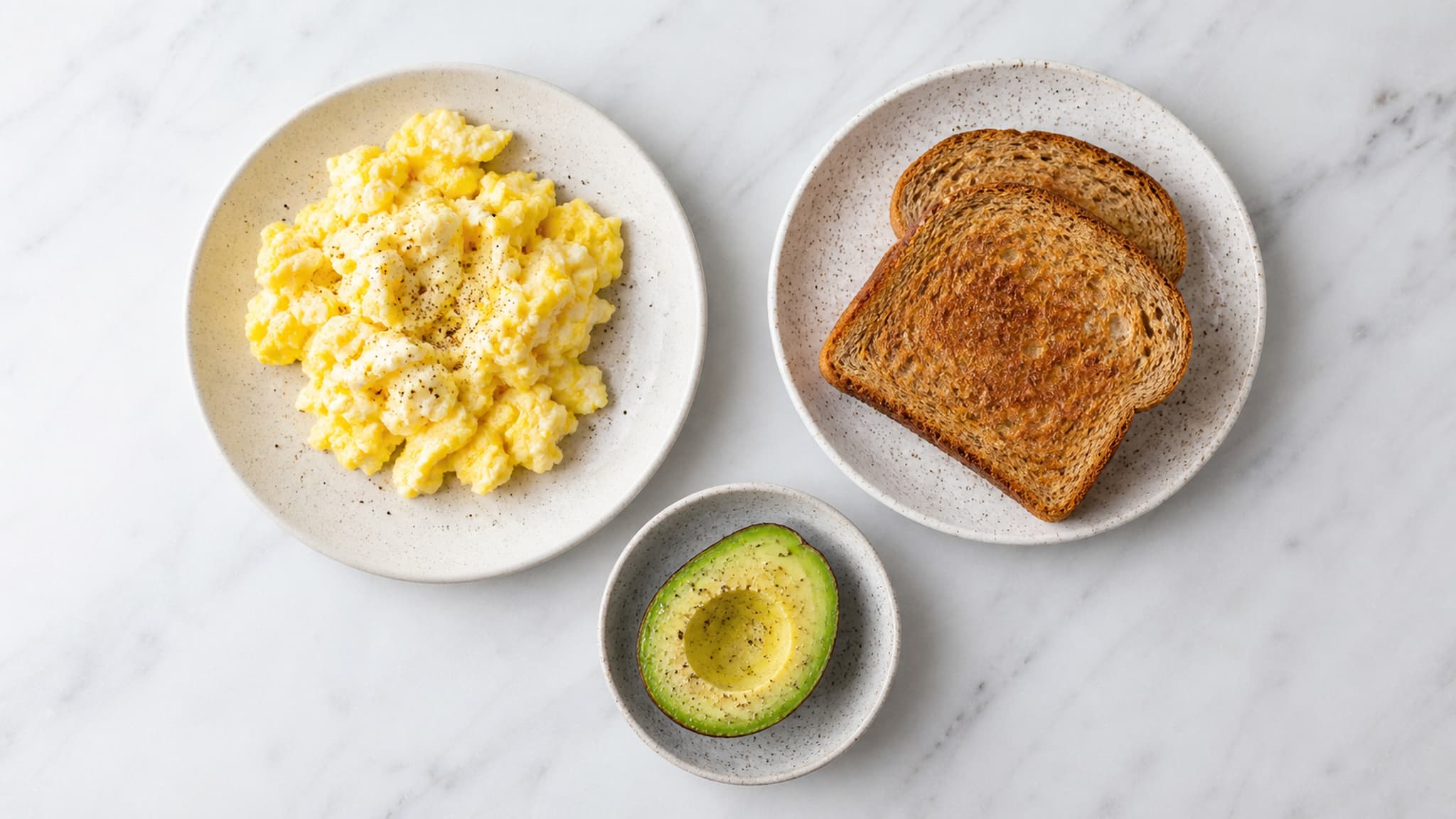
Let me give you some concrete examples of what this framework looks like as actual meals. For an omnivore client in a fat loss phase, a typical breakfast might be three scrambled eggs with a slice of smoked salmon on one piece of wholemeal toast with a handful of cherry tomatoes on the side. That provides approximately 35 grams of protein, 25 grams of carbohydrates, 18 grams of fat, and around 400 calories. Filling, satisfying, and perfectly aligned with a fat loss target.
For a vegetarian client, it might be a two egg omelette with spinach and 40 grams of feta, served with a slice of wholemeal toast and a small bowl of mixed berries. That delivers approximately 28 grams of protein, 30 grams of carbohydrates, 16 grams of fat, and around 380 calories. Alternatively, 200 grams of Greek yoghurt with a scoop of whey protein, 30 grams of oats, and a tablespoon of mixed seeds takes you to roughly 38 grams of protein in a quick, no cook option.
For a vegan client, a tofu scramble made with half a block of firm tofu, a teaspoon of olive oil, turmeric, nutritional yeast, mushrooms, and peppers, served on a slice of sourdough with a glass of fortified soy milk, provides approximately 30 grams of protein, 35 grams of carbohydrates, 14 grams of fat, and around 390 calories. A smoothie made with soy milk, a scoop of pea protein, a banana, a tablespoon of peanut butter, and a handful of frozen spinach delivers similar macros in under three minutes of preparation.
Adjusting for Training Days Versus Rest Days
For clients who train in the morning, I typically increase the carbohydrate portion at breakfast to ensure they have fuel for their session. An extra slice of toast, a larger serving of oats, or a banana alongside the meal provides the additional glycogen that supports training performance. Research published in the Journal of the International Society of Sports Nutrition supports the practice of consuming carbohydrates before exercise to improve performance and delay fatigue during moderate to high intensity training (5).
On rest days, the carbohydrate portion can be scaled back slightly and the meal can lean more heavily on protein and fat. The protein target stays the same regardless of whether it is a training day or a rest day. The adjustment is only in the carbohydrate and fat balance. This mirrors the principle of carbohydrate periodisation that I use across all meals, not just breakfast. More fuel on the days you need it. Slightly less on the days you do not. Total weekly intake stays consistent. The distribution just shifts to match the demand.
Your First Meal Is Your First Decision of the Day
How you start the morning sets the tone for everything that follows. A well structured first meal gives you energy, controls your appetite, stimulates muscle protein synthesis, and puts you in a position to make good decisions for the rest of the day. A poorly structured one does the opposite. It leaves you hungry, tired, craving sugar by mid morning, and playing catch up with your protein target from lunch onwards.
The framework I have laid out in this article is not theoretical. It is the exact approach I use with every client I coach, adapted to their specific calorie target, macronutrient needs, and dietary preferences. It works for people who eat meat. It works for vegetarians. It works for vegans. It works for people who love cooking and people who want everything done in under five minutes. The structure is the same. The foods are interchangeable. The results are consistent.
If you want a complete nutrition plan where every meal, from breakfast through to your last snack, is designed to support fat loss and muscle building around your training, your schedule, and the foods you actually enjoy, that is exactly what I build for every client I work with. I coach one-to-one online globally. Get in touch and let me build a plan that starts every day right.
Work with Me
Get a personalised coaching plan built around your goals, your schedule, and your life.
Enquire NowReferences
- Mamerow MM, Mettler JA, English KL, Casperson SL, Arentson-Lantz E, Sheffield-Moore M, Layman DK, Paddon-Jones D. Dietary protein distribution positively influences 24-h muscle protein synthesis in healthy adults. Journal of Nutrition. 2014; 144(6): 876-880.
- Leidy HJ, Ortinau LC, Douglas SM, Hoertel HA. Beneficial effects of a higher-protein breakfast on the appetitive, hormonal, and neural signals controlling energy intake regulation in overweight/obese, breakfast-skipping, late-adolescent girls. American Journal of Clinical Nutrition. 2013; 97(4): 677-688.
- Schoenfeld BJ, Aragon AA. How much protein can the body use in a single meal for muscle-building? Implications for daily protein distribution. Journal of the International Society of Sports Nutrition. 2018; 15(1): 10.
- Howarth NC, Saltzman E, Roberts SB. Dietary fiber and weight regulation. Nutrition Reviews. 2001; 59(5): 129-139.
- Kerksick CM, Arent S, Schoenfeld BJ, Stout JR, Campbell B, Wilborn CD, Taylor L, Kalman D, Smith-Ryan AE, Kreider RB, Willoughby D, Arciero PJ, VanDusseldorp TA, Ormsbee MJ, Wildman R, Greenwood M, Ziegenfuss TN, Aragon AA, Antonio J. International Society of Sports Nutrition position stand: nutrient timing. Journal of the International Society of Sports Nutrition. 2017; 14(1): 33.