I have heard every version of this excuse. I do not have time for breakfast. I cannot cook in the morning. I am not a morning person. I would rather sleep for ten extra minutes than stand at a stove. If any of this sounds like you, I understand. I genuinely do. But the excuse does not change the reality that a low protein or nonexistent breakfast is one of the most common reasons people stall on their fat loss and muscle building goals.
The good news is that a high protein breakfast does not require you to be a chef. It does not require 30 minutes in the kitchen. Most of the breakfasts I recommend to my busiest clients take under five minutes to prepare, and several require no morning preparation at all because the work was done the night before. The barrier is not time. It is not knowing what to make. That is what this article solves.
I am going to give you five high protein breakfasts that I recommend to clients week after week. Each one has been tested extensively across my client base with men and women of all dietary backgrounds. For every option I have included an omnivore version, a vegetarian version, and a vegan version so that no matter what you eat, you have something practical and ready to use from tomorrow morning.

Why a High Protein Breakfast Is Non Negotiable for Results
I have covered the science behind protein at breakfast in detail in other articles on this site, but the short version is this. A breakfast containing at least 25 to 35 grams of protein does three critical things. First, it stimulates muscle protein synthesis, the process by which your body builds and repairs muscle tissue after an overnight fast (1). Second, it dramatically improves satiety and reduces total calorie intake across the day, which is essential during a fat loss phase (2). Third, it stabilises blood sugar and prevents the mid morning energy crash and sugar cravings that derail most people by 10am (3). If you are serious about changing your body, this is the single easiest nutritional habit to implement. Now let me show you exactly how.
The Five Breakfasts
Breakfast One: Overnight Protein Oats
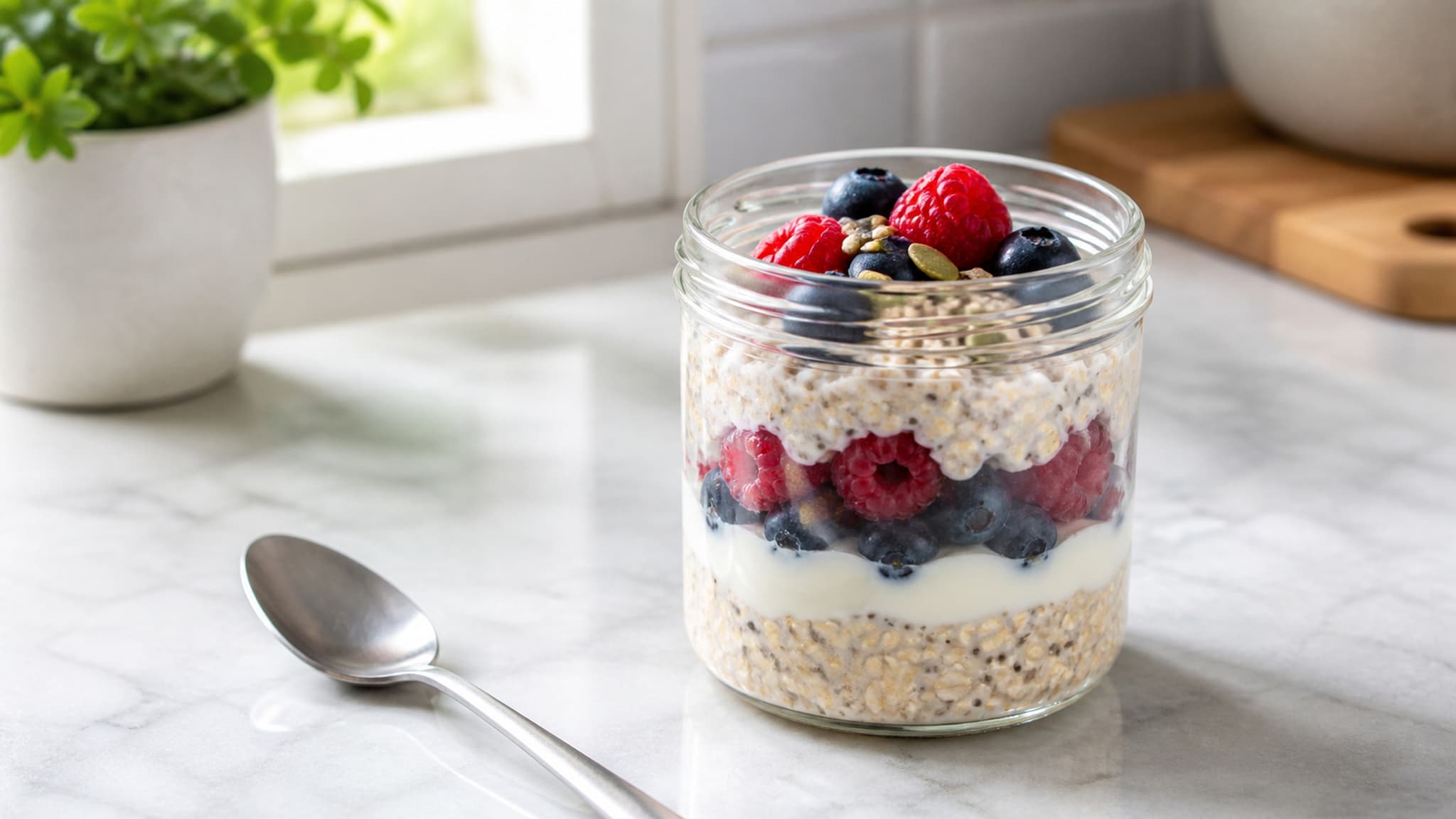
This is the breakfast I recommend more than any other to time poor clients because it requires absolutely zero morning preparation. You make it the night before in under five minutes and it is waiting for you in the fridge when you wake up. It is filling, it tastes good, and it delivers a strong protein hit without turning on a single appliance.
The omnivore and vegetarian version is identical. Combine 50 grams of rolled oats, 200 grams of Greek yoghurt, a scoop of whey protein powder, 100 millilitres of milk, a tablespoon of chia seeds, and a handful of frozen berries in a jar or container. Stir, seal, and refrigerate overnight. By morning the oats have softened, the chia seeds have absorbed the liquid, and you have a thick, creamy, high protein breakfast ready to eat cold or microwaved. This delivers approximately 40 grams of protein, 55 grams of carbohydrates, 12 grams of fat, and around 480 calories.
The vegan version follows the same method. Swap the Greek yoghurt for soy yoghurt, the whey protein for a scoop of pea protein or soy protein, and the milk for fortified soy milk. Add the same oats, chia seeds, and frozen berries. The macros come out to roughly 32 grams of protein, 52 grams of carbohydrates, 10 grams of fat, and around 430 calories. Both versions taste excellent and can be varied endlessly by changing the fruit, adding a tablespoon of peanut butter, or topping with different nuts and seeds.
Breakfast Two: The Three Minute Protein Smoothie
For clients who genuinely cannot face solid food first thing in the morning, a protein smoothie is the answer. It takes three minutes from opening the freezer to having it in your hand, it goes down easily, and it can be sipped on the commute if you are truly pressed for time. The key is building it with the right ingredients so that it delivers meaningful protein rather than just being a fruit and ice sugar bomb.
For omnivore and vegetarian clients, blend 200 millilitres of semi skimmed milk, a scoop of whey protein, one banana, a tablespoon of peanut butter, and a handful of frozen spinach. The spinach adds micronutrients without affecting the taste. This gives you roughly 35 grams of protein, 40 grams of carbohydrates, 14 grams of fat, and around 430 calories.
For vegan clients, use 200 millilitres of fortified soy milk, a scoop of pea protein, one banana, a tablespoon of almond or peanut butter, and the same handful of frozen spinach. If you want additional protein, add a tablespoon of hemp seeds. This delivers roughly 30 grams of protein, 38 grams of carbohydrates, 14 grams of fat, and around 400 calories. To save even more time, pre portion the dry and frozen ingredients into freezer bags on a Sunday. In the morning you just empty the bag into the blender, add your liquid, and blend.
Breakfast Three: Eggs on Toast, Done Properly
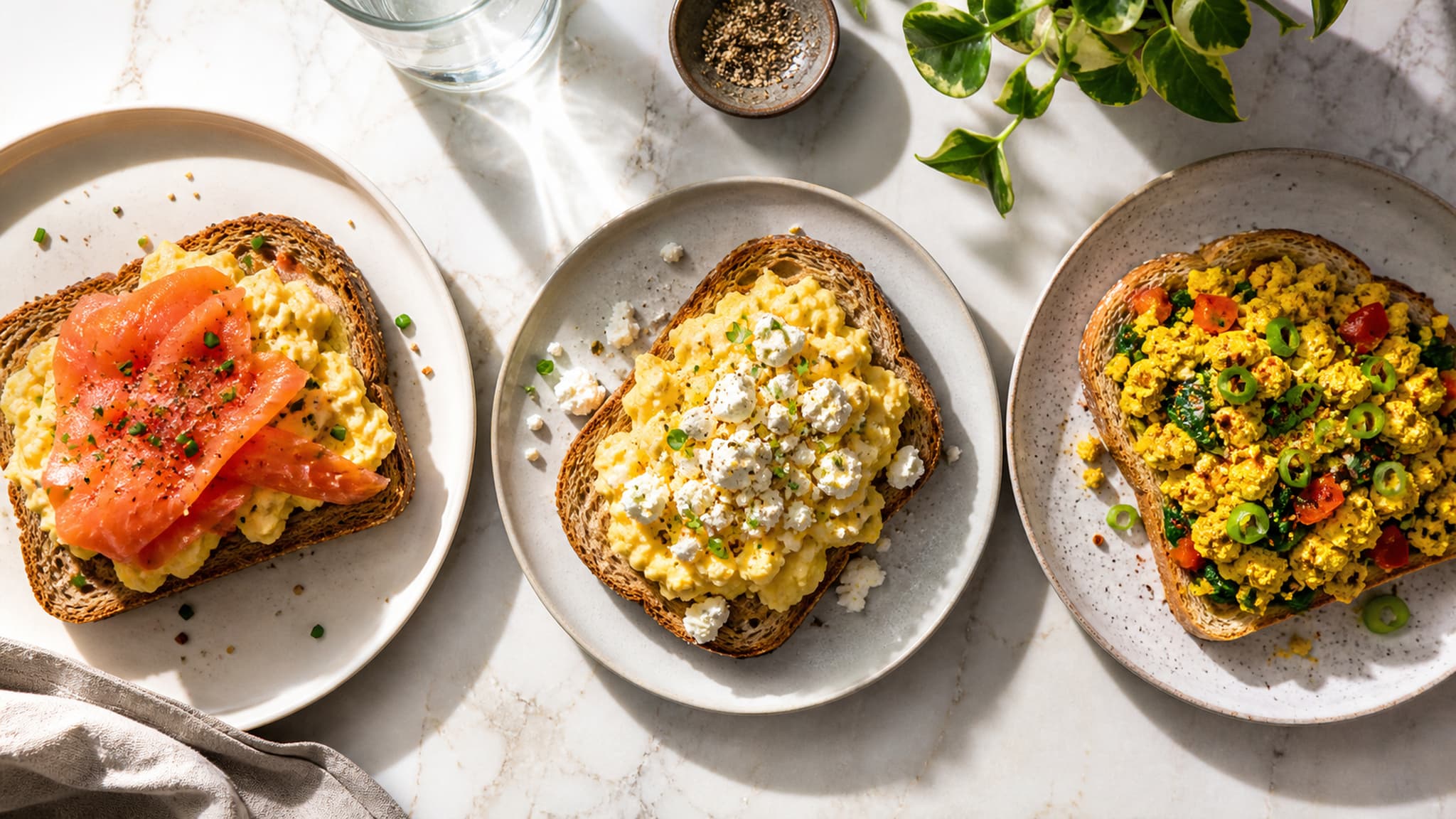
This is the classic. It is fast, it is simple, and when done properly it is one of the most effective high protein breakfasts you can eat. The reason most people’s egg on toast falls short is that they only use one or two eggs and load up on butter and thick cut bread, which tilts the macronutrient balance heavily toward fat and carbohydrates. The fix is straightforward. Use three eggs, one or two slices of wholemeal toast, and cook with a measured teaspoon of oil or butter rather than a generous pour.
For omnivore clients, scramble or poach three eggs and serve on one slice of wholemeal toast with a side of smoked salmon or two turkey rashers. That takes you to approximately 35 grams of protein, 20 grams of carbohydrates, 16 grams of fat, and around 370 calories. Add a handful of cherry tomatoes or some wilted spinach for fibre and volume.
For vegetarian clients, the same three egg base works perfectly. Top your toast with the eggs and a generous crumble of feta or a side of cottage cheese. Three eggs with 30 grams of feta on toast gives you roughly 28 grams of protein, 22 grams of carbohydrates, 18 grams of fat, and around 360 calories.
For vegan clients, a tofu scramble replaces the eggs and is just as quick once you have done it a couple of times. Crumble half a block of firm tofu into a pan with a teaspoon of oil, add turmeric, nutritional yeast, black pepper, and whatever vegetables you have to hand. Mushrooms, peppers, and spinach all work well. Serve on toast. This provides roughly 24 grams of protein, 25 grams of carbohydrates, 12 grams of fat, and around 300 calories. Add a glass of soy milk to boost the protein to over 30 grams.
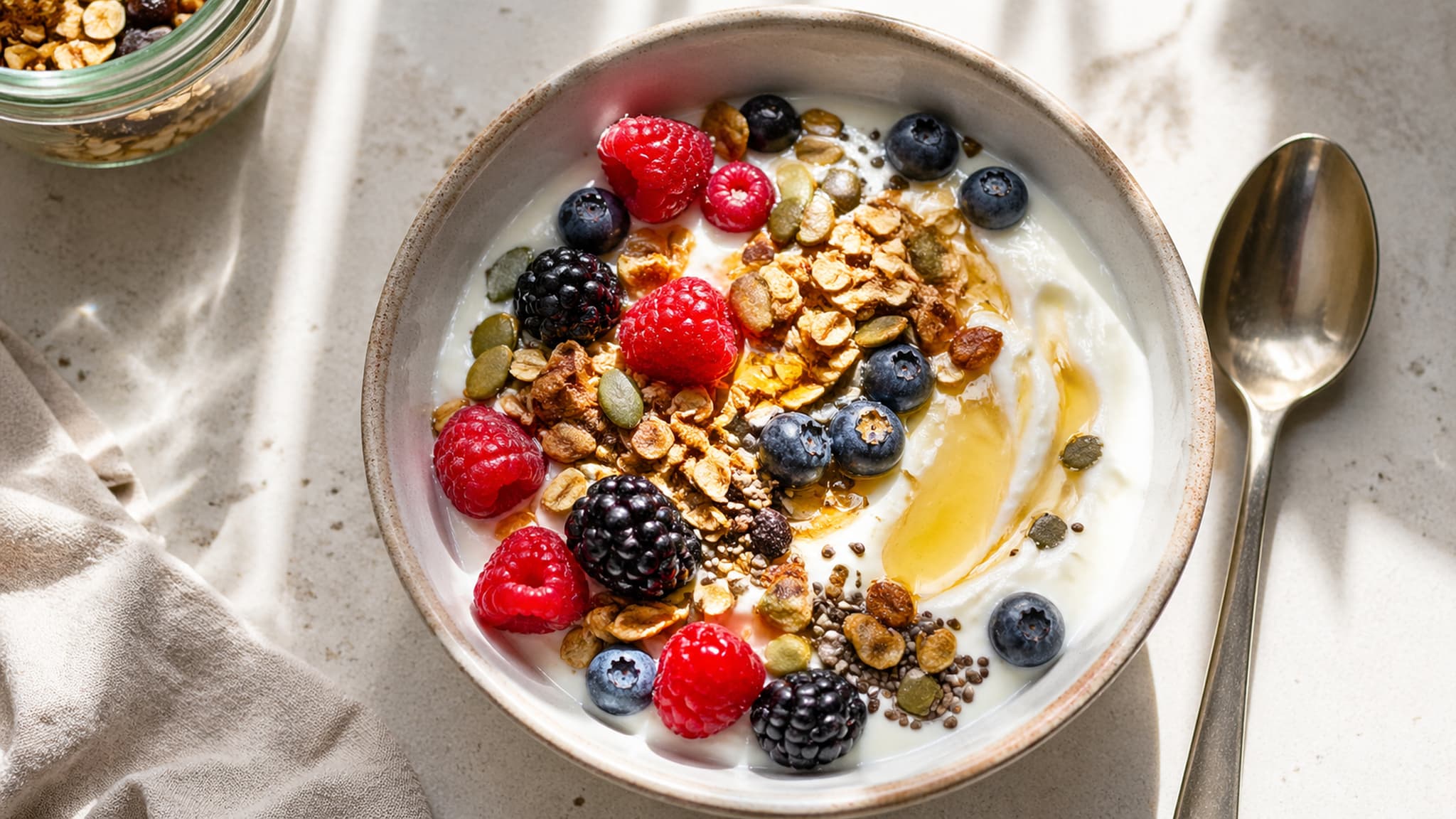
Breakfast Four: The High Protein Yoghurt Bowl
This requires zero cooking and takes under two minutes to assemble. It is one of the go to breakfasts for my clients who want something light but satisfying that keeps them full until lunch. The foundation is a high protein yoghurt, and the toppings add texture, fibre, and additional nutrients.
For omnivore and vegetarian clients, start with 200 grams of plain Greek yoghurt, which alone provides around 20 grams of protein. Add a scoop of whey or casein protein powder and stir it through. Top with 30 grams of granola or oats, a handful of mixed berries, a tablespoon of mixed seeds, and a drizzle of honey if you want sweetness. Total: approximately 38 grams of protein, 35 grams of carbohydrates, 10 grams of fat, and around 380 calories.
For vegan clients, use 200 grams of soy yoghurt as the base and stir through a scoop of pea protein or soy protein powder. Top with the same granola, berries, and seeds. Add a tablespoon of nut butter for richness and extra calories if needed. Total: approximately 30 grams of protein, 38 grams of carbohydrates, 14 grams of fat, and around 400 calories. This is also an excellent option to take to work in a container if you prefer to eat at your desk.
Breakfast Five: The Grab and Go Protein Wrap
For the clients who are literally walking out the door and need something they can eat in one hand, the protein wrap is the solution. It takes under five minutes to assemble and it travels well. I have had executive clients eating these on the Tube and construction workers eating them on site. It works everywhere.
For omnivore clients, take a large wholemeal wrap and fill it with 100 grams of sliced chicken breast or turkey, a handful of spinach leaves, a few slices of tomato, and a tablespoon of light mayonnaise or mustard. Roll it tight. That gives you approximately 32 grams of protein, 30 grams of carbohydrates, 8 grams of fat, and around 320 calories. If you want more calories and protein, add a hard boiled egg sliced in half.
For vegetarian clients, fill the wrap with two sliced hard boiled eggs, 30 grams of grated cheddar, spinach, and a tablespoon of hummus. That provides roughly 25 grams of protein, 32 grams of carbohydrates, 16 grams of fat, and around 370 calories. Swap the cheddar for cottage cheese to reduce the fat and increase the protein.
For vegan clients, fill the wrap with half a block of seasoned, pan fried tofu sliced into strips, hummus, grated carrot, spinach, and a squeeze of sriracha. That delivers approximately 22 grams of protein, 35 grams of carbohydrates, 12 grams of fat, and around 330 calories. Add a handful of edamame beans on the side and you are past 30 grams of protein. All of these wraps can be made the night before, wrapped in foil, and grabbed straight from the fridge in the morning.
No More Excuses
You now have five high protein breakfasts, each with options for omnivore, vegetarian, and vegan clients, that take five minutes or less and require minimal cooking ability. Between them, they cover every scenario. No time at all? Overnight oats are waiting in the fridge. Cannot face solid food? The smoothie goes down easy. Want something hot and satisfying? Eggs or tofu on toast. Want something light but filling? The yoghurt bowl. Need to eat on the move? The wrap travels anywhere.
The key is not variety for its own sake. It is having a rotation of three or four options that you genuinely enjoy and can default to without thinking. My most consistent clients do not reinvent breakfast every morning. They rotate between two or three of these options throughout the week and it becomes automatic. That is when the results follow. Consistency in the small, daily habits is what produces transformation over weeks and months.
If you want a complete nutrition plan with your breakfasts, lunches, dinners, and snacks structured around your specific protein targets, calorie goals, and dietary preferences, that is exactly what I build for every client I work with. I coach one-to-one online globally. Get in touch and let me make your nutrition as simple as it should be.
Work with Me
Get a personalised coaching plan built around your goals, your schedule, and your life.
Enquire NowReferences
- Mamerow MM, Mettler JA, English KL, Casperson SL, Arentson-Lantz E, Sheffield-Moore M, Layman DK, Paddon-Jones D. Dietary protein distribution positively influences 24-h muscle protein synthesis in healthy adults. Journal of Nutrition. 2014; 144(6): 876-880.
- Leidy HJ, Ortinau LC, Douglas SM, Hoertel HA. Beneficial effects of a higher-protein breakfast on the appetitive, hormonal, and neural signals controlling energy intake regulation in overweight/obese, breakfast-skipping, late-adolescent girls. American Journal of Clinical Nutrition. 2013; 97(4): 677-688.
- Lennerz BS, Alsop DC, Holsen LM, Stern E, Rojas R, Ebbeling CB, Goldstein JM, Ludwig DS. Effects of dietary glycemic index on brain regions related to reward and craving in men. American Journal of Clinical Nutrition. 2013; 98(3): 641-647.