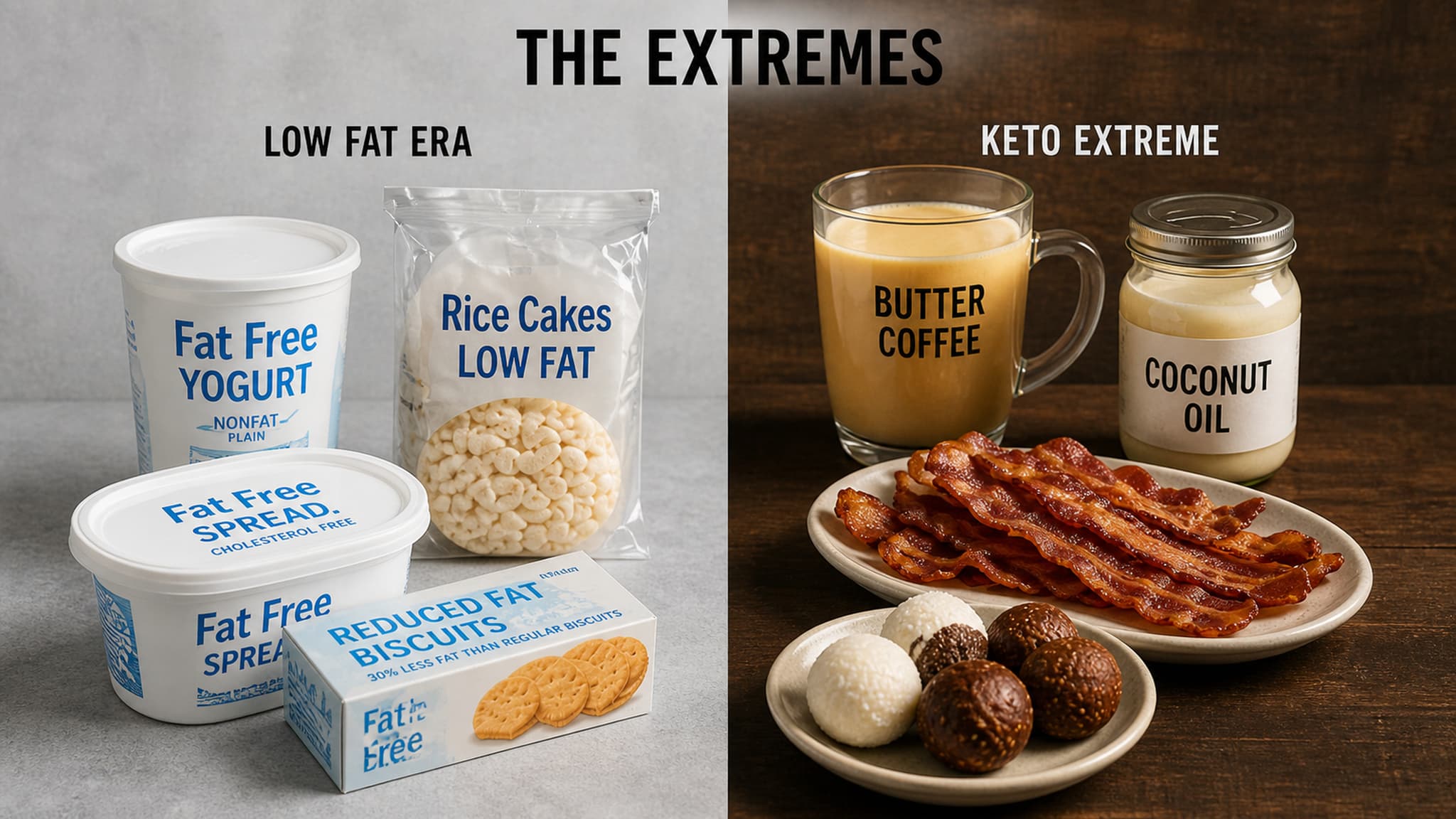
For decades, fat was the villain. The low fat movement of the 1980s and 1990s convinced an entire generation that eating fat made you fat, that saturated fat would clog your arteries, and that the path to a lean, healthy body was paved with fat free yoghurts, margarine, and rice cakes. Supermarket shelves were flooded with products stripped of fat and loaded with sugar to compensate for the loss of flavour. People dutifully avoided egg yolks, threw away chicken skin, and felt guilty about putting butter on their toast. And the obesity rates climbed higher than ever.
The pendulum has since swung to the opposite extreme. Now we have a culture that puts butter in coffee, drenches everything in coconut oil, and treats dietary fat as though it is a miracle macronutrient that can be consumed without limit. The keto movement has created a new generation of confusion, where people eat 70 percent of their calories from fat, avoid fruit because of the sugar content, and genuinely believe that fat cannot be stored as body fat as long as they keep carbohydrates low enough. This is equally wrong.
The truth about dietary fat sits in the middle, as it usually does with nutrition. Fat is not the enemy. But it is not a free pass either. It is an essential macronutrient with specific roles in your body that need to be understood and respected. Either they are still afraid of fat and eating far too little of it, or they have embraced the high fat trend and are eating far too much without realising the caloric implications. Both approaches produce suboptimal results.
What Goes Wrong When You Get Fat Intake Wrong
Getting dietary fat wrong in either direction causes real problems. Too little fat and your hormonal health suffers. Too much fat and your calorie intake spirals beyond what your body can use. Both scenarios undermine your goals.
When fat intake drops too low, the first thing to suffer is hormonal production. Dietary fat is the precursor for steroid hormones including testosterone and oestrogen. Research published in the Journal of Clinical Endocrinology and Metabolism found that men consuming diets very low in fat experienced significant reductions in testosterone levels compared to those consuming moderate fat diets (1). For women, chronically low fat intake can disrupt menstrual function and contribute to low oestrogen levels, which has downstream consequences for bone density, mood, and metabolic health. I have worked with clients, both men and women, who came to me with hormonal complaints that improved measurably once we brought their fat intake back to an appropriate level. This is not a fringe issue. It is a predictable consequence of eating too little fat for too long.
Beyond hormones, very low fat diets impair the absorption of fat soluble vitamins A, D, E, and K. These vitamins are critical for immune function, bone health, skin health, and blood clotting. Without adequate dietary fat to facilitate their absorption, you can eat all the vegetables in the world and still develop functional deficiencies. A review published in the American Journal of Clinical Nutrition confirmed that the absorption of fat soluble vitamins and carotenoids is significantly enhanced when consumed alongside dietary fat (2). Eating a salad with no dressing is not just bland. It is nutritionally less effective.
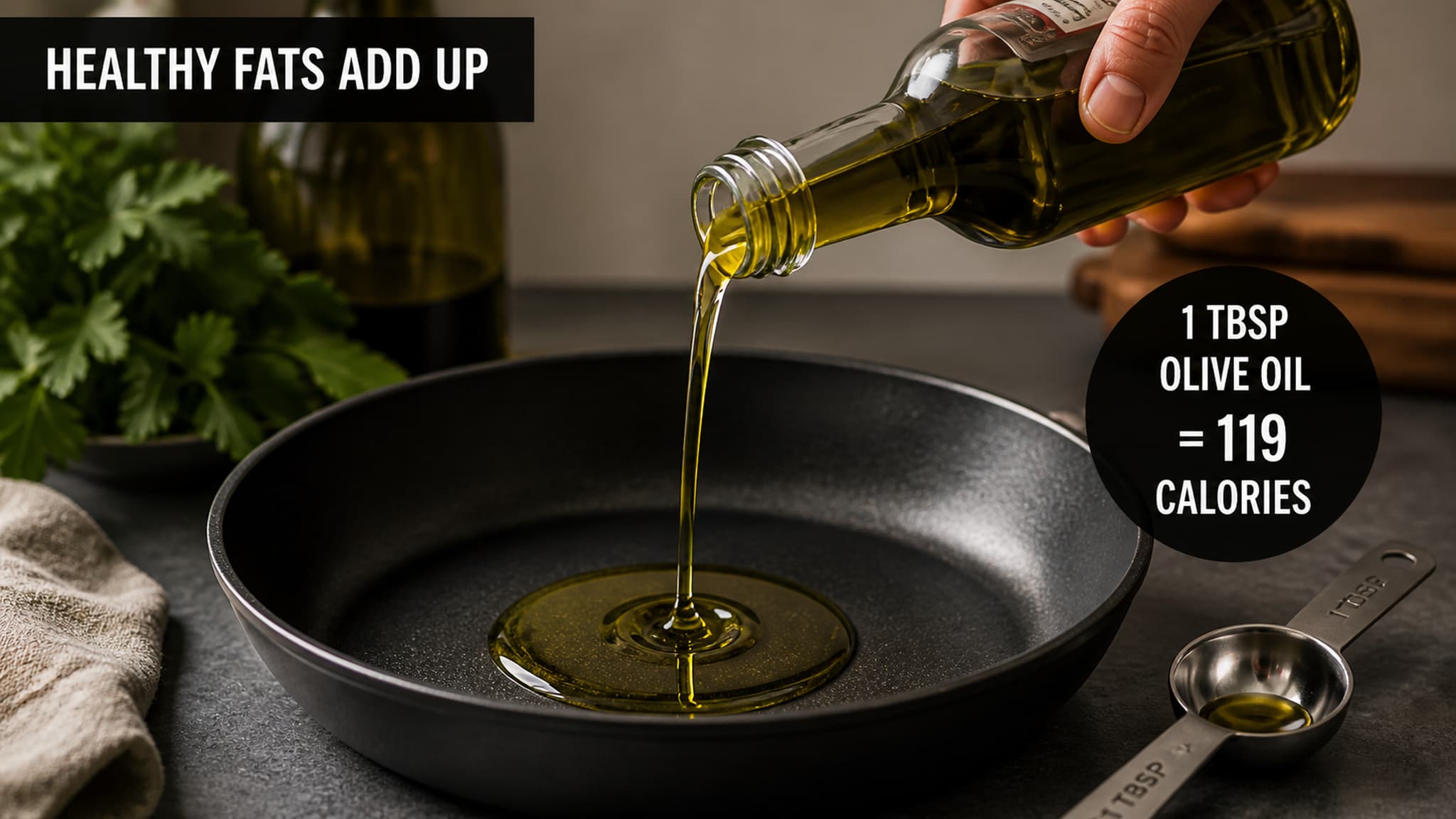
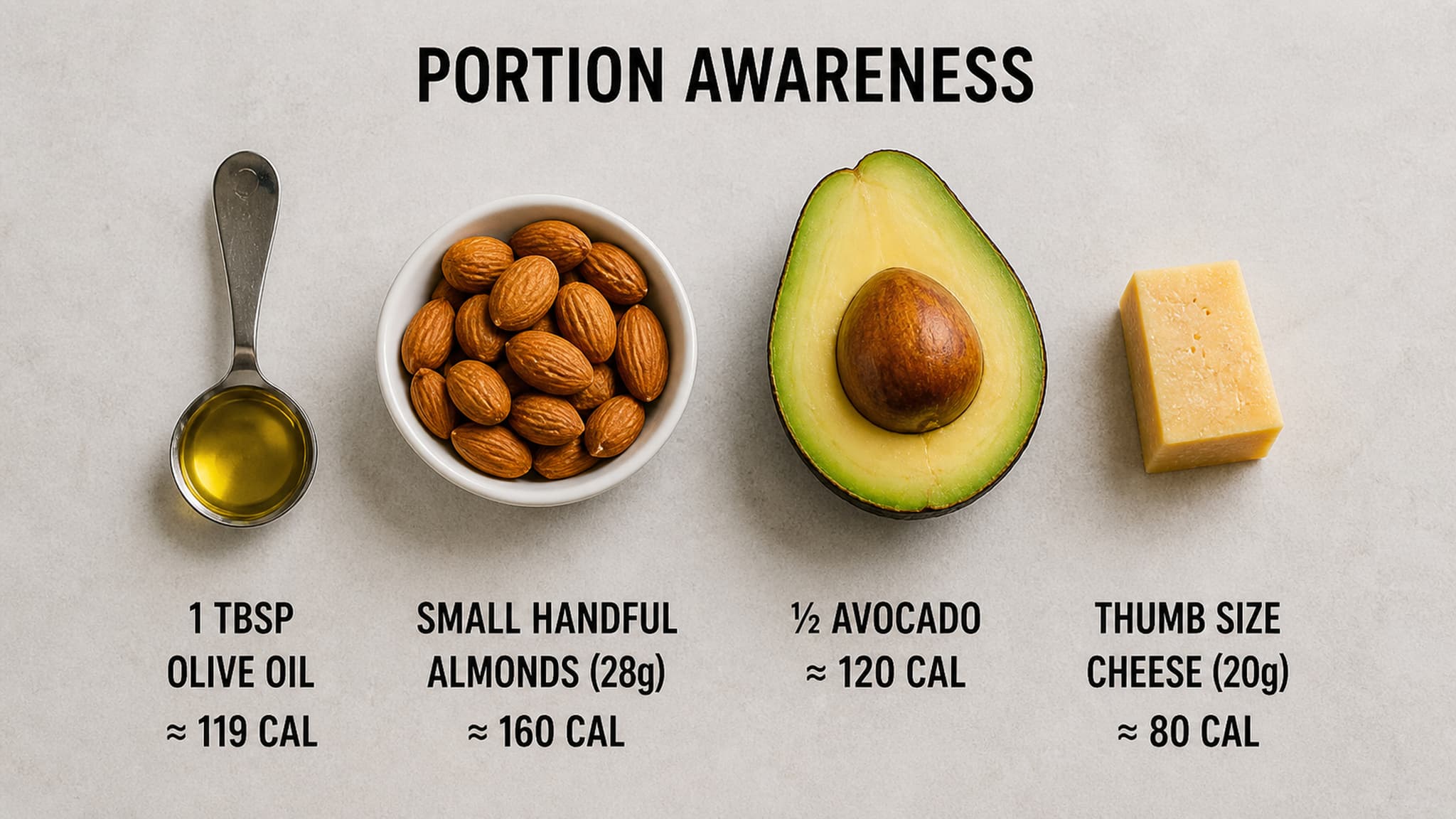
On the other side of the equation, the problem with excessive fat intake is purely mathematical. Fat is the most calorie dense macronutrient at 9 calories per gram, compared to 4 calories per gram for protein and carbohydrates. This means that fat heavy foods and cooking methods add calories at more than double the rate of the other macronutrients. A tablespoon of olive oil is approximately 120 calories. A generous pour of oil in a frying pan can easily add 300 to 400 calories to a meal without changing the volume of food on your plate. Clients who tell me they are eating healthily but not losing weight are frequently consuming far more fat than they realise, particularly from cooking oils, dressings, nuts, and cheese. The food is healthy. The quantity is the issue.
How to Use Dietary Fat Properly for Your Goals
The goal with dietary fat is straightforward. Eat enough to support your hormonal health, vitamin absorption, and brain function. Do not eat so much that it pushes your calorie intake beyond what your body needs. The specific amount varies by individual, but the principles I use with every client are consistent regardless of whether they eat meat, are vegetarian, or are vegan.
How Much Fat You Actually Need
For most of my clients, I set fat intake at approximately 0.7 to 1.2 grams per kilogram of bodyweight per day. For an 80 kilogram person, that is 56 to 96 grams of fat daily. For a 65 kilogram person, that is 46 to 78 grams. This range is sufficient to support all the physiological functions that fat is responsible for while leaving enough room in the calorie budget for adequate protein and carbohydrates.
During a fat loss phase, I tend to keep fat toward the lower end of this range, not because fat is bad but because every gram of fat you eat represents 9 calories that could otherwise be allocated to carbohydrates, which fuel your training, or protein, which preserves your muscle. When calories are limited, making fat the largest macronutrient is an inefficient use of your budget for most people who train. During a maintenance or muscle building phase, fat can sit comfortably at the higher end of the range because the additional calories are available. The key is that fat intake is never a fixed number. It is a variable that adjusts based on your total calorie target and your other macronutrient priorities.
Prioritise the Right Types of Fat
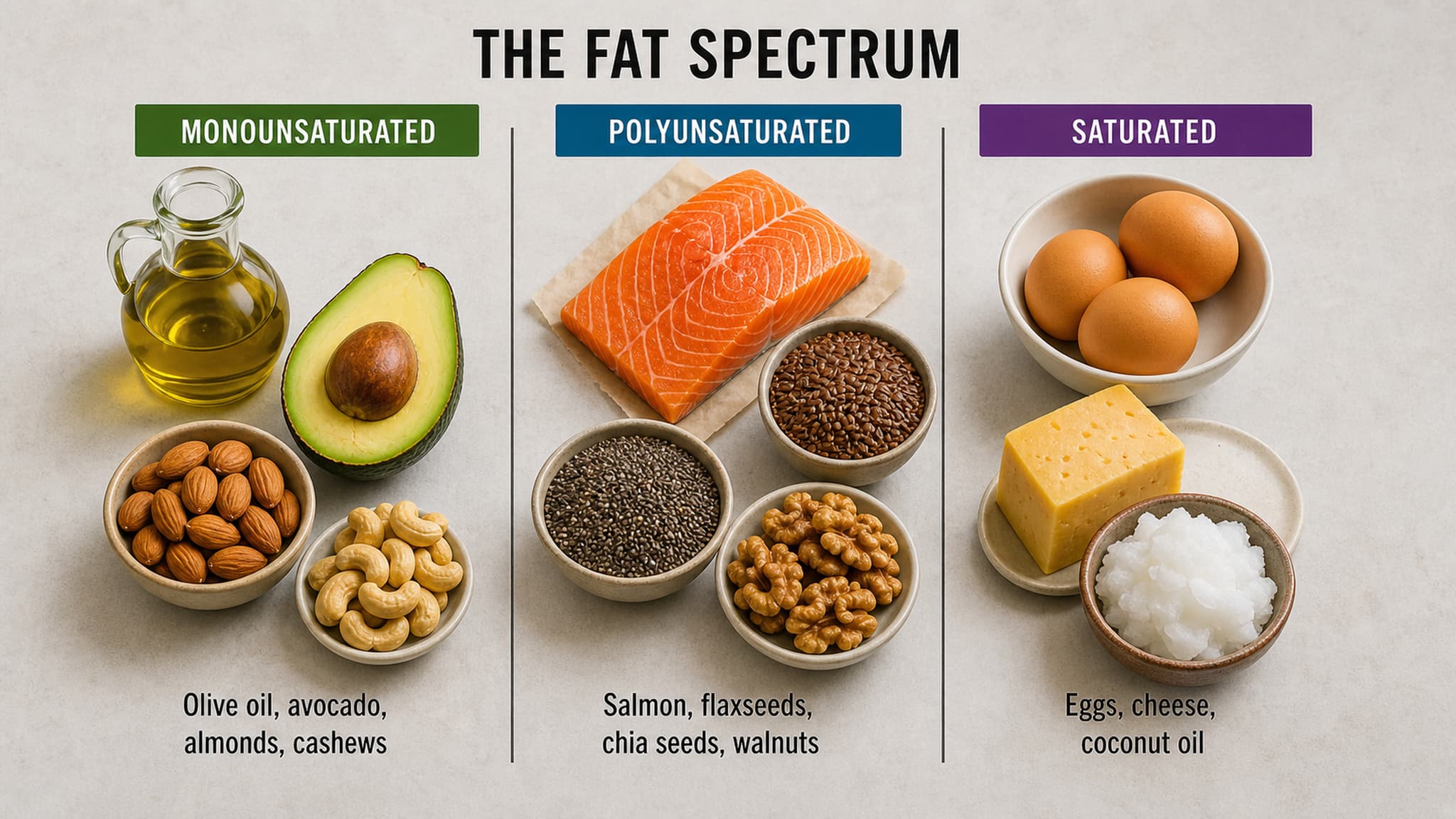
Not all fats are equal in terms of their impact on your health. The evidence on this is well established and it matters. The majority of your fat intake should come from unsaturated sources, both monounsaturated and polyunsaturated, with a particular emphasis on omega 3 fatty acids which most people are deficient in.
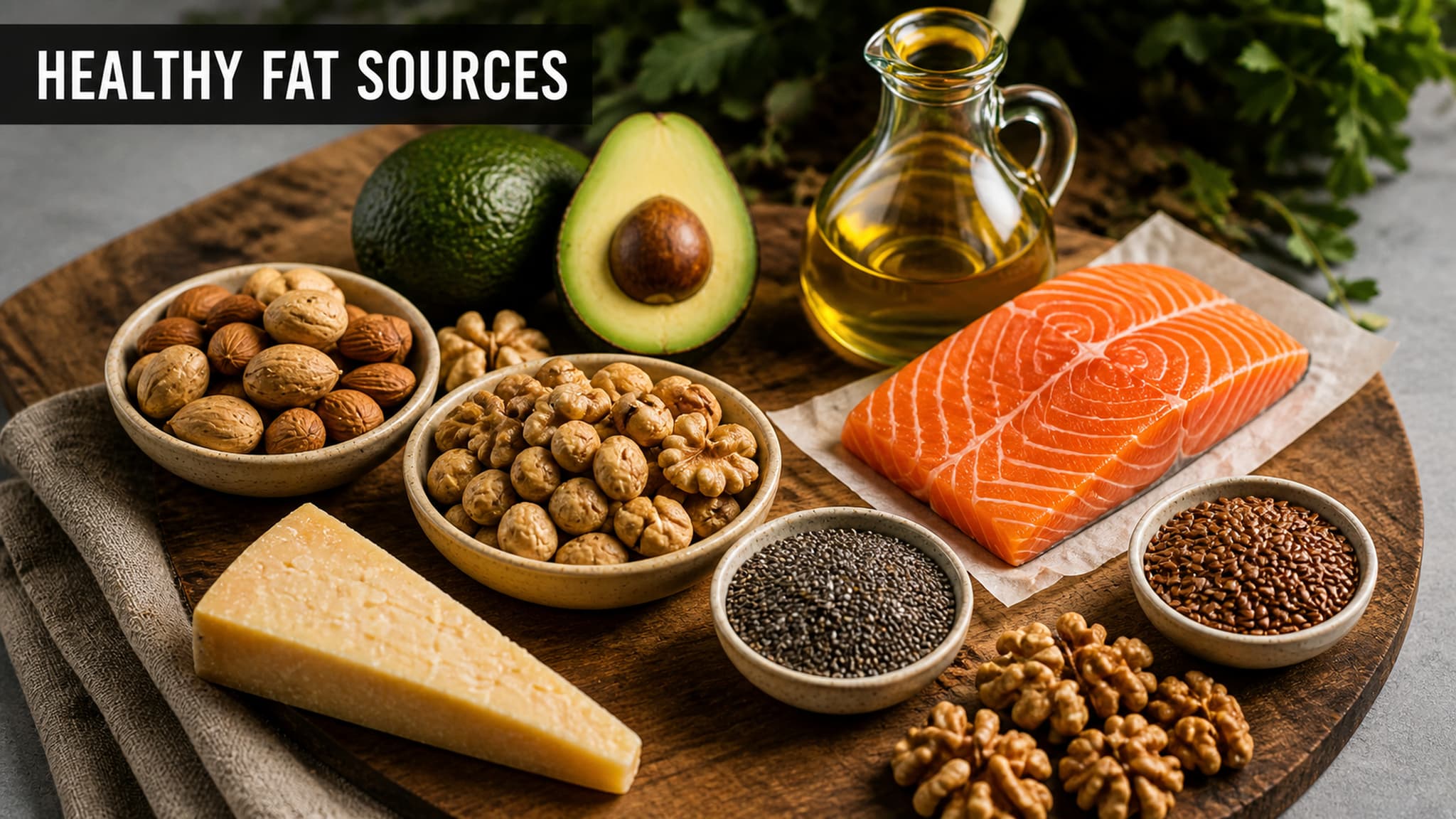
Monounsaturated fats are found in olive oil, avocados, almonds, cashews, and peanut butter. These are the cornerstone fats that I include in virtually every client’s plan regardless of dietary preference. A landmark trial published in the New England Journal of Medicine, the PREDIMED study, demonstrated that a Mediterranean diet supplemented with extra virgin olive oil or nuts significantly reduced the incidence of major cardiovascular events compared to a control diet (3). The evidence for monounsaturated fats and cardiovascular health is about as strong as it gets in nutrition science.
Polyunsaturated fats include omega 3 and omega 6 fatty acids. Most Western diets are heavily skewed toward omega 6, found in vegetable oils and processed foods, and deficient in omega 3. For omnivore clients, oily fish such as salmon, mackerel, sardines, and trout are the best sources of the long chain omega 3 fatty acids EPA and DHA. I recommend eating oily fish at least twice a week, in line with guidance from the British Heart Foundation and the American Heart Association. For vegetarian and vegan clients, alpha linolenic acid from flaxseeds, chia seeds, hemp seeds, and walnuts provides a plant based omega 3 source, though the conversion rate to EPA and DHA is limited (4). For this reason, I frequently recommend an algae based omega 3 supplement for vegan clients to ensure adequate intake of these critical fatty acids.
Saturated fat is the most contentious category and the science has evolved considerably. The old narrative that saturated fat directly causes heart disease has been significantly nuanced by more recent evidence. A meta-analysis published in the Annals of Internal Medicine found no significant association between saturated fat intake and coronary heart disease or cardiovascular disease when analysed independently of other dietary factors (5). However, this does not mean saturated fat can be consumed without limit. Current evidence suggests that replacing a portion of saturated fat with unsaturated fat offers a modest but meaningful benefit for cardiovascular health (6). My practical advice to clients is simple. Do not fear saturated fat. Do not avoid eggs, cheese, or red meat purely because of their saturated fat content. But make sure the majority of your fat intake comes from unsaturated sources. Balance and proportion matter more than rigid avoidance.
Watch the Hidden Fat Traps
One of the most common reasons clients come to me eating more fat than they realise is hidden fats in cooking and preparation. Cooking oils are the biggest culprit. Most people do not measure the oil they cook with, and a heavy handed pour can add 200 to 400 calories to a meal without any change in portion size or perceived volume. I teach all of my clients to measure their cooking oil, at least initially, until they develop an intuitive sense of how much they are using. A single tablespoon of oil is sufficient for most cooking tasks. Switching to an oil spray can reduce the calorie contribution of cooking fat by 80 to 90 percent.
Nuts and nut butters are another common trap. They are incredibly nutritious but also incredibly calorie dense. A small handful of almonds, roughly 30 grams, contains approximately 180 calories and 15 grams of fat. A generous serving of peanut butter on toast can add 300 to 400 calories. None of this is a problem when it fits within your total calorie target. It becomes a problem when you are eating these foods freely without accounting for their caloric density. I am not suggesting you avoid nuts or nut butter. I am suggesting you weigh them, at least for a period, so you understand what a sensible portion looks like.
Cheese, dressings, and sauces are the other frequent offenders. A wedge of cheddar here, a generous drizzle of tahini there, a couple of extra spoonfuls of hummus. Individually these additions seem harmless. Collectively they can add 500 or more calories to your daily intake without you feeling like you ate anything extra. Awareness is not restriction. It is information. And information is what allows you to make choices that align with your goals.
Fat Intake for Vegetarian and Vegan Clients
Fat intake requires slightly more attention for clients who do not eat animal products, primarily because some of the most convenient fat sources in an omnivore diet, such as oily fish, eggs, and dairy, are either absent or limited. For vegetarian clients who consume eggs and dairy, the adjustment is minimal. Eggs, cheese, Greek yoghurt, and butter all contribute to fat intake alongside the plant sources that are available to everyone.
For vegan clients, fat intake tends to come predominantly from olive oil, avocados, nuts and seeds, nut butters, coconut products, and soy based foods like tofu which contains moderate amounts of fat. The main nutritional consideration is omega 3 intake. As I mentioned, the conversion of plant based ALA to the longer chain EPA and DHA that the body needs is inefficient, typically below 10 percent (4). This is one of the few situations where I consistently recommend a supplement. An algae derived omega 3 capsule providing at least 250 milligrams of combined EPA and DHA daily is a practical and effective solution. Beyond that, a well structured vegan diet provides plenty of dietary fat from whole food sources without any difficulty.
Fat Is a Tool, Not a Trend
The history of dietary fat in popular nutrition is a cautionary tale about extremes. First it was demonised and stripped out of everything. Then it was glorified and poured over everything. Neither approach reflects the science. The reality is far more measured and far more useful. Fat is an essential macronutrient that your body needs in specific amounts for specific functions. It supports your hormones, your brain, your vitamin absorption, and your overall health. But it is also the most calorie dense thing on your plate, and ignoring that fact while chasing health trends will stall your fat loss faster than almost anything else.
The clients I work with who get the best results are the ones who treat fat as one component of a well structured nutrition plan, not as something to fear and not as something to worship. They eat enough. They choose quality sources. They measure when it matters. And they get on with their lives without making fat intake a source of stress or identity.
If you want a nutrition plan where every macronutrient, including fat, is calculated precisely for your body, your goals, and your dietary preferences, that is exactly what I build for every client I work with. I coach one-to-one online globally with men and women of all dietary backgrounds. Whether you eat meat, are vegetarian, vegan, or somewhere in between, I will build a plan that gives your body exactly what it needs. Get in touch and let me take the confusion out of your nutrition for good.
Work with Me
Get a personalised coaching plan built around your goals, your schedule, and your life.
Enquire NowReferences
- Dorgan JF, Judd JT, Longcope C, Brown C, Schatzkin A, Clevidence BA, Campbell WS, Nair PP, Franz C, Kahle L, Taylor PR. Effects of dietary fat and fiber on plasma and urine androgens and estrogens in men: a controlled feeding study. American Journal of Clinical Nutrition. 1996; 64(6): 850-855.
- Brown MJ, Ferruzzi MG, Nguyen ML, Cooper DA, Eldridge AL, Schwartz SJ, White WS. Carotenoid bioavailability is higher from salads ingested with full-fat than with fat-reduced salad dressings as measured with electrochemical detection. American Journal of Clinical Nutrition. 2004; 80(2): 396-403.
- Estruch R, Ros E, Salas-Salvado J, Covas MI, Corella D, Aros F, Gomez-Gracia E, Ruiz-Gutierrez V, Fiol M, Lapetra J, Lamuela-Raventos RM, Serra-Majem L, Pinto X, Basora J, Munoz MA, Sorli JV, Martinez JA, Martinez-Gonzalez MA. Primary prevention of cardiovascular disease with a Mediterranean diet supplemented with extra-virgin olive oil or nuts. New England Journal of Medicine. 2013; 368(14): 1279-1290.
- Burdge GC, Calder PC. Conversion of alpha-linolenic acid to longer-chain polyunsaturated fatty acids in human adults. Reproduction Nutrition Development. 2005; 45(5): 581-597.
- Chowdhury R, Warnakula S, Kunutsor S, Crowe F, Ward HA, Johnson L, Franco OH, Butterworth AS, Forouhi NG, Thompson SG, Khaw KT, Mozaffarian D, Danesh J, Di Angelantonio E. Association of dietary, circulating, and supplement fatty acids with coronary risk: a systematic review and meta-analysis. Annals of Internal Medicine. 2014; 160(6): 398-406.
- Sacks FM, Lichtenstein AH, Wu JHY, Appel LJ, Creager MA, Kris-Etherton PM, Miller M, Rimm EB, Rudel LL, Robinson JG, Stone NJ, Van Horn LV. Dietary fats and cardiovascular disease: a presidential advisory from the American Heart Association. Circulation. 2017; 136(3): e1-e23.