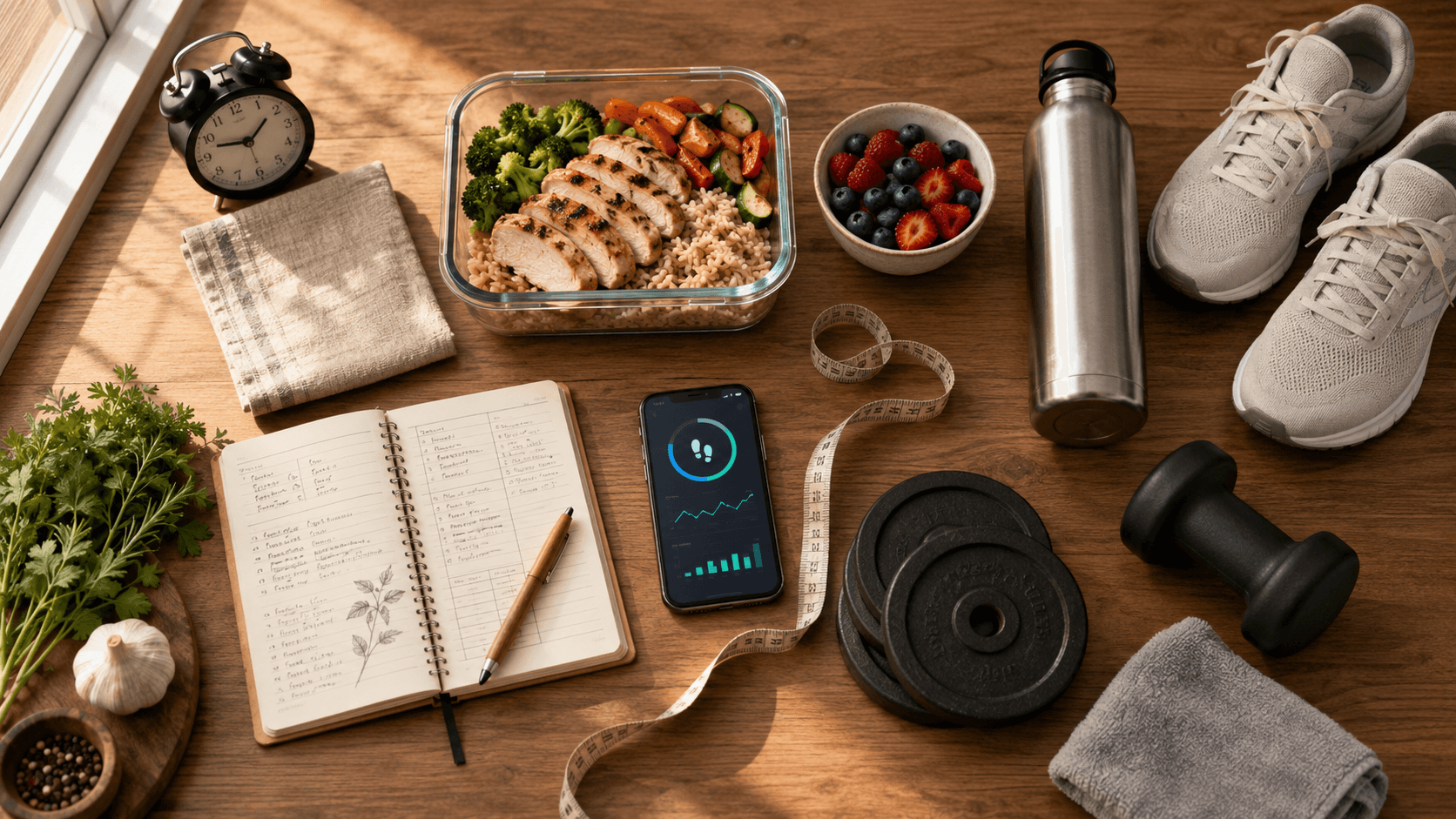
Fat loss tips are everywhere. Every fitness influencer, every magazine, every podcast has a list of tricks, hacks, and secrets that promise to transform your body. The problem is not a shortage of information. The problem is that most of it is either wrong, incomplete, or presented without context. Sustainable fat loss is not about tricks. It is about principles. Principles that are grounded in physiology, supported by evidence, and proven through thousands of hours of real-world coaching with real people who have real jobs, real families, and real constraints on their time and energy.
This article is the distillation of everything I know. Not the trendy stuff. Not the stuff that gets clicks. The stuff that actually works when you commit to it consistently, week after week, month after month. I work with men and women of all ages, all dietary backgrounds, from meat eaters to vegetarians to vegans, clients with type 2 diabetes, type 1 diabetes, PCOS, hypertension, and a wide range of other medical conditions. The principles in this playbook apply to all of them. The application varies. The fundamentals do not.
If you have been stuck, if you have tried everything and nothing seems to work, if you have lost weight before only to regain it, the issue is almost certainly not effort. It is structure. A systematic review of successful weight loss interventions found that the combination of reduced dietary intake, regular physical activity, and behavioural strategies such as self-monitoring was present in 92 percent of interventions that achieved and maintained clinically significant weight loss (1). That tells you something crucial: fat loss is not about finding the one magic variable. It is about building a complete system where nutrition, training, movement, sleep, and accountability all work together. That is what this playbook gives you.

Nutrition: The Foundation of Every Transformation
Nothing in fat loss matters more than your nutrition. You can train as hard as you want, but if your food is not right, your body will not change. This is not opinion. It is thermodynamics. A meta-analysis of 29 long-term studies found that diet and exercise combined were clearly superior to exercise alone, confirming that dietary management is the primary driver of sustained weight loss (2). Exercise supports the process. Nutrition drives it.
You must be in a calorie deficit to lose fat. There are no exceptions to this rule. Every diet that has ever produced fat loss, whether it was low carb, low fat, intermittent fasting, keto, Mediterranean, or anything else, worked because it created a calorie deficit. A landmark network meta-analysis of 121 randomised controlled trials covering 21,942 adults found no significant differences in weight loss between named diets at 12 months (3). The diet that works is the one you can adhere to consistently. Choose the approach that fits your lifestyle, your preferences, and your relationship with food. Then stick with it.
Set your calorie deficit at 400 to 600 calories below your maintenance level. This is the range I use with the vast majority of my clients. It is large enough to produce meaningful fat loss of 0.5 to 1 percent of body weight per week, but small enough to be sustainable, to allow adequate training performance, and to minimise muscle loss. Extreme deficits of 1,000 plus calories produce faster initial weight loss but also drive greater muscle loss, more severe hormonal disruption, stronger hunger signals, and significantly higher rates of regain (4).
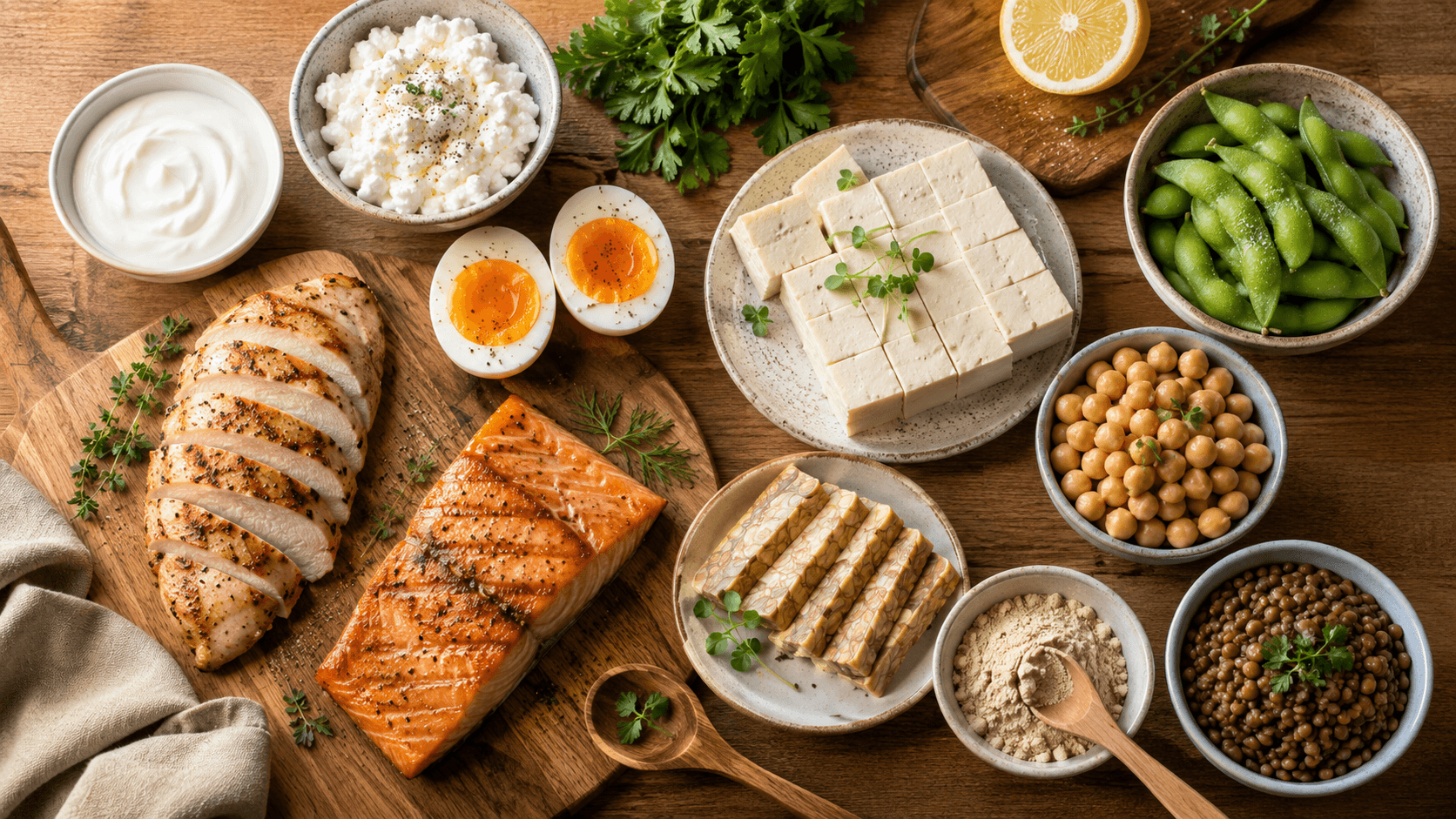
Eat at least 1.6 to 2.2 grams of protein per kilogram of body weight per day. This is the single most important macronutrient target during a fat loss phase. A meta-analysis published in the Journal of the International Society of Sports Nutrition confirmed that higher protein intakes during calorie restriction significantly reduce the loss of lean body mass compared to lower protein intakes (5). Protein preserves muscle, increases satiety, and has the highest thermic effect of any macronutrient, meaning your body burns more energy digesting protein than it does digesting carbohydrates or fat. Whether you eat meat, are vegetarian, or are fully vegan, this target is achievable. Build your meals around chicken, fish, eggs, tofu, tempeh, seitan, lentils, chickpeas, Greek yoghurt, soy protein, pea protein, or dairy alternatives.
Do not demonise any macronutrient. Eat carbohydrates and fats alongside your protein. Carbohydrates fuel your training and support thyroid function, mood, and sleep quality. Fats are essential for hormonal health, including testosterone and oestrogen production, as well as the absorption of fat-soluble vitamins. I typically structure my clients' diets with protein as the non-negotiable anchor, then distribute remaining calories between carbohydrates and fats based on their preferences, their activity level, and how they respond physically and psychologically. There is no metabolic advantage to eliminating an entire macronutrient group, and doing so usually makes adherence harder, not easier.
Track your food intake, at least initially. Self-monitoring of dietary intake is one of the most consistent predictors of successful weight management in the research literature (6). Most people dramatically underestimate how much they eat. A study published in the New England Journal of Medicine found that participants who believed they were diet resistant were underreporting their calorie intake by an average of 47 percent (7). You do not need to weigh and log every gram of food for the rest of your life, but you do need to go through a period of accurate tracking to calibrate your understanding of portion sizes and calorie content. Once you have internalised that knowledge, you can transition to a more intuitive approach without losing accuracy.
Prioritise whole, minimally processed foods for the majority of your intake. Ultra-processed foods are engineered to be hyperpalatable, meaning they are designed to override your natural satiety signals and drive overconsumption (8). You do not need to eliminate them completely. Rigid, all-or-nothing approaches to food tend to backfire psychologically. But making whole foods the foundation of your diet, foods like vegetables, fruits, whole grains, legumes, lean proteins, nuts, seeds, and quality fats, will naturally improve satiety, nutrient density, and your ability to sustain a deficit without feeling deprived.
Training: Building the Body You Want While Losing Fat
Training during a fat loss phase has two primary purposes: to preserve and build lean muscle mass, and to increase total energy expenditure. The single most important type of training for both of these goals is resistance training.
Resistance train at least two to four times per week. This is non-negotiable. A systematic review and meta-analysis comparing resistance training, aerobic training, and concurrent training found that all modalities produced significant body fat loss when combined with a calorie deficit (9). But resistance training offers something aerobic training cannot: it builds and preserves muscle mass. During a calorie deficit, your body is primed to break down both fat and muscle for energy. Resistance training provides the stimulus that tells your body to hold onto muscle and preferentially burn fat. Without it, a significant portion of the weight you lose will be muscle, and that is metabolically and aesthetically counterproductive.
Focus on compound movements that work multiple muscle groups simultaneously. Squats, deadlifts, lunges, presses, rows, and pull-ups should form the foundation of your programme. These movements recruit the most muscle tissue, burn the most energy, produce the greatest hormonal response, and translate to real-world functional strength. Isolation exercises have their place, but they should complement your compound work, not replace it.

Train with progressive overload. This means systematically increasing the demands placed on your muscles over time, whether through heavier weights, more repetitions, more sets, or shorter rest periods. Your body adapts to the stimulus you give it. If you lift the same weights for the same reps every week, your body has no reason to change. Progressive overload is the mechanism that drives continued muscle growth and metabolic adaptation. Track your sessions. Record your weights and reps. Aim to beat your previous performance, even incrementally, at every opportunity.
Do not rely on exercise to create your entire calorie deficit. Training supports fat loss, but it should not be the primary mechanism for creating your deficit. The calories burned during exercise are often overestimated, and compensatory behaviours like increased hunger and decreased non-exercise movement can offset a large portion of the energy you expend in the gym. Create your deficit primarily through nutrition, and use training to build muscle, improve fitness, and add a modest additional energy cost.
Daily Movement: The Overlooked Fat Loss Accelerator
One of the most powerful and most underutilised tools in fat loss is non-exercise activity thermogenesis, or NEAT. This is the energy you burn through all of the movement you do outside of structured exercise: walking, standing, fidgeting, climbing stairs, carrying shopping, doing housework, and simply being active throughout your day. NEAT can account for a significant portion of your total daily energy expenditure and it varies enormously between individuals, with differences of several hundred calories per day between sedentary and active people (10).
Aim for a minimum of 8,000 to 10,000 steps per day. Walking is the simplest, most sustainable, and most underappreciated fat loss tool there is. It burns calories without placing significant stress on your recovery capacity, it improves insulin sensitivity, it supports cardiovascular health, and it costs nothing. Many of my most successful client transformations have involved nothing more revolutionary than adding 4,000 to 5,000 extra steps per day on top of their existing activity. That small addition, sustained over months, adds up to tens of thousands of additional calories burned with almost zero effort or fatigue.
Reduce your sitting time wherever possible. Take phone calls standing or walking. Use a standing desk for part of your working day. Walk to meetings. Take the stairs. Park further from the entrance. These small behavioural changes seem trivial in isolation, but they compound over time into meaningful differences in energy expenditure and metabolic health.
Sleep: The Silent Saboteur of Fat Loss
Sleep is not a luxury. It is a biological necessity, and insufficient sleep will undermine your fat loss efforts regardless of how well you eat and train. A landmark study published in Annals of Internal Medicine found that sleep curtailment in healthy young men was associated with decreased leptin, elevated ghrelin, and increased hunger and appetite, particularly for calorie-dense, high-carbohydrate foods (11). In practical terms, poor sleep makes you hungrier, less satisfied by the food you do eat, more drawn to junk food, and less motivated to train. It is the perfect storm for overeating and underperforming.
Sleep seven to nine hours per night. Treat it as seriously as your training. This is not generic wellness advice. This is a fat loss strategy. Research has shown that when people in a calorie deficit sleep only 5.5 hours compared to 8.5 hours, the proportion of weight lost as fat decreases significantly while the proportion lost as lean tissue increases (12). You are literally losing more muscle and less fat when you sleep badly. Set a consistent bedtime. Reduce screen exposure in the hour before sleep. Keep your bedroom cool and dark. These are not optional habits for someone serious about their body composition.

Stress Management: Why Cortisol Matters More Than You Think
Chronic stress elevates cortisol, and chronically elevated cortisol promotes the accumulation of visceral fat specifically. It also increases appetite, drives cravings for energy-dense food, impairs sleep quality, and reduces training performance. If you are in a high-stress job, managing a difficult personal situation, or simply running on too little sleep and too much caffeine, your cortisol levels may be actively working against your fat loss goals.
Build deliberate stress management into your daily routine. This does not have to mean meditation or yoga, although both are effective. It can be as simple as a 20 minute walk in the evening, reading before bed instead of scrolling your phone, spending time with people who make you feel good, or setting boundaries around your working hours. The specific method matters less than the consistency of the practice. Clients I have worked with who address their stress alongside their nutrition and training consistently achieve better results than those who focus on diet and exercise alone.
Accountability and Consistency: Where Transformations Are Won or Lost
Every principle in this playbook is useless without consistent execution. The best nutrition plan in the world delivers nothing if you follow it for three days and then abandon it. The best training programme produces no results if you skip sessions whenever life gets busy. Fat loss is a compliance game. The people who get lasting results are not the people who try the hardest for two weeks. They are the people who show up at 80 percent effort, consistently, for months.
Weigh yourself daily and track the weekly average, not the daily number. Body weight fluctuates by 1 to 3 kilograms on a daily basis due to water retention, sodium intake, carbohydrate intake, bowel movements, and hormonal cycles. A single daily weigh-in can be misleading and demoralising. But a weekly average, taken from seven daily weigh-ins, smooths out the noise and gives you a reliable trend. If your weekly average is trending downwards over a period of two to four weeks, you are losing fat. If it is flat or rising, something needs to change.
Measure your waist circumference fortnightly. The scale does not distinguish between fat and muscle. If you are resistance training and eating adequate protein, you may be building muscle while losing fat, which can mask progress on the scale. Waist circumference is a direct indicator of abdominal fat, including visceral fat, and it will often show progress when the scale does not. Take the measurement at the midpoint between your lowest rib and the top of your hip bone, first thing in the morning, before eating or drinking.
Get external accountability. Whether it is a coach, a training partner, or a structured programme, having someone or something holding you accountable dramatically improves adherence. Research consistently shows that supervised programmes and external accountability structures produce significantly greater weight loss than self-directed efforts (1). This is not a weakness. It is human psychology. We perform better when someone else is invested in our outcome.
Sustainability: The Only Diet That Works Is the One You Can Maintain
The fitness industry sells transformation as a destination. Lose the weight, hit the goal, and you are done. The reality is that fat loss maintenance is a lifelong process. A meta-analysis published in the American Journal of Clinical Nutrition found that individuals maintained 67 percent of their initial weight loss at one year, 44 percent at two years, and just 21 percent at five years (13). Those numbers are not a failure of willpower. They reflect the biological reality that your body actively resists sustained weight loss through metabolic adaptation, hormonal changes, and increased hunger signalling.
Plan for a maintenance phase after every fat loss phase. Once you have reached your target or completed a sustained period of dieting, do not immediately return to unrestricted eating. Increase your calories gradually back to maintenance level, keep your training intensity up, and maintain your monitoring habits. This maintenance phase allows your hormones to stabilise, your metabolic rate to recover, and your psychology to adjust to your new body composition. I typically programme a maintenance phase of at least four to eight weeks for every 12 to 16 weeks of active dieting.
Accept that perfection is not the goal. Consistency is. You will have bad days. You will miss sessions. You will overeat at social events. None of these things will ruin your progress unless you allow them to spiral into days or weeks of abandonment. The difference between my most successful clients and the ones who struggle is not that the successful ones never slip up. It is that they get back on track the next meal, the next day, the next session, without guilt and without drama. Progress is not a straight line. It is a trend. Keep the trend moving in the right direction and the results will come.

Your Fat Loss Playbook: The Top Tips
Here is a summary of the most important actionable principles from this playbook. Print it. Screenshot it. Stick it on your fridge. These are the things that actually matter.
Create a calorie deficit of 400 to 600 calories per day through nutrition.
Eat 1.6 to 2.2 grams of protein per kilogram of body weight daily from quality sources.
Track your food intake accurately, at least until you understand your portion sizes.
Make whole, minimally processed foods the foundation of your diet.
Resistance train two to four times per week with progressive overload.
Walk 8,000 to 10,000 steps every day.
Sleep seven to nine hours per night consistently.
Manage your stress deliberately and daily.
Weigh yourself daily and track the weekly average.
Measure your waist circumference fortnightly.
Get external accountability from a coach, partner, or structured programme.
Plan maintenance phases after every fat loss phase.
Be consistent, not perfect. Get back on track without guilt every time you slip.
The Bottom Line
Fat loss is not complicated. But it is hard. It requires sustained effort, honest self-assessment, and a willingness to do the basics well, day after day, long after the initial motivation has faded. There are no shortcuts, no hacks, and no secrets. There is a calorie deficit, adequate protein, resistance training, daily movement, quality sleep, managed stress, and consistent accountability. That is the playbook. It has worked for every successful client I have ever coached. It will work for you.
If you want this playbook built specifically for your body, your goals, your dietary preferences, and your lifestyle, get in touch. I work one-to-one with clients online globally. Whether you eat meat, are vegetarian, vegan, or somewhere in between, whether you are managing diabetes, PCOS, hypertension, or simply want to lose fat and build a body you are proud of, I will give you the structure, the plan, and the accountability to make it happen. No gimmicks. No fads. Just evidence-based coaching applied directly to your transformation.
Work with Me
Get a personalised coaching plan built around your goals, your schedule, and your life.
Enquire NowReferences
- Burgess E, Hassmen P, Pumpa KL. Healthy strategies for successful weight loss and weight maintenance: a systematic review. Applied Physiology, Nutrition, and Metabolism. 2017; 42(6): 665-676.
- Miller WC, Koceja DM, Hamilton EJ. A meta-analysis of the past 25 years of weight loss research using diet, exercise or diet plus exercise intervention. International Journal of Obesity. 1997; 21(10): 941-947.
- Ge L, Sadeghirad B, Ball GDC, et al. Comparison of dietary macronutrient patterns of 14 popular named dietary programmes for weight and cardiovascular risk factor reduction in adults: systematic review and network meta-analysis of randomised trials. BMJ. 2020; 369: m696.
- Fothergill E, Guo J, Howard L, et al. Persistent metabolic adaptation 6 years after The Biggest Loser competition. Obesity. 2016; 24(8): 1612-1619.
- Helms ER, Zinn C, Rowlands DS, Brown SR. A systematic review of dietary protein during caloric restriction in resistance trained lean athletes: a case for higher intakes. International Journal of Sport Nutrition and Exercise Metabolism. 2014; 24(2): 127-138.
- Burke LE, Wang J, Sevick MA. Self-monitoring in weight loss: a systematic review of the literature. Journal of the American Dietetic Association. 2011; 111(1): 92-102.
- Lichtman SW, Pisarska K, Berman ER, et al. Discrepancy between self-reported and actual caloric intake and exercise in obese subjects. New England Journal of Medicine. 1992; 327(27): 1893-1898.
- Monteiro CA, Cannon G, Moubarac JC, et al. Ultra-processed foods, diet quality, and health using the NOVA classification system. Rome: FAO. 2019.
- Willis LH, Slentz CA, Bateman LA, et al. Effects of aerobic and/or resistance training on body mass and fat mass in overweight or obese adults. Journal of Applied Physiology. 2012; 113(12): 1831-1837.
- Levine JA. Non-exercise activity thermogenesis (NEAT). Best Practice and Research Clinical Endocrinology and Metabolism. 2002; 16(4): 679-702.
- Spiegel K, Tasali E, Penev P, Van Cauter E. Brief communication: sleep curtailment in healthy young men is associated with decreased leptin levels, elevated ghrelin levels, and increased hunger and appetite. Annals of Internal Medicine. 2004; 141(11): 846-850.
- Nedeltcheva AV, Kilkus JM, Imperial J, Schoeller DA, Penev PD. Insufficient sleep undermines dietary efforts to reduce adiposity. Annals of Internal Medicine. 2010; 153(7): 435-441.
- Anderson JW, Konz EC, Frederich RC, Wood CL. Long-term weight-loss maintenance: a meta-analysis of US studies. American Journal of Clinical Nutrition. 2001; 74(5): 579-584.