No macronutrient has been more unfairly vilified over the past two decades than carbohydrates. If you have spent any amount of time reading about nutrition online, you have almost certainly been told at some point that carbs make you fat, that cutting carbs is the fastest route to fat loss, or that carbohydrates are essentially poison that spikes your insulin and destroys your health. The low carb movement has done an extraordinary job of convincing millions of people that an entire macronutrient group is the enemy. And it has left a trail of confusion, guilt, and failed diets in its wake.
I see the damage this messaging causes with my own clients every single week. People who are afraid to eat a banana because they think the sugar will make them gain weight. People who avoid rice, potatoes, and bread as though these foods are inherently fattening. People who have tried keto three or four times, lost weight initially, regained it all and more, and now believe their body simply cannot handle carbohydrates. The frustration is real. The confusion is understandable. But the underlying belief that carbs are the problem is, in the vast majority of cases, completely wrong.

How Carb Phobia Sabotages Your Results
The fear of carbohydrates causes real, measurable harm to people pursuing body composition goals. Not because carbohydrates are essential in unlimited quantities, but because the behaviours that carb phobia produces are counterproductive to sustainable fat loss, muscle building, and overall health.
The first and most common problem is the restrict and binge cycle. When someone eliminates carbohydrates entirely, they are removing one of the most palatable and satisfying food groups from their diet. That creates an increasing psychological pressure that, for most people, eventually breaks. The result is a binge on exactly the foods they were trying to avoid, followed by guilt, followed by another round of restriction. Research published in Appetite found that rigid dietary restraint, which includes strict carbohydrate avoidance, was significantly associated with higher levels of disinhibition, binge eating, and poorer long term weight management outcomes compared to flexible approaches (1). Cutting carbs does not just fail for most people. It actively makes their relationship with food worse.
The second problem is the impact on training performance. Carbohydrates are your body’s preferred fuel source for moderate to high intensity exercise. Muscle glycogen, which is stored carbohydrate in muscle tissue, is the primary substrate your muscles draw on during resistance training and high intensity intervals. When glycogen stores are depleted through chronic carbohydrate restriction, training performance suffers. You cannot lift as heavy. You fatigue faster. Your recovery is impaired. A position stand from the International Society of Sports Nutrition confirmed that adequate carbohydrate intake is essential for optimising performance in resistance trained individuals and for supporting the anabolic processes that drive muscle growth (2). If you are training hard and eating almost no carbs, you are undermining your own efforts.
The third problem is hormonal. Chronic low carbohydrate intake has been associated with elevated cortisol levels and suppressed thyroid function, both of which can impair fat loss and negatively affect mood, energy, and sleep (3). For women in particular, sustained very low carb dieting can disrupt menstrual regularity, which has downstream consequences for bone health, fertility, and metabolic function. I have worked with female clients who came to me with disrupted cycles after months of keto dieting. In every case, the reintroduction of adequate carbohydrates was a key part of restoring normal hormonal function.

How to Use Carbohydrates Properly for Fat Loss and Performance
Carbohydrates are not the enemy. They are a tool. Like any tool, the results you get depend entirely on how you use it. The amount of carbohydrate you need, the types you should prioritise, and the timing that works best for you will depend on your goals, your activity level, your body, and your individual response. Here is how I approach carbohydrate prescription with my clients.
Understand That Total Calories Still Come First
Before we even talk about carbohydrate intake, this needs to be clear. You do not gain body fat because you eat carbohydrates. You gain body fat because you consume more total energy than your body expends over time. This is the law of energy balance and it is supported by an overwhelming body of evidence. A landmark trial published in the New England Journal of Medicine compared diets of varying macronutrient compositions and found that total calorie intake, not the proportion of carbohydrates, fat, or protein, was the primary determinant of weight loss (4). Carbs do not make you fat. A caloric surplus makes you fat. You can eat a high carb diet and lose body fat if you are in a deficit. You can eat a low carb diet and gain body fat if you are in a surplus. This is non negotiable physiology.

Choose the Right Types Most of the Time
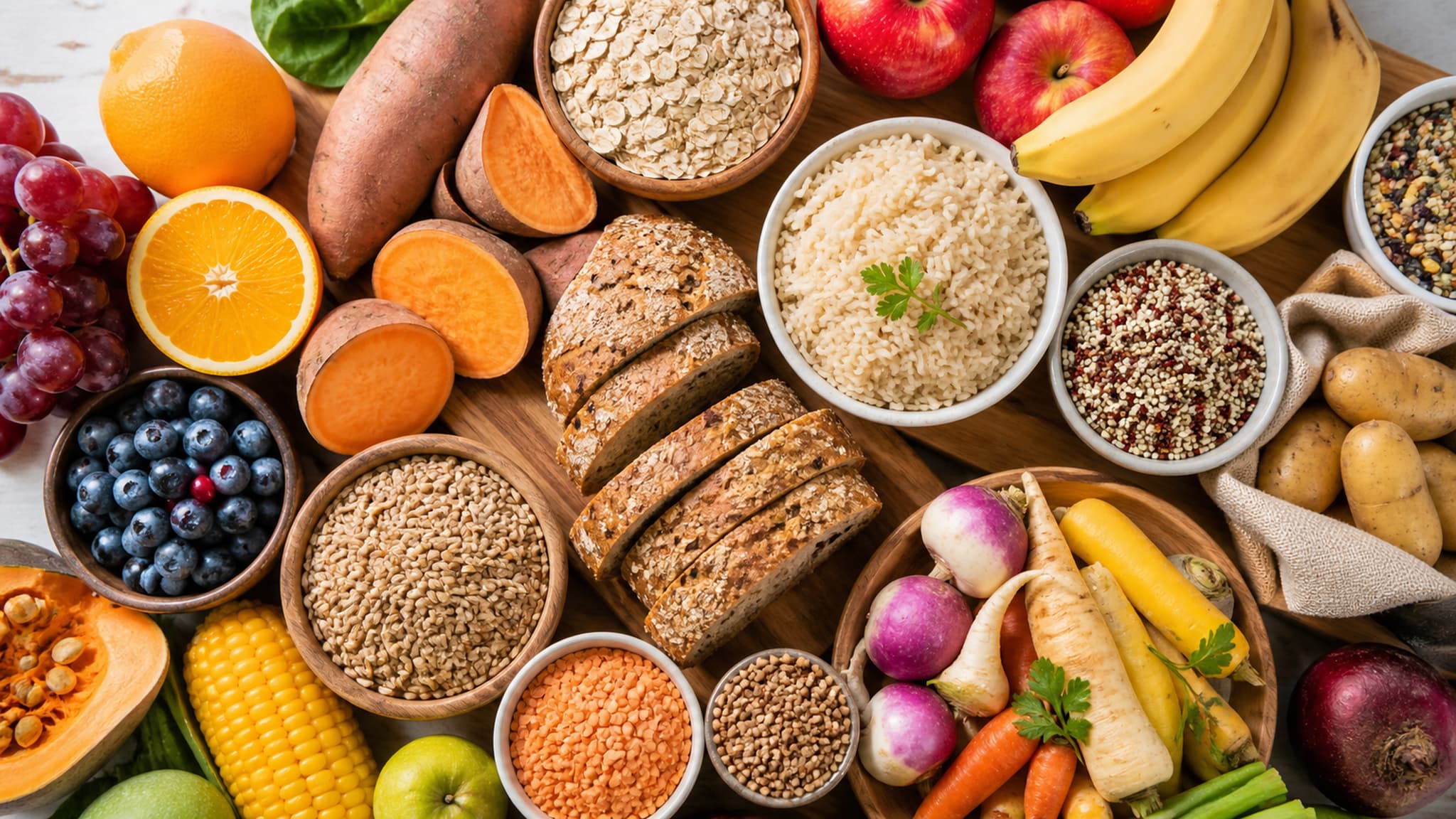
Not all carbohydrate sources are equal in terms of their nutritional value, their effect on blood sugar, and their impact on satiety. This is where the nuance lives. I am not saying go and eat as many biscuits, sweets, and fizzy drinks as you like because carbs are fine. What I am saying is that the vast majority of your carbohydrate intake should come from whole, minimally processed sources that provide fibre, vitamins, minerals, and a slower, more sustained release of energy.
For my omnivore clients this means oats, sweet potatoes, white and brown rice, potatoes, quinoa, wholegrain bread, fruits, and root vegetables. For my vegetarian and vegan clients the list is identical but also includes lentils, chickpeas, black beans, kidney beans, and other legumes as primary carbohydrate and protein sources simultaneously. These foods are nutrient dense, they keep you full, and they support stable blood sugar levels. A meta analysis published in The Lancet found that higher dietary fibre intake, predominantly from whole grain and legume sources, was associated with significantly lower rates of cardiovascular disease, type 2 diabetes, and all cause mortality (5). The carbohydrates that come packaged with fibre and micronutrients are actively protective of your health.
That does not mean you can never eat white bread, pasta, or a slice of cake. It means these should not be the foundation of your carbohydrate intake. An 80/20 approach works well for most people. Eighty percent of your carbohydrates from whole, fibre rich sources. Twenty percent from whatever you enjoy. This keeps you healthy, performing well, and psychologically sane.
Match Your Carbohydrate Intake to Your Activity
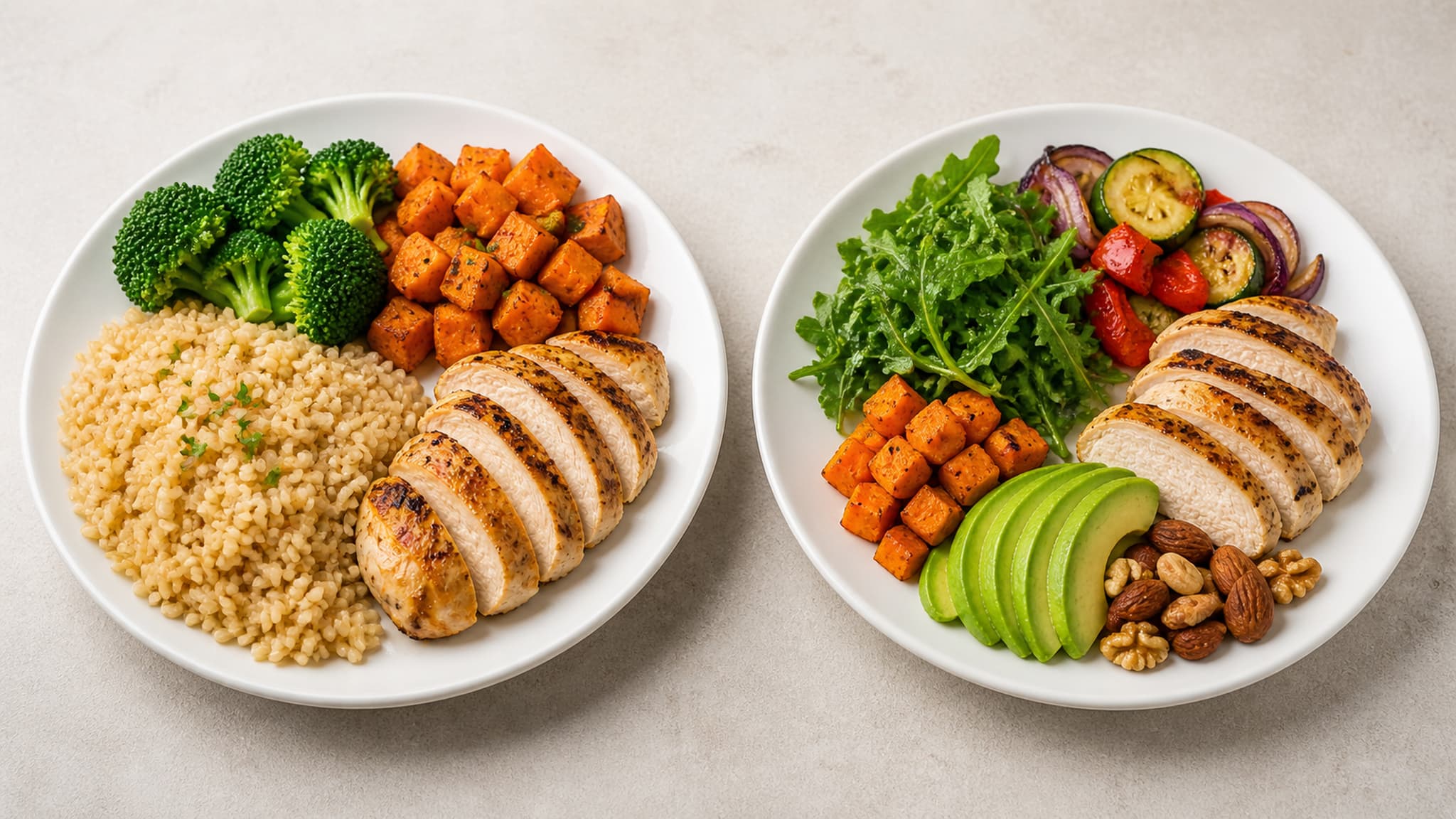
One of the biggest mistakes I see is people eating the same amount of carbohydrate every day regardless of what they are doing. Your carbohydrate needs are not static. They fluctuate based on your training volume, your training intensity, and your overall activity level. On a day when you perform a heavy resistance training session, your body needs more carbohydrate to replenish muscle glycogen and support recovery. On a rest day when your activity is limited to walking and sitting at a desk, your carbohydrate needs are lower.
This is the principle of carbohydrate periodisation and the evidence supports its effectiveness. A study published in the Journal of the International Society of Sports Nutrition found that adjusting carbohydrate intake to match training demands improved body composition outcomes compared to a static daily intake (6). In practice, this means my clients eat more carbohydrates on training days and fewer on rest days, with the difference made up by slightly higher fat intake on the lower carb days. Total weekly calories stay roughly the same. The distribution just shifts to better align with what the body actually needs on any given day.
Time Your Carbohydrates Strategically
While total daily intake matters more than timing, there is evidence that strategic carbohydrate placement can offer small but meaningful advantages, particularly for people who train regularly. Consuming a portion of your daily carbohydrates before training provides fuel for performance. Consuming another portion after training supports glycogen replenishment and recovery. Research published in the Journal of the International Society of Sports Nutrition supports the practice of consuming carbohydrates in the hours surrounding exercise for individuals seeking to maximise training performance and recovery (7).
For my clients, this typically means having a carbohydrate containing meal two to three hours before training and another within a couple of hours after. The rest of the day’s carbohydrates can be distributed however suits their schedule and preferences. For clients who train first thing in the morning, a slightly larger carbohydrate serving at dinner the night before works effectively as a pre training fuel strategy. There is no single perfect timing protocol. There is just the principle of putting fuel where it is most useful.
Stop Fearing Fruit
I want to address this specifically because it comes up with almost every new client I work with. Fruit is not making you fat. The sugar in fruit is not the same as the sugar in a fizzy drink and treating them as equivalent is nutritionally illiterate. Whole fruit comes packaged with fibre, water, vitamins, minerals, and phytonutrients that slow the absorption of its natural sugars and provide significant health benefits. A comprehensive review published in the British Medical Journal found that higher fruit intake was associated with reduced risk of type 2 diabetes, cardiovascular disease, and several forms of cancer (8). Telling someone to avoid bananas while they are eating processed protein bars with 15 grams of added sugar is the kind of backwards logic that the low carb movement has normalised. Eat your fruit. It is good for you.
Carbohydrates Are Part of the Solution, Not the Problem
The people who achieve the best long-term body composition results are not the ones who eliminate carbohydrates. They are the ones who learn to use them intelligently. They eat enough to fuel their training. They choose whole, fibre rich sources most of the time. They adjust their intake based on their activity. And they stop feeling guilty every time they eat a piece of toast.
If you have spent years bouncing between low carb diets, losing and regaining the same weight, and feeling like your body just does not respond to carbohydrates, I would challenge you to consider whether the problem is the macronutrient or the approach. In almost every case I have encountered, it is the approach. Carbohydrates are one of the most powerful tools you have for building the body you want. You just need to learn how to use them properly.
If you want a nutrition plan that includes carbohydrates in the right amounts, from the right sources, timed around your training and your life, that is exactly what I build for every client I work with. I coach one-to-one online globally. Whether you eat meat, are vegetarian, vegan, or somewhere in between, I will create a plan that works with your preferences, your goals, and your body. Get in touch and let me show you how to stop fearing carbs and start using them.
Work with Me
Get a personalised coaching plan built around your goals, your schedule, and your life.
Enquire NowReferences
- Stewart TM, Williamson DA, White MA. Rigid vs. flexible dieting: association with eating disorder symptoms in nonobese women. Appetite. 2002; 38(1): 39-44.
- Kerksick CM, Arent S, Schoenfeld BJ, Stout JR, Campbell B, Wilborn CD, Taylor L, Kalman D, Smith-Ryan AE, Kreider RB, Willoughby D, Arciero PJ, VanDusseldorp TA, Ormsbee MJ, Wildman R, Greenwood M, Ziegenfuss TN, Aragon AA, Antonio J. International Society of Sports Nutrition position stand: nutrient timing. Journal of the International Society of Sports Nutrition. 2017; 14(1): 33.
- Tomiyama AJ, Mann T, Vinas D, Hunger JM, DeJager J, Taylor SE. Low calorie dieting increases cortisol. Psychosomatic Medicine. 2010; 72(4): 357-364.
- Sacks FM, Bray GA, Carey VJ, Smith SR, Ryan DH, Anton SD, McManus K, Champagne CM, Bishop LM, Laranjo N, Leboff MS, Rood JC, de Jonge L, Greenway FL, Loria CM, Obarzanek E, Williamson DA. Comparison of weight-loss diets with different compositions of fat, protein, and carbohydrates. New England Journal of Medicine. 2009; 360(9): 859-873.
- Reynolds A, Mann J, Cummings J, Winter N, Mete E, Te Morenga L. Carbohydrate quality and human health: a series of systematic reviews and meta-analyses. The Lancet. 2019; 393(10170): 434-445.
- Mata F, Valenzuela PL, Gimenez J, Ber C, Dieli-Conwright CM, Dominguez R, Sanchez-Oliver AJ, Martinez Sanz JM. Carbohydrate availability and physical performance: physiological overview and practical recommendations. Nutrients. 2019; 11(5): 1084.
- Kerksick CM, Wilborn CD, Roberts MD, Smith-Ryan A, Kleiner SM, Jager R, Collins R, Cooke M, Davis JN, Galvan E, Greenwood M, Lowery LM, Wildman R, Antonio J, Kreider RB. ISSN exercise and sports nutrition review update: research and recommendations. Journal of the International Society of Sports Nutrition. 2018; 15(1): 38.
- Aune D, Giovannucci E, Boffetta P, Fadnes LT, Keum N, Norat T, Greenwood DC, Riboli E, Vatten LJ, Tonstad S. Fruit and vegetable intake and the risk of cardiovascular disease, total cancer and all-cause mortality: a systematic review and dose-response meta-analysis of prospective studies. International Journal of Epidemiology. 2017; 46(3): 1029-1056.