One of the most common things I hear from new clients is that they have no idea what to actually buy when they go food shopping. They know they need to eat better. They know their current diet is not supporting their goals. But when they walk into a supermarket, they are overwhelmed by choice, confused by marketing claims on packaging, and unsure which foods genuinely matter and which are just noise. So they end up buying the same handful of things they always buy, or they throw random items in the trolley based on whatever health trend they read about that week, and nothing really changes.
This is not a knowledge problem in the traditional sense. Most people can tell you that vegetables are good and processed food is not ideal. The problem is that general knowledge does not translate into a practical, consistent shopping list that supports fat loss, muscle building, and overall health. What people actually need is a clear, structured list of staple foods that they can rely on week after week, built around the nutritional principles that actually drive results. That is exactly what I am going to give you in this article.

Why Your Shopping Habits Are Holding You Back
Your nutrition does not start when you sit down to eat. It starts at the point of purchase. If the right foods are not in your fridge, your freezer, and your cupboard, you cannot eat them no matter how motivated you are. I have lost count of the number of clients who have come to me with a perfectly reasonable meal plan from a previous coach or an app, only to admit that they never actually buy the foods on it. The plan sits in a drawer while they eat whatever is already in the house, which is usually a combination of convenience foods, snacks, and not nearly enough protein.
Research supports what I see in practice. A study published in the International Journal of Behavioral Nutrition and Physical Activity found that household food availability was one of the strongest predictors of dietary intake quality (1). Put simply, you eat what is available. If your kitchen is stocked with nutrient dense, high protein, whole foods, that is what you will eat. If it is stocked with biscuits, crisps, and ready meals, that is what you will reach for when you are tired and hungry. The shopping trip is where the real decisions happen. Everything after that is just execution.
There is also the cost misconception. Many people believe that eating well is expensive. And it can be if you are buying organic everything, exotic superfoods, and premium branded health products. But a practical, results driven shopping list built around staple whole foods is not expensive. Research from the American Journal of Clinical Nutrition found that a diet based on minimally processed whole foods could be constructed at a cost comparable to, and in some cases lower than, a diet based on processed and convenience options when measured per calorie and per unit of nutrition (2). The issue is not the price of healthy food. The issue is that people do not know which foods to prioritise.

The Foods I Build Every Client’s Plan Around
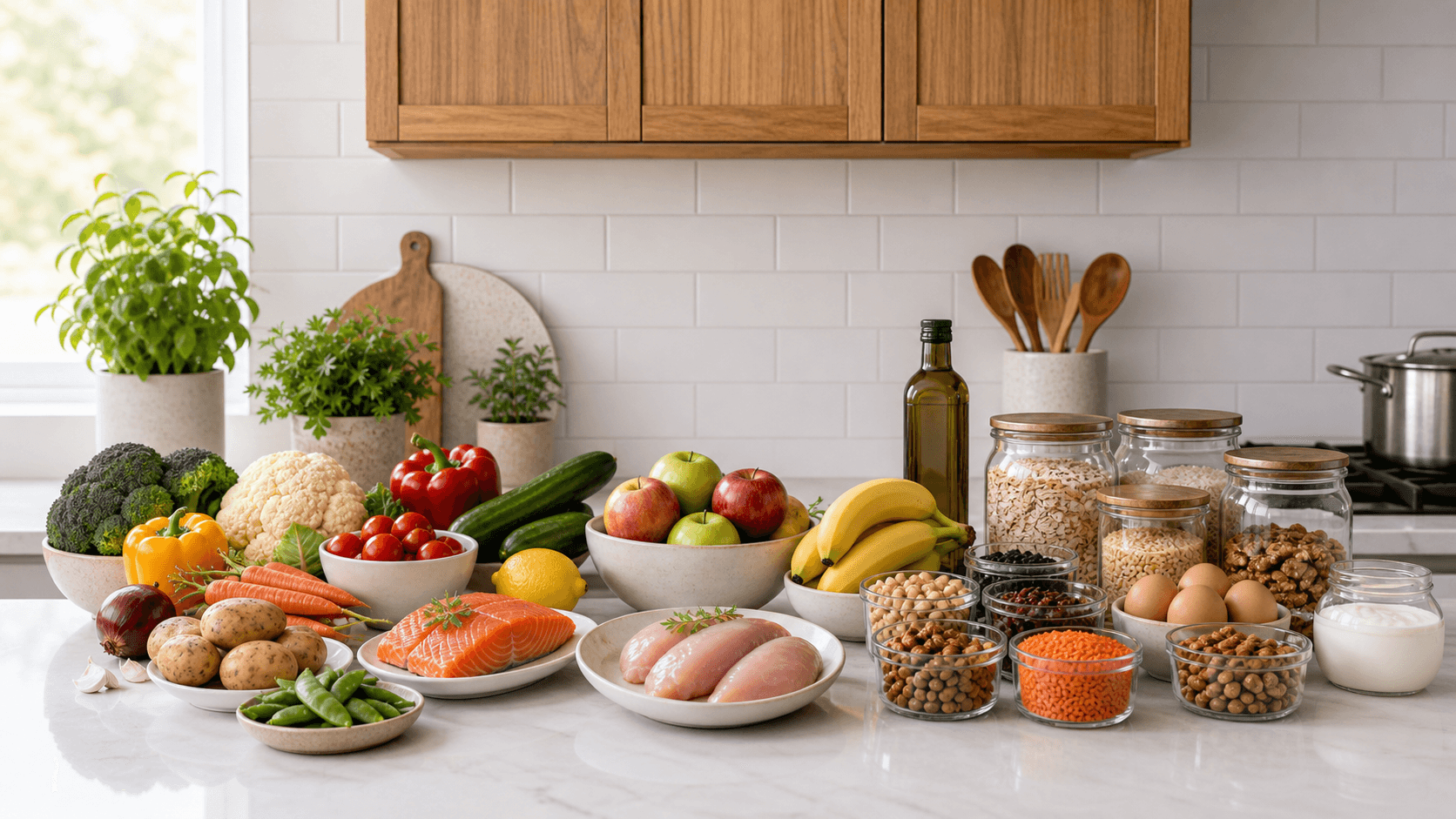
What follows is the core shopping list I use as the foundation for my clients’ nutrition plans. I have organised it by category. Not every client buys every item on this list every week, and the specifics vary depending on dietary preference, but these are the staple foods that appear most frequently across the plans I build. Whether you eat meat, are vegetarian, vegan, or somewhere in between, there is a version of this list that works for you.
Protein Sources
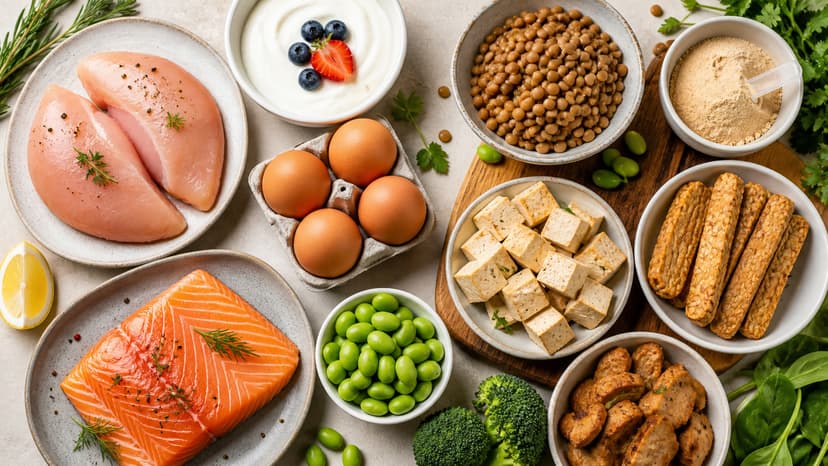
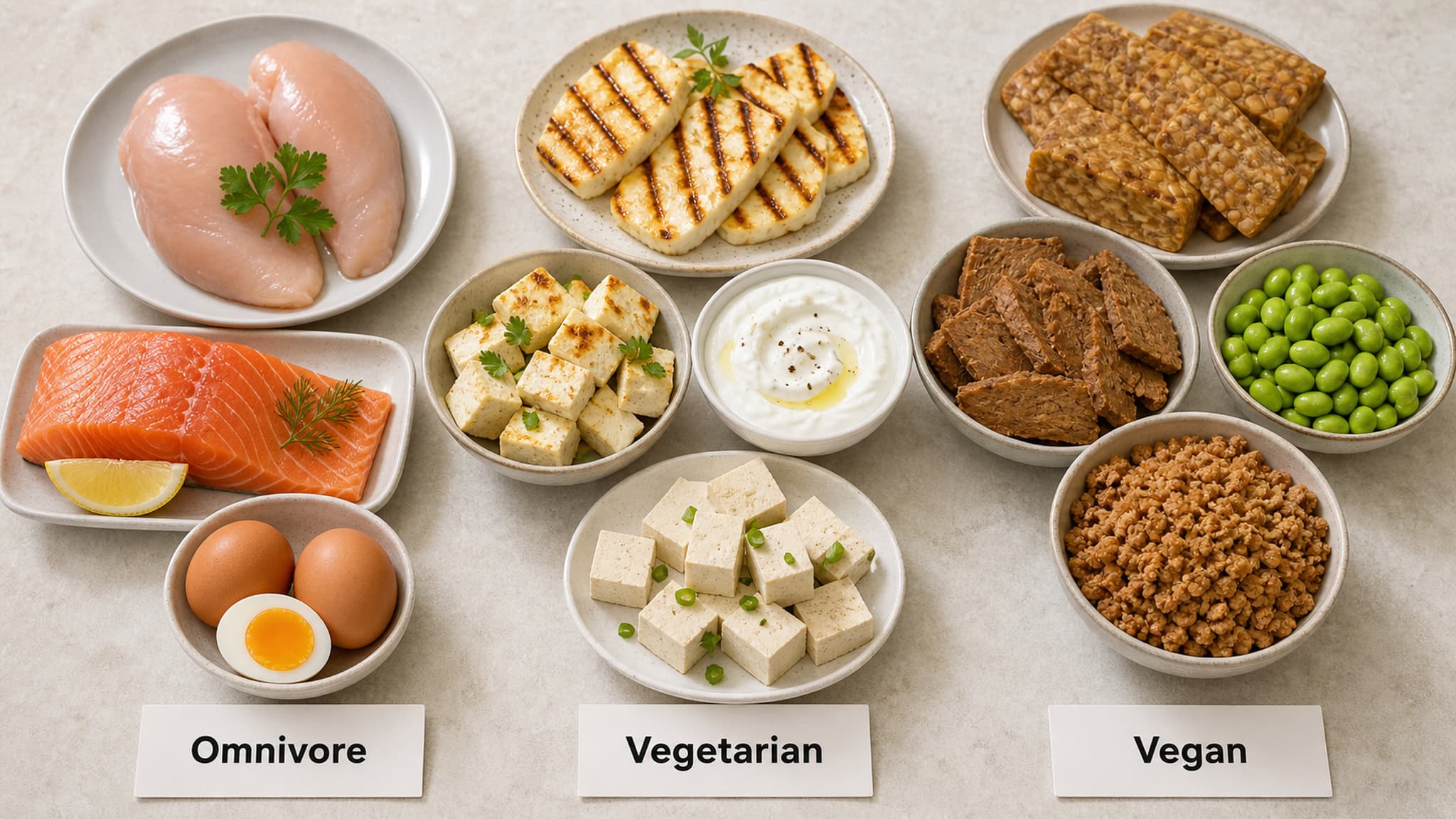
Protein is the most important macronutrient for body composition, and it is the one that most people consistently under eat. Every shopping trip should start here. For omnivore clients, my staples include chicken breast, chicken thighs, turkey mince, lean beef mince, salmon fillets, white fish such as cod or haddock, prawns, and eggs. These are versatile, affordable, and high in protein relative to their calorie content. For vegetarian clients, I build around eggs, Greek yoghurt, cottage cheese, halloumi, paneer, firm tofu, and tempeh. For vegan clients, the foundation is firm tofu, tempeh, seitan, edamame beans, soy mince, pea protein powder, and the growing range of high protein plant based alternatives that are now widely available.
The evidence for prioritising protein is robust. A systematic review and meta-analysis published in the British Journal of Sports Medicine found that protein supplementation combined with resistance training significantly enhanced gains in muscle mass and strength, with intakes of at least 1.6 grams per kilogram of bodyweight per day providing the greatest benefit (3). Whether your protein comes from chicken or chickpeas, the principle is the same. Make it the anchor of your shopping list.
Complex Carbohydrates
Carbohydrates are your primary fuel source for training and daily energy. The goal is to stock your kitchen with sources that are minimally processed, fibre rich, and provide a sustained release of energy rather than a spike and crash. My go-to carbohydrate sources for clients include oats, white rice, brown rice, sweet potatoes, white potatoes, quinoa, wholemeal bread, wholemeal wraps, rice cakes, couscous, and pasta. For vegetarian and vegan clients, lentils, chickpeas, black beans, kidney beans, and butter beans serve a dual purpose as both carbohydrate and protein sources, making them some of the most efficient foods you can buy.
A meta-analysis published in The Lancet confirmed that higher intakes of dietary fibre, predominantly from whole grains and legumes, were associated with significant reductions in chronic disease risk and all-cause mortality (4). Stocking your kitchen with these foods is not just about body composition. It is about long-term health.
Vegetables and Salad
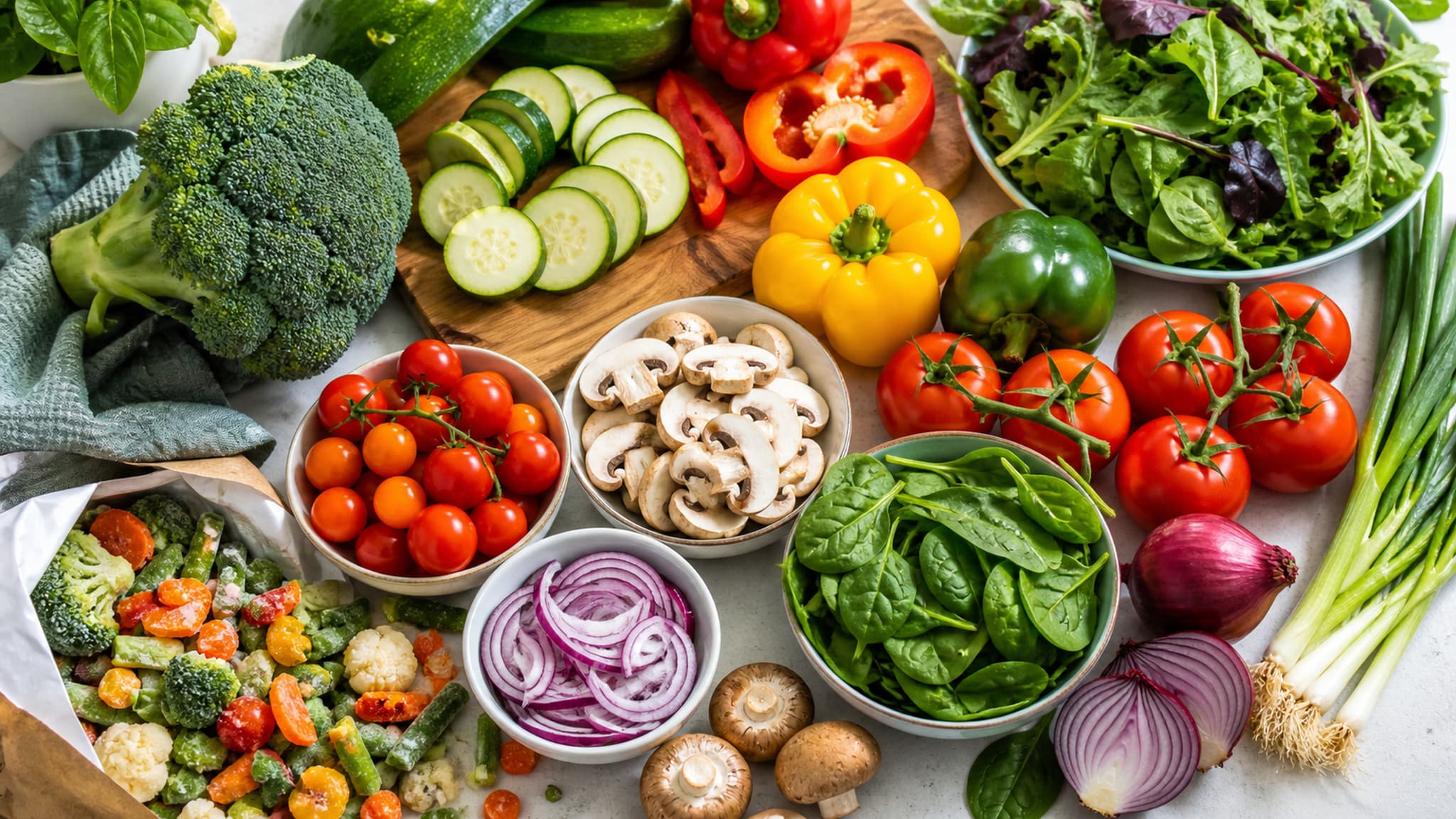
Vegetables should be a non-negotiable part of every shopping trip. They are high in fibre, high in micronutrients, low in calories, and they add volume and colour to your meals. My clients’ shopping lists typically include broccoli, spinach, mixed salad leaves, peppers, courgettes, mushrooms, tomatoes, onions, garlic, green beans, asparagus, kale, pak choi, and frozen mixed vegetables. I always recommend keeping a bag or two of frozen vegetables in the freezer as a backup. They are just as nutritious as fresh, they last for months, and they require zero preparation (5).
Research published in the British Medical Journal found that higher vegetable intake was consistently associated with lower risk of cardiovascular disease and premature mortality, with benefits continuing to increase up to approximately five servings per day (6). I aim for my clients to include at least two to three portions of vegetables in their daily intake, spread across lunch and dinner as a minimum.
Healthy Fats
Dietary fat is essential for hormone production, brain function, and the absorption of fat soluble vitamins. The goal is to include sources that are rich in unsaturated fats while keeping overall fat intake within your calorie targets. My staple fat sources for clients include extra virgin olive oil, avocados, mixed nuts such as almonds, cashews, and walnuts, natural nut butters with no added sugar, seeds including chia, flax, and pumpkin, and oily fish such as salmon and mackerel for omnivore clients. For vegetarian and vegan clients, flaxseed oil, walnuts, chia seeds, and algae based omega-3 supplements help cover the essential fatty acid requirements that would otherwise come from fish.
A landmark study published in the New England Journal of Medicine found that a Mediterranean style diet rich in olive oil and nuts significantly reduced the incidence of major cardiovascular events compared to a reduced fat diet (7). Fat is not the enemy. The right fats in the right amounts are a critical part of a well constructed nutrition plan.
Dairy and Dairy Alternatives
For clients who consume dairy, this category provides some of the most protein dense and versatile foods available. Greek yoghurt is one of my most frequently recommended foods across all client plans. It is high in protein, high in calcium, low in sugar if you buy the plain variety, and incredibly versatile. Cottage cheese is another powerhouse. Other dairy staples include semi-skimmed milk, cheddar cheese in moderation, and feta. For vegan clients or those who are lactose intolerant, I recommend fortified soy milk as the closest nutritional equivalent to cow’s milk, soy yoghurt, oat milk for cooking and coffees, and nutritional yeast which provides a savoury, cheesy flavour along with B vitamins.
Fruits
Fruit provides natural sugars for energy, fibre for digestive health, and a broad spectrum of vitamins and antioxidants. I always have my clients include fruit on their shopping list. Bananas are excellent pre or post training. Berries, particularly blueberries, strawberries, and raspberries, are low in calories and extremely high in antioxidants. Apples, oranges, kiwis, and grapes are all solid staples. I also recommend keeping frozen berries and frozen mango in the freezer for smoothies and overnight oats. A comprehensive review published in the International Journal of Epidemiology found that higher fruit intake was associated with significantly reduced risk of cardiovascular disease, cancer, and all-cause mortality (8). Fruit belongs in your trolley every single week.
Sauces, Seasonings, and Flavour
This is the section most people overlook and it is one of the most important for long-term adherence. If your food tastes bland, you will not stick with it no matter how well structured the plan is. I make sure every client has a rotation of sauces and seasonings that add flavour without significantly adding calories. Staples include soy sauce or tamari, hot sauce, sriracha, balsamic vinegar, Dijon mustard, lemon juice, fresh herbs like coriander and basil, garlic, ginger, smoked paprika, cumin, chilli flakes, black pepper, and a good quality stock. For creamier sauces, tahini, natural yoghurt, and reduced fat pesto work well. These items transform basic prepped food into something you actually look forward to eating, and that is the difference between a plan that lasts three weeks and a plan that becomes a lifestyle.
A Good Shopping List Is the Foundation of a Good Physique
The clients who get the best results are almost always the ones who take their shopping seriously. Not obsessively. Not expensively. Just consistently. They go to the supermarket with a list. They buy the same core staples week after week. They make sure there is always protein in the fridge, carbohydrates in the cupboard, and vegetables ready to cook. That consistency at the point of purchase is what makes consistency in the kitchen possible, and consistency in the kitchen is what drives results.
You do not need to shop at a specialist health food store. You do not need to buy organic. You do not need expensive supplements or branded diet foods. You need the basics, bought regularly, and used as the foundation for simple, balanced meals that support your goals. Everything on this list is available at any major supermarket in the UK for a reasonable weekly budget.
If you want a personalised shopping list and nutrition plan built specifically around your goals, your dietary preferences, your budget, and the foods you actually enjoy eating, that is exactly what I create for every client I work with. I coach one-to-one online globally with men and women of all dietary backgrounds. Whether you eat meat, are vegetarian, vegan, or somewhere in between, I will build something practical that fits your life. Get in touch and let me take the guesswork out of your nutrition.
Work with Me
Get a personalised coaching plan built around your goals, your schedule, and your life.
Enquire NowReferences
- Fulkerson JA, Nelson MC, Lytle L, Moe S, Heitzler C, Pasch KE. The validation of a home food inventory. International Journal of Behavioral Nutrition and Physical Activity. 2008; 5(1): 55.
- Carlson A, Frazao E. Are healthy foods really more expensive? It depends on how you measure the price. Economic Information Bulletin, United States Department of Agriculture. 2012; 96: 1-50.
- Morton RW, Murphy KT, McKellar SR, Schoenfeld BJ, Henselmans M, Helms E, Aragon AA, Devries MC, Banfield L, Krieger JW, Phillips SM. A systematic review, meta-analysis and meta-regression of the effect of protein supplementation on resistance training-induced gains in muscle mass and strength in healthy adults. British Journal of Sports Medicine. 2018; 52(6): 376-384.
- Reynolds A, Mann J, Cummings J, Winter N, Mete E, Te Morenga L. Carbohydrate quality and human health: a series of systematic reviews and meta-analyses. The Lancet. 2019; 393(10170): 434-445.
- Bouzari A, Holstege D, Barrett DM. Mineral, fiber, and total phenolic retention in eight fruits and vegetables: a comparison of refrigerated and frozen storage. Journal of Agricultural and Food Chemistry. 2015; 63(3): 951-956.
- Aune D, Giovannucci E, Boffetta P, Fadnes LT, Keum N, Norat T, Greenwood DC, Riboli E, Vatten LJ, Tonstad S. Fruit and vegetable intake and the risk of cardiovascular disease, total cancer and all-cause mortality: a systematic review and dose-response meta-analysis of prospective studies. International Journal of Epidemiology. 2017; 46(3): 1029-1056.
- Estruch R, Ros E, Salas-Salvado J, Covas MI, Corella D, Aros F, Gomez-Gracia E, Ruiz-Gutierrez V, Fiol M, Lapetra J, Lamuela-Raventos RM, Serra-Majem L, Pinto X, Basora J, Munoz MA, Sorli JV, Martinez JA, Martinez-Gonzalez MA. Primary prevention of cardiovascular disease with a Mediterranean diet. New England Journal of Medicine. 2013; 368(14): 1279-1290.
- Aune D, Giovannucci E, Boffetta P, Fadnes LT, Keum N, Norat T, Greenwood DC, Riboli E, Vatten LJ, Tonstad S. Fruit and vegetable intake and the risk of cardiovascular disease, total cancer and all-cause mortality. International Journal of Epidemiology. 2017; 46(3): 1029-1056.