
The Lie You Have Been Sold About Turning 50
Somewhere along the way, our culture decided that turning 50 means the beginning of the end. That your best years are behind you. That aches, weight gain, low energy, and declining health are just what happens now. I hear this from clients all the time. They walk through my door convinced that their body is working against them and that there is nothing they can do about it. I am going to tell you clearly and directly: that is a lie. Your 50s can be the decade you build the strongest, healthiest, most resilient body you have ever had. I have seen it happen over and over again, and the science backs it up completely.
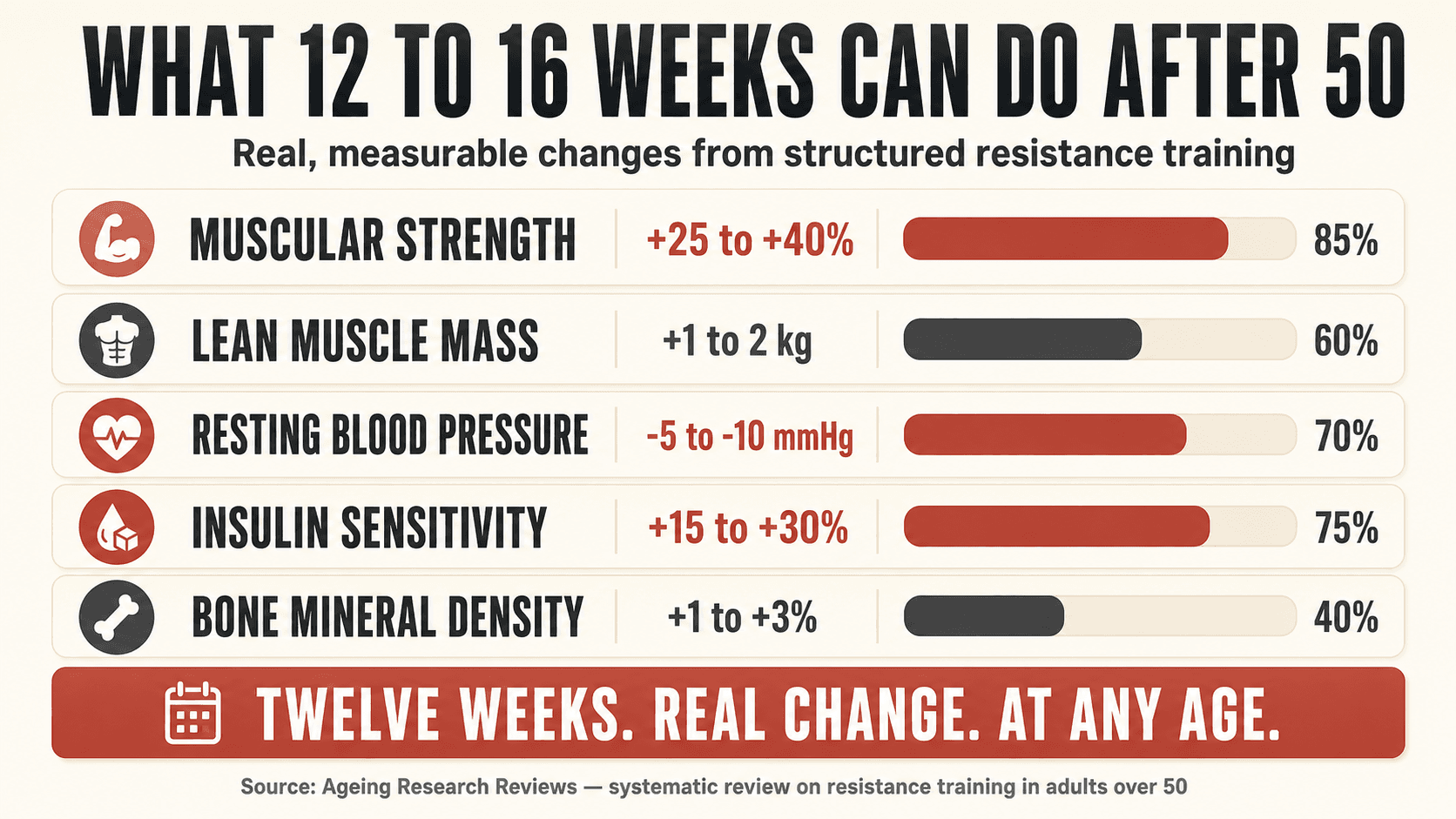
The truth is that much of what people blame on ageing is actually the result of decades of inactivity, poor nutrition, and a lack of structured resistance training. A major systematic review published in Ageing Research Reviews confirmed that progressive resistance training produces significant improvements in muscular strength in older adults, regardless of starting fitness level (1). Your body has not given up on you. You have just never given it the right stimulus.
What Is Really Happening to Your Body in Your 50s
I am not going to sugarcoat this. Your 50s are a decade of significant physiological change, and if you do not understand what is happening inside your body, you cannot make the right decisions about how to respond. Let me break it down for you in plain terms.
Muscle Loss Accelerates
By your 50s, the gradual muscle loss that began in your 30s starts to pick up pace. Research shows that adults can lose 3 to 8 percent of their muscle mass per decade from the age of 30, and this rate accelerates after 50 (2). Less muscle means a slower metabolism, more body fat, weaker bones, unstable joints, and a dramatically increased risk of falls and fractures as you move into your 60s and 70s.
Hormonal Shifts Are Real but Not the Whole Story
For women, menopause typically occurs around the age of 51 in the UK. The decline in oestrogen has wide reaching effects: accelerated bone loss, increased abdominal fat storage, disrupted sleep, mood changes, and a higher risk of cardiovascular disease (3). For men, testosterone levels decline gradually from around the age of 30, typically at a rate of 1 to 2 percent per year. By your 50s, this cumulative decline can result in reduced muscle mass, increased body fat, lower energy, reduced libido, and mood changes (4). This is sometimes referred to as andropause.
Here is the part most people miss: while you cannot stop these hormonal changes entirely, you can powerfully influence how much they affect you. Physical inactivity and excess body fat make hormonal decline worse. Resistance training, good nutrition, and maintaining a healthy body composition are among the most effective natural strategies for managing these transitions.
Metabolic Health Deteriorates Without Intervention
Your 50s are the decade where metabolic conditions often surface or worsen. Insulin resistance increases, blood pressure tends to rise, cholesterol profiles shift, and the risk of Type 2 diabetes climbs significantly (5). If you are carrying excess body fat, particularly around the midsection, these risks are amplified. The good news is that every single one of these markers responds positively to resistance training and dietary improvement.
The Two Paths After 50: A Simple Choice
I use a simple diagram with my clients to explain the two paths available to everyone in their 50s. One leads downward. The other leads upward. The only difference is what you choose to do today.
Every client I have ever worked with in their 50s started somewhere on the left hand side of that diagram. Every single one who committed to the process moved to the right hand side. The human body is remarkable in its ability to adapt, no matter what age you start.
Top Tip
It does not matter where you are starting from. What matters is that you start. The research is clear that even previously sedentary adults over 50 can make significant gains in muscle mass, strength, and metabolic health within 12 to 16 weeks of beginning a structured resistance training programme (1).
The Four Pillars of Transformation After 50
When I work with a client in their 50s, I build everything around four pillars. Miss one and your results will suffer. Get all four right and the changes can be extraordinary. Let me walk you through each one.
| Pillar 1 | Pillar 2 | Pillar 3 | Pillar 4 |
|---|---|---|---|
| Resistance Training | Nutrition | Recovery | Consistency |
| The stimulus that tells your body to build and maintain muscle. | The fuel and raw materials your body needs to recover and change. | Sleep, rest days, and stress management. Where adaptation actually happens. | Showing up week after week. The only thing that separates those who transform and those who do not. |
Pillar 1: Resistance Training in Your 50s
The principles of effective strength training do not change because you have turned 50. You still need to challenge your muscles with progressively increasing resistance. You still need to train the fundamental movement patterns: squat, hinge, push, pull, and carry. What does change is how you manage volume, intensity, and recovery.
Training Frequency and Structure
For most people in their 50s, two to three resistance training sessions per week is the ideal range. This gives you enough stimulus to build muscle and strength while allowing adequate recovery between sessions. I typically programme full body sessions for clients training twice a week, or an upper body and lower body split for those training three times. The specific structure depends on the individual, their goals, their health status, and their experience level.
What Changes After 50
| Training Variable | In Your 30s and 40s | Adjustment for Your 50s |
|---|---|---|
| Warm Up | 5 to 10 minutes was usually sufficient. | 10 to 15 minutes. Include joint mobilisation, dynamic stretches, and activation work specific to the session. |
| Load Progression | Could increase weights weekly. | Slower progression. Increase loads fortnightly or monthly. Prioritise form over ego. |
| Recovery Between Sessions | 24 to 48 hours was often enough. | 48 to 72 hours between training the same muscle group. Sleep quality becomes even more critical. |
| Exercise Selection | Higher tolerance for heavy barbell movements. | Dumbbells, cables, and machines may be kinder on joints. Choose exercises that feel right for your body. |
| Volume | Higher volume tolerated well. | Moderate volume, higher quality. 2 to 3 sets per exercise, 8 to 15 repetitions. Focus on controlled tempo. |
| Deload Weeks | Every 6 to 8 weeks. | Every 4 to 6 weeks. A lighter week allows your joints, tendons, and nervous system to recover fully. |
Top Tip
If a particular exercise causes you consistent joint pain, do not push through it. There is always an alternative movement that trains the same muscles without aggravating the joint. A good coach will find that alternative for you.

Pillar 2: Nutrition After 50
Nutrition in your 50s requires more precision than it did in your 30s. Your calorie needs are slightly lower because your metabolism has slowed, but your nutrient needs are actually higher. This means every meal needs to work harder for you. I coach clients across all dietary backgrounds, whether you eat meat, are vegetarian, vegan, or somewhere in between, and the principles I am about to outline apply to everyone.
Protein Is Your Number One Priority
After 50, your muscles become less responsive to the protein you eat. This is known as anabolic resistance (6). In practical terms, it means you need more protein per meal to trigger the same muscle building response that a younger person gets from a smaller amount. The current evidence supports a daily protein intake of 1.2 to 1.6 grams per kilogram of bodyweight for adults over 50 who are resistance training, distributed across three to four meals per day with at least 30 to 40 grams per meal (7).
Meal Construction: The Plate Model for Over 50s
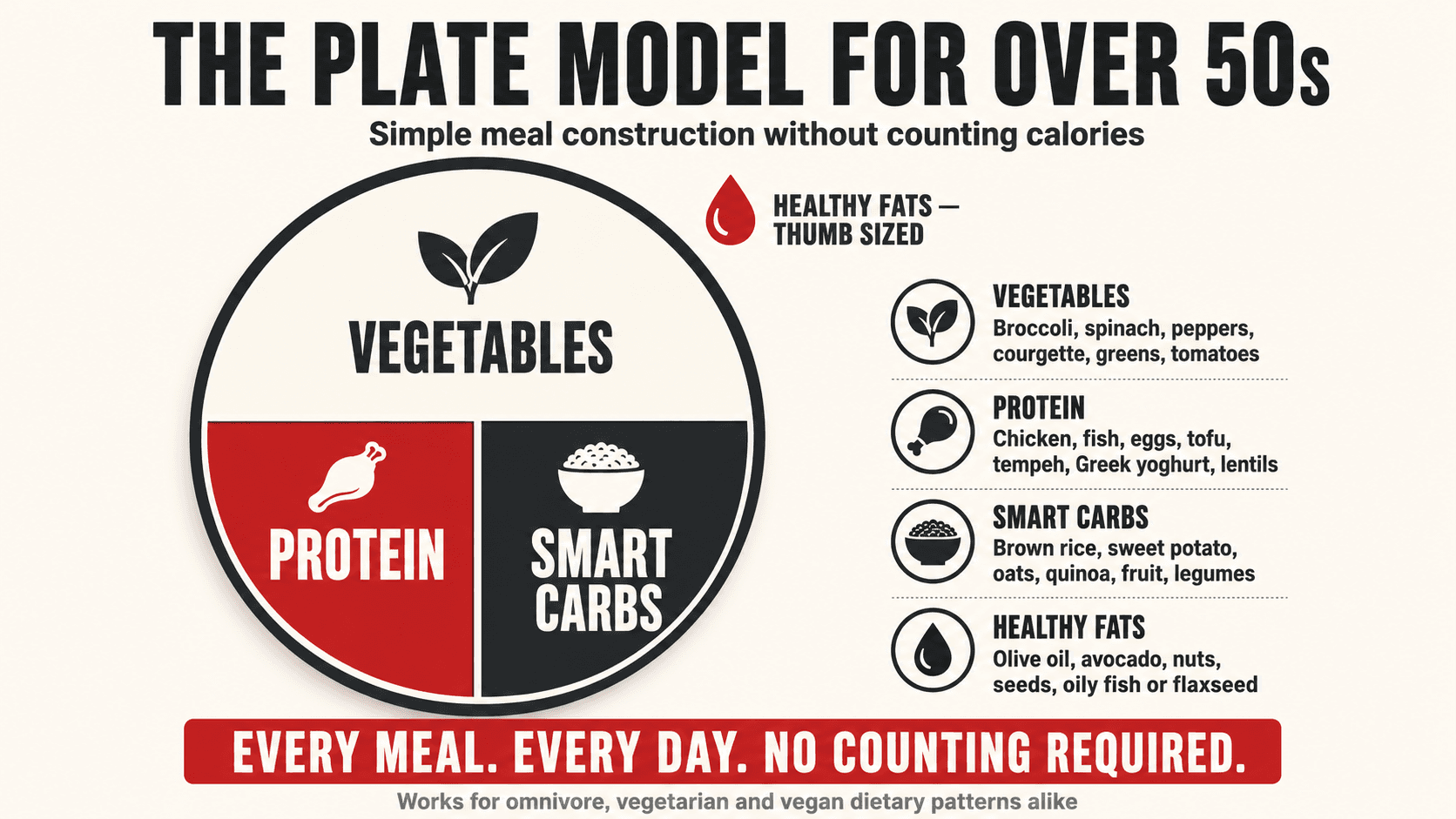
I teach my clients a simple plate model that makes it easy to construct a good meal without needing to count every calorie. Think of your plate divided into sections.
| Protein (one quarter of your plate) | Vegetables (half of your plate) |
|---|---|
| Chicken, fish, eggs, tofu, tempeh, seitan, lentils, Greek yoghurt, cottage cheese, or a protein shake. | Any non starchy vegetables. Broccoli, spinach, peppers, courgette, salad greens, tomatoes, green beans. |
| Smart Carbohydrates (one quarter of your plate) | Healthy Fats (a thumb sized portion) |
| Brown rice, sweet potato, oats, quinoa, whole grain bread, legumes, fruit. | Olive oil, avocado, nuts, seeds, oily fish or flaxseed and chia seeds for plant based. |
Top Tip
If you are vegetarian or vegan, pay extra attention to combining protein sources across the day. Lentils with rice, tofu with quinoa, tempeh with whole grain bread. These combinations provide a complete amino acid profile that supports muscle building effectively.
Key Nutrients to Prioritise After 50
| Nutrient | Why It Matters After 50 | Best Food Sources | Consider Supplementing? |
|---|---|---|---|
| Vitamin D | Bone health, immune function, muscle function. Deficiency is extremely common in the UK, especially after 50. | Sunlight exposure, oily fish, fortified foods, egg yolks, fortified plant milks. | Yes. Most adults in the UK should supplement with 1000 to 2000 IU daily, especially October to March (8). |
| Calcium | Bone mineral density declines sharply after menopause in women and gradually in men. Calcium is essential for maintaining bone strength. | Dairy products, fortified plant milks, tofu made with calcium sulphate, kale, broccoli, almonds. | Consider if dietary intake is low. Aim for 1000 to 1200mg daily from food and supplement combined. |
| Omega 3 | Anti inflammatory. Supports cardiovascular health, brain function, and joint health. Also shown to improve muscle protein synthesis in older adults (9). | Oily fish (salmon, mackerel, sardines), walnuts, flaxseeds, chia seeds, algae based supplements. | Yes, particularly if you do not eat oily fish regularly. Fish oil or algae based omega 3 for plant based. |
| Magnesium | Muscle function, sleep quality, blood pressure regulation, nerve function. Deficiency is very common and often undiagnosed. | Dark leafy greens, nuts, seeds, whole grains, dark chocolate, legumes, bananas. | Consider supplementing 200 to 400mg of magnesium glycinate, particularly if you struggle with sleep. |
| B12 | Nerve function, red blood cell production, energy. Absorption declines with age. Critical for vegetarians and vegans. | Meat, fish, eggs, dairy, fortified nutritional yeast, fortified plant milks. | Essential supplement for vegans. Recommended for all adults over 50 regardless of diet. |
| Fibre | Gut health, blood sugar regulation, cholesterol management, satiety. Most adults eat less than half the recommended amount. | Vegetables, fruits, legumes, whole grains, oats, flaxseed, chia seeds. | Focus on food sources first. Aim for 30g per day from whole foods. |
Top Tip
Do not try to overhaul your entire diet overnight. Pick one thing from this table that you know you are lacking and fix that first. Once it becomes a habit, move to the next. Small, consistent changes beat dramatic overhauls every time.
Pillar 3: Recovery and Sleep
I cannot say this strongly enough: if you are over 50 and you are not prioritising recovery, you are undermining everything you do in the gym. Training creates the stimulus for change. Recovery is where the change actually happens. Your muscles grow while you rest, not while you train. Growth hormone, which plays a critical role in muscle repair, fat metabolism, and tissue regeneration, is released primarily during deep sleep (10).
If you are sleeping less than seven hours a night, if your sleep quality is poor, or if you are under chronic stress, your body cannot recover properly. You will feel more fatigued, your training performance will drop, your appetite regulation will be disrupted, and your body will hold onto fat more stubbornly.
The Recovery Hierarchy
Helpful But Secondary
Foam rolling, massage, sauna, cold water exposure. Nice to have, not essential.
Active Recovery
Walking, light stretching, swimming on rest days. Promotes blood flow without taxing the body.
Stress Management
Chronic stress elevates cortisol, which breaks down muscle and promotes fat storage.
Nutrition Timing
Protein and carbohydrates within 2 hours of training to maximise recovery.
Sleep — 7 to 9 Hours
Non negotiable foundation. Where adaptation actually happens.
Top Tip
If you can only improve one thing about your recovery, make it sleep. Set a consistent bedtime, make your room cool and dark, avoid screens for at least 30 minutes before bed, and limit caffeine after midday. These simple changes can dramatically improve your sleep quality within a week.

Pillar 4: Consistency Is Everything
This is the pillar that separates people who transform their health from people who stay stuck. I have worked with clients who had every advantage, access to the best gym, all the time in the world, perfect health, and they achieved nothing because they could not show up consistently. I have also worked with clients who were time poor, dealing with chronic health conditions, managing family responsibilities, and they achieved extraordinary results because they committed to showing up two or three times a week, every single week, for months on end.
Consistency does not mean perfection. It means doing the work most of the time, even when you do not feel like it, even when life gets in the way, even when progress feels slow. Because it will feel slow sometimes. Transformation does not happen in a straight line. There are weeks where you feel invincible and weeks where you feel like nothing is working. The people who get the results they want are the ones who keep going through both.
Top Tip
Commit to a minimum of 12 weeks before you judge whether something is working. Real, lasting body transformation takes time. If you are expecting visible results in two weeks, you are setting yourself up for disappointment and quitting too early.
A Specific Note on Menopause and Andropause
I work with a significant number of clients going through menopause and andropause, and I want to address these directly because they are often misunderstood.
For Women Going Through Menopause
The decline in oestrogen during menopause leads to accelerated loss of bone density, increased visceral fat storage, disrupted sleep, hot flushes, and mood changes. Many women are told to accept this as inevitable. It is not. Resistance training is one of the most effective strategies for managing every single one of these symptoms. It builds and maintains bone density, it reduces body fat, it improves sleep quality, and it has been shown to reduce the severity and frequency of hot flushes in some studies (11). If you are on hormone replacement therapy, training enhances the benefits. If you are not, training becomes even more important.
Top Tip
If you are going through menopause or are post menopausal, prioritise compound resistance exercises like squats, deadlifts, and overhead presses. These load bearing movements provide the mechanical stress your bones need to maintain density. Combine this with adequate calcium and Vitamin D intake.
For Men Experiencing Andropause
The gradual decline in testosterone that occurs in men from their 30s onward can lead to reduced muscle mass, increased body fat, lower energy, reduced motivation, and changes in mood. Research has shown that high intensity resistance training is one of the most effective natural ways to support healthy testosterone levels in ageing men (12). Combine this with maintaining a healthy body composition, getting sufficient sleep, and managing stress, and you are doing everything within your control to maintain hormonal health naturally.
Training and Nutrition with Health Conditions in Your 50s
Many clients come to me in their 50s already managing a health condition. Type 2 diabetes, hypertension, high cholesterol, PCOS, joint problems, or a combination of these. The first thing I tell every one of them is that their condition is not a barrier to training. In most cases, it is the strongest argument for it.
I have worked with clients who have reduced their blood pressure medication after consistent training and nutritional changes. I have worked with clients who have dramatically improved their blood sugar control. I have worked with a client who was a Type 1 diabetic and lost 24 kilograms. None of this happened by accident. It happened because of a structured, evidence based approach to training and nutrition, tailored to the individual.
If you have a health condition, always get clearance from your GP or specialist before starting a new programme. But do not let that condition be the reason you do nothing. The evidence is overwhelming that resistance training is medicine for the majority of chronic conditions (13).
Top Tip
If you are managing Type 2 diabetes, be aware that resistance training can lower your blood glucose for up to 24 hours after a session. Monitor your levels and work with your GP to adjust medication as your fitness improves. This is a positive sign, not a problem.
This Decade Is Yours to Define
Your 50s are not a decline. They are a turning point. What you do in this decade will determine how you feel, how you move, and how you live for the next 20, 30, even 40 years. The research is clear. The evidence is overwhelming. And I have seen it with my own eyes, over and over again, working with clients who were told their best days were behind them and went on to build the strongest, healthiest bodies of their lives.
I am a performance coach. I am a lifelong vegetarian. I have helped hundreds of clients in their 50s and beyond through body transformations. I work one-to-one with clients online globally. If you are in your 50s and you are ready to stop accepting decline and start building something better, I would like to hear from you.
Get in touch through my website at trperformancecoaching.com and let us start a conversation about what is possible for you.