
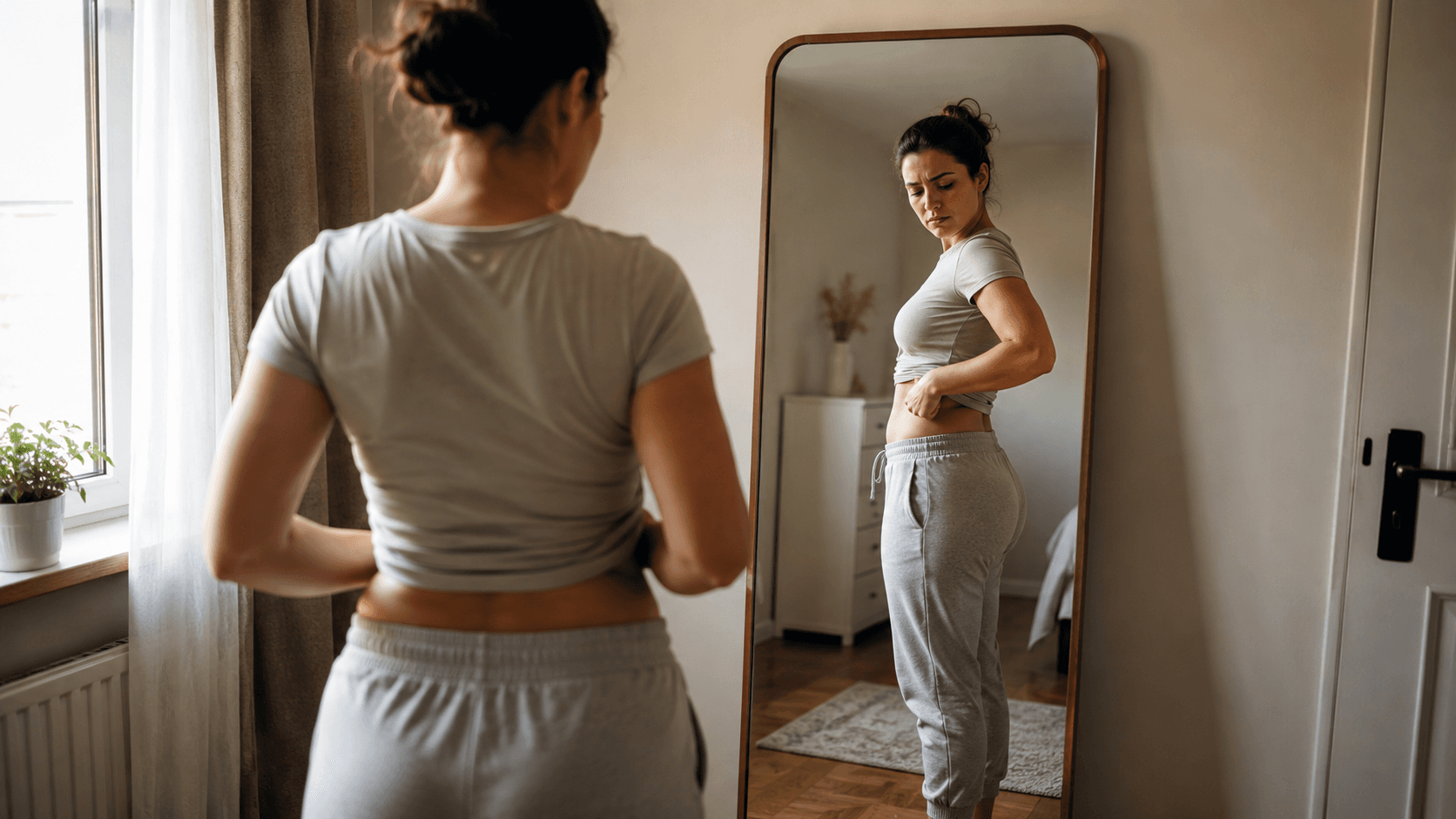
You are exercising but not losing weight. You are showing up to the gym three, four, maybe five times a week. You are working hard. You are sweating. You are sore. And yet the scale is not moving, the clothes are not fitting any differently, and the reflection in the mirror looks exactly the same as it did two months ago. This is one of the most common and most demoralising experiences in the entire fitness space, and it drives people to quit their programmes, distrust the process, and conclude that their body simply does not respond to exercise. The problem is almost never your body. The problem is almost always a misunderstanding of what exercise actually does for fat loss and what it does not.
If you are exercising consistently but not losing body fat, there is a reason. There is always a reason. And in the vast majority of cases, it falls into one of a small number of well-understood categories that are entirely fixable once you understand what is actually going on. This article is going to walk you through each of those categories in detail, explain the science behind them, and give you clear, actionable steps to get your results moving again.
The Uncomfortable Truth About Exercise and Fat Loss
The first thing you need to understand, and this is something the fitness industry does not want you to hear because it undermines the entire business model of selling gym memberships and workout programmes, is that exercise alone is a remarkably poor tool for fat loss. A systematic review and meta-analysis published in the journal Obesity Reviews examined the effects of exercise without dietary intervention on body weight and found that exercise alone produced only modest weight loss, typically between 0.5 and 3 kilograms over 12 to 26 weeks (1). That is not nothing, but for most people who are expecting dramatic changes from their training, it is nowhere near what they anticipated.
The reason for this is straightforward. The number of calories you burn through structured exercise is far smaller than most people believe. A typical 45 minute resistance training session burns somewhere between 150 and 300 calories depending on your body size, the intensity of the session, and the exercises selected. A 30 minute run at a moderate pace burns roughly 250 to 400 calories. These are meaningful contributions to your daily energy expenditure, but they are easily offset by a single extra snack, an extra glass of wine, a slightly larger portion at dinner, or a handful of nuts from the kitchen cupboard. A study published in Current Biology found evidence for what the researchers called “constrained total energy expenditure,” suggesting that at higher activity levels, the body compensates by reducing energy expenditure elsewhere, including non-exercise activity and even some metabolic processes (2). In other words, the relationship between exercise and calorie burn is not as linear as most people assume.
None of this means exercise is not important. It is critically important. Resistance training preserves lean muscle mass during a calorie deficit, which protects your metabolic rate, improves insulin sensitivity, enhances body composition, and ensures that the weight you lose is predominantly fat rather than a combination of fat and muscle (3). Cardiovascular exercise supports heart health, improves VO2 max, and contributes to daily energy expenditure. But exercise is the tool that shapes your body composition. Nutrition is the tool that determines whether you are in a calorie deficit. If you are not in a calorie deficit, you will not lose body fat regardless of how hard you train. That is not an opinion. That is the first law of thermodynamics applied to human biology.
You Are Eating More Than You Think
This is by far the most common reason I see in clients who are training hard but not losing fat, and it applies to almost everyone regardless of how “clean” they believe their diet is. The research on this is remarkably consistent. A landmark study published in the New England Journal of Medicine found that individuals who described themselves as “diet resistant” underreported their actual calorie intake by an average of 47 percent and overestimated their physical activity by 51 percent (4). That is not a small margin of error. That is nearly half of all calories consumed going unaccounted for.
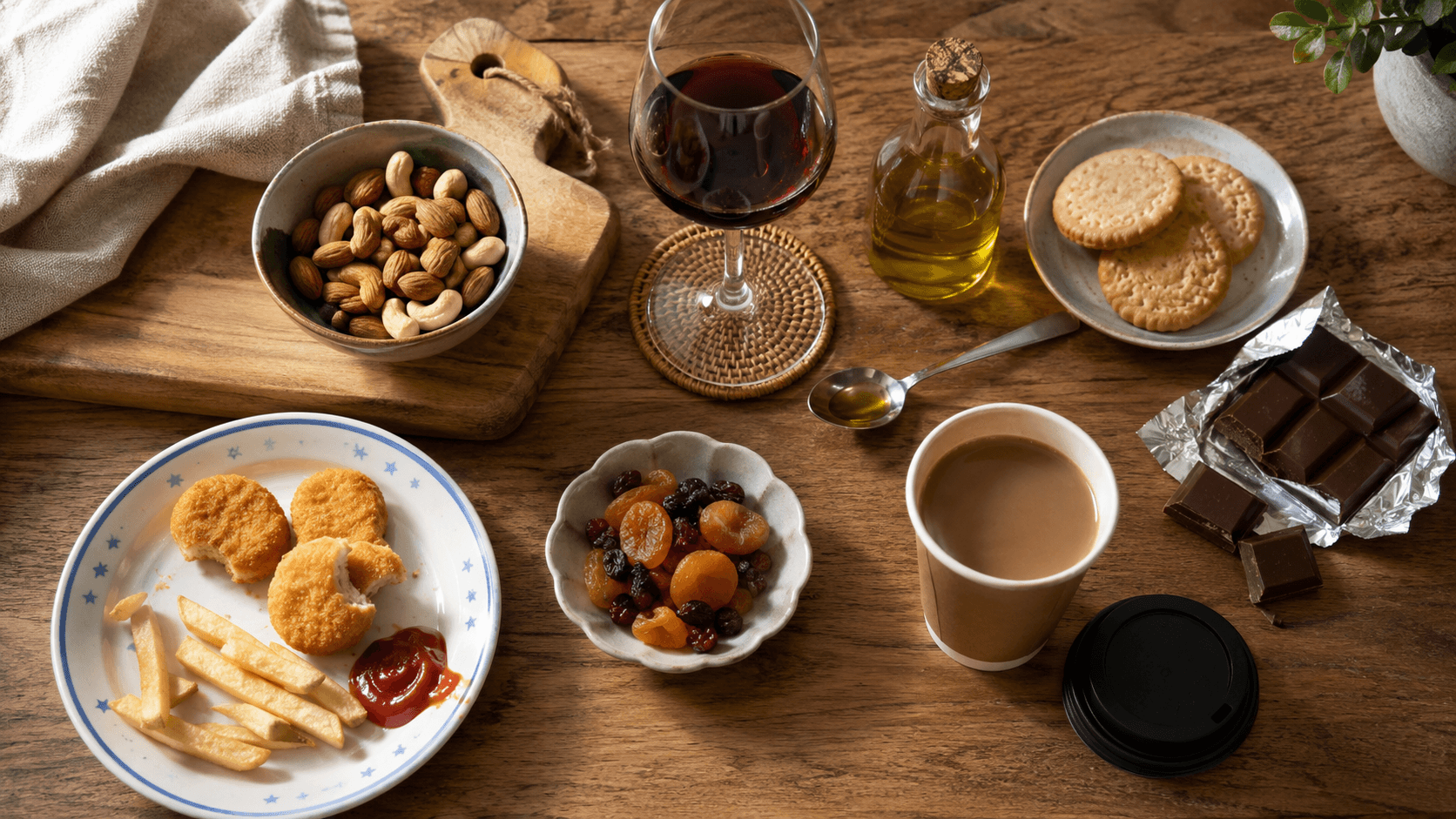
The calories that people miss are rarely from their main meals. Most people have a reasonable idea of what they eat at breakfast, lunch, and dinner. The problem lies in the spaces between meals: the handful of almonds at your desk (about 170 calories), the splash of olive oil on your salad (120 calories per tablespoon), the biscuit with your afternoon tea (80 to 150 calories), the glass of wine with dinner (125 to 180 calories), the finishing of your child's leftover food (100 to 300 calories), the “just a taste” while cooking (50 to 200 calories). Add these up over a day and you can easily be consuming 500 to 1,000 additional calories that you never consciously registered eating. That is enough to completely eliminate the calorie deficit you thought you had, and in many cases, push you into a calorie surplus.
This is not about moral failure. It is about human psychology and the fact that we are spectacularly bad at estimating how much we eat. A study published in the British Medical Journal found that even trained dietitians underestimated calorie content of restaurant meals by an average of 34 percent (5). If professionals get it wrong, it is unrealistic to expect anyone else to get it right by guessing. This is why I encourage every client who is struggling with fat loss to track their food intake accurately, at least for a period, using a food scale and a tracking app. Not forever. Just long enough to calibrate their awareness of what they are actually consuming versus what they think they are consuming.
Your NEAT Has Dropped Without You Noticing
Here is something that catches almost everyone by surprise. When you start exercising more, particularly when you combine increased training with calorie restriction, your body tends to compensate by reducing your non-exercise activity thermogenesis (NEAT), the energy you expend through all the movement you do outside of structured exercise. Walking, fidgeting, taking the stairs, standing, playing with your children, doing household tasks: all of these contribute to NEAT, and collectively they can account for a much larger proportion of your daily calorie burn than your gym session.
Research published in the International Journal of Obesity found that individuals who increased their exercise levels showed significant compensatory reductions in NEAT, effectively negating a substantial portion of the additional calories burned during their workouts (6). You go to the gym in the morning, train hard for 45 minutes, and then spend the rest of the day sitting more, walking less, fidgeting less, and generally moving less than you would have on a non-training day. The net effect on your total daily energy expenditure can be much smaller than you expected, sometimes barely different from a day where you did not train at all but were naturally more active throughout the day.
This is why I am a strong advocate for daily step targets with every client I coach. A step count gives you an objective, measurable way to monitor and maintain your NEAT regardless of whether you trained that day or not. I typically set clients a target of 8,000 to 12,000 steps per day depending on their lifestyle and goals, and I treat this target with the same importance as their training programme. A study published in the British Journal of Sports Medicine found that higher daily step counts were associated with significantly lower all-cause mortality and that the benefits were observed even at levels well below the commonly cited 10,000 step target (7). For fat loss specifically, maintaining your NEAT is one of the most impactful and most overlooked variables you can control.
You Are Not Sleeping Enough and It Is Sabotaging Everything
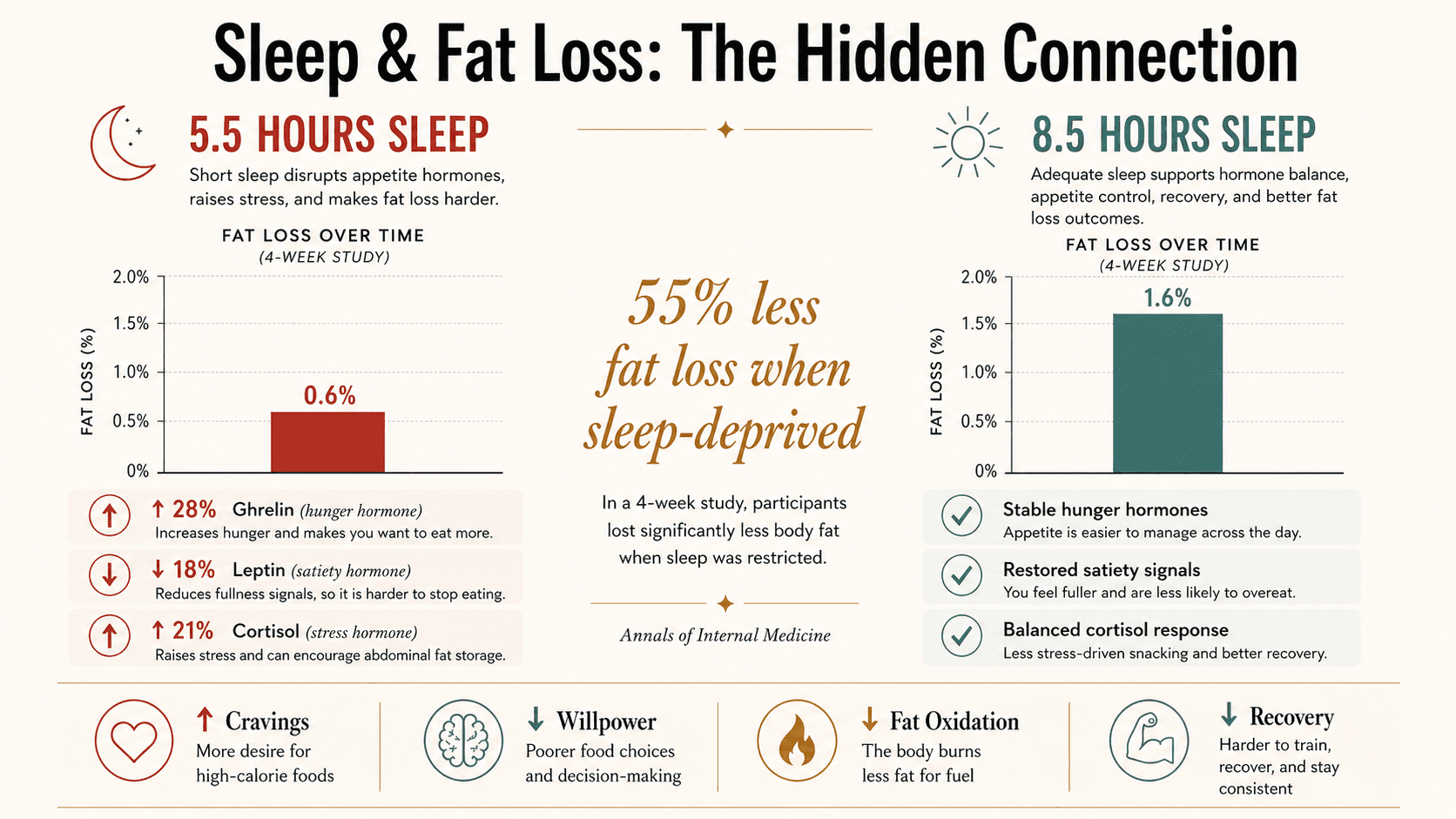
Sleep deprivation is the silent destroyer of fat loss progress, and most people who are exercising but not losing weight are getting far less quality sleep than they need. The physiological effects of insufficient sleep on body composition are profound and well documented. A study published in the Annals of Internal Medicine placed participants on identical calorie-restricted diets but varied their sleep duration. The group sleeping 8.5 hours lost predominantly fat. The group sleeping 5.5 hours lost predominantly lean mass, with 55 percent less fat loss despite eating the exact same number of calories (8).
The mechanisms are multiple and compounding. Poor sleep increases ghrelin (the hunger hormone) and decreases leptin (the satiety hormone), which makes you hungrier and less satisfied by the food you eat (9). It impairs insulin sensitivity, which shifts your body towards fat storage and away from fat oxidation. It elevates cortisol, which promotes visceral fat deposition. It reduces motivation and willpower, making it harder to stick to your nutrition plan and easier to give in to cravings. And it impairs recovery from training, which means you get less benefit from the sessions you are doing and you feel more fatigued going into the next one. If you are training hard, eating well, and not losing fat, sleep is one of the first variables I investigate.
Stress Is Driving Your Cortisol Through the Roof
Chronic psychological stress does not just make you feel bad. It creates measurable physiological changes that directly impair fat loss. Cortisol, the primary stress hormone, serves an essential function in acute situations but becomes deeply problematic when it remains chronically elevated. Research published in the journal Obesity found that individuals with higher chronic cortisol levels, measured via hair cortisol concentration, had significantly higher BMI, larger waist circumference, and greater accumulation of visceral fat compared to individuals with lower cortisol levels (10).
Cortisol promotes the deposition of fat specifically in the abdominal region because visceral fat cells have a higher density of cortisol receptors than subcutaneous fat cells (11). It impairs insulin sensitivity, increases appetite particularly for calorie dense highly palatable foods, disrupts sleep architecture, and when combined with the additional physiological stress of intense training and calorie restriction, can create a hormonal environment that is actively resistant to fat loss. I have worked with clients, particularly high-pressure executives and professionals, who were training hard and eating in a deficit but could not shift body fat until we addressed their stress levels, improved their sleep, and reduced their total physiological stress load. Sometimes the answer to stalled fat loss is not training harder or eating less. Sometimes it is recovering better, sleeping more, and giving your body the signal that it is safe to let go of stored energy.
You Are Overestimating Your Training Calorie Burn
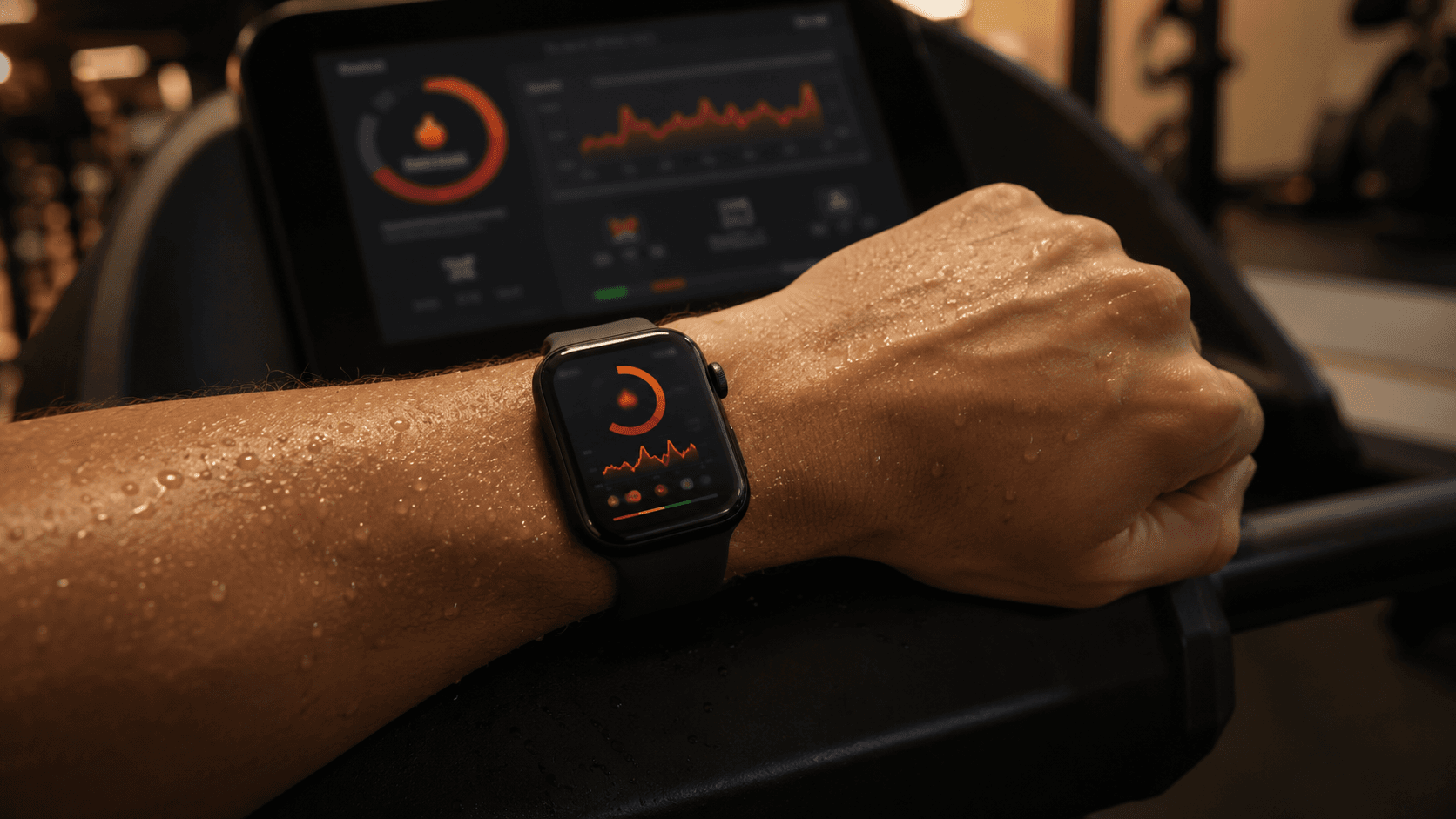
Fitness trackers, gym machines, and workout apps routinely overestimate the number of calories burned during exercise. A study published in the Journal of Personalized Medicine found that popular wrist-worn fitness trackers overestimated energy expenditure during exercise by 27 to 93 percent depending on the device and the activity (12). If your watch tells you that you burned 600 calories during your gym session and you eat 600 calories extra to “refuel,” but you actually only burned 350, you have just added 250 surplus calories to your day. Do that three or four times a week and you have eliminated your entire weekly deficit.
This is compounded by the psychological phenomenon of “moral licensing,” where the act of exercising makes you feel that you have earned the right to eat more, drink more, or relax your nutritional standards. Research published in the journal Marketing Letters found that people who completed a workout subsequently consumed more calories than people who did not exercise, often negating or exceeding the calories they had burned (13). I call this the “I earned it” trap, and it is one of the most common patterns I see in clients who train consistently but cannot understand why their body is not changing. Exercise is not a license to eat. It is one component of a broader strategy in which nutrition, sleep, stress management, and daily activity all need to be aligned.
You Are Losing Fat but the Scale Is Hiding It
I want to include this because it is a genuine possibility that deserves consideration, even though it accounts for a smaller percentage of cases than the factors above. If you have started resistance training for the first time or returned to it after a long break while simultaneously eating in a moderate calorie deficit, it is possible that you are gaining a small amount of muscle mass while losing fat. Body recomposition, as this is known, results in minimal change on the scale because muscle and fat have similar weight but very different volumes. A kilogram of muscle takes up significantly less space than a kilogram of fat, so you can look leaner, feel tighter, and fit into smaller clothes without the number on the scale changing or even while it increases slightly.
A study published in the Journal of Strength and Conditioning Research found that novice trainees on a calorie-restricted, high protein diet gained measurable lean mass while simultaneously losing fat mass over an 8 week period, with minimal change in total body weight (14). However, I want to be careful with this point because it is also the most commonly used excuse for a lack of progress. True body recomposition is most pronounced in beginners, in individuals returning from a training break, in those who are significantly overfat, and in those consuming very high protein diets. If you have been training for more than a few months and your weight has not budged, body recomposition alone is unlikely to fully explain it. You need to look honestly at the other factors in this article.
Top Tips to Get Your Fat Loss Moving Again
Track Your Food Intake Accurately for Two Weeks. Use a food scale and a tracking app to record everything you eat and drink for 14 days without changing your habits. This is not about perfection. It is about awareness. Most people discover they are consuming 300 to 800 more calories per day than they estimated. Awareness is always the first step to change (4).
Set and Protect a Daily Step Target. Aim for 8,000 to 12,000 steps per day every day, including training days. Your NEAT is one of the largest controllable variables in your daily energy expenditure and it is the first thing that drops when you start dieting and training harder. A step target prevents that silent decline (7).
Do Not Eat Back Your Exercise Calories. Ignore the calorie burn number on your watch or the treadmill display. Set your daily calorie target based on your nutrition plan and stick to it regardless of how much you trained that day. If you need to adjust for training, do it through pre-planned carbohydrate timing, not reactive overeating (12).
Prioritise Protein at Every Meal. Protein is the most satiating macronutrient, it has the highest thermic effect of food (meaning your body burns more calories digesting it), and it is essential for preserving lean muscle mass during a deficit. Aim for a minimum of 1.6 grams per kilogram of body weight per day spread across 3 to 5 meals. Include options across all dietary backgrounds: chicken, fish, eggs, Greek yoghurt, tofu, tempeh, lentils, soy protein, pea protein, and seitan (3).
Address Your Sleep as a Fat Loss Priority. If you are consistently sleeping less than 7 hours per night, that is likely a bigger obstacle to your fat loss than any detail of your training programme. Improve your sleep environment, set a consistent bedtime, limit caffeine after midday, and protect your sleep the way you protect your training time (8).
Audit Your Liquid Calories. Alcohol, lattes, smoothies, fruit juices, soft drinks, and even “healthy” green juices all contain calories that many people do not account for. Liquid calories are particularly problematic because they bypass most of the satiety signals that solid food triggers. Switch to water, black coffee, and herbal tea as your default drinks and account for everything else.
Reduce Total Stress Load. If you are chronically stressed, underslept, and training at high intensity on restricted calories, your body is under an enormous physiological load. Sometimes the most effective fat loss intervention is reducing that load. Take a deload week from training, prioritise sleep, add some low intensity walking, eat at maintenance for a few days, and let your body recover. You will often see a whoosh of progress afterwards (10).
Use Measurements Beyond the Scale. Track your waist circumference, take progress photographs in consistent lighting, note how your clothes fit, and if possible get a body composition assessment. The scale tells you one number. It does not distinguish between fat, muscle, water, glycogen, or the contents of your digestive system. Do not let a single metric determine whether you are making progress.
The Bottom Line
If you are exercising but not losing weight, the answer is not to exercise more or eat less in a panic. The answer is to identify which of the factors above is actually responsible and address it specifically. In my experience, it is almost always a combination of underestimating calorie intake, overestimating calorie burn, declining NEAT, insufficient sleep, and excessive stress. Fix those, and the training you are already doing will start producing the results it should have been producing all along.
Fat loss is not complicated in principle, but it requires an honest and detailed understanding of what is happening in your body and your life. If you have been stuck for weeks or months despite consistent effort, you do not need a new programme. You need a clear-eyed assessment of where the gap is between what you think is happening and what is actually happening. That is exactly what I do with every client I work with.
If you want help identifying exactly what is stalling your progress and building a personalised plan to fix it, get in touch. I work one-to-one with clients online globally, across every dietary background. There is always an answer.
Work with Me
Get a personalised coaching plan built around your goals, your schedule, and your life.
Enquire NowReferences
- Thorogood A, Mottillo S, Shimony A, et al. Isolated aerobic exercise and weight loss: a systematic review and meta-analysis of randomized controlled trials. American Journal of Medicine. 2011; 124(8): 747-755.
- Pontzer H, Durazo-Arvizu R, Dugas LR, et al. Constrained total energy expenditure and metabolic adaptation to physical activity in adult humans. Current Biology. 2016; 26(3): 410-417.
- Longland TM, Oikawa SY, Mitchell CJ, Devries MC, Phillips SM. Higher compared with lower dietary protein during an energy deficit combined with intense exercise promotes greater lean mass gain and fat mass loss: a randomized trial. American Journal of Clinical Nutrition. 2016; 103(3): 738-746.
- Lichtman SW, Pisarska K, Berman ER, et al. Discrepancy between self-reported and actual caloric intake and exercise in obese subjects. New England Journal of Medicine. 1992; 327(27): 1893-1898.
- Urban LE, Dallal GE, Robinson LM, Ausman LM, Saltzman E, Roberts SB. The accuracy of stated energy contents of reduced-energy, commercially prepared foods. Journal of the American Dietetic Association. 2010; 110(1): 116-123.
- Melanson EL, Keadle SK, Donnelly JE, Braun B, King NA. Resistance to exercise-induced weight loss: compensatory behavioral adaptations. Medicine and Science in Sports and Exercise. 2013; 45(8): 1600-1609.
- Paluch AE, Bajpai S, Bassett DR, et al. Daily steps and all-cause mortality: a meta-analysis of 15 international cohorts. The Lancet Public Health. 2022; 7(3): e219-e228.
- Nedeltcheva AV, Kilkus JM, Imperial J, Schoeller DA, Penev PD. Insufficient sleep undermines dietary efforts to reduce adiposity. Annals of Internal Medicine. 2010; 153(7): 435-441.
- Spiegel K, Tasali E, Penev P, Van Cauter E. Brief communication: sleep curtailment in healthy young men is associated with decreased leptin levels, elevated ghrelin levels, and increased hunger and appetite. Annals of Internal Medicine. 2004; 141(11): 846-850.
- Jackson SE, Kirschbaum C, Steptoe A. Hair cortisol and adiposity in a population-based sample of 2,527 men and women aged 54 to 87 years. Obesity. 2017; 25(3): 539-544.
- Bjorntorp P. Do stress reactions cause abdominal obesity and comorbidities? Obesity Reviews. 2001; 2(2): 73-86.
- Shcherbina A, Mattsson CM, Waggott D, et al. Accuracy in wrist-worn, sensor-based measurements of heart rate and energy expenditure in a diverse cohort. Journal of Personalized Medicine. 2017; 7(2): 3.
- Werle COC, Wansink B, Payne CR. Is it fun or exercise? The framing of physical activity biases subsequent snacking. Marketing Letters. 2015; 26(4): 691-702.
- Antonio J, Ellerbroek A, Silver T, et al. The effects of a high protein diet on indices of health and body composition: a crossover trial in resistance-trained men. Journal of the International Society of Sports Nutrition. 2016; 13: 3.