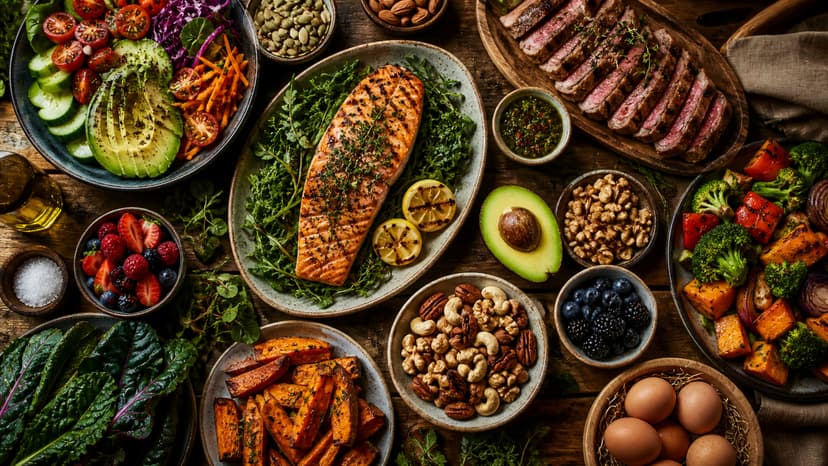
Pre-workout nutrition is one of those topics where the gap between what people do and what actually matters is enormous. At one end you have the person who trains on a completely empty stomach at 6am because they heard fasted cardio burns more fat. At the other end you have the person who drinks a neon-coloured pre-workout supplement loaded with stimulants, beta-alanine, and ingredients they cannot pronounce, convinced it is the reason they had a good session. Most people fall somewhere between these two extremes, either overthinking it to the point of paralysis or ignoring it entirely and wondering why their energy crashes halfway through a session.
What you eat before training matters. It does not matter in the way the supplement industry wants you to believe, and it is not as complicated as social media makes it look. But it has a genuine, measurable impact on your performance, your energy, your recovery, and over time, your results. Getting pre-workout nutrition right is one of the simplest changes a person can make that produces an immediately noticeable difference in how they train. The problem is that most people have never been taught what actually works, so they default to either nothing or whatever a supplement company told them to buy.

What Happens When You Get Pre-Workout Nutrition Wrong
Getting pre-workout nutrition wrong manifests in two distinct ways, and I see both regularly in my coaching practice. The first is training underfuelled. The client who skips food before training, either deliberately or because they ran out of time, arrives at the gym with depleted glycogen stores and no readily available substrate for high-intensity work. Glycogen is the stored form of carbohydrate in your muscles and liver, and it is the primary fuel source for resistance training and any exercise performed above moderate intensity. When glycogen is low, performance drops. Research published in the Journal of Strength and Conditioning Research found that pre-exercise carbohydrate ingestion improved resistance training volume and time to exhaustion compared to fasted conditions (1). The client does not necessarily feel terrible. But they fatigue faster, lift less weight, complete fewer reps, and leave the gym having done less total work than they were capable of. Over weeks and months, that accumulated deficit in training quality adds up to slower progress.
The second problem is training overfuelled or with the wrong foods. The client who eats a large, high-fat, high-fibre meal 30 minutes before training and spends the entire session feeling sluggish, bloated, and nauseous. Fat slows gastric emptying. Fibre adds bulk and increases transit time. Both are excellent in the context of a normal meal. Neither is helpful immediately before intense physical activity. I have had clients who ate a full plate of lentil dal with rice 40 minutes before a heavy leg session and wondered why they felt awful. The food choices were not wrong. The timing was wrong. The composition relative to the activity was wrong. Understanding the difference between what makes a good meal and what makes a good pre-workout meal is a distinction that most people never make.
Then there is the pre-workout supplement problem. The average pre-workout supplement is essentially caffeine combined with a proprietary blend of ingredients at doses too low to have any meaningful effect, packaged in a tub with aggressive branding and sold for thirty to forty pounds. Research published in the Journal of the International Society of Sports Nutrition found that while caffeine independently and consistently improves exercise performance, the majority of other ingredients found in commercial pre-workout supplements lack sufficient evidence at the doses typically included (2). You are paying a significant premium for caffeine with a marketing budget. A cup of strong coffee achieves the same ergogenic effect at a fraction of the cost. I covered this in detail in my supplements article, but it bears repeating here because the pre workout category is one of the most overhyped and overpriced segments of the entire supplement industry.

The Science of Pre-Workout Nutrition
Before I give you the practical guidelines, it helps to understand what your body actually needs before training and why. This is not complicated science. It is basic exercise physiology that directly informs what you should eat, when you should eat it, and how much.
Carbohydrates for Fuel
Resistance training and high-intensity exercise are fuelled primarily by glycogen. Your muscles store glycogen locally, and that glycogen is broken down into glucose to fuel muscular contractions during training. When glycogen stores are adequate, you can train harder, sustain more volume, and maintain intensity for longer. When they are depleted, performance declines. This is not controversial. It is basic energy systems physiology confirmed by decades of research. A meta-analysis published in the British Journal of Sports Medicine concluded that carbohydrate availability was a key determinant of exercise performance across a wide range of exercise types and durations (3).
This does not mean you need to eat a mountain of carbohydrates before every session. If you ate a balanced meal containing carbohydrates within the previous three to four hours, your glycogen stores are likely adequate for a standard 60 to 90 minute resistance training session. The pre-workout meal or snack is most important when there has been a longer gap since your last carbohydrate-containing meal, when you train first thing in the morning after an overnight fast, or when you are performing particularly high-volume or demanding sessions.
Protein for Muscle Protein Synthesis
Consuming protein before training ensures that amino acids are available in the bloodstream during and after exercise, which supports muscle protein synthesis and limits muscle protein breakdown. Research published in the American Journal of Clinical Nutrition demonstrated that pre-exercise protein ingestion increased amino acid delivery to working muscles and improved the net protein balance during and after resistance exercise (4). In practical terms, this means including a source of protein in your pre-workout meal or snack provides a genuine physiological advantage for anyone whose goal is building or preserving muscle.
The protein does not need to be consumed immediately before training. If you ate a protein-containing meal two to three hours before your session, that protein is still being digested and amino acids are still entering your bloodstream. The so-called anabolic window is far wider than the supplement industry would have you believe. A position stand from the International Society of Sports Nutrition concluded that total daily protein intake and distribution across meals are far more important than precise timing relative to a single training session (5). The key is ensuring you have consumed protein at some point in the hours leading up to your session, not that you consume it at a specific minute mark before training.
Fat and Fibre: What to Minimise
Fat and fibre are both important components of a healthy diet, but they are the two macronutrients you want to reduce in the window immediately before training. Both slow gastric emptying, meaning food sits in your stomach for longer before being digested and absorbed. During rest, this is beneficial because it promotes satiety and stabilises blood sugar. Before exercise, it can cause bloating, discomfort, nausea, and a feeling of heaviness that impairs performance. The closer you are to your training session, the lower you want your fat and fibre intake to be. If you are eating two to three hours before training, moderate amounts of fat and fibre are fine because there is sufficient time for digestion. If you are eating 30 to 60 minutes before training, keep fat and fibre as low as practically possible.
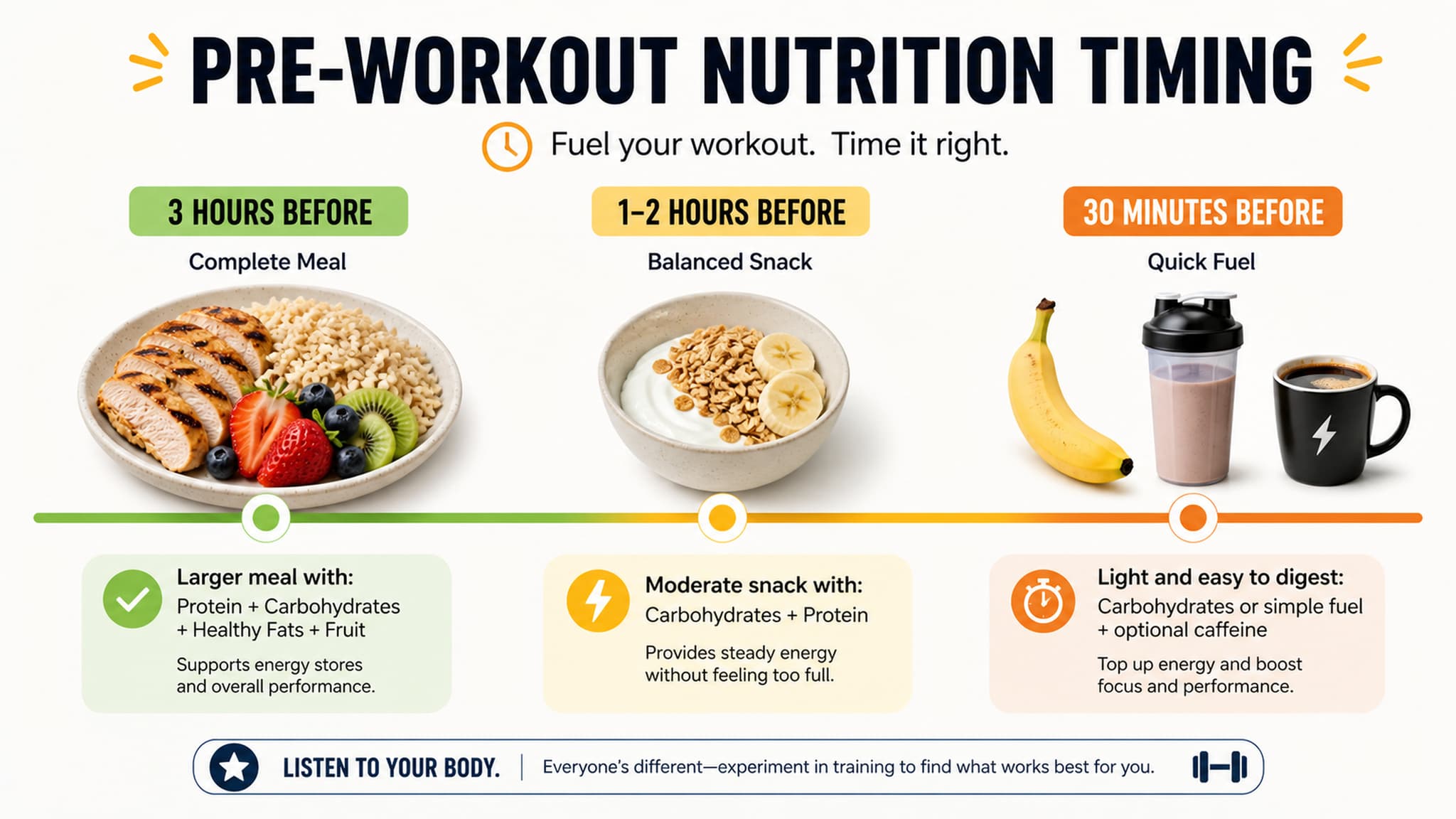
What to Eat and When: The Practical Framework
Two to Three Hours Before Training: A Full Meal
If your schedule allows you to eat a proper meal two to three hours before training, this is the ideal scenario. You have enough time for digestion, absorption, and glycogen replenishment. The meal should contain a moderate portion of protein, a moderate to generous portion of complex carbohydrates, a small amount of healthy fat, and vegetables if they do not cause you digestive discomfort before training.
For omnivore clients, a meal like grilled chicken breast with rice and a small portion of roasted vegetables works well. Roughly 30 to 40 grams of protein, 40 to 60 grams of carbohydrates, and 10 to 15 grams of fat. For vegetarian clients, paneer or halloumi with rice and roasted peppers, or an omelette with toast and a side of fruit, provides a similar macronutrient profile. For vegan clients, tofu stir-fried with rice and vegetables, or a lentil and sweet potato bowl with a small drizzle of olive oil, delivers the same nutritional foundation. The specific foods do not matter as much as the macronutrient composition and the timing. You want enough carbohydrates to fuel the session, enough protein to support amino acid availability, and not so much fat or fibre that digestion becomes an issue during training.
60 to 90 Minutes Before Training: A Moderate Snack
This is the window where many of my clients find themselves in practice. They have had lunch a few hours ago but it was not recent enough to still be providing fuel, and they are heading to the gym after work or during a break. A moderate snack that is higher in carbohydrates, moderate in protein, and low in fat is the best approach here.
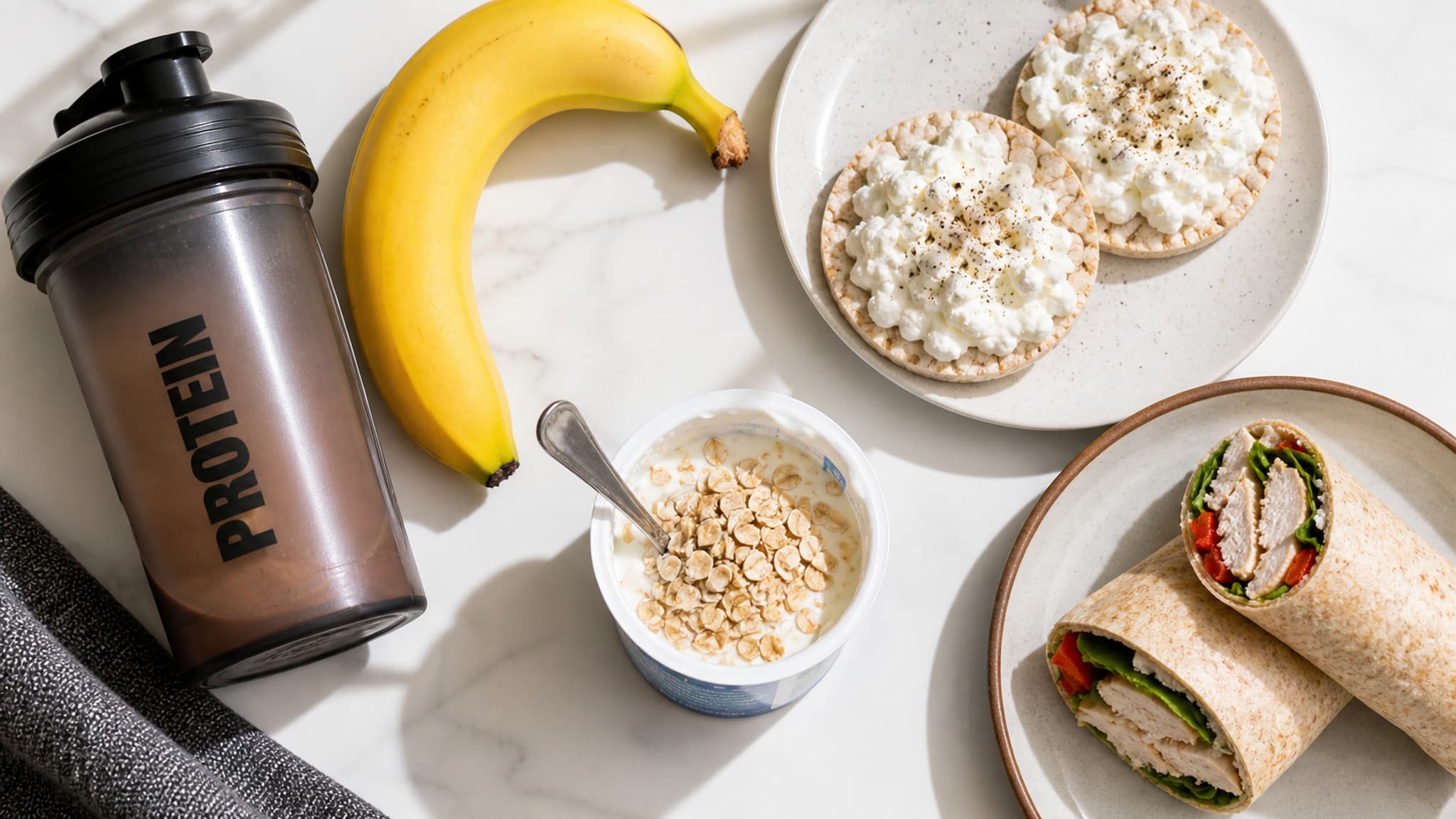
Good options for omnivore clients include Greek yoghurt with a banana, or a small wrap with turkey and a thin spread of hummus. For vegetarian clients, Greek yoghurt with oats and honey, or a couple of rice cakes with cottage cheese and banana slices. For vegan clients, a banana with a tablespoon of peanut butter, or soy yoghurt with granola and berries. Protein shakes work well in this window too. A scoop of whey protein for omnivore and vegetarian clients, or pea or soy protein for vegan clients, blended with a banana and a small handful of oats provides roughly 25 to 30 grams of protein and 30 to 40 grams of carbohydrates in a form that digests quickly and sits comfortably before training.
30 Minutes or Less Before Training: Quick Fuel Only
Sometimes life does not allow for ideal timing. You are rushing from work to the gym. You forgot to eat. You woke up and are heading straight to a morning session. In this window, the goal is simple. Get some easily digestible carbohydrates into your system to provide immediate fuel without causing any stomach discomfort. This is not the time for a full meal. It is not even the time for a moderate snack. It is the time for something small, fast, and almost entirely carbohydrate-based.
A banana is the simplest and most reliable option. A handful of dried fruit works. A couple of rice cakes with a thin layer of jam. A small glass of fruit juice. A few dates. These are rapidly digested, provide glucose quickly, and are unlikely to cause any gastrointestinal issues during training. Protein is less critical in this immediate window because digestion time is too short for significant amino acid absorption before the session begins. If you had protein at your last meal within the previous four to five hours, you are covered. If it has been longer than that, consider a small amount of easily digestible protein alongside the carbohydrates, such as a few sips of a protein shake.
First Thing in the Morning: The Early Trainer
Morning training presents a unique challenge because you have been fasting overnight and glycogen stores are partially depleted, particularly liver glycogen. Research published in the European Journal of Applied Physiology found that overnight fasting reduced liver glycogen by approximately 80 percent while muscle glycogen remained relatively preserved (6). This means that for shorter, moderate-intensity sessions, training fasted in the morning is tolerable for most people. But for longer sessions, higher-volume resistance training, or any session where maximum performance matters, some pre-training fuel will make a noticeable difference.
I generally recommend that early morning trainers consume something small 20 to 30 minutes before their session. A banana with a small scoop of protein powder stirred into water is my most frequently recommended option because it is fast to prepare, easy to digest, and provides both carbohydrates and amino acids. A slice of toast with a thin spread of peanut butter works well for vegetarian and vegan clients who prefer whole food. A small smoothie made with soy milk, a banana, and a scoop of pea protein is another excellent vegan option. The full breakfast can follow the session, which is the approach I use with most of my early morning training clients. Fuel the session with something small, train well, then eat a proper meal afterwards.

Caffeine: The One Pre-Workout Supplement Worth Taking
If there is one ergogenic aid with consistent, robust evidence for improving exercise performance, it is caffeine. Research is extensive and unambiguous. A meta-analysis published in the British Journal of Sports Medicine found that caffeine ingestion improved strength, power, endurance, and time to exhaustion across a wide range of exercise modalities (7). The effective dose is approximately 3 to 6 milligrams per kilogram of bodyweight, consumed 30 to 60 minutes before training. For a 75 kilogram person, that is 225 to 450 milligrams, which equates to roughly two to four cups of coffee depending on the strength.
You do not need a pre-workout supplement for this. A strong black coffee, a double espresso, or caffeine tablets from any pharmacy will achieve the same result at a fraction of the cost. I recommend caffeine to most of my clients who train in the afternoon or evening, with two important caveats. First, if you are sensitive to caffeine and it disrupts your sleep, it is not worth the trade-off. Poor sleep will damage your recovery and your results far more than a slightly better training session. If you train after 4pm and caffeine affects your sleep, skip it or switch to a lower dose. Second, caffeine tolerance builds quickly with habitual use. If you drink four or five coffees a day, the ergogenic effect of your pre-training caffeine will be significantly blunted. Keeping overall daily caffeine intake moderate and strategic preserves its effectiveness as a performance tool.
What About Fasted Training
I addressed this in my article on whether you should eat breakfast, but it is worth covering specifically in the context of pre workout nutrition because fasted training remains one of the most common approaches I encounter. Clients come to me training fasted either because they believe it enhances fat burning, because they follow an intermittent fasting protocol, or simply because they train early and do not have time or appetite for food.
The evidence on fasted training for fat loss is clear. While fasted exercise does increase the proportion of energy derived from fat during the session itself, this does not translate into greater fat loss over time. A randomised controlled trial published in the Journal of the International Society of Sports Nutrition found no significant difference in body composition changes between fasted and fed training groups over four weeks when total calorie intake was matched (8). Your body compensates by adjusting fuel utilisation at other points during the day. Fat loss is determined by your overall energy balance, not by whether you were fasted or fed during a specific training session.
The practical downside of fasted training is reduced performance. If you can train just as hard, complete the same volume, and recover equally well in a fasted state, then fasting before training is not a problem. But most people cannot. Most people, particularly during resistance training or higher-intensity work, perform measurably better when they have eaten something beforehand. Even a small pre-workout snack of 100 to 200 calories can make a meaningful difference to session quality. Given that session quality drives long-term progress, I default to recommending that clients eat something before training unless there is a compelling reason not to.
Putting It All Together
Pre-workout nutrition does not need to be complicated. It does not require special products. It does not require precise timing down to the minute. It requires an understanding of a few simple principles and the willingness to plan ahead rather than leaving it to chance. Eat a balanced meal containing protein and carbohydrates two to three hours before training if possible. If that is not possible, have a smaller snack 60 to 90 minutes before with carbohydrates and moderate protein. If you are truly short on time, grab a banana or a few dates and get something in your system. Have a coffee if it helps and does not interfere with your sleep. Keep fat and fibre low the closer you get to your session. And stop buying overpriced pre-workout supplements when the same results are available from real food and a cup of coffee.
The best pre-workout strategy is one that you can follow consistently within your real schedule. For some clients that means a full meal at lunchtime before an evening session. For others it means a protein shake and banana at 5.30am before a 6am gym session. For others it means rice cakes and coffee at their desk 90 minutes before they train. There is no single right answer. There is the right answer for you, and that depends on when you train, what your day looks like, and what your body tolerates.
Train Better by Eating Smarter
If your training has felt flat, if your energy dips halfway through sessions, if you are not progressing in the gym despite consistent effort, the issue might not be your programme. It might be what you are eating before you train, or what you are not eating. This is exactly the kind of issue I identify and fix with every client I work with. I do not just write training programmes. I build the complete framework around training, nutrition, and recovery that allows you to get the most from every session.
I work one-to-one online globally with men and women of all dietary backgrounds. Whether you eat meat, are vegetarian, vegan, or somewhere in between, I will build your nutrition around your training schedule so that every session is properly fuelled and every recovery window is optimised.
Get in touch and let me help you train better by eating smarter.
Work with Me
Get a personalised coaching plan built around your goals, your schedule, and your life.
Enquire NowReferences
- Haff GG, Koch AJ, Potteiger JA, Kuphal KE, Magee LM, Green SB, Jakicic JJ. Carbohydrate supplementation attenuates muscle glycogen loss during acute bouts of resistance exercise. Journal of Strength and Conditioning Research. 2000; 14(2): 187-194.
- Harty PS, Zabriskie HA, Erickson JL, Molling PE, Kerksick CM, Jagim AR. Multi-ingredient pre-workout supplements, safety implications, and performance outcomes: a brief review. Journal of the International Society of Sports Nutrition. 2018; 15(1): 41.
- Stellingwerff T, Cox GR. Systematic review: carbohydrate supplementation on exercise performance or capacity of varying duration. Applied Physiology, Nutrition, and Metabolism. 2014; 39(9): 998-1011.
- Tipton KD, Elliott TA, Cree MG, Aarsland AA, Sanford AP, Wolfe RR. Stimulation of net muscle protein synthesis by whey protein ingestion before and after exercise. American Journal of Physiology – Endocrinology and Metabolism. 2007; 292(1): E71-E76.
- Kerksick CM, Arent S, Schoenfeld BJ, Stout JR, Campbell B, Wilborn CD, Taylor L, Kalman D, Smith-Ryan AE, Kreider RB, Willoughby D, Arciero PJ, VanDusseldorp TA, Ormsbee MJ, Wildman R, Greenwood M, Ziegenfuss TN, Aragon AA, Antonio J. International Society of Sports Nutrition position stand: nutrient timing. Journal of the International Society of Sports Nutrition. 2017; 14(1): 33.
- Gonzalez JT, Fuchs CJ, Betts JA, van Loon LJC. Liver glycogen metabolism during and after prolonged endurance-type exercise. American Journal of Physiology – Endocrinology and Metabolism. 2016; 311(3): E543-E553.
- Grgic J, Grgic I, Pickering C, Schoenfeld BJ, Bishop DJ, Pedisic Z. Wake up and smell the coffee: caffeine supplementation and exercise performance – an umbrella review of 21 published meta-analyses. British Journal of Sports Medicine. 2020; 54(11): 681-688.
- Schoenfeld BJ, Aragon AA, Wilborn CD, Krieger JW, Sonmez GT. Body composition changes associated with fasted versus non-fasted aerobic exercise. Journal of the International Society of Sports Nutrition. 2014; 11(1): 54.