
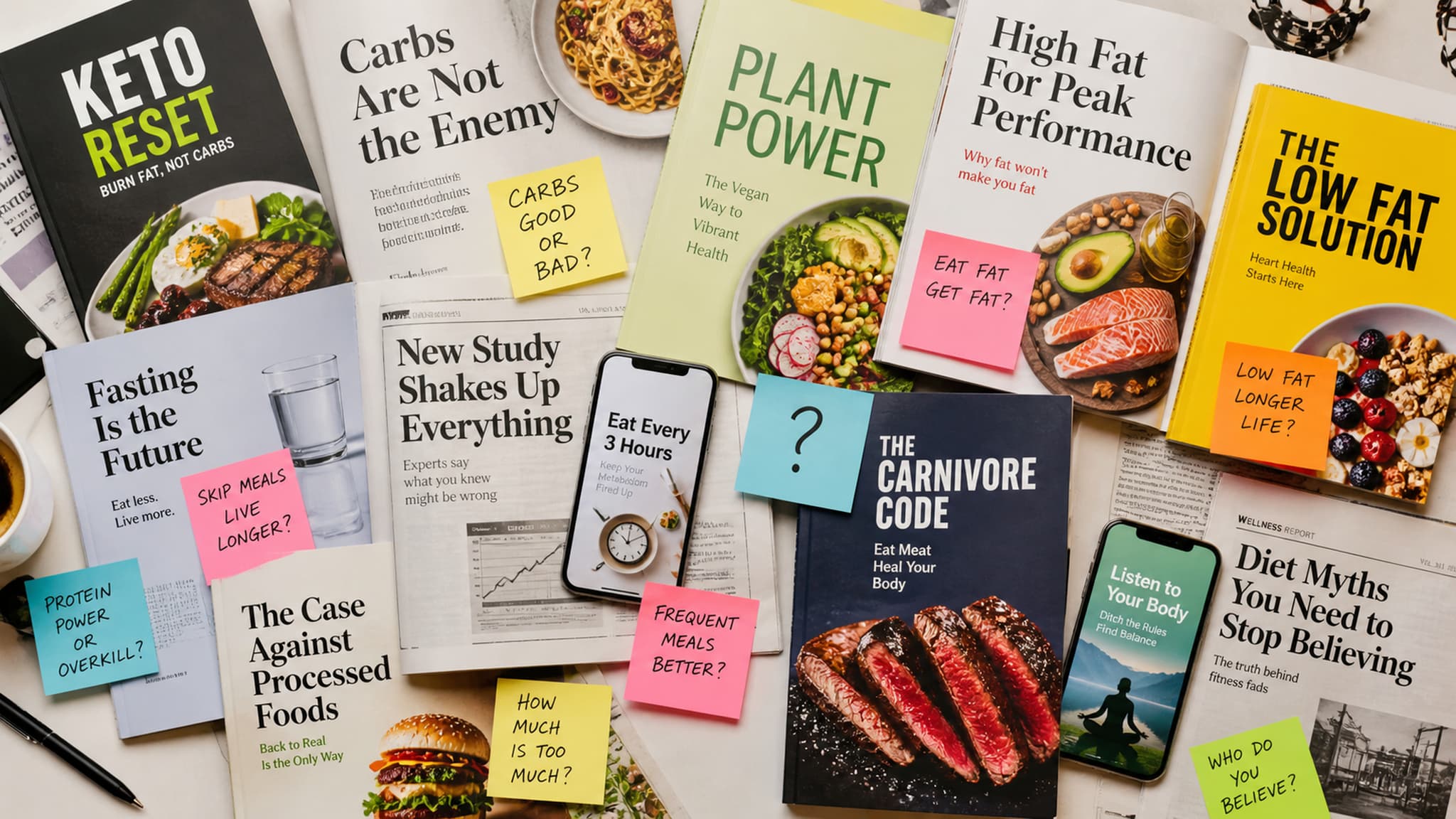
The nutrition industry has a problem. It sells certainty. Every few years a new dietary approach arrives with the promise that it has finally cracked the code. Keto. Paleo. Carnivore. Vegan. Intermittent fasting. The Zone. Atkins. Whole30. Each one is marketed as the answer, the one true way to eat for health, fat loss, and longevity. Each one has passionate advocates who will tell you, with absolute conviction, that their approach is the only one that works. And each one has produced real results for some people while failing spectacularly for others.
There never has been. There never will be. The search for the single best way to eat is a distraction from the work that actually produces lasting results, which is finding the specific approach that works for your body, your preferences, your lifestyle, your health status, and your goals.
Why Following Someone Else’s Diet Keeps Failing You
The most common pattern I see with new clients is a history of diet hopping. They tried keto for three months. Lost weight initially, then regained it when they could not sustain the restriction. They tried a vegan diet because they read it was healthier. Felt good for a while but their protein intake dropped and they lost muscle along with fat. They tried intermittent fasting because their colleague swore by it. It worked for the colleague but left them ravenous, irritable, and binge eating every evening. Each failed attempt erodes confidence. Each one reinforces the belief that they are the problem, that they lack willpower, that their body is somehow broken. That belief is wrong.
The problem is not you. The problem is that you have been trying to force your body, your life, and your preferences into a framework that was designed for someone else. Research published in the Journal of the American Medical Association compared multiple popular diets head to head over 12 months and found no significant difference in weight loss outcomes between low fat, low carb, and moderate macronutrient approaches when adherence was controlled for (1). The single greatest predictor of dietary success was not the macronutrient ratio. It was not the meal timing. It was adherence. The diet that works is the one you can actually follow consistently. Every other variable is secondary.
A further study published in the New England Journal of Medicine confirmed this finding, demonstrating that weight loss was determined by calorie deficit regardless of whether the diet was high protein, low fat, high fat, or any other composition (2). The authors explicitly concluded that the best dietary strategy is the one the individual can maintain over time. This is not a vague, feel good statement. It is the consensus position of the highest quality evidence we have. And yet the industry continues to sell rigid, one size fits all protocols because certainty is easier to market than nuance.

How to Find the Right Diet for You
When I build a nutrition plan for a client, I do not start with a dietary label. I do not start with a meal plan template. I start with the person. Their goals. Their body. Their medical history. Their relationship with food. Their daily routine. Their cooking ability. Their cultural background and food preferences. Their stress levels. Their sleep quality. Their training schedule. Every single one of these factors influences what the right dietary approach looks like. That is why no two client plans I write are identical, even when the goals are similar. The principles are consistent. The application is always individual.
Start With the Non-Negotiable Principles
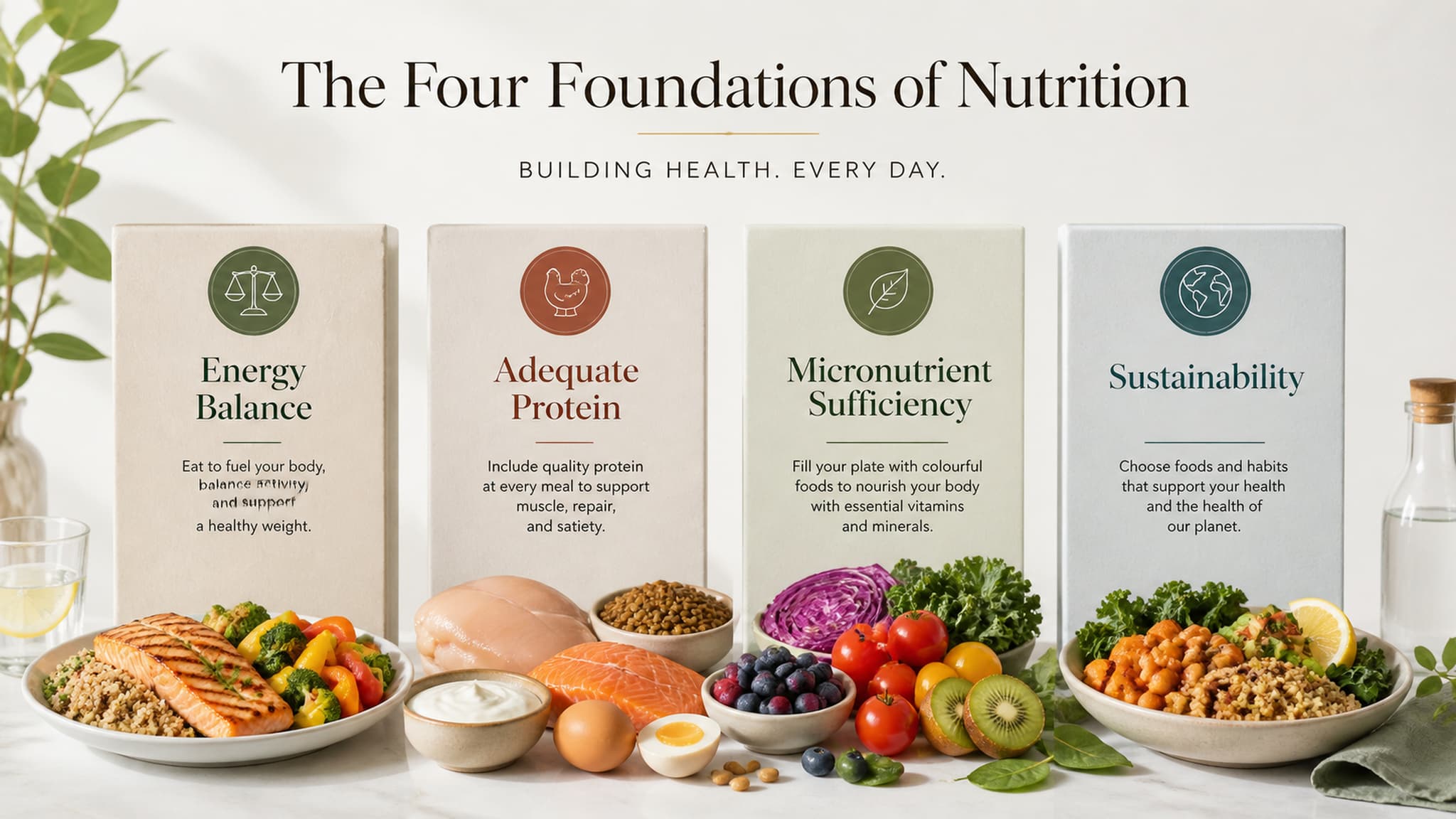
While there is no perfect diet, there are principles that every effective nutrition plan shares regardless of the specific approach. These are the foundations that I build every client’s plan around, and they are supported by decades of consistent evidence.
The first principle is energy balance. If your goal is fat loss, you need to consume fewer calories than you expend. If your goal is muscle building, you need to consume more. If your goal is maintenance, you need to match intake to expenditure. No dietary approach can override this fundamental requirement (2). The second principle is adequate protein. Regardless of whether you eat meat, are vegetarian, or are vegan, consuming sufficient protein to support muscle preservation, recovery, and satiety is essential. The evidence consistently points to 1.6 to 2.2 grams per kilogram of bodyweight per day for active individuals (3). The third principle is micronutrient sufficiency. Your diet needs to provide adequate vitamins, minerals, and fibre, which means eating a variety of whole foods including vegetables, fruits, whole grains, and legumes. The fourth principle is sustainability. The plan must be something you can realistically follow for months and years, not just weeks.
Everything else, the specific macronutrient split, the number of meals per day, the timing of those meals, whether you include dairy or avoid gluten or eat after 8pm, is a variable that should be adjusted to fit the individual. These variables matter. But they matter far less than the four principles above. Get those right and you have the foundation for results regardless of which dietary style you prefer.
Account for Your Dietary Preferences and Ethics
This is where personalisation begins. I am a lifelong vegetarian myself. I understand from personal experience that dietary choices are not just about nutrition. They are about identity, ethics, culture, and enjoyment. Telling a committed vegan to eat chicken breast because it is the most efficient protein source is not just insensitive. It is bad coaching. It ignores the reality that adherence is the most important variable, and a person will not adhere to a plan that violates their values.
When I work with vegan clients, I build their protein intake around tofu, tempeh, seitan, edamame, soy mince, lentils, chickpeas, and pea or soy protein supplements. When I work with vegetarian clients, I include eggs, dairy, paneer, halloumi, and whey protein alongside plant sources. When I work with omnivore clients, I include meat, fish, and dairy as primary protein sources. The macronutrient targets are the same. The food choices are different. And the results are equally strong because the plan respects the person’s preferences rather than fighting them.
Account for Your Health Conditions
A diet that works brilliantly for a healthy 28 year old with no medical history may be entirely inappropriate for a 52 year old managing Type 2 diabetes, or a woman with PCOS, or a man with hypertension. Health conditions fundamentally change the nutritional priorities and in some cases the macronutrient structure of a plan.
For clients with Type 2 diabetes or insulin resistance, I typically emphasise lower glycaemic carbohydrate sources, higher protein intake, and strategic carbohydrate timing around activity to improve glucose control. Research published in Diabetes Care confirmed that dietary interventions focused on carbohydrate quality and distribution significantly improved glycaemic control in individuals with Type 2 diabetes (4). For clients with PCOS, which is characterised by insulin resistance and hormonal imbalance, a similar approach combined with attention to anti-inflammatory food choices and adequate omega-3 intake has produced consistently positive outcomes in my practice. For clients with hypertension, I pay particular attention to sodium intake, potassium-rich foods, and the DASH dietary pattern, which has strong evidence for blood pressure reduction (5). None of these adjustments require a named diet. They require a coach who understands the condition and knows how to adapt the principles accordingly.

Account for Your Lifestyle and Schedule
A nutrition plan that requires you to eat six meals a day will fail if you work 12 hour shifts with one break. A plan built around elaborate home cooked meals will fail if you travel four days a week for work. A plan that demands strict meal timing will fail if your schedule is unpredictable. I have worked with corporate executives who eat most of their meals in airport lounges and hotel restaurants. I have worked with shift workers whose eating windows change from week to week. I have worked with parents of young children who have roughly seven minutes to eat between school runs. Every single one of them achieved their goals because the plan was built around their real life, not around an idealised version of how they wished they ate.
Practical adjustments make the difference. For time-poor clients, I lean heavily on meal prep strategies and quick assembly meals. For frequent travellers, I teach them how to construct a balanced meal from any restaurant menu or hotel buffet. For shift workers, I build flexible frameworks that shift with their schedule rather than rigid timetables that break the moment the rota changes. The research supports this approach. A systematic review published in Obesity Reviews found that dietary interventions tailored to individual lifestyles and preferences produced significantly better long-term adherence and weight management outcomes than standardised protocols (6).
Account for Your Relationship With Food
This is the factor that most diet programmes ignore entirely, and it is often the most important. Some clients come to me with a healthy, neutral relationship with food. They eat to fuel their body, they enjoy meals without guilt, and they can be flexible without anxiety. For these clients, a structured macro-based approach works extremely well. But many clients come to me with a damaged relationship with food. Years of dieting have left them with food fear, guilt cycles, binge tendencies, and a deep mistrust of their own hunger signals.
For these clients, jumping straight into calorie counting and macro tracking can be counterproductive. It can reinforce the obsessive patterns that caused problems in the first place. I often start these clients with a habit-based approach instead. We focus on one or two changes at a time. Eating a source of protein at every meal. Drinking two litres of water daily. Eating three portions of vegetables. We build consistency with these foundational behaviours before introducing any tracking or numerical targets. Research published in the International Journal of Obesity found that habit-based interventions produced sustained weight loss comparable to more intensive dietary programmes but with lower rates of dropout and greater improvements in psychological wellbeing (7). The approach that is right for you is not just about what you eat. It is about how you relate to food while eating it.
Test, Observe, and Adjust
Even with the best initial plan, the process of finding your perfect diet is iterative. Your body responds. You observe the response. You adjust. This is how intelligent coaching works and it is fundamentally different from following a rigid template. If a client’s energy crashes in the afternoon, I look at their carbohydrate distribution and their lunch composition. If a client’s cravings increase, I look at their protein intake and their sleep quality. If a client’s weight loss stalls, I look at their adherence, their stress levels, their training load, and their calorie targets in that order.
The plan you start on is rarely the plan you finish on. It evolves as you do. Your body changes, your schedule changes, your goals change, and your nutrition should change with them. The clients who achieve the most impressive long-term transformations are not the ones who found the perfect diet on day one. They are the ones who stayed in the process of refinement long enough to build something that fits them like a glove.
Your Diet Should Fit You, Not the Other Way Around
The fitness industry wants you to fit into a box. Keto. Vegan. Paleo. Carnivore. It wants you to adopt a label, buy the books, follow the influencers, and join the tribe. I want the opposite. I want to build something around you that has no label because it does not need one. It is just the right combination of foods, in the right amounts, at the right times, for your body, your goals, your preferences, and your life. That is what works. That is what lasts.
Stop looking for the perfect diet. Start looking for the right coach who can help you build one that is perfect for you. That is what I do, every day, for every client I work with. I coach one-to-one online globally with men and women of all dietary backgrounds, health conditions, and goals. Whether you eat meat, are vegetarian, vegan, or somewhere in between, I will create something that works because it was built specifically for you.
Get in touch and let me build the diet that finally works for you.
Work with Me
Get a personalised coaching plan built around your goals, your schedule, and your life.
Enquire NowReferences
- Gardner CD, Trepanowski JF, Del Gobbo LC, Hauser ME, Rigdon J, Ioannidis JPA, Desai M, King AC. Effect of low-fat vs low-carbohydrate diet on 12-month weight loss in overweight adults and the association with genotype pattern or insulin secretion: the DIETFITS randomised clinical trial. JAMA. 2018; 319(7): 667-679.
- Sacks FM, Bray GA, Carey VJ, Smith SR, Ryan DH, Anton SD, McManus K, Champagne CM, Bishop LM, Laranjo N, Leboff MS, Rood JC, de Jonge L, Greenway FL, Loria CM, Obarzanek E, Williamson DA. Comparison of weight-loss diets with different compositions of fat, protein, and carbohydrates. New England Journal of Medicine. 2009; 360(9): 859-873.
- Morton RW, Murphy KT, McKellar SR, Schoenfeld BJ, Henselmans M, Helms E, Aragon AA, Devries MC, Banfield L, Krieger JW, Phillips SM. A systematic review, meta-analysis and meta-regression of the effect of protein supplementation on resistance training-induced gains in muscle mass and strength in healthy adults. British Journal of Sports Medicine. 2018; 52(6): 376-384.
- Evert AB, Dennison M, Gardner CD, Garvey WT, Lau KHK, MacLeod J, Mitri J, Pereira RF, Rawlings K, Robinson S, Saslow L, Uelmen S, Urbanski PB, Yancy WS. Nutrition therapy for adults with diabetes or prediabetes: a consensus report. Diabetes Care. 2019; 42(5): 731-754.
- Appel LJ, Moore TJ, Obarzanek E, Vollmer WM, Svetkey LP, Sacks FM, Bray GA, Vogt TM, Cutler JA, Windhauser MM, Lin PH, Karanja N. A clinical trial of the effects of dietary patterns on blood pressure. New England Journal of Medicine. 1997; 336(16): 1117-1124.
- Stubbs RJ, Morris L, Pallister C, Horgan G, Lavin JH. Weight outcomes audit in 1.3 million adults during their first 3 months’ attendance in a commercial weight management programme. BMC Public Health. 2015; 15(1): 882.
- Lally P, Chipperfield A, Wardle J. Healthy habits: efficacy of simple advice on weight control based on a habit-formation model. International Journal of Obesity. 2008; 32(4): 700-707.