
Male fertility lifestyle is one of the most consequential and consistently overlooked areas of men's health. When a couple faces difficulty conceiving, the clinical gaze has historically focused on the woman: her cycle, her hormones, her reproductive anatomy. Yet male factor infertility contributes to approximately 50 percent of all cases of couple infertility. In around 30 percent of cases, the problem is exclusively male. In a further 20 percent, male and female factors coexist.
Despite this, men often do not receive the same level of investigation, education, or support as their partners when fertility is the concern. And the body of evidence demonstrating that male fertility parameters are highly responsive to lifestyle interventions — that sperm quality is not a fixed characteristic but a modifiable output of the body's systems — rarely reaches the men who need it most.
This article addresses that gap directly.
The Male Fertility Conversation That Is Long Overdue
In 2017, a landmark meta-analysis published in Human Reproduction Update analysed data from 185 studies involving nearly 43,000 men across North America, Europe, Australia, and New Zealand. The findings were unequivocal: total sperm count in Western men had declined by more than 59 percent between 1973 and 2011. Sperm concentration fell by over 52 percent. The decline showed no sign of levelling off.
This is not a minor statistical trend. It represents a fundamental and still-accelerating deterioration in male reproductive function across multiple generations. The causes are multifactorial — endocrine-disrupting chemicals, sedentary behaviour, dietary degradation, obesity, sleep disruption, chronic stress — and many of them are modifiable.
The conversation about male fertility is not one that most men have initiated, been invited into, or been given the language to engage with. That changes here.
What Sperm Quality Actually Means
Fertility specialists assess male reproductive function through semen analysis, which measures three primary parameters. Understanding what each parameter means — and what the current reference values represent — is essential context for understanding what lifestyle interventions can achieve.
Sperm count refers to the total number of sperm in an ejaculate. The World Health Organization's current lower reference limit is 39 million per ejaculate. Values below this are associated with reduced fertility, though men can and do conceive naturally with lower counts. Values above the reference limit do not guarantee fertility. Count is one parameter among several.
Sperm motility describes the ability of sperm to move effectively. The WHO reference limit specifies that at least 42 percent of sperm should be motile (moving in any direction) and at least 30 percent should be progressively motile (moving forward in a consistent direction). Motility determines whether sperm can navigate the female reproductive tract and reach the egg. High count with low motility is a meaningful impairment.
Sperm morphology describes the proportion of sperm with normal shape and structure. Using strict Kruger criteria — the most rigorous assessment — only 4 percent of sperm need to be normally formed to meet the reference threshold, which reflects how common abnormal sperm morphology is. Morphology influences both motility and the ability to penetrate an egg.
Beyond these three core parameters, more advanced analysis may assess sperm DNA fragmentation — the extent of damage to the genetic material carried within sperm. High DNA fragmentation is associated with failed fertilisation, increased miscarriage risk, and impaired embryo development even when standard semen parameters appear normal. DNA fragmentation is strongly associated with oxidative stress, which is itself highly lifestyle-responsive.
Practical Takeaway
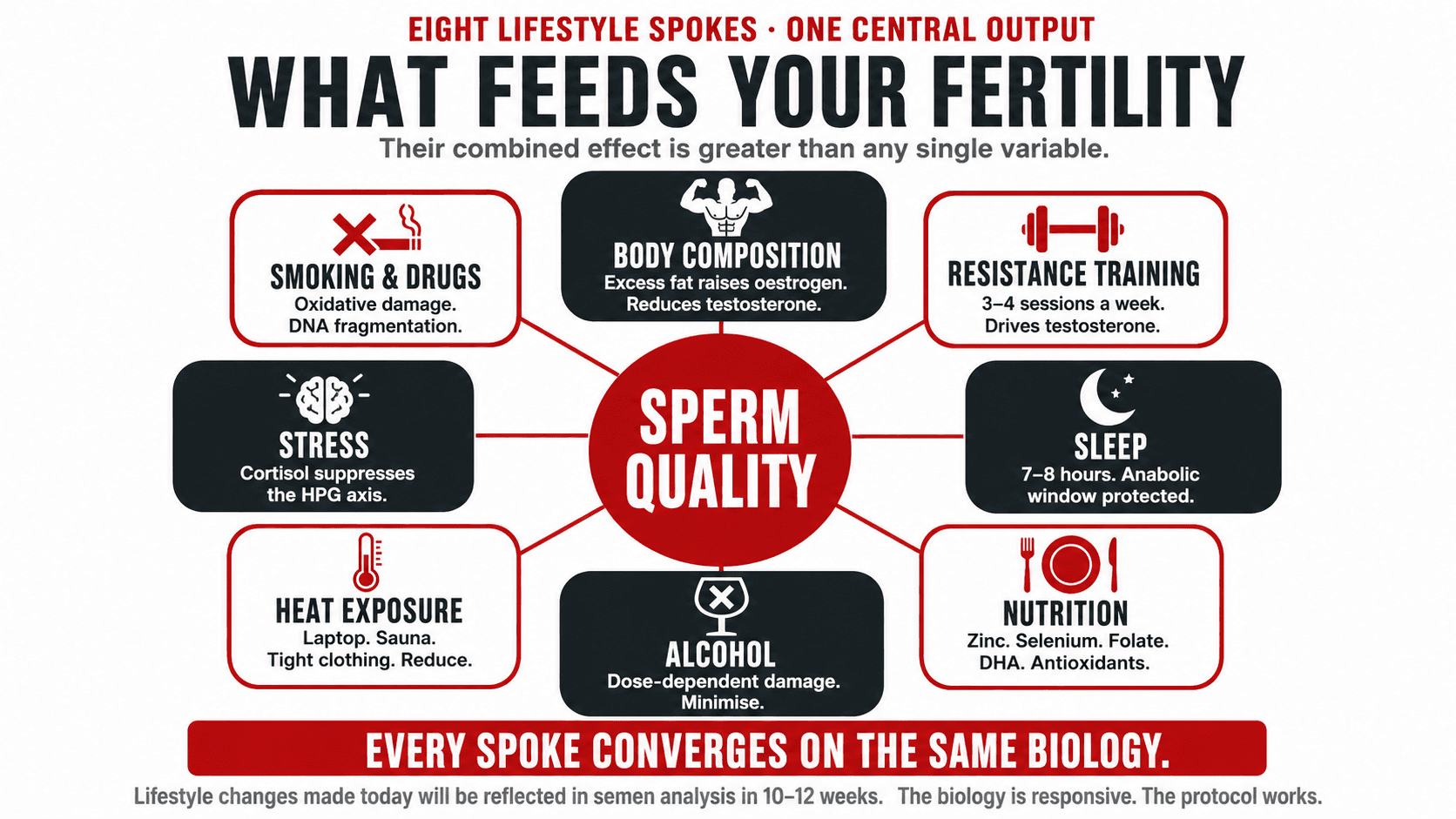
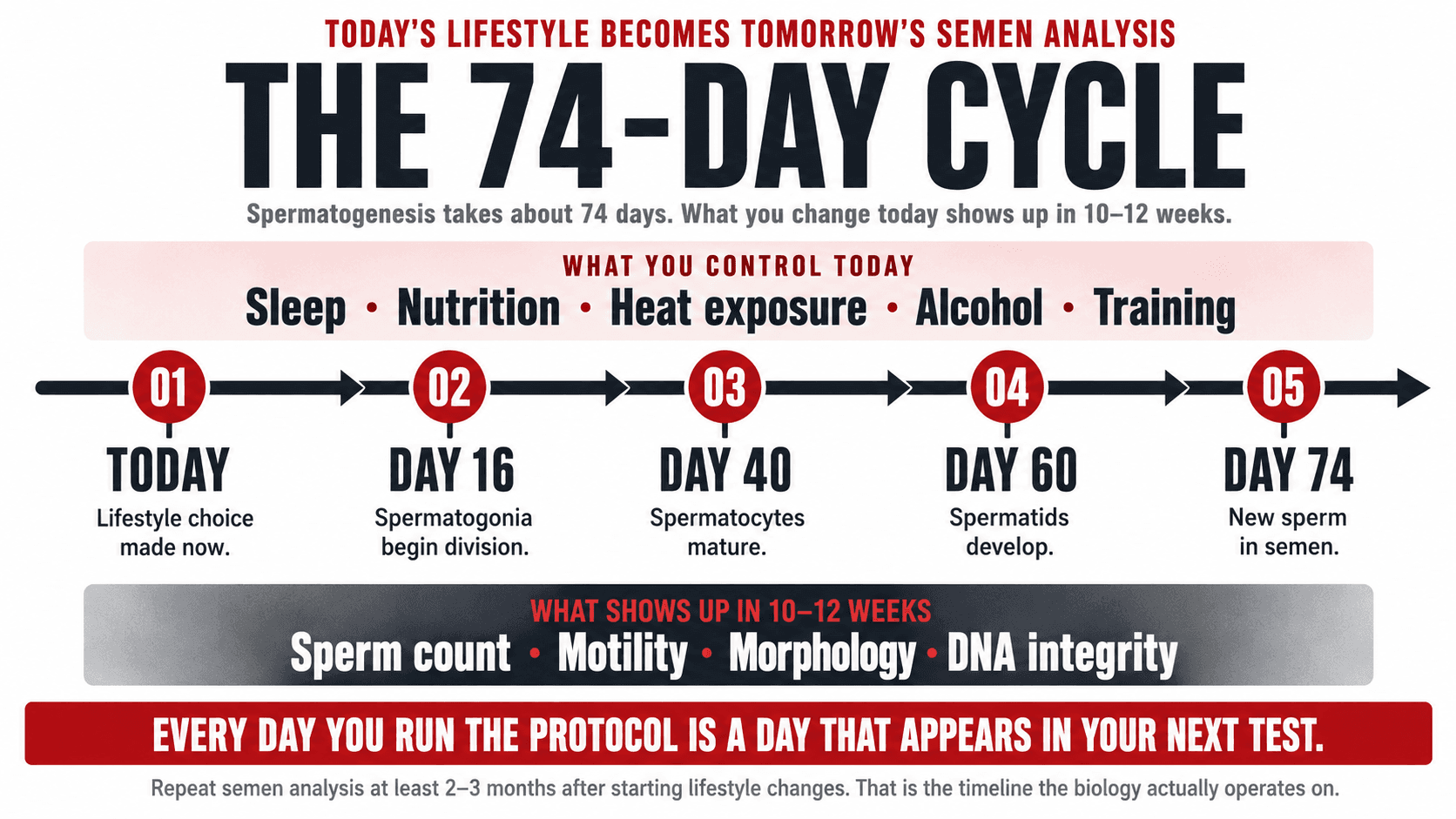
Spermatogenesis — the production of new sperm from precursor cells in the testes — takes around 74 days from start to finish. This means that the sperm present in any given semen sample reflect the physiological environment of the previous two and a half months. Lifestyle changes made today will take approximately 10 to 12 weeks to be fully reflected in semen analysis results. This is both a caution against expecting immediate improvement and a reassurance that meaningful change is achievable within a defined timescale.

How Lifestyle Affects Sperm Quality
Sperm quality is not determined by a single input. Multiple lifestyle factors converge on the same biological endpoints — hormone levels, oxidative stress, scrotal temperature, nutrient availability — and their combined effect is substantially greater than any single variable. The diagram below illustrates the primary lifestyle spokes that feed into sperm quality as a central outcome.
Body Composition and Male Fertility
The relationship between excess body fat and impaired male fertility is well established and operates through multiple mechanisms. Adipose tissue — body fat — is not metabolically inert. It is an endocrine organ that produces oestrogens through the conversion of androgens via the enzyme aromatase. Men with high levels of visceral and subcutaneous fat have elevated aromatase activity, resulting in higher circulating oestrogen levels and a suppressed testosterone-to-oestrogen ratio.
This hormonal disruption acts directly on the hypothalamic-pituitary-gonadal axis. Elevated oestrogen suppresses the secretion of gonadotropin-releasing hormone (GnRH) and, in turn, luteinising hormone (LH) and follicle-stimulating hormone (FSH) — the two pituitary hormones that drive testosterone production and spermatogenesis. The result is a hormonal environment that is less conducive to optimal sperm production.
Obesity also increases scrotal temperature through additional fat deposition in the groin region and altered thermoregulatory dynamics, adds to oxidative stress throughout the body, impairs insulin sensitivity (which has independent effects on reproductive hormones), and is associated with erectile dysfunction and reduced sexual frequency — further reducing the statistical probability of conception during the fertile window.
A 2015 meta-analysis in the British Journal of Urology International found that overweight and obese men had significantly lower sperm concentration, total sperm count, and progressive motility compared to men with normal body weight. The association was dose-dependent: the greater the excess body fat, the greater the impairment. Critically, studies examining men who lost significant body fat through lifestyle intervention have demonstrated improvements in semen parameters, testosterone levels, and fertility outcomes.
Practical Takeaway
Reducing central body fat is one of the most impactful single actions a man can take to improve his fertility parameters. This is not about achieving a particular physique. It is about reducing the aromatase activity, inflammatory load, and hormonal disruption that excess visceral fat generates. A structured resistance training programme combined with nutritional intervention is the most evidence-supported approach to reducing visceral adiposity and improving testosterone-to-oestrogen balance simultaneously.

Exercise and Sperm Health: Getting the Balance Right
Regular moderate-to-vigorous exercise is consistently associated with better semen parameters in observational studies. Men who exercise regularly tend to have higher sperm counts, better motility, and improved morphology compared to sedentary men. The mechanisms include improved testosterone levels, reduced oxidative stress, better insulin sensitivity, improved sleep, and — for men who reduce body fat through exercise — the hormonal benefits of lower aromatase activity.
Resistance training in particular supports testosterone production and insulin sensitivity, both of which are directly relevant to reproductive function. Three to four sessions per week at moderate to high intensity appears to be the optimal range in studies examining the exercise-fertility relationship.
However, the relationship between exercise and sperm health is not entirely linear. Very high volumes of endurance exercise — particularly prolonged cycling — have been associated with impaired semen parameters in some studies. The mechanisms include elevated scrotal temperature from prolonged saddle contact, oxidative stress from very high exercise volume, suppression of gonadotropins in men training at extreme volume, and potential physical trauma to the perineal region.
Anabolic-androgenic steroid use, which is common among men who train with serious intensity, is profoundly and sometimes permanently damaging to male fertility. Exogenous testosterone suppresses the HPG axis, shutting down endogenous testosterone and spermatogenesis. Post-cycle recovery of sperm production can take many months to years, and in some cases, recovery is incomplete. This is not a risk to be managed — it is a near-certainty of use.
Practical Takeaway
If you cycle heavily as your primary form of exercise and are concerned about fertility, consider rotating with lower-impact alternatives for a period. A proper saddle fit, padded shorts, and limiting very long rides can mitigate — though not eliminate — the thermal and physical factors associated with cycling and sperm quality. If you use or have ever used anabolic steroids and are now planning for fatherhood, a fertility specialist evaluation is essential before drawing any conclusions from semen analysis results.
Heat, Laptops, and Tight Clothing: The Temperature Factor
The testes are located outside the body for a reason. Spermatogenesis requires a temperature approximately 2 to 4 degrees Celsius lower than core body temperature. The cremaster muscle and pampiniform plexus venous network function as a thermoregulatory system to maintain this differential. When scrotal temperature rises — whether through external heat sources, tight clothing, or prolonged heat exposure — spermatogenesis is impaired and sperm DNA fragmentation increases.
Laptop computers placed directly on the lap generate substantial heat and elevate scrotal temperature measurably during extended use. A 2005 study in the journal Human Reproduction found that laptop use on the lap elevated scrotal temperature by up to 2.8 degrees Celsius above baseline within 15 minutes. Even with a laptop cooling pad, significant temperature elevation persisted due to the position of the legs held together to support the device.
Prolonged hot baths, hot tubs, and saunas present the same issue. Studies have demonstrated that regular sauna use or hot bath immersion can transiently impair semen parameters, with recovery typically occurring after several weeks of abstention. For men undergoing active fertility optimisation, these exposures are worth moderating.
Tight synthetic underwear has also been associated with modestly elevated scrotal temperature compared to loose-fitting cotton alternatives. While the effect size is smaller than laptop heat or sauna exposure, it is a variable within a man's direct control and easily modified.
Practical Takeaway
Use a desk or table for laptop work rather than placing it on your lap for extended periods. Switch to loose-fitting cotton underwear. Limit sauna and hot bath use during active fertility optimisation periods. These are low-cost, low-effort changes that address a biologically meaningful variable. They do not replace the larger lifestyle interventions but remove a persistent thermal stressor from the equation.
Alcohol, Smoking, and Recreational Drugs: Direct Sperm Toxins
Alcohol has a dose-dependent negative effect on male fertility parameters. It impairs testosterone synthesis by directly damaging Leydig cells in the testes, alters LH and FSH secretion, increases oestrogen through effects on hepatic metabolism, and contributes to oxidative stress. A systematic review published in Reproductive Biology and Endocrinology in 2017 found that chronic alcohol consumption was associated with reduced sperm count, motility, and morphology, and with elevated rates of sperm DNA fragmentation.
Even moderate alcohol consumption — defined as more than 5 units per week — has been associated with detectable reductions in semen quality in some studies. For men actively trying to conceive, minimising alcohol during the relevant window is a clear, evidence-based recommendation.
Tobacco smoking is associated with significantly impaired sperm motility, reduced count, increased morphological abnormalities, and elevated sperm DNA fragmentation. The mechanisms involve oxidative stress from cigarette smoke constituents, which directly damages sperm DNA and lipid membranes. The effects are dose-dependent and are observed in both active smokers and men with significant secondary smoke exposure.
Cannabis use, while socially normalised, has a documented negative effect on sperm motility and morphology, and some evidence suggests effects on sperm DNA integrity. THC accumulates in seminal fluid, where it appears to impair sperm function directly. Regular cannabis use is not compatible with optimising fertility parameters.
Anabolic steroids, as noted above, represent the most severe fertility-impairing substance commonly encountered in fitness contexts. Their effect is not merely a reduction in fertility parameters — they suppress the HPG axis such that spermatogenesis may be completely absent during use. Recovery following cessation is highly variable and may be incomplete.
Practical Takeaway
If you use or have used anabolic steroids and are planning to try for a child, this needs to be a conversation with a urologist or fertility specialist — not a gym floor discussion. Recovery of spermatogenesis post-cycle is not automatic, and the timeline and probability of recovery depend on the compounds used, duration of use, and individual biology. A semen analysis will tell you where you actually are.
Nutrition for Sperm Health: The Evidence-Based Essentials
The nutritional requirements for optimal sperm production are not exotic. They are consistent with a broadly healthy, nutrient-dense dietary pattern — but several specific micronutrients deserve particular attention because of the strength and specificity of their evidence in the male fertility context.
Zinc
Zinc is among the most extensively studied micronutrients in male fertility. It is present in high concentrations in seminal fluid and plays a structural role in sperm chromatin stabilisation, contributes to the formation and function of the outer dense fibres of the sperm tail, and is involved in testosterone biosynthesis. Zinc deficiency is associated with impaired spermatogenesis, reduced testosterone, and elevated sperm DNA fragmentation. A 2018 meta-analysis found that zinc supplementation significantly improved sperm quality parameters in infertile men, particularly motility and morphology.
Selenium
Selenium is an essential component of glutathione peroxidase enzymes, which are the testes' primary antioxidant defence mechanism. It is also a structural component of selenoprotein P, which is required for normal sperm motility. Selenium deficiency is associated with impaired sperm motility and elevated DNA fragmentation. UK soil selenium content is low, making dietary adequacy a meaningful concern for men relying on plant-based selenium sources without supplementation.
Folate
Folate is required for DNA synthesis and repair. Deficiency in men has been associated with increased rates of sperm aneuploidy — abnormal chromosome number — and elevated DNA fragmentation. While folate supplementation is well established in prenatal guidance for women, its importance for male fertility is less widely communicated. A diet rich in green leafy vegetables, legumes, and fortified foods is the preferred delivery mechanism, with supplementation providing a safety net.
Omega-3 Fatty Acids (DHA)
Docosahexaenoic acid (DHA) is present in high concentrations in mature sperm, concentrated particularly in the sperm midpiece and tail. DHA is essential for the fluidity of the sperm plasma membrane and for the normal acrosome reaction required for egg penetration. Studies have found that fertile men tend to have higher DHA content in their sperm than infertile men, and that DHA supplementation can improve sperm motility and morphology in men with suboptimal baseline parameters.
Antioxidants
Oxidative stress — the excess production of reactive oxygen species relative to antioxidant capacity — is one of the most common causes of sperm DNA fragmentation. The testes and epididymis are particularly vulnerable to oxidative damage because sperm have limited intrinsic antioxidant capacity and rely heavily on exogenous antioxidant protection. Vitamins C and E, coenzyme Q10, and lycopene all demonstrate antioxidant activity in the male reproductive system. Multiple randomised controlled trials have found that antioxidant supplementation in infertile men improves sperm count, motility, morphology, and DNA integrity, and increases pregnancy rates.
Practical Takeaway
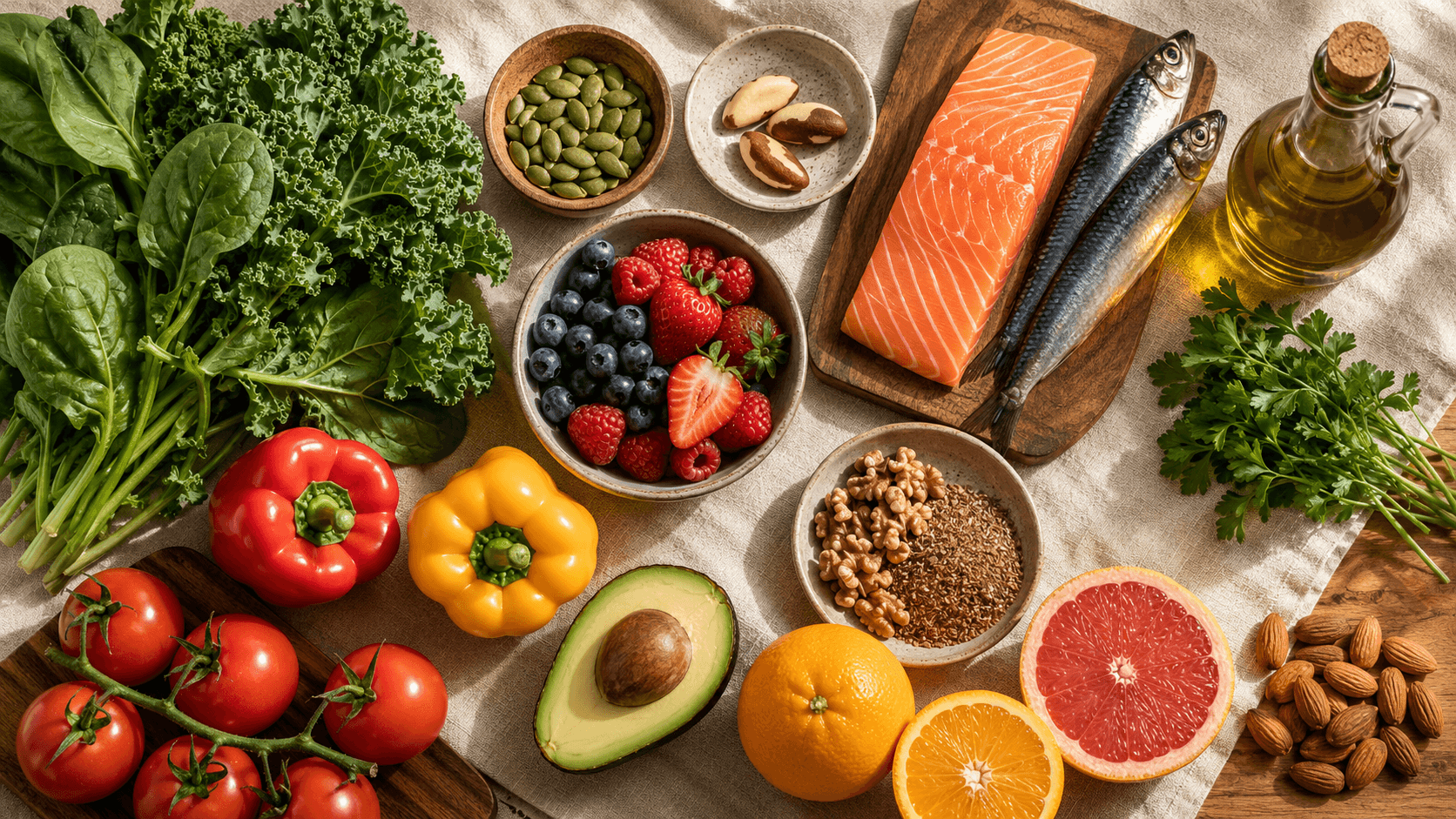
The fertility-supporting diet is not exotic. It is the same nutrient-dense, protein-sufficient, antioxidant-rich diet recommended for general health in men over 35. Prioritise: colourful vegetables and fruits for antioxidant intake; oily fish or algae oil for DHA; leafy greens and legumes for folate; nuts and seeds for zinc and selenium; and sufficient total protein to support all anabolic processes. A good men's multivitamin with zinc, selenium, and folate provides an effective baseline while dietary quality is being improved.
Addressing the Soy Myth Directly
Concern about soy consumption and male fertility is pervasive in fitness communities and sometimes raised by men who have encountered claims that phytoestrogens in soy foods suppress testosterone or impair sperm production. This concern is not supported by the current evidence base.
Soy isoflavones — genistein and daidzein — are phytoestrogens, meaning they can bind to oestrogen receptors. However, their binding affinity is several hundred to several thousand times weaker than endogenous oestrogen. The physiological effect of normal dietary soy intake on circulating testosterone in human males is, at the doses achievable through food, negligible. Multiple clinical trials and meta-analyses have found no statistically significant effect of normal soy food consumption on serum testosterone, LH, FSH, or sperm parameters in men.
A 2021 systematic review in the journal Andrology examined all available clinical evidence on soy and male reproductive hormones and concluded that consumption of soy foods or isoflavone supplements does not meaningfully alter sex hormone concentrations in men at habitual dietary intakes. The isolated case reports of feminising effects involved extremely high isoflavone supplement doses — far beyond what any normal dietary pattern would deliver.
Practical Takeaway
If you are a plant-based man and have been avoiding soy out of concern for its effect on testosterone or fertility, the current evidence does not support that restriction. Soy foods such as tofu, tempeh, edamame, and miso are nutritionally valuable sources of protein and isoflavones and are not associated with impaired male reproductive function at normal dietary intakes. The avoidance of soy based on gym mythology is not evidence-based and may be causing unnecessary dietary restriction.
Lifestyle Factors and Male Fertility
| Factor | Positive Impact | Negative Impact | Practical Action |
|---|---|---|---|
| Body composition | Healthy body fat supports hormonal balance and optimal HPG axis function | Excess body fat raises oestrogen through aromatase activity and suppresses gonadotropins | Reduce visceral fat through resistance training and a calorie-controlled nutrition plan |
| Resistance training | 3 to 4 sessions per week supports testosterone production and insulin sensitivity | Overtraining syndrome can suppress gonadotropins and impair spermatogenesis | Follow a periodised resistance programme with adequate recovery built in |
| Sleep | 7 to 8 hours of quality sleep supports testosterone secretion and cellular repair | Chronic poor sleep suppresses testosterone and increases cortisol, which inhibits the HPG axis | Implement the sleep hygiene protocol: consistent schedule, dark and cool room, no screens before bed |
| Nutrition | Zinc, selenium, folate, omega-3 DHA, and antioxidants directly support sperm production and DNA integrity | Nutrient deficiencies impair count, motility, morphology, and increase DNA fragmentation | Ensure key nutrients through diet first, with supplementation as a structured safety net |
| Alcohol | Minimal or no intake is associated with better sperm parameters | Regular alcohol consumption reduces count, motility, and morphology in a dose-dependent manner | Reduce alcohol significantly — ideally to zero — during active fertility optimisation periods |
| Heat exposure | Normal scrotal temperature maintained by appropriate clothing and work habits | Laptops on lap, hot baths, saunas, and tight underwear elevate scrotal temperature and impair spermatogenesis | Use a desk for laptop work, switch to loose cotton underwear, limit sauna during optimisation |
| Stress | Well-managed stress supports a healthy hormonal axis and normal cortisol diurnal rhythm | Chronic cortisol elevation suppresses GnRH and gonadotropins, reducing testosterone and sperm production | Apply structured stress management: sleep, exercise, reduced stimulant intake, and capacity-load balance |
| Smoking | Non-smoking is the baseline; stopping smoking improves parameters within weeks | Oxidative damage to sperm DNA, significantly reduced motility, count, and morphology | Stop smoking using the most effective method available — pharmacological support if needed |
Sperm Health Checklist
| Lifestyle | Nutrition |
|---|---|
| Resistance training 3 to 4 times per week | Zinc from pumpkin seeds, meat, legumes, or supplement |
| 7 to 8 hours of sleep per night consistently | Selenium from Brazil nuts (1 to 2 per day) or supplement |
| Body fat within a healthy range — reduce visceral fat | Folate from leafy greens, legumes, or supplement |
| Alcohol minimised — ideally zero during optimisation | DHA from oily fish, algae oil supplement, or walnuts |
| Non-smoker — stop if currently smoking | Antioxidants from colourful vegetables and fruits daily |
| No anabolic steroid use | Vitamin C from peppers, citrus, broccoli, or supplement |
| Laptop used on a desk, not on lap | Vitamin E from sunflower seeds, almonds, avocado |
| Loose-fitting cotton underwear | CoQ10 from dietary sources or supplement (100 to 300mg) |
| Sauna and hot bath use limited during optimisation | Lycopene from cooked tomato products regularly |
When to See a Fertility Specialist
Current clinical guidelines recommend that a couple seek medical evaluation if they have been trying to conceive naturally for 12 months without success, or after 6 months if the woman is over 35. However, there is no reason to wait 12 months before making lifestyle changes that can improve male fertility parameters now. The lifestyle interventions described in this article should begin immediately — regardless of where you are in the trying-to-conceive timeline.
Semen analysis is the primary diagnostic tool for male fertility evaluation. It is available through your GP, through NHS fertility clinics, and through a growing number of private services, including home testing kits for an initial screen. A single semen analysis provides a snapshot; repeat testing at least 2 to 3 months apart — after lifestyle improvements have been made — provides a more meaningful picture of your actual fertility status.
If initial semen analysis reveals significant abnormalities, referral to a urologist or andrologist is appropriate. Causes may include varicocele (varicose veins in the testes), hormonal disorders, genetic factors, or structural abnormalities — some of which are medically treatable independent of lifestyle. A thorough evaluation includes hormone profiling (testosterone, LH, FSH, prolactin) alongside semen analysis.
DNA fragmentation testing, while not universally offered in initial evaluations, is increasingly available and provides important information in cases where standard parameters appear normal but fertility outcomes are poor. If you have had recurrent miscarriages, failed IVF cycles with good-quality embryos, or unexplained infertility, requesting DNA fragmentation assessment is a reasonable next step.
How I Work With Men Who Are Optimising for Fertility
Fertility optimisation for men is a structured, evidence-based process — not a collection of supplements or vague lifestyle suggestions. When I work with men in this context, the starting point is a full picture of their current lifestyle: training history, nutritional patterns, body composition, sleep quality, stress load, substance use, and any relevant medical history. From there, we build a systematic plan that addresses each of the modifiable variables in a prioritised sequence.
The 74-day spermatogenesis cycle means that meaningful change is achievable within a defined timeframe. Men who commit to the lifestyle protocol see measurable improvements in semen parameters when retested after 3 months. This is not speculation — it reflects the biological reality that sperm quality is a dynamic output of a man's physiology, not a fixed characteristic of his genetics.
If you are trying to conceive and want a structured, evidence-based approach to improving your fertility parameters, get in touch. This is a coaching conversation, not a medical one — but it is one that can meaningfully improve the odds.
Work with Me
Get a personalised coaching plan built around your goals, your schedule, and your life.
Enquire NowReferences
- (1) Levine H, et al. Temporal trends in sperm count: a systematic review and meta-regression analysis. Human Reproduction Update. 2017;23(6):646-659.
- (2) World Health Organization. WHO Laboratory Manual for the Examination and Processing of Human Semen. 6th edition. 2021.
- (3) Sermondade N, et al. BMI in relation to sperm count: an updated systematic review and collaborative meta-analysis. Human Reproduction Update. 2013;19(3):221-231.
- (4) Gaskins AJ, Chavarro JE. Diet and fertility: a review. American Journal of Obstetrics and Gynecology. 2018;218(4):379-389.
- (5) Showell MG, et al. Antioxidants for male subfertility. Cochrane Database of Systematic Reviews. 2020.
- (6) Agarwal A, et al. The effects of oxidative stress on female reproduction: a review. Reproductive Biology and Endocrinology. 2012.
- (7) Jurewicz J, et al. Lifestyle factors and sperm aneuploidy. Reproductive Biology. 2014;14(3):190-199.
- (8) Afeiche MC, et al. Dairy intake and semen quality among men attending a fertility clinic. Fertility and Sterility. 2013.
- (9) Condorelli RA, et al. Chronic inhibition of sperm motility by cell phones. Reproductive BioMedicine Online. 2015.
- (10) Robbins WA, et al. Lifestyle modifications and male infertility. Fertility and Sterility. 2021.
- (11) Tvrda E, et al. Zinc and selenium relationship to male fertility. Korean Journal of Urology. 2013.
- (12) Hamilton CJCM, et al. The effect of cycling on male sexual and reproductive function: a systematic review. European Urology Focus. 2019.
- (13) Reed SM, et al. Soy isoflavones and male reproductive function: a systematic review of clinical evidence. Andrology. 2021.