Your 60s Do Not Have to Mean Decline
If you are in your 60s and feel like your body is working against you, you are not imagining it. Muscle mass has been declining since your 30s. Your bones are becoming less dense. Your joints may feel stiffer than they did a decade ago. Your metabolism has slowed, and you may be carrying more body fat than you would like. For many people, this decade is where conditions like type 2 diabetes, hypertension, osteoporosis, and cardiovascular disease really start to tighten their grip.
Research published in the journal Age and Ageing confirms that sarcopenia, which is the progressive loss of skeletal muscle mass and function, accelerates significantly after age 60, with prevalence ranging from 5 to 13 percent in those aged 60 to 70 and climbing as high as 50 percent in those over 80 (1). That is not a distant problem. It is happening right now, inside your body, whether you notice it or not.
But here is what most people get wrong about their 60s. They assume this decline is inevitable. They assume there is nothing meaningful they can do about it. They assume that exercise at this age means gentle walks and stretching classes. That assumption is not just wrong. It is dangerous.
What Happens When You Do Nothing
I need to be straight with you about what inaction looks like. If you are in your 60s and you are not doing any form of resistance training, you are losing muscle at an accelerating rate. The research tells us that after age 50, muscle loss occurs at approximately 1 to 2 percent per year, and strength declines even faster, at roughly 1.5 to 3 percent per year (2). That may not sound dramatic. But compound it over a decade and you are looking at losing 10 to 20 percent of your remaining muscle mass and up to 30 percent of your strength. That is the difference between getting up from a chair unassisted and needing someone to help you.
THE CASCADE OF DECLINE
How muscle loss compounds into loss of independence
It does not fix itself.
Falls are the leading cause of injury-related death in adults over 65 (3). In the UK alone, falls account for over 4 million hospital bed days each year. A hip fracture in your 60s or 70s is not just painful. It is a turning point. Research shows that up to 30 percent of older adults who suffer a hip fracture die within a year (4). That is a sobering statistic, and it is one that should motivate action, not fear.
Then there is metabolic health. If you are carrying excess body fat in your 60s and not managing your nutrition, you are at significantly elevated risk for type 2 diabetes, cardiovascular disease, and hypertension. According to the NHS, around 40 percent of people with type 2 diabetes in the UK are aged between 60 and 79. Blood pressure typically rises with age, and uncontrolled hypertension is one of the strongest predictors of stroke and heart attack.
None of this is meant to frighten you. It is meant to show you that doing nothing is the most dangerous option available.
The Solution: Structured, Evidence Based Training and Nutrition
I have worked with clients in their 60s who arrived at my door convinced that their best years were behind them. They left stronger, leaner, and healthier than they had been in decades. The solution is not complicated, but it does require commitment, consistency, and a willingness to challenge what you think you know about exercise at this age.
Let me walk you through the key pillars.
Pillar 1: Resistance Training Is Non-Negotiable
If there is one message I want you to take from this article, it is this: resistance training is the single most important form of exercise you can do in your 60s. Not walking. Not yoga. Not swimming. Those all have their place, and I am not dismissing them. But none of them provide the stimulus your muscles and bones need to reverse the decline that is already underway.
A systematic review and meta-analysis of 42 randomised controlled trials involving 3,728 older adults with sarcopenia found that resistance exercise, with or without nutritional support, was the most effective intervention for improving quality of life, muscle strength, and physical function (5). A further meta-analysis of 14 studies in adults aged 65 to 82 found that resistance training improved grip strength, gait speed, and measures of body composition including reductions in body fat (6).
Top Tip
Start with two to three resistance training sessions per week. Each session should include compound movements that work multiple muscle groups simultaneously, such as squats, presses, rows, and hip hinges. If you have never lifted weights before, work with a qualified coach who understands the needs of older adults. Correct form matters more at this age than at any other.
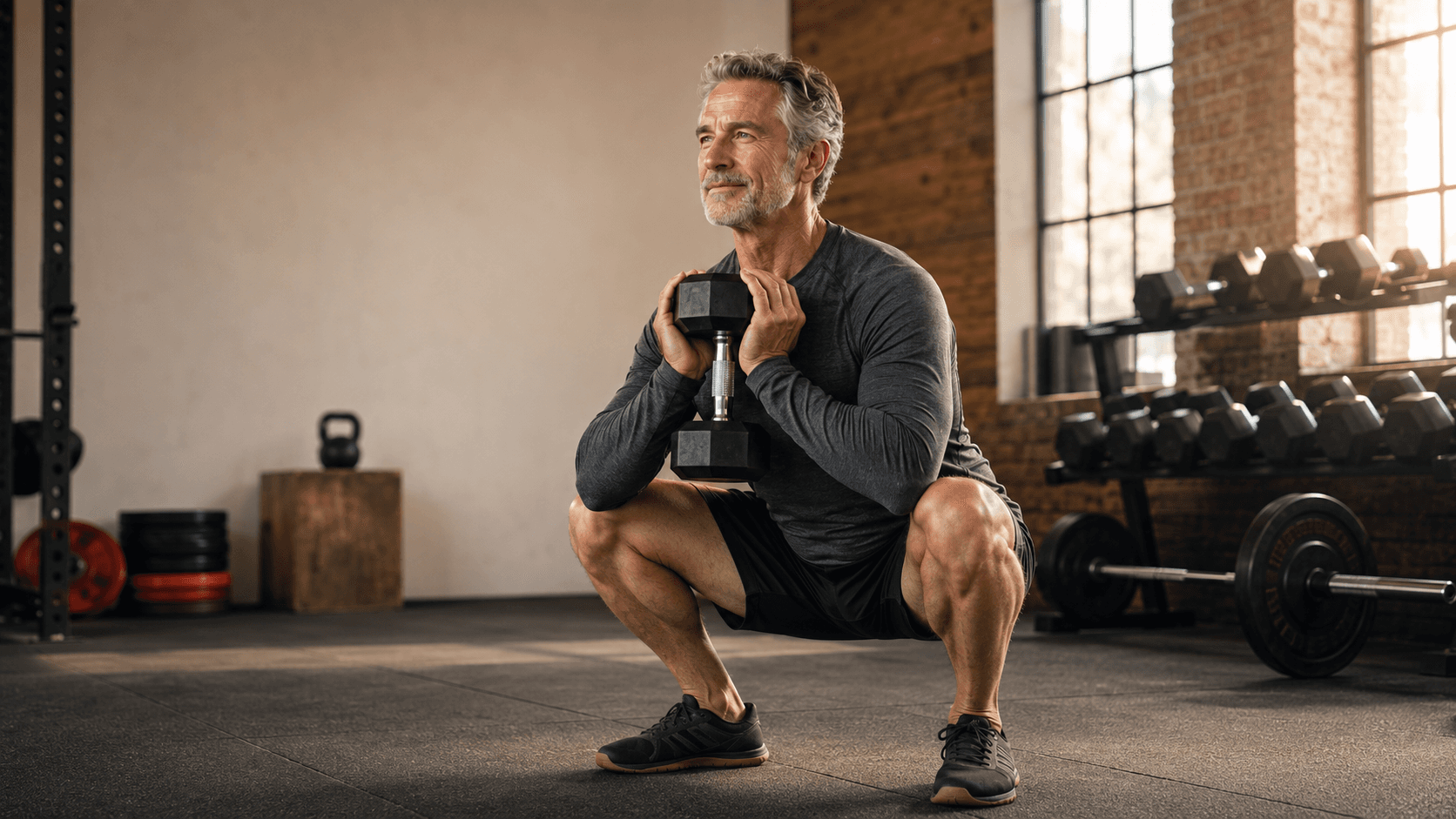
Let me explain what this actually looks like in practice. I am not asking you to train like a 25 year old bodybuilder. I am asking you to perform controlled, progressive resistance exercise with appropriate loads. That might mean goblet squats with a dumbbell, seated cable rows, leg presses, chest presses, and deadlift variations. The movements are the same fundamental patterns that benefit anyone at any age. The difference is that we scale the load and volume to your current capacity and build from there.
Sample Weekly Training Framework for Your 60s
| Training Day | Focus | Example Exercises | Sets x Reps |
|---|---|---|---|
| Day 1 | Lower Body + Core | Goblet squat, leg press, Romanian deadlift, plank | 3 x 8–12 |
| Day 2 | Upper Body Push + Pull | Chest press, seated row, overhead press, lat pulldown | 3 x 8–12 |
| Day 3 | Full Body + Balance | Step ups, cable pull-through, single arm press, farmer carry | 2–3 x 8–10 |
Notice that I have included balance work on Day 3. This is deliberate. A systematic review published in the Journal of Cachexia, Sarcopenia and Muscle found that combining resistance exercise with balance training was the most effective strategy for improving physical function measures in older adults with sarcopenia (5). Falls prevention is not a separate category of training. It should be woven into your programme.
Top Tip
Include at least one single leg exercise per session, such as a step up, split squat, or single leg Romanian deadlift. Single leg work directly challenges your balance and stability while building the kind of functional strength that keeps you independent.
Pillar 2: Protecting and Building Your Bones
Bone density is a critical concern in your 60s, particularly for women who have been through menopause. Oestrogen plays a major role in maintaining bone mineral density, and its decline during menopause triggers a period of accelerated bone loss. Men are not immune either. Testosterone declines gradually with age and plays its own role in bone health.
The good news is that resistance training has a measurable protective effect on your bones. A systematic review and meta-analysis of seven studies involving 370 older adults found that resistance training protocols performed two to three times per week with moderate to high loads produced positive changes in bone mineral density at the hip and spine (7). The researchers concluded that the primary benefit is preventive, meaning it slows the rate of bone loss that would otherwise occur with ageing. For anyone at risk of osteopenia or osteoporosis, that is genuinely significant.
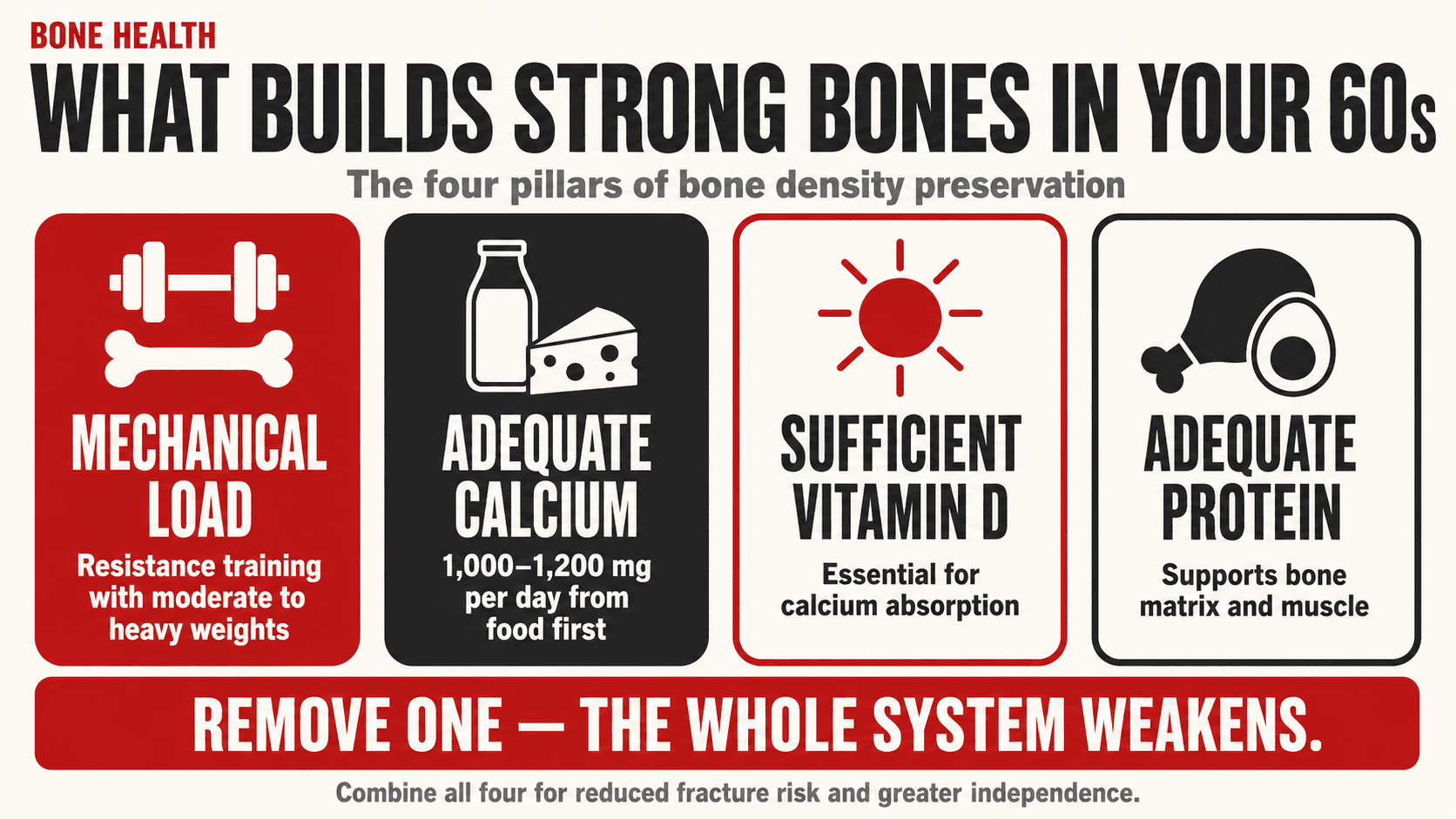
| What Builds Stronger Bones in Your 60s? |
| Mechanical Load (resistance training with moderate to heavy weights) |
| + Adequate Calcium (aim for 1,000–1,200 mg/day from food first) |
| + Sufficient Vitamin D (essential for calcium absorption) |
| + Adequate Protein (supports bone matrix and muscle) |
| = Reduced Fracture Risk and Greater Independence. Each factor amplifies the others. Remove one and the whole system weakens. |
The International Osteoporosis Foundation recommends that older adults combine resistance training with weight-bearing impact exercise for optimal bone outcomes (8). This does not mean jumping around a gym. It means including exercises where your bones bear load through ground contact. Walking, stair climbing, and step ups all count.
Top Tip
If you have been diagnosed with osteopenia or osteoporosis, do not avoid exercise. You need it more than anyone. But work with a coach who understands bone health. Avoid high-impact jumping or heavy spinal loading until you have built a solid foundation of strength.
Pillar 3: Nutrition for Strength, Health, and Longevity
Your nutritional needs in your 60s are different from your 40s. Protein requirements increase because your body becomes less efficient at using the protein you eat, a phenomenon known as anabolic resistance. Research published in the American Journal of Clinical Nutrition shows that older adults who consume at least 1.0 to 1.2 grams of protein per kilogram of body weight per day maintain significantly more muscle mass than those eating the standard recommended dietary allowance of 0.8 grams per kilogram (9). If you are active and resistance training, I typically recommend aiming for 1.2 to 1.6 grams per kilogram as a working target.
Let me put that into real numbers. If you weigh 75 kilograms, that is 90 to 120 grams of protein per day. Spread across three to four meals, that is 25 to 35 grams per meal. That is entirely achievable regardless of your dietary background.
Protein Sources Compared: Hitting 25–35g Per Meal
| Protein Source | Portion for ~30g Protein | Dietary Suitability | Additional Notes |
|---|---|---|---|
| Chicken breast | 150g cooked | Omnivore | Lean, versatile, widely available |
| Salmon fillet | 170g cooked | Omnivore / Pescatarian | Rich in omega-3 fatty acids for joint and heart health |
| Greek yoghurt (0% fat) | 300g | Vegetarian | Also provides calcium for bone health |
| Eggs | 5 large eggs | Vegetarian | Complete amino acid profile; include yolks for vitamin D |
| Tofu (firm) | 350g | Vegan / Vegetarian | Rich in calcium when set with calcium sulphate |
| Tempeh | 200g | Vegan / Vegetarian | Fermented soy; excellent gut health benefits |
| Lentils (cooked) | 350g | Vegan / Vegetarian | High in fibre; pair with grains for complete amino acids |
| Seitan | 130g | Vegan | Very high protein density; not suitable for gluten intolerance |
| Pea protein isolate | 1.5 scoops (~38g) | Vegan | Convenient post-workout; leucine content supports muscle building |
| Soy protein isolate | 1 scoop (~35g) | Vegan | Complete protein; well researched for muscle outcomes |
I am a lifelong vegetarian myself, so I understand the challenges of hitting protein targets without meat. It is entirely possible, but it requires a bit more planning. The key is to include a protein-rich food at every meal and consider using a quality protein supplement to fill any gaps, whether that is whey for vegetarians or pea and soy protein for vegans.
Top Tip
Distribute your protein intake evenly across the day rather than loading it all into one meal. Research shows that older adults stimulate muscle protein synthesis more effectively when consuming 25 to 40 grams of protein per meal compared to eating a small amount at breakfast and a large amount at dinner.
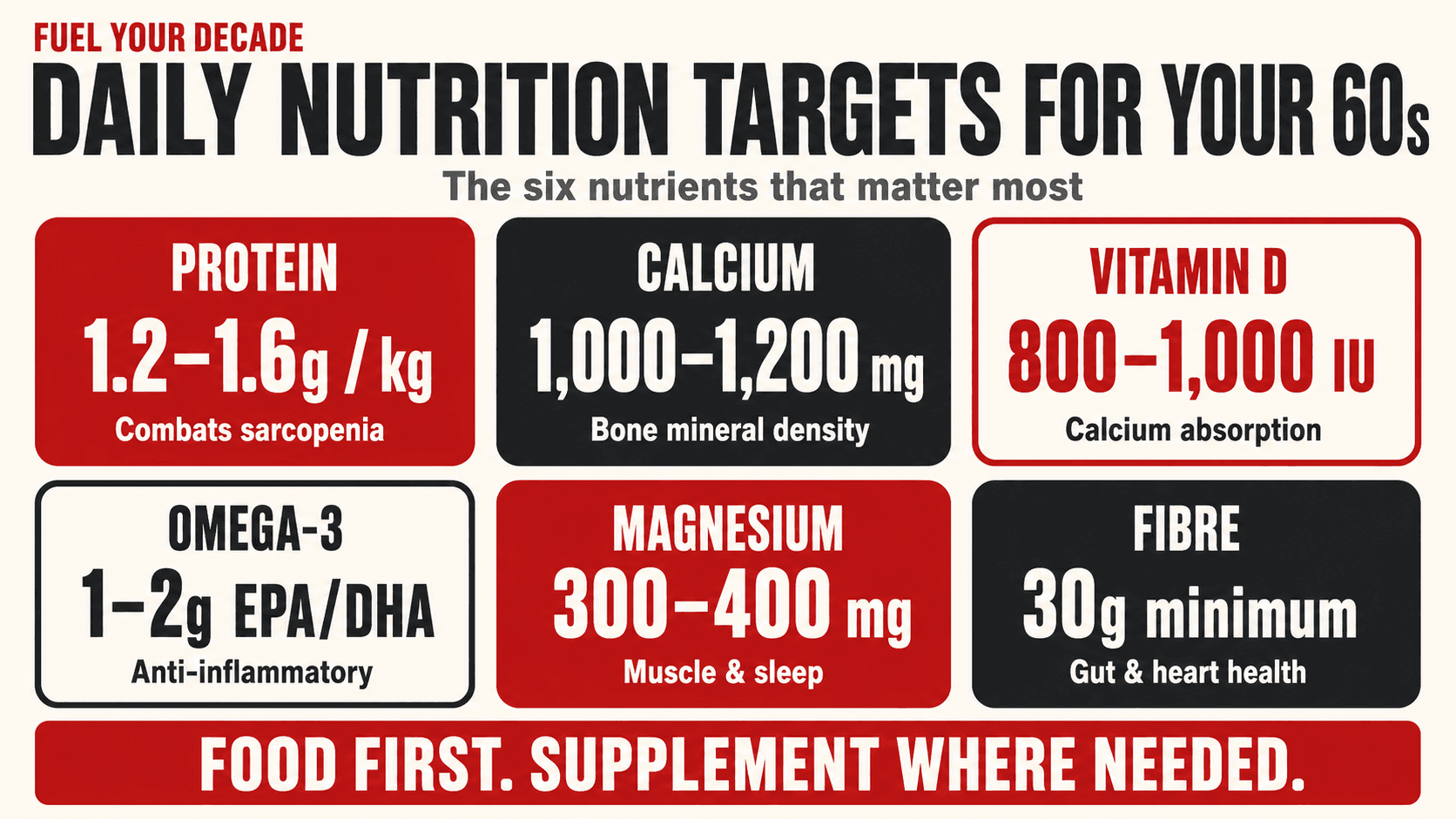
Key Nutrients to Prioritise in Your 60s
| Nutrient | Why It Matters | Where to Find It | Daily Target |
|---|---|---|---|
| Protein | Combats sarcopenia and anabolic resistance | Meat, fish, eggs, tofu, tempeh, lentils, protein supplements | 1.2–1.6g per kg bodyweight |
| Calcium | Maintains bone mineral density | Dairy, fortified plant milks, tofu (calcium-set), kale, broccoli | 1,000–1,200 mg |
| Vitamin D | Calcium absorption, immune function, muscle function | Sunlight, fortified foods, oily fish, supplements | 800–1,000 IU (consider higher if deficient) |
| Omega-3 fatty acids | Anti-inflammatory, supports heart and joint health | Oily fish, flaxseed, chia seeds, walnuts, algae-based supplements | 1–2g EPA/DHA combined |
| Magnesium | Muscle function, sleep quality, blood pressure regulation | Nuts, seeds, dark leafy greens, wholegrains, dark chocolate | 300–400 mg |
| Fibre | Gut health, blood sugar regulation, cholesterol management | Vegetables, fruits, wholegrains, legumes, oats | 30g minimum |
Pillar 4: Managing Blood Pressure, Diabetes, and Metabolic Health
If you are in your 60s, there is a strong chance you are either dealing with hypertension, type 2 diabetes, or pre-diabetes, or you know someone who is. These conditions are extremely common in this age group, and they are strongly linked to excess body fat, poor nutrition, and physical inactivity.
The evidence on what works is clear. A combination of resistance training, cardiovascular exercise, and dietary management produces significant improvements in blood pressure, blood glucose control, and insulin sensitivity. A meta-analysis published in the British Journal of Sports Medicine found that structured exercise programmes reduced systolic blood pressure by an average of 4.8 mmHg and diastolic blood pressure by 3.2 mmHg in older adults, with combined aerobic and resistance exercise producing the greatest reductions (10). Those numbers may seem modest, but a sustained 5 mmHg reduction in systolic blood pressure reduces the risk of stroke by approximately 13 percent and coronary heart disease by 10 percent (11).
For clients with type 2 diabetes, resistance training is particularly powerful because it improves insulin sensitivity independently of weight loss. Muscle tissue is a major site of glucose disposal, so the more muscle you have and the more you use it, the better your body handles blood sugar. I have coached clients who have seen their GPs reduce medication after committing to a structured training and nutrition programme.
Top Tip
If you have type 2 diabetes or hypertension, get medical clearance before starting a new training programme, then get started without delay. The sooner you begin, the sooner you will see improvements in your blood markers. Track your progress with regular GP check-ups and blood tests.
| How Exercise Improves Metabolic Health |
| Resistance Training → Increased muscle mass → Greater glucose uptake |
| Cardiovascular Exercise → Improved heart efficiency → Lower resting blood pressure |
| Fat Loss (from combined training + nutrition) → Reduced visceral fat → Lower inflammation |
| All Three Together → Improved insulin sensitivity + Better blood lipids + Reduced medication dependency. These are not theoretical benefits. They are measurable outcomes I see with clients regularly. |
Pillar 5: Joint Health and Mobility
One of the biggest fears I hear from people in their 60s is that resistance training will damage their joints. In almost every case, the opposite is true. Controlled, progressive resistance training strengthens the muscles, tendons, and ligaments surrounding your joints, which improves stability and reduces pain. The cartilage in your joints benefits from the mechanical loading that resistance exercise provides, as long as the load is appropriate and the movement is performed correctly.
If you have osteoarthritis, which is common in this age group, the evidence is strongly in favour of exercise. The National Institute for Health and Care Excellence (NICE) guidelines recommend both strengthening and aerobic exercise as first-line treatments for osteoarthritis (12). The idea that you need to rest an arthritic joint is outdated and harmful. Movement is medicine. The key is finding the right movements, at the right intensity, with the right technique.
Top Tip
If your knees bother you during squats, try box squats to a higher surface, leg presses, or Bulgarian split squats with a reduced range of motion. There is almost always a pain-free variation of every exercise. Do not abandon an entire movement pattern because one version of it does not suit you.
Pillar 6: Falls Prevention Through Strength and Balance
I have already mentioned that falls are the leading cause of injury-related death in older adults. What I want to emphasise is that falls are not accidents. They are predictable outcomes of weakness, poor balance, and reduced reaction time. And all three of those factors are trainable.
A Cochrane systematic review of 108 randomised controlled trials found that exercise programmes, particularly those that include balance training and functional strength work, significantly reduce both the rate of falls and the number of people experiencing falls (3). The review concluded that exercise is one of the most effective interventions available for falls prevention in community-dwelling older adults.
Falls Risk Factors and How Training Addresses Them
| Risk Factor | How It Increases Fall Risk | How Structured Training Helps |
|---|---|---|
| Muscle weakness | Unable to recover from a stumble or misstep | Resistance training builds lower body strength and power |
| Poor balance | Unable to maintain stable posture during daily activities | Single leg work, farmer carries, and balance challenges improve proprioception |
| Slow reaction time | Delayed response to slips, trips, and uneven surfaces | Power-based exercises like box step ups and medicine ball throws improve neuromuscular speed |
| Low bone density | Minor falls result in fractures rather than bruises | Weight-bearing and resistance exercise supports bone mineral density |
| Fear of falling | Leads to avoidance of activity, which worsens all other risk factors | Gradual exposure to challenging movements builds confidence and capability |
Top Tip
Practise getting up and down from the floor at least once per week. If you cannot currently do this without assistance, that is the clearest possible sign that you need to start strength training immediately. The ability to get up from the floor independently is one of the strongest predictors of longevity in older adults.
Putting It All Together: Your Action Plan
I know this is a lot of information. Let me simplify what you need to do. Here is a clear, actionable framework you can start implementing this week.
| Action | Frequency | Why It Matters |
|---|---|---|
| Resistance train (full body or upper/lower split) | 2–3 times per week | Builds muscle, strengthens bones, improves metabolic health, prevents falls |
| Walk briskly | Most days, 20–40 minutes | Supports cardiovascular health, aids recovery, improves mood |
| Include balance work in every training session | Every session | Directly reduces fall risk and improves functional independence |
| Eat sufficient protein (1.2–1.6g/kg/day) | Every meal | Combats anabolic resistance and supports muscle retention |
| Prioritise calcium, vitamin D, and omega-3 intake | Daily | Protects bones, supports joints, reduces inflammation |
| Track blood pressure and blood glucose regularly | Monthly or as advised by GP | Enables early intervention and tracks the impact of lifestyle changes |
| Sleep 7–9 hours per night | Every night | Recovery, hormone regulation, immune function, cognitive health |
Top Tip
Do not try to overhaul everything at once. Pick two or three actions from the table above and commit to them consistently for four weeks. Then add more. Consistency beats perfection every single time.
How I Can Help You
I am a performance coach. I have helped hundreds of clients build strength and independence in their 60s and beyond. I work one-to-one with clients online globally.
If you are in your 60s and ready to take control of your health, I offer one-to-one coaching online globally. I will build you a training programme and nutrition plan that is tailored to your goals, your health status, and your life. No fads. No gimmicks. Just structured, evidence-based coaching that gets results.
Your 60s can be a decade of strength, health, and independence. But only if you choose to make it so. The science is clear. The path is proven. The only question is whether you are ready to start.
Get in touch today at trperformancecoaching.com and let us get to work.
Disclaimer: This article is for educational purposes only and does not constitute medical advice. If you have any existing health conditions, consult your GP or relevant healthcare professional before starting a new exercise or nutrition programme.