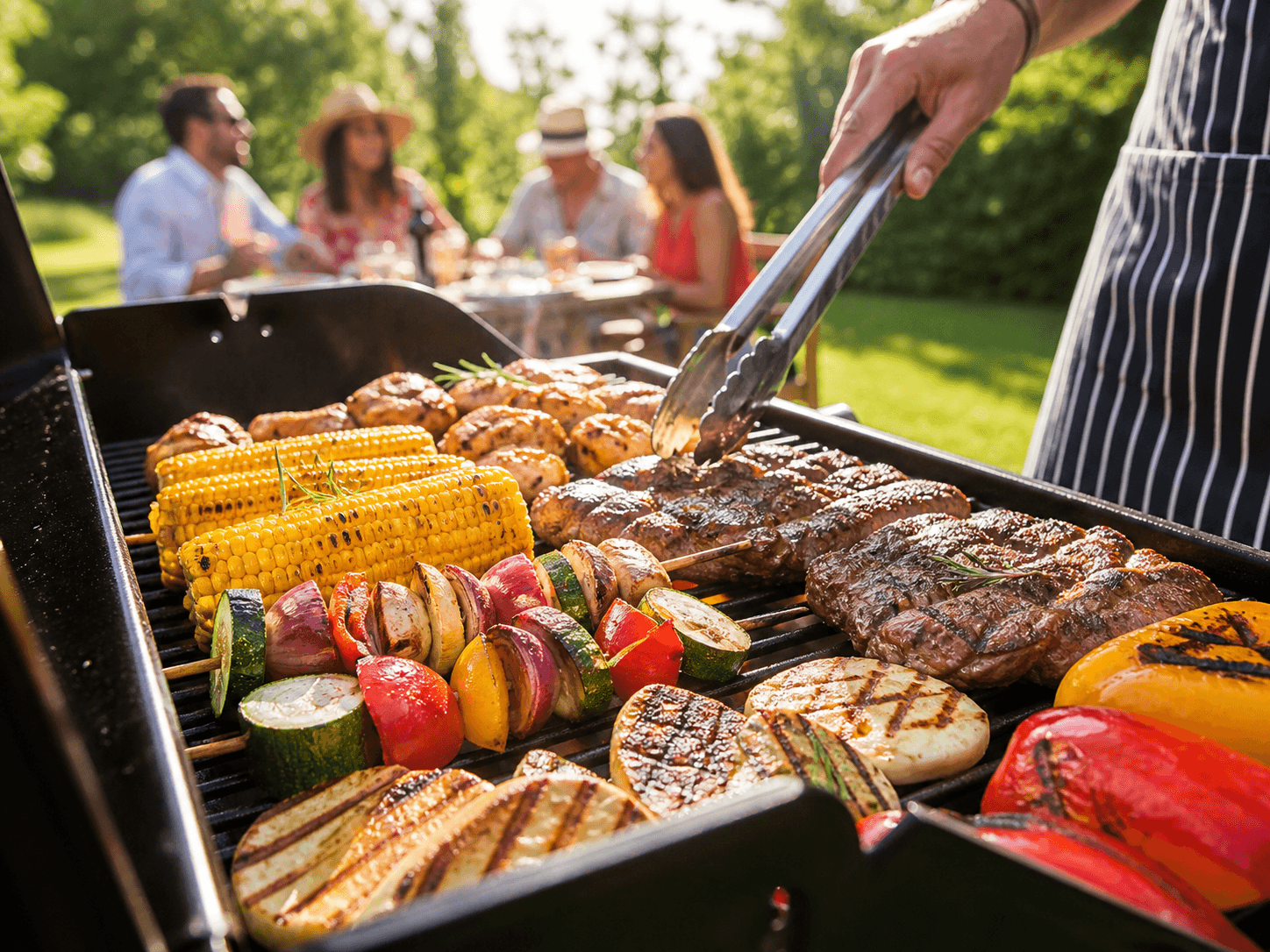
Summer is the season that should feel like a reward. The sun is out, the evenings are long, and the invitations to eat and drink outdoors start stacking up. But if you are someone who has been working hard on your body, watching your nutrition, training consistently, and finally starting to see real changes in the mirror, BBQ season can feel like a minefield. I hear it from clients every single year. The same question in slightly different words. Can I go to a BBQ and still stay on track? The answer is yes. Absolutely. But only if you understand what actually matters and stop overthinking the things that do not.
The problem most people face when it comes to enjoying a summer BBQ without gaining fat is not a lack of willpower. It is a lack of strategy. They either go in with no plan and eat everything in sight, or they go in so rigid and anxious that they avoid the event entirely or sit there miserable while everyone else enjoys themselves. Neither approach works long term. Neither approach is necessary.

What Happens When You Have No Plan
Here is what I see happen every summer without fail. Someone spends eight, ten, maybe twelve weeks dialling in their nutrition. They are in a calorie deficit, they are training hard, they are seeing results. Then BBQ season arrives. One event turns into two. Two turns into a full weekend. The burgers, the sausages, the crisps, the dips, the desserts, the beers, the cocktails. Within a few weekends the deficit is gone. In some cases it has flipped into a surplus. The scale goes up, the waistline softens, and the frustration kicks in.
Research consistently shows that energy balance is the primary determinant of changes in body mass (1). It does not matter how clean you eat during the week. If your weekends are repeatedly pushing you into a caloric surplus, you will not lose body fat. It is straightforward mathematics. A single BBQ where you eat and drink without restraint can easily add 2,000 to 3,000 calories above your maintenance level. Do that twice a month and you have wiped out the deficit you created across ten weekdays of disciplined eating.
Alcohol plays a significant role here. A few beers or glasses of wine do not just add empty calories. Alcohol suppresses fat oxidation, meaning your body essentially pauses its ability to burn stored fat while it prioritises metabolising the alcohol (2). On top of that, alcohol lowers inhibitions around food. You are far more likely to reach for a second plate, an extra portion of dessert, or a bag of crisps at midnight after a few drinks. The combination of high calorie food, high calorie drinks, and impaired decision making is what makes BBQ season genuinely dangerous for anyone pursuing fat loss.
Then there is the psychological side. If you have been restricting yourself all week and you see a BBQ as your one chance to let loose, you are setting up a binge and restrict cycle that is both metabolically inefficient and mentally draining. Studies have shown that rigid dietary restraint is associated with higher levels of disinhibition and a greater tendency toward overeating episodes, whereas a more flexible approach to dieting leads to better long term outcomes (3). The all or nothing mentality is the real enemy here, not the BBQ itself.
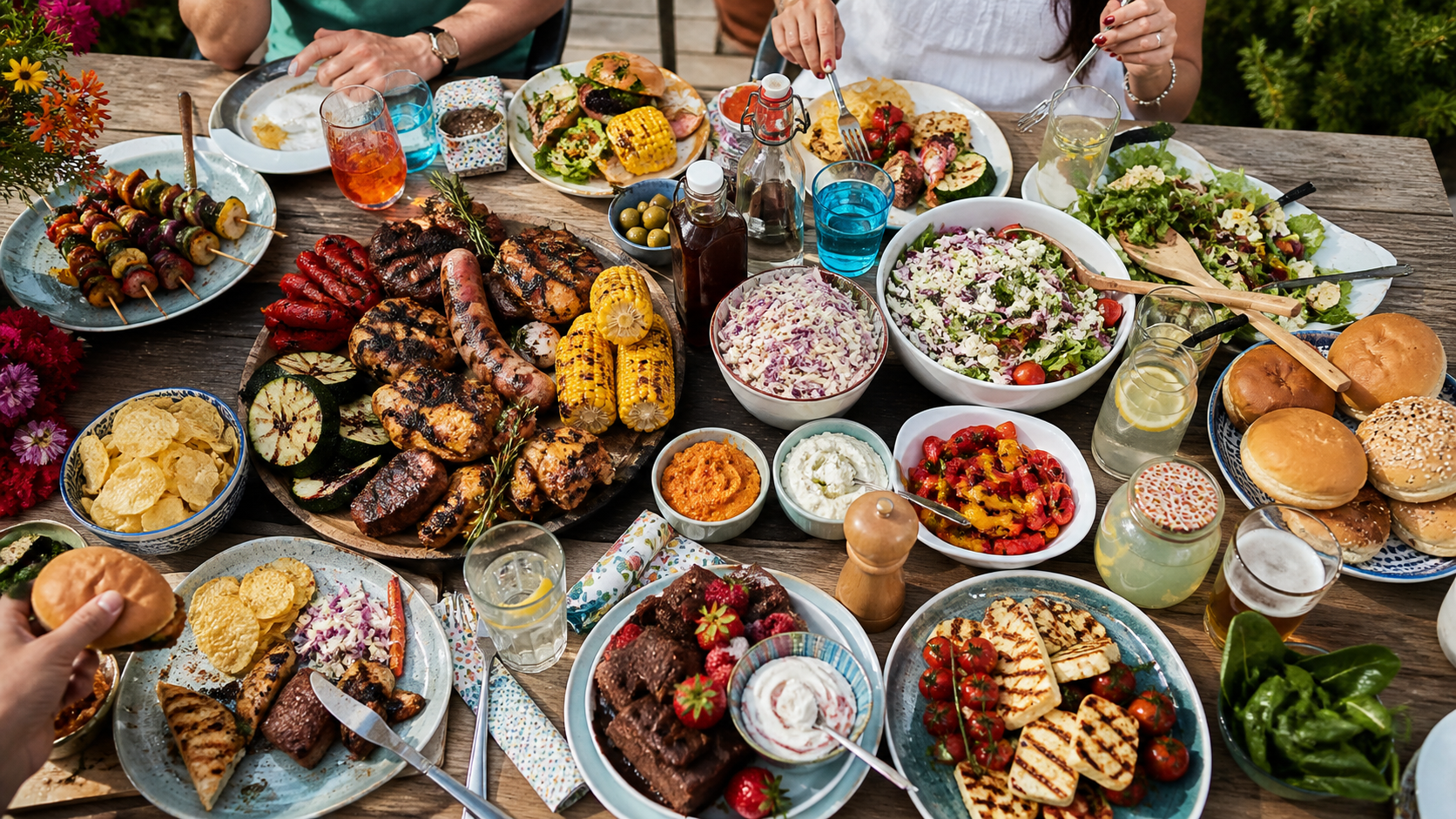
How to Enjoy Every BBQ This Summer and Still Protect Your Progress
I am going to walk you through exactly how I advise my clients to approach BBQ season. This is not about deprivation. It is not about turning up with a Tupperware container and sitting in the corner eating cold chicken and broccoli while everyone else has a good time. This is about being smart, being strategic, and understanding that one meal does not define your results. Your overall pattern of eating across the week does.
Prioritise Protein at Every Opportunity
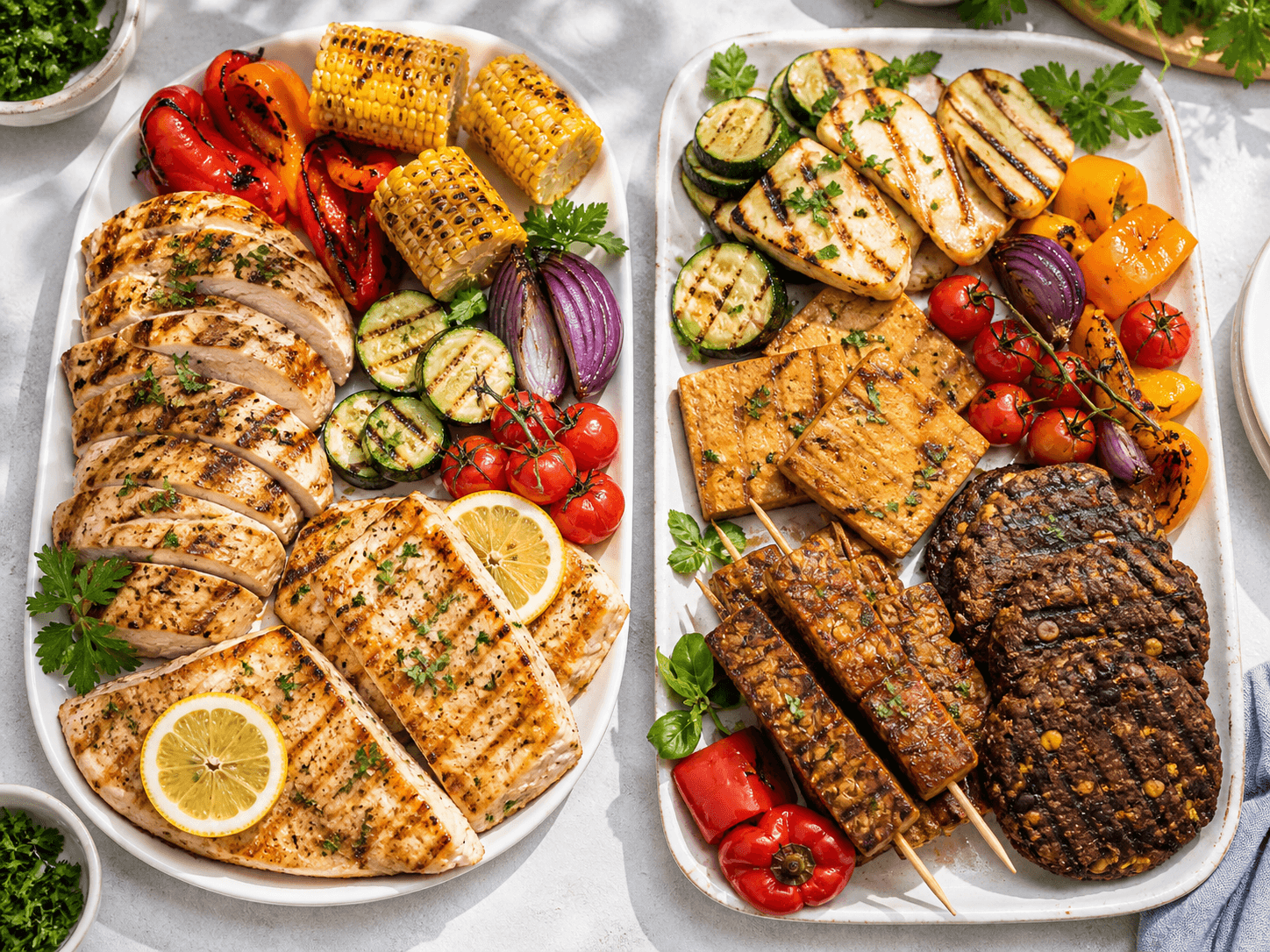
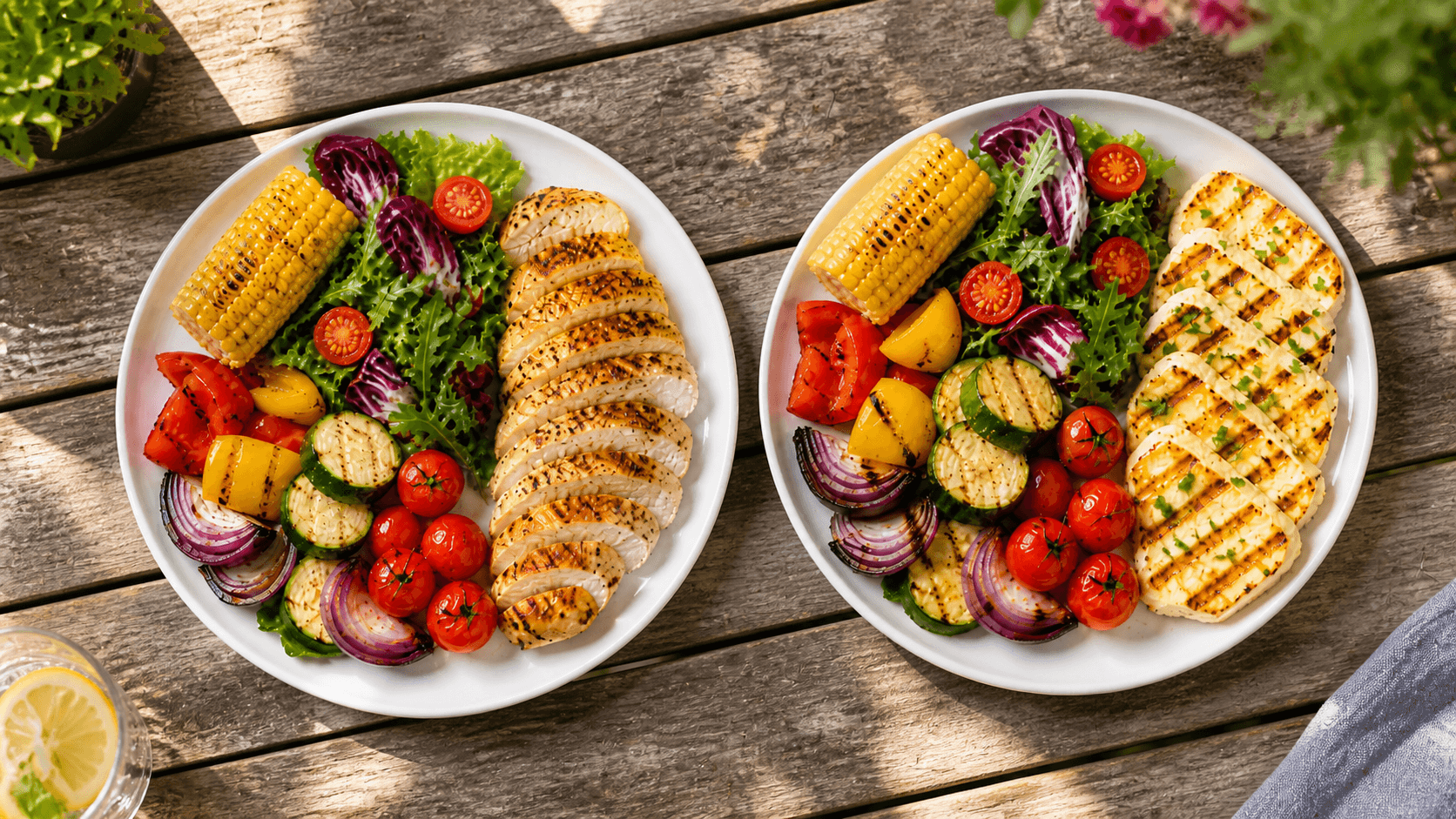
Protein should be the foundation of your plate at any BBQ. Whether you eat meat or not, there are always high protein options available if you look for them. For meat eaters that means leaner cuts like chicken breast, turkey burgers, or grilled fish rather than loading up exclusively on fatty sausages and processed burgers. For vegetarians and vegans, grilled halloumi, marinated tofu steaks, tempeh skewers, seitan sausages, and black bean burgers are all excellent choices. If the host is open to it, bring a dish yourself. A large bowl of lentil and roasted vegetable salad with feta, or a platter of spiced chickpea patties gives you a guaranteed high protein option.
Protein has the highest thermic effect of any macronutrient, meaning your body expends more energy digesting and metabolising it compared to carbohydrates or fat (4). It is also the most satiating macronutrient, which means it keeps you fuller for longer and reduces the likelihood of overeating later in the day (5). Leading with protein at a BBQ is one of the simplest and most effective strategies for keeping your total calorie intake in check without feeling deprived.
Manage Your Calories Earlier in the Day
If you know you have a BBQ in the evening, adjust your earlier meals accordingly. I am not saying skip breakfast and starve yourself all day. That almost always backfires because you arrive at the BBQ ravenous and inhale everything in sight. What I am saying is keep your earlier meals lighter and protein focused. A Greek yoghurt with berries for breakfast. A large salad with grilled chicken or a tofu and vegetable stir fry for lunch. For plant based clients I might suggest a smoothie with pea protein, oats, and frozen fruit in the morning, followed by a hearty lentil soup at lunch. This creates a calorie buffer that allows you to eat more freely in the evening without blowing past your daily target.
Research into flexible dietary strategies supports this approach. A landmark trial published in the New England Journal of Medicine demonstrated that it is the overall caloric and macronutrient balance over time that determines body composition outcomes, not the specific structure or timing of individual meals (6). Shifting calories from earlier in the day to the evening when you know a social event is coming is a perfectly valid and effective strategy.
Be Strategic With Alcohol
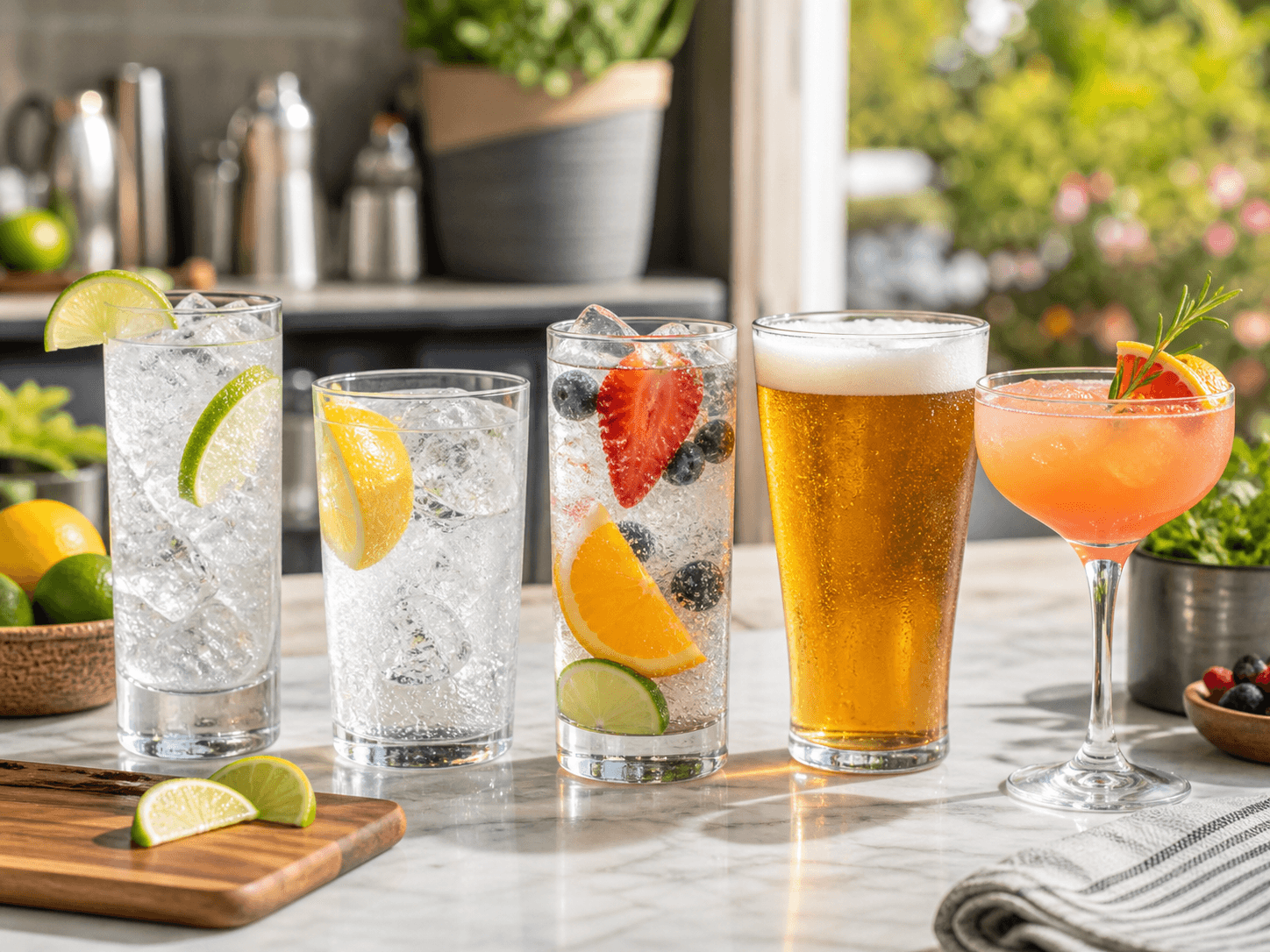
I am not going to tell you not to drink. You are an adult. But I will tell you what alcohol does to your body and your fat loss goals so you can make an informed decision. Every gram of alcohol contains 7 calories with essentially zero nutritional value. A pint of beer is typically 180 to 250 calories. A large glass of wine is around 200 to 230 calories. A cocktail can easily exceed 300. Three or four drinks and you have added 800 to 1,200 calories to your day before you have even touched the food.
If you choose to drink, go in with a number. Decide beforehand how many drinks you will have and stick to it. Alternate every alcoholic drink with a glass of water or sparkling water with lime. Choose lower calorie options where possible. A gin and slimline tonic is around 60 to 70 calories. A vodka soda with lime is similar. These are significantly lower than a pint of craft beer or a sugary cocktail. And if you are someone who finds it difficult to stop at two or three, consider whether the drinks are genuinely adding to your enjoyment or whether it is simply a habit.
Fill Half Your Plate With Volume
One of the best strategies for managing calorie intake at any social eating event is filling a significant portion of your plate with high volume, low calorie foods. At a BBQ this means loading up on grilled vegetables, side salads, corn on the cob, tomato and onion salads, grilled peppers, courgettes, mushrooms, and anything else that is not drenched in oil or heavy dressing. These foods take up physical space in your stomach and contribute to satiety through stretch receptor activation in the gut, which signals to your brain that you are full (7).
This is not about avoiding the higher calorie items entirely. It is about proportion. Have the burger. Have a sausage or a couple of pieces of halloumi. But make sure that at least half of your plate is made up of vegetables, salad, or other lower calorie options. This one habit alone can easily save you 500 to 800 calories over the course of an afternoon without making you feel like you missed out.
Stop Treating One Meal as a Crisis
This might be the most important piece of advice in this entire article. One BBQ will not ruin your progress. One afternoon of eating slightly more than usual will not undo weeks of consistent effort. The problem is never a single event. The problem is the story you tell yourself after the event. I have already blown it so I might as well write off the rest of the weekend. That thought process is what turns a 500 calorie overshoot into a 5,000 calorie weekend blowout.
If you eat more than planned at a BBQ, wake up the next morning and get straight back to your normal nutrition. Do not try to compensate by eating nothing. Do not punish yourself with an extra hour of cardio. Just return to the plan. Consistency across weeks and months is what produces results. A study examining self monitoring behaviours in weight management found that individuals who returned to their structured eating plan quickly after a deviation achieved significantly better long term outcomes than those who allowed a single lapse to spiral into days of uncontrolled eating (8).
Train on BBQ Day If You Can
If your schedule allows it, getting a training session in on the day of a BBQ is a genuinely useful strategy. Resistance training increases insulin sensitivity and muscle glycogen storage capacity, meaning a greater proportion of the carbohydrates you consume after training will be directed toward muscle recovery rather than fat storage (9). You do not need to do anything extreme. A solid 45 to 60 minute weights session hitting compound movements will do the job. Even a brisk 30 minute walk before the event has benefits for glucose metabolism and appetite regulation.
For my clients who train regularly, I often programme their sessions so that their hardest training days coincide with their most social eating days. This is not about earning food through exercise. It is about leveraging the metabolic environment that training creates to partition nutrients more favourably.
The Bigger Picture
Every summer the same fears come up. Every summer I have the same conversation. And every summer the clients who succeed are the ones who learn that their social life and their fitness goals are not in opposition. You can enjoy a BBQ, have a great time, eat good food, have a drink if you want one, and still wake up on Monday in exactly the position you need to be in to keep moving forward.
The key is going in with awareness rather than anxiety. Know roughly what your calorie target is for the day. Prioritise protein. Fill your plate with volume. Be intentional about alcohol. And above all, stop catastrophising one meal. Your body does not work in 24 hour windows. It works in patterns across weeks and months. One BBQ is a blip. A summer of smart, flexible, enjoyable eating is a strategy.
If you are struggling with navigating social events, holiday eating, or finding a sustainable nutrition approach that fits around your real life, that is exactly what I help people with. I work one-to-one with clients online globally, building personalised plans that account for everything from your training and nutrition to your lifestyle, social commitments, and dietary preferences. Whether you eat meat, are vegetarian, vegan, or somewhere in between, I will build something that works for you.
Get in touch and let me show you what a proper plan looks like.
Work with Me
Get a personalised coaching plan built around your goals, your schedule, and your life.
Enquire NowReferences
- Hall KD, Heymsfield SB, Kemnitz JW, Klein S, Schoeller DA, Speakman JR. Energy balance and its components: implications for body weight regulation. American Journal of Clinical Nutrition. 2012; 95(4): 989-994.
- Yeomans MR. Alcohol, appetite and energy balance: is alcohol intake a risk factor for obesity? Physiology & Behavior. 2010; 100(1): 82-89.
- Stewart TM, Williamson DA, White MA. Rigid vs. flexible dieting: association with eating disorder symptoms in nonobese women. Appetite. 2002; 38(1): 39-44.
- Westerterp KR. Diet induced thermogenesis. Nutrition & Metabolism. 2004; 1(1): 5.
- Leidy HJ, Clifton PM, Astrup A, Wycherley TP, Westerterp-Plantenga MS, Luscombe-Marsh ND, Woods SC, Mattes RD. The role of protein in weight loss and maintenance. American Journal of Clinical Nutrition. 2015; 101(6): 1320S-1329S.
- Sacks FM, Bray GA, Carey VJ, Smith SR, Ryan DH, Anton SD, McManus K, Champagne CM, Bishop LM, Laranjo N, Leboff MS, Rood JC, de Jonge L, Greenway FL, Loria CM, Obarzanek E, Williamson DA. Comparison of weight-loss diets with different compositions of fat, protein, and carbohydrates. New England Journal of Medicine. 2009; 360(9): 859-873.
- Rolls BJ, Ello-Martin JA, Tohill BC. What can intervention studies tell us about the relationship between fruit and vegetable consumption and weight management? Nutrition Reviews. 2004; 62(1): 1-17.
- Burke LE, Wang J, Sevick MA. Self-monitoring in weight loss: a systematic review of the literature. Journal of the American Dietetic Association. 2011; 111(1): 92-102.
- Holloszy JO. Exercise-induced increase in muscle insulin sensitivity. Journal of Applied Physiology. 2005; 99(1): 338-343.